Food

Much of it is pointless, but that only adds to its charm: Fortnum & Mason hampers reviewed

From our UK edition

Stop the clocks: Fortnum & Mason is still delivering hampers. I am not surprised, because this shop — or rather this myth disguised as a shop — sold condiments to the Empire, and it wouldn’t let a global pandemic thwart the consumption of those condiments. It was among the earliest fans of globalisation, which is now something I have to explain to my son. He doesn’t understand globalisation, although he knows some dogs come from abroad. He does understand a Fortnum & Mason hamper though; he knows it is a consolation, although he wouldn’t call it that. As soon as the lockdown began, I ordered an Easter basket and an Easter egg.

16 food delivery services to try in London

From our UK edition

London feels very different from the city it was a few weeks ago. Restaurants are closed, the tubes are empty save for key workers, and Soho is a ghost town. We can’t eat out, or go to bars or pubs; many are struggling to get hold of even basic supplies, like eggs and flour. But a number of food businesses have shown extraordinary tenacity, ingenuity and spirit in the way they have dealt with the daily changes to our lockdown situation, manipulating their business models, and pivoting to delivery services. We’ve collated a list of independent food stores or producers who are delivering in London at the moment. Please visit individual suppliers for delivery time estimates, as most are slightly longer than normal due to the current Covid-19 situation.

How much are people eating during lockdown?

From our UK edition

People power Boris Johnson said that the reaction to the coronavirus crisis showed ‘There really is such a thing as society’ — an apparent reference to an interview Mrs Thatcher gave to Woman’s Own in 1987. A reminder of what she actually said: ‘I think we have gone through a period when too many people have been given to understand “I have a problem, it is the government’s job to cope with it!”… and so they are casting their problems on society, and who is society? There is no such thing! There are individual men and women and there are families and no government can do anything except through people, and people look to themselves first.

Dining in the time of pandemic: takeaways reviewed

From our UK edition

I love eating while watching bad films like Battleship, so I love takeaway food from local restaurants. I am not rich enough to like the idea of takeaway from Simpson’s in the Strand and a plastic lid does not have the drama of a silver-plated dome. But eating takeaway food while watching Battleship is not my job, or at least it wasn’t until now, in the era of pandemic. The fine restaurants shuttered swiftly but the local restaurants offered takeaway, and I supported them. It is not indolence to order takeaway in the time of pandemic and, if you don’t, when this is over there will only be either Simpson’s in the Strand or KFC and Domino’s Pizza, and that is not a world anyone would wish to live in.

How much food have we really been stockpiling?

From our UK edition

Time out When did British workers start being ‘furloughed’? The word furlough is first recorded in the English language in 1625, believed to be derived from the Dutch verloffe, meaning a leave of absence of a sailor from the navy. It seems to have come back into parlance in Britain thanks to it being used in the US prison system to describe temporary leave for an inmate. It was the title of a 2018 American film in which a female prisoner is allowed out of jail for the weekend to visit her dying mother. The film was later renamed Time Out, perhaps because not everyone knew what ‘furlough’ meant. But to no avail — the film, which is reported to have cost $3 million to make, grossed just $8,472 at the US box office.

Recipes to cook while you self-isolate

From our UK edition

We live in interesting times. Given the recent government guidance on not leaving the house for unnecessary reasons, the run on supermarkets, the advice to avoid restaurants and pubs, we’re all looking at food preparation rather differently. Whether you are quarantined because you’re symptomatic, self-isolating because you’re vulnerable, or social distancing to protect those who are at high risk, there are ways to inject flavour and interest without having every possible ingredient or convenience at our fingertips. This is not the reboot of Ready Steady Cook we were all hoping for, but with so few things within our control, being able to handle ingredients and turn them into something wonderful is reassuring and hopeful.

The virtual pub: how to share a digital pint with your friends

From our UK edition

The coronavirus lockdown means we’re under strict orders from the Prime Minister not to head down to our local for a pint and to avoid social get togethers wherever possible. So why not start a new trend and share a digital drink with your friends? Here’s how to pull it off: 1. Get online Google Hangouts is great for group video calls, as is Zoom (free for the first 45 minutes) or, if you have access to it through work, Microsoft Teams. New app Houseparty is also a popular choice with young people and has been picking up users very quickly since lockdown was announced. Simply agree a time, send out the invites and off you go.

A tax on intellectuals: Terrace Cafe at the British Library reviewed

From our UK edition

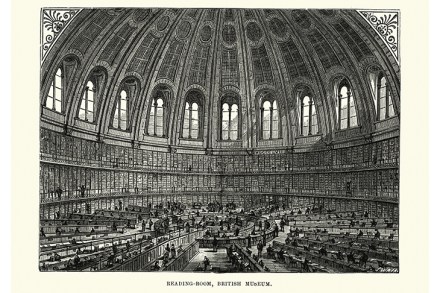
The British Library is the national library of the United Kingdom, and it sits like a red-brick crab on the Euston Road, on the site of an old goods yard between St Pancras and Euston. The older British Museum Library, whose collection was founded on the books of George III, Sir Hans Soane, Robert Harley and Sir Robert Cotton, was in the British Museum, but that gorgeous reading room is now a glass atrium with overpriced cafés and shops selling historical tat for children: cultural vandalism, then, and incitement to migraine. Instead we have the red-brick crab. It was opened by the Queen in 1998 and it is Grade I-listed, so, unless there is a war, we are stuck with it. Perhaps architects don’t read books. When I look at this library, I wonder if they have eyes.

I have always liked angry food: Ugly Butterfly reviewed

From our UK edition

Ugly Butterfly is a zero-waste restaurant and champagne bar on the King’s Road, Chelsea. The ‘champagne bar’ addition is so awful as to be pantomime villainous — I think of zero-waste diamonds and zero-waste wars — but perhaps they need this kind of duplicity to seduce the punters, who move so slowly towards wisdom? ‘Zero-waste’ isn’t an advertising catchphrase designed for Chelsea and its constituent tractors and immaculate blondes, unless they are very drunk. It is from Adam Handling, who has six venues, including the Frog in Hoxton and the sustainable deli Bean & Wheat in Old Street. Ugly Butterfly is pretty, because anything ugly in Chelsea would shrivel through lack of identification.

A Trumpian feast

This article is in The Spectator’s February 2020 US edition. Subscribe here. Donald Trump serves the best food in Washington. The residents of DC won’t say so, but it’s true. America’s capital has a lively food scene, with many excellent restaurants. None is better than the two that are in the soon-to-be-sold Trump International Hotel on Pennsylvania Avenue: Sushi Nakazawa and BLT Prime by David Burke. Burke’s joint is absolutely my kind of place. It’s in the hotel lobby. The building used to be a post office before the Trump family converted it. The enormous glass-roofed lobby area is a marvel: put politics to one side and admit that it is an extraordinary achievement.

trump dc

French women do get fat

This article is in The Spectator’s January 2020 US edition. Subscribe here.Paris ‘And please meet Alice, who has brought industrial cheese,’ said our Parisian host as she introduced me to the other dinner guests. Imagine my despair! I had failed her, not to mention her guests, on the sacrosanct fromage. A fate worse than death. Food is a national obsession for the French. The couple throwing the party presented us with a three-course meal, all made from scratch using seasonal produce from the local market. To think that I almost brought a six-pack of beer.

french women

Standing up to eat is the new line in dining in DC

This article is in The Spectator’s January 2020 US edition. Subscribe here. Going into Spoken English, you feel a little like Henry Hill taking the back entrance to the Copa in Goodfellas. Wander into the Line Hotel, past the check-in, take a right past the elevators and enter the kitchen. It works best if you’re with someone you need to impress. Unfortunately, this time I’m with a Spectator editor. The Line is one of DC’s newest and hippest boutique hotels. That’s another way of saying it’s slightly less boring than the Hilton about five blocks away.

standing

Bowl food: childhood memories have inspired a new craze for cookie dough

This article is in The Spectator’s December 2019 US edition. Subscribe here. In Greenwich Village, one block south of Washington Square Park, stands the flagship store of DŌ, ‘New York City’s first ever cookie dough scoop shop’. Opened in 2017 by an American designer with fond childhood memories of baking with her mother, DŌ is now so popular that it requires a special line policy, as in: ‘SINGLE FILE so that pedestrians can still use the sidewalk.’ Often, a line of hundreds of customers can be seen snaking around the block, eagerly awaiting tubs and cones of its buttery, sugary (and uncooked) batter.

cookie dough

This food needs a little less grandeur, and a little more love: Simpson’s in the Strand reviewed

From our UK edition

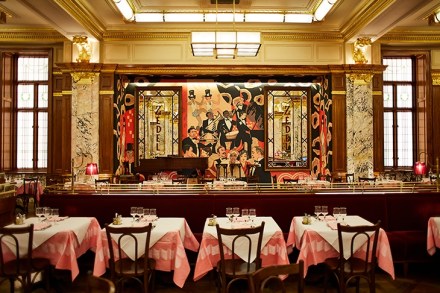
Simpson’s in the Strand stopped serving breakfast in 2017, after it had been renovated to stop it smelling of cabbage. Fat men wept, but worse things have happened here. Simpson’s is built on the site of John of Gaunt’s Savoy Palace, in which Geoffrey Chaucer, Gaunt’s brother-in-law, wrote part of The Canterbury Tales. The palace was destroyed during the Peasants’ Revolt of 1381; it is all detailed in Anya Seton’s romance novel Katherine. Of the palace’s successor, Henry VII’s Savoy Hospital, only a small chapel remains. It looks deeply oppressed. Instead we have the Savoy hotel, created by Richard D’Oyly Carte.

‘Cook it like a prayer’: Bip Ling’s Christmas curry

From our UK edition

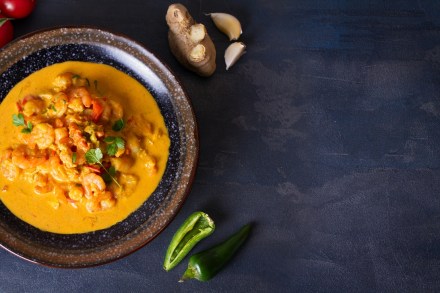
This dish is refreshing and super yummy. It’s a recipe that Didas (my Indian grandmother) taught me. The zesty tomato flavour makes my mouth water. You can’t go wrong with this curry. Everyone loves it and always asks for more! It’s comforting and warm, especially when it’s cold outside during Christmas time. Cook the dish like a prayer. The more you enjoy the process, the better it will taste. You can use the same recipe with different meat, or try it with vegetables. Make sure you taste the sauce as you cook, and add more spices if you desire. It’s even more fun to cook with the song ‘Curry’ by Bip Ling in the background.

Eggs and hard liquor: Spectator writers on their favourite examples of meals in literature

From our UK edition

P.J. O’Rourke I love poems but hate poetasters, love wine but detest oenophiles, love food but can’t stand foodies. Therefore my favourite passage about food in fiction is Lionel Shriver’s entire book Big Brother. In her tale of obese totalitarianism and comestible fascists Shriver destroys every pretention and abstract conception about food — starves it to death or fattens it for the kill. And she does so in prose that is poetry: ‘You have to ask yourself if there was ever a time people just ate something and got on with it. Every time I open the refrigerator I feel like I’m staring into a library of self-help books with air-conditioning.

Sumptuous, remote – and forgettable: Locket’s reviewed

From our UK edition

Locket’s is a new café from the owners of Wiltons in Jermyn Street. Wiltons is the restaurant that dukes visit when they have fallen out with White’s. It has a sign featuring a lobster that looks like Benjamin Disraeli wearing a top hat. When a bomb fell nearby in 1942, its anxious owner immediately sold it to the banker Olaf Hambro, who was sitting at the bar, by adding the price of the restaurant to his bill. It appeared, thinly disguised, in Jeffrey Archer’s First Among Equals as Walton’s, in which a fictional Tory minister plots the seduction of a woman called Amanda. I like Wiltons, even if the female staff are dressed as Edwardian housemaids, which is the second worst uniform in existence after hessian smocks.

Remarkable and imaginative: Fitzwilliam Museum’s The Art of Food reviewed

From our UK edition

Eating makes us anxious. This is a feature of contemporary life: a huge amount of attention is devoted to how much we eat, when we eat it, where it comes from, to toxic foods, organic and inorganic ones, environmentally damaging groceries, those that tot up too much mileage or cause damage to the rainforest. Some of these worries are relatively novel, but preoccupation with the nourishment we consume is not. A remarkable and imaginative exhibition at the Fitzwilliam Museum, Cambridge, Feast & Fast: The Art of Food in Europe, 1500–1800, documents just how obsessed our ancestors were with every aspect of their meals. At its heart are a series of recreations by Ivan Day, a specialist on the subject of what can only be described as edible art.

Nauseating, but I like the garlic bread: Legoland Windsor reviewed

From our UK edition

The theme music to Legoland in Berkshire is the theme music to The Exorcist. It appears from speakers hidden in the grass. I hear it as I wander out of some un-enchanted wood filled with Lego: we have lost our ancient woods and need new ones. These ones smell slightly of drains. The Exorcist music is a joke for parents; or perhaps an acknowledgment that there is something demonic at Legoland. You can, from the fake hills — everything is fake here, and that is both bewitching and awful — see Windsor Castle, which probably means that from Windsor Castle you can see Legoland. I wonder if Legoland will outlive the monarchy; if Legoland and the monarchy have a lot in common.

Back in the Babington Triangle: Roth Bar & Grill reviewed

From our UK edition

The Roth Bar & Grill exists on an art-farm called Durslade in Bruton, Somerset, which is also the country outpost of the Hauser & Wirth gallery, which is the silliest art gallery in Britain. It specialises in decapitated gnomes. It is only 13 miles from Babington House, Soho House’s monstrous country house with its playrooms for adults and giant fish-finger sandwiches. This is a world of electric Agas, black Range Rovers and pink wellington boots; and it is, almost by itself, the reason why country dwellers despise town dwellers. If people live in homage to what they read in Sunday newspaper supplements, they deserve to be despised. When I visited it three years ago, it was both abuzz and the silliest restaurant I had ever seen.