Film review

Naples and nurture

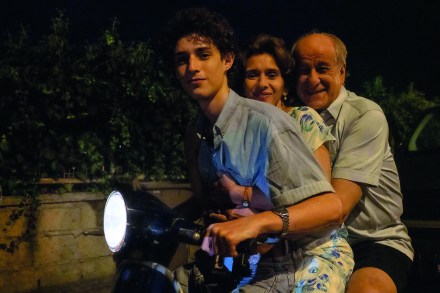
The climactic scene in the Italian director Paolo Sorrentino’s latest film, The Hand of God, finds the teenaged Sorrentino stand-in, Fabietto, being verbally attacked by an aging director named Capuano, the seaside at their backs. At this point in the film, the young Fabietto (Filippo Scotti), a sullen mama’s boy searching for meaning, has suffered an immense tragedy and is looking for answers. Enter the wise man. The scene, like many in The Hand of God, is on the nose and borders on the melodramatic, but when Capuano (Ciro Capano) yells “how does this city not inspire you?” at Fabietto, he reveals the film’s emotional core. The Hand of God, like Sorrentino’s previous work, is highly stylized and aesthetically beautiful — a true visual feast.

hand of god
Macbeth

Witches brew

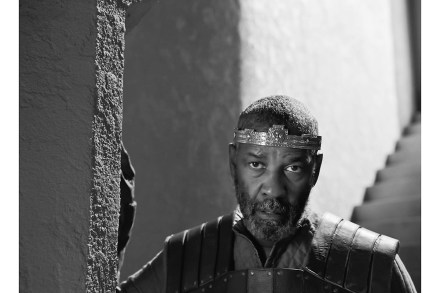
Since its initial publication in the legendary 1623 First Folio, Shakespeare’s Macbeth — one of the Bard’s late tragedies, and among his greatest — has been reimagined in countless ways. By the late seventeenth century, it had already been updated by Sir William Davenant to meet changing tastes. It was supposedly restored (though still thoroughly altered) by David Garrick in the eighteenth; and it was further “cleaned up” by Thomas Bowdler (which gave us the term ‘bowdlerized’) for his Family Shakespeare collection in the nineteenth century, an era that also brought us Verdi’s enthralling operatic version.

Jake Gyllenhaal is guilty

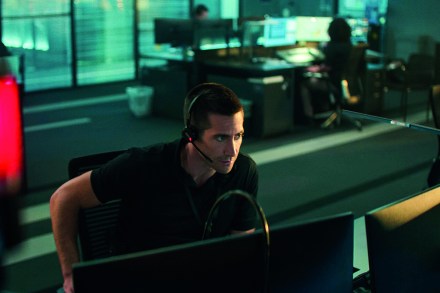
Jake Gyllenhaal is losing it. As with so many of his films — Demolition, Southpaw and Nightcrawler, to name a few — the actor’s latest, the unconventional crime thriller The Guilty, finds him yet again portraying a troubled man, beaten down and about to crack up. Joe Baylor is an LAPD cop relegated to working at the 911 call center as the result of misconduct some eight months before. Surly and apathetic, Joe answers the nightshift calls, ranging from drunken mishaps to carjackings, with a disgust he doesn’t care to contain. He longs to return to the streets. The night turns, however, when Joe fields a call from a woman (voiced by Riley Keough) who’s been abducted and is being held in a white van.

guilty

The latest Dune entertains and underwhelms

The hotly anticipated second cinematic take on Frank Herbert’s 1965 sci-fi classic Dune rolls into theaters this week. Billed as an adaptation and "not a remake" of the now infamous 1984 misfire by David Lynch, the new Dune arrives in two, two-hour-plus chapters. “Part I” is a marked upgrade from that butchered Lynch release (he lost creative control and the film was edited down to just over two hours). It's sharper, more conformable in its saga duds, and as you can imagine, the use of modern computer effects goes a long way to offset those cheesy sets and clunky models. Set some 8,000 years in the future in a galaxy far, far away, Dune, much like Star Wars (or is it Star Wars, much like Dune?

dune

Eternal Eastwood

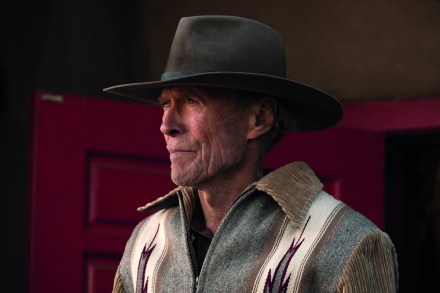
No other actor epitomizes traditional masculinity and classic cool quite like Clint Eastwood. He long ago ceased being human and transformed into the American Man. When you watch an Eastwood movie, your understanding of Clint as the ultimate symbol of a bygone America is so potent that an otherwise mediocre movie like Gran Torino feels greater than the sum of its parts because of his mere presence. This is what an American man is supposed to look and sound like, you think, as Clint snarls and puts up his dukes. These young whippersnappers, they’re no good now, you hear. Which is to say that when you watch one of his films, you’re not watching the actor become a different character, but rather hoping to see ‘Clint Eastwood’.

eastwood

Time for Another Round

Years ago, a friend of mine turned to me at someone’s birthday party and called beer ‘the universal panacea’. Beyond a physical intolerance to most alcohol, I can hardly tolerate alcoholics and their often appalling behavior. Anything that valorizes drinking alcohol, a drug whose societal acceptance is wildly at odds with its negative effects and addictive nature, is a hard sell for me. Unless you’re a member of the Jackass ensemble — that’s appointment viewing. If you’re getting bitten by scorpions and jumping off buildings for fun, a beer bong up the rear end is a nice surprise, at least in the world of cinema.

another round

Somebody’s watching me

America has an abundance of daring documentarians: Frederick Wiseman, Errol Morris, Alex Gibney, Laura Poitras, Morgan Neville, Matt Wolf, Morgan Spurlock and Michael Moore, off the top of my head. Not a diverse list demographically, but you can tell their movies apart. Some are better than others, some (Poitras and Neville) have oily ethics, but others still have made some of the most iconic American films of this century (Spurlock’s Super Size Me is in the lexicon even if nothing else he’s done is, and say what you will about Moore and his films, his impact on American pop-political culture cannot be dismissed entirely).

all light, everywhere

Yet more death in Venice

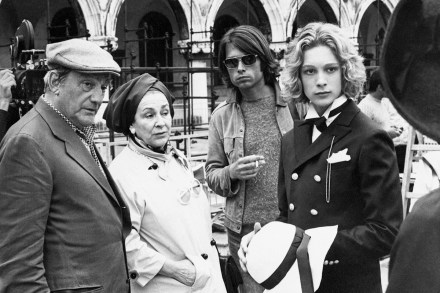
The inspiration for the object of Aschenbach’s infatuation in Thomas Mann’s Death in Venice was acknowledged by the author some years after publication, and the subject of a biography a century later (The Real Tadzio by Gilbert Adair). He was a Polish boy the writer ogled from a distance in 1911 while holidaying with his wife at the Grand Hotel des Bains in Venice. Less is known of the teenager who played the role in Luchino Visconti’s 1971 film of Mann’s novel. For years the director trawled the Continent in pursuit of the right actor for the part. It was a search that had eluded the other major directors who had attempted to bring the book to the screen: John Huston, Joseph Losey, Franco Zeffirelli. Visconti finally found 15-year-old Björn Andrésen in Stockholm.

death venice

Affluent white female killer

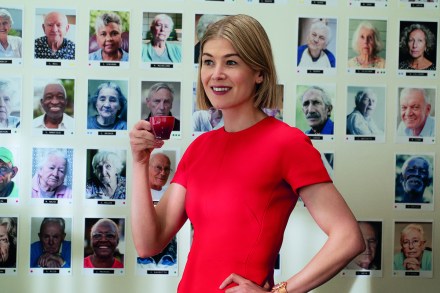
The poster for I Care a Lot, now available on Netflix and Amazon Prime, has a pull quote from a Collider review: ‘DELICIOUSLY NASTY’. In a better world, perhaps this would be true. But here on Earth, we have J Blakeson’s film, starring Rosamund Pike as Marla Grayson, a predatory professional legal guardian convincing crooked courts to grant her the right to put old people in nursing homes against their will, regardless of their health or mental capacity. This allows her to cash in on their homes, jewelry, valuables and anything else that she can vacuum up. Near the beginning of the film, shortly before she picks up ‘a cherry’ in the form of Jennifer Peterson (Dianne Wiest), we see Marla before a wall of her wards, all taped up and looking miserable in their intake headshots.

care

Korean film has mastered the supernatural horror genre

There is a moment in the Jung brothers’ 2007 ghost film, Epitaph, when a young doctor in wartime Korea realizes that the wife he adores does not have a shadow. He is entertaining her with a shadow puppet show in their home when he notices the aberration. ‘Walk to me,’ he says as he waves a naked light bulb in front of her. She had been a visiting medical student in Japan a year earlier and, unbeknownst to him, had died in an accident. It’s a moment that perfectly illustrates the psychological subtlety and brilliant scene-making of Korean film. Epitaph is about a group of young doctors working in a hospital under the Japanese occupation.

korean

Not in front of the servants

This article is in The Spectator’s inaugural US edition. Subscribe here to get yours. Tina Turner believed that she and Ike were the reincarnation of god-kings from ancient Egypt. That, she reasoned, was why they’d been reincarnated in Memphis, Tenn.; their souls would feel at home in a city that, like Memphis in ancient Egypt, was sited on a big river and noted for its artisanry. In a perversion of Buddhism by celebrity culture, people select past lives that are more interesting than their present ones. Plenty of people believe they used to be Napoleon Bonaparte, but when was the last time you met someone who boasts of having been an illiterate Corsican goat-herder who married his cousin?

downton abbey britain u country

Tarantino’s male fantasy rejects your hypothesis

Once Upon a Time...in Hollywood is Quentin Tarantino’s most pleasurable film since the first installment of Kill Bill. It’s delightful pop esoterica, blending the sensational disposability of a pulp novel with an antique edition of Playboy filled with crackling cigarette ads you can practically inhale off the page. The film is a visual banquet with a daft machismo that puts Tarantino out of step with the marketing plans of today's priggish e-cigarette smoking snoots. Ultimately, Once Upon a Time... is a stylish fairytale where the two anti-heroes are a neurotic leather-clad TV cowboy named Rick Dalton (Leonardo Di Caprio in his funniest performance) and Cliff Booth, a sadistic and square-jawed drunk who feeds his dog canned slop, played by Brad Pitt.

tarantino hollywood

Bob Dylan is rum and cokey

Rock music is always so close to parody that the best and best known fictional film about a rock tour is This Is Spinal Tap. Rolling Thunder Revue, new on Netflix, is a rock documentary — a rockumentary, if you will — about Bob Dylan’s ‘Rolling Thunder’ tour of December 1975. Its producer is Martin Scorsese, who made The Last Waltz in 1976, when rockumentaries had yet to become mockumentaries by default. Really, it was the musicians who made The Last Waltz, and Scorsese who turned that material into not just one of the best concert films, but also a sharp-eyed study of musicians and the music business.

Rolling Thunder Revue: A Bob Dylan Story by Martin Scorsese

Gorbachev’s war and peace

Tolstoy tried to write a history of Napoleon’s invasion of Russia, but found that his story required the broader canvas of fiction. We like to think that fiction emerges from reality, and that a novel, which is as much as species of hallucination as it is a social document, might retain enough of its physicality to be, as we say of War and Peace,’realist’. But the traffic between fiction and reality goes in both directions. ‘What force moves the nations?’ Tolstoy asked in the philosophical coda that, returning fiction to history, he added to the end of War and Peace. The discipline of history, its reliance on facts, was at the heart of the Enlightenment.

gorbachev

Love is the drug

Rory Stewart, who is awfully polite about wanting to be Britain’s next prime minister, has apologized for smoking opium while walking in Afghanistan. It was politeness that got him into trouble in the first place. Stewart says he felt it would have been rude not to take a deep drag on the pipe when it was passed around at the wedding he had wandered into, as one does when one is walking in Afghanistan. What happens in Herat stays in Herat, except of course, if one of your qualifications for the top job is your stint as Prisons Minister. Not a good look, as the Pashtun say. Jeremy Hunt, another ministerial candidate to replace Theresa May, has confessed to drinking mind-altering yoghurt when traveling in Asia.

souvenir

Swedes in space

About halfway through the Swedish space saga Aniara, I realized that there is no future. Or at least no alternative future for us in space. For a genre set in a distant future, space movies haven’t changed in decades. The limits of the form, and the techno-dystopian implications of the flight from reality, were mapped out in the Fifties and Sixties. The peak space movies were all made a long time ago: Stanley Kubrick’s 2001: A Space Odyssey (1968), Ridley Scott’s Alien (1979), Philip Kaufman’s The Right Stuff (1983), and Ron Howard’s Apollo 13 (1995).

aniara

Publish and be damned

To understand the differing status of the arts in Britain and France, compare the publishers in Bridget Jones’s Diary and Olivier Assayas’s new film, Non-Fiction. In Bridget Jones’s Diary, Daniel Cleaver (Hugh Grant) is an underwear-obsessed cad who gets his comeuppance when he is beaten up by Colin Firth. In Non-Fiction, Alain Danielson ruminates philosophically about what the ‘digital transition’ means for civilization, and indulges in plenty of Cleaver-style trifling with the staff, but gets away with both. We are reminded that ‘intellectual’ is a compliment in France but a dirty word in Britain, and that sex is dirty in Britain but intellectual in France.

non-fiction

Fear and Loathing on Netflix

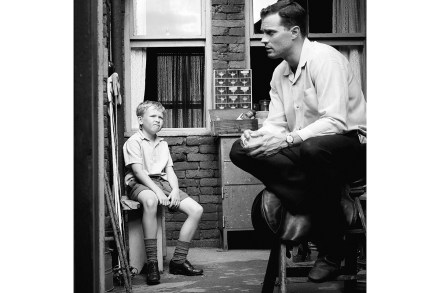
Remember hygge, the Danish art of warding off existential horror by suffocating your fear and trembling beneath a soft blanket? The cult of coziness is a Scandinavian speciality. You too would insist on marshmallows in your hot chocolate if there was a howling blizzard outside your window — in May. You too would feel like making the best of living alone with a cat and a set of matching sofa pillows if you had no choice but to live alone like Agnetha from ABBA in ‘The Winner Takes It All’. It was a Dane, Søren Kierkegaard, who wrote Fear and Trembling. This is not a novel set in a Danish dinner party, but a reflection on patriarchal authority and the uses of religious despair.

fortunate man

Kurd is the word

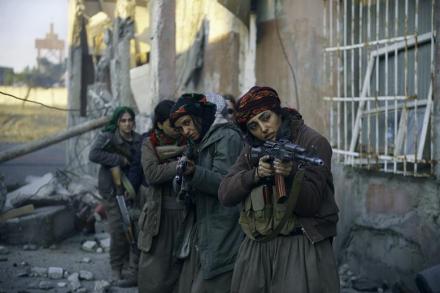
American conservatives don’t usually like Marxist guerrillas, but they make an exception for the Kurds. So do American socialists. The further left you go, the more you feel the burn of contempt for the Kurds, until eventually you go far enough left to find yourself in the company of those who support the Kurds’ enemies. Our friends on the left have principles, you know. It isn’t sufficient to survive genocidal attacks and build a gender-neutral people’s militia. You have to hate America and Israel too. A bit of Islamist zealotry doesn’t go amiss either, for the decadent Western nostril is happy to mistake the stink of Islamism for the red rose of socialism.

girls of the sun

Horse sense

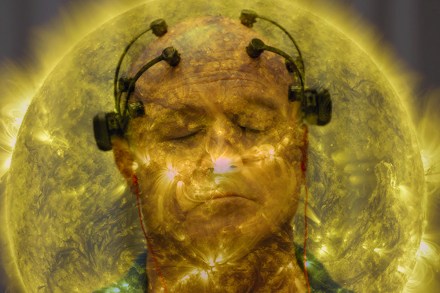
Nietzsche trained as a cavalryman, but injured himself attempting an unorthodox dismount. His last public act was to throw himself sobbing around the neck of a flogged horse in Turin. In the decades after the philosopher was carried to the asylum, we put horses out to pasture. Our constant companions, first domesticated on the Eurasian steppe some four- to six thousand years ago, were displaced by a new symbol of mobility and freedom, the internal combustion engine. In Farewell to the Horse (2017), the German historian Ulrich Raulff identifies the moment we abandoned our real four-legged friend as the moment we became modern — which is to say, lost amid freedom. If Americans are more lost than most, it is because they have more freedom than most.

beach bum