Film review

Ann Lee deserves better than her biopic

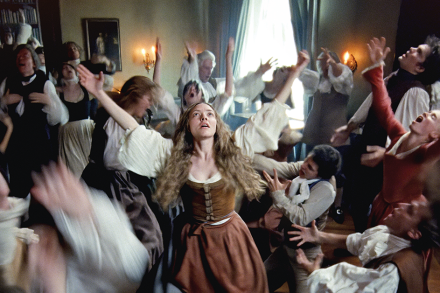
Ann Lee was a sharp-tongued woman from the back streets of 18th-­century Manchester who joined a maverick Protestant sect that became known as the Shakers, or “Shaking Quakers.” In fact their shaking was the least of it: they howled, gurned and gibbered while flirting with the notion that God would return to Earth in the form of a woman. All sexual activity, even between man and wife, was forbidden. Ann then had a series of visions that, according to subsequent Shaker accounts, identified her as the “woman clothed with the sun” whose appearance in the Book of Revelation heralds the end of the world. In 1774, “Mother Ann” and a small band of faithful emigrated to America.
ann lee shakers

One Battle After Another may be the worst movie ever made

One Battle After Another may be the worst movie ever made. Not in the petty and obvious way of a normal bad movie, though. It is a grand, multifaceted masterpiece of badness. It is dramatically bad, morally bad, historically bad and even erotically bad. And to cram in all this badness, it is an hour too long. But you won’t be bored – it is even entertainingly bad. This film is so bad that most people will think it is good, and it will probably make a lot of money. Proving only that America is the kingdom of Cain. But we knew that. But why not start with praise, eh? The film has a beautiful celluloid look.

Battle

The Phoenician Scheme is Wes Anderson at his most transparent

My name is Curtis. I’m a GenXer. I love Wes Anderson. I also like IPAs. Sometimes it’s OK to be a cliché. The Phoenician Scheme is not Wes Anderson’s best movie (that would be The Life Aquatic with Steve Zissou), or even his second-best. It may be his most transparent, though. Wes Anderson is certainly our auteuriest of major auteurs. A Wes Anderson film knows it’s a Wes Anderson film and doesn’t mind that at all. As a monarchist, I always point to auteur theory as a micro-reflection of my crackpot political theories. If it were possible for corporations to make movies by committee, it would certainly be done that way. But it isn’t. Instead, even the most hackneyed superhero sequel has a director – just as even the cheapest taquería has a chef.

Anderson

Zach Cregger’s Weapons is a new kind of cinema

Weapons, Zach Cregger’s sophomore picture after the acclaimed Barbarian, was a conspicuous success story in its opening weekend: brilliant reviews, an A- CinemaScore from audiences (rare for the horror genre, in which anything above a B is considered a major hit) and, of course, a massive box office. Its first weekend gross was $43.5 million, an astonishing amount for a film without an existing intellectual property, A-list stars (although Josh Brolin, Alden Ehrenreich and Julia Garner are hardly unknowns) or big-name director.

Weapons

Eddington, a Greek tragedy in the Wild West

Like many Westerns, Eddington, Ari Aster’s latest feature, unfolds with the inevitability of a Greek tragedy. It’s late May 2020 – the height of Covid. The ominous opening shot shows the construction site of an artificial-intelligence data center, which threatens the scarce water resources of the titular New Mexico town. A bird drops dead from the sky; a sick homeless man, coughing and rambling incoherently like a mad prophet, slouches toward the town, the dead bird clutched like an omen in his fist. From the outset, we already know the town is doomed. It’s not a question of if, but how. The Western genre and Greek-tragedy framing shape the exploration of this era’s still-disputed history, transforming the recent past into something mythic.

Eddington, the newest Western

The Sweet East is the first film to capture 2020s America

What would an American odyssey look like today? There are too many rabbit holes to go down, too many traps. Besides our fractious politics, everything in 2020s America is busted. Broken self-checkout machines and petty theft are scapegoats for a spiritual and economic crisis — it feels like the end of the world could come at any moment. Non-linear digital media and smartphones have destroyed the monoculture of popular movies and television that used to gird our pop culture. Everyone can find their own niche now, but we have so little to talk about together — not even the dread permeating the country. And it’s been this way for the better part of a decade.  The Sweet East presents the most accurate, from-the-front picture of America today.

sweet east

Spider-Man: Across the Spider-Verse dodges all the MCU virtue-signaling

The complaints about the Marvel Cinematic Universe are by now widely known. Their films follow predictable formulas and story beats. Characters become increasingly indistinguishable quip machines. The stakes are never high. The streaming content is overwhelmingly forgettable. Other than the death of Tony Stark onscreen and the sad passing of Chadwick Boseman offscreen, emotional moments are few and far between, as it's hard to care about characters when everything can be reset with a bit of multiverse mumbo jumbo. And then there's the problem of, well, as the Critical Drinker refers to it, THE MESSAGE. Expect a lot of that in the already twice-postponed production of The Marvels, girlbossing into theaters this winter.

Spider-Man: Across the Spider-Verse

Bama Rush fails as anti-Greek life propaganda

Nobody liked Bama Rush: not the viewers, not the sorority sisters at the University of Alabama at Tuscaloosa (where the film is set), not TikTokkers. It is a remarkably unlikable film that ostensibly attempts to position itself as a “shocking” inside look at sorority recruitment at the University of Alabama. Meandering, self-absorbed and lazy, it somehow even manages to fail as anti-Greek life propaganda. Props to director Rachel Fleit for that though: it might be the film’s only achievement in a climate where people are frothing at the mouth to vilify anything resembling a uniquely American and time-honored tradition. (HBO Max/YouTube screenshot) Bama Rush is first and foremost a transparent attempt to cash in on the 2021 viral success of #RushTok.

bama rush

The Pope’s Exorcist isn’t scary enough

All worthwhile horror films are products of their culture. They distill its neuroses and fears, forcing protagonists to make value judgments with life-or-death stakes. And that’s why the genre continues to compel: beyond the adrenaline rush of jump scares, watching old chillers is like opening a metaphysical time capsule. They show how past generations understood their world. The exorcism subgenre tracks that pattern — only its questions tend to be explicitly religious. William Friedkin’s 1973 classic, arriving at the height of modernist theology, directly foregrounded the question of faith within a liberal world order.

Pope’s Exorcist

Dungeons and Dragons makes a comeback in theaters

I have a confession, or perhaps a boast. I have never played the roleplaying game Dungeons and Dragons, and now, at the grand old age of forty-one, I doubt I ever shall. But there’s no doubt it’s a cultural phenomenon that has long since transcended any suggestion of being the preserve of adolescents, literal and overgrown alike. Since it was created in 1974, sales of the game have grossed billions, and it has been played by tens if not hundreds of millions of people worldwide. To be an aficionado is to find yourself in broad company — but how does that translate at the movies?  The first answer to this question came in 2000, when a film that starred Jeremy Irons as the villainous Mage Profion was released in cinemas.

dungeons

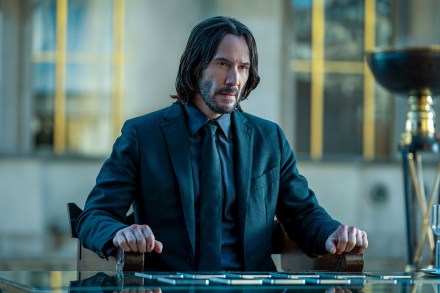
John Wick: Chapter 4 is the strongest installment yet

Fourth installments of mega-franchises don’t exactly have the greatest reputation — just think of The Phantom Menace, The Matrix Revolutions, Live Free or Die Hard and Jaws: The Revenge, to name a few. By this point, film sagas are usually bogged down by their own internal mythologies and find themselves replaying familiar beats in a bid to recapture the magic. But every so often, there’s that Mad Max: Fury Road, an utterly unexpected burst of wild creativity that outdoes its predecessors. And John Wick: Chapter 4 is such a triumph. As Chapter 4 begins, legendary assassin John Wick (Keanu Reeves) is at odds with the High Table, the governing authority of the assassin underworld.

john wick

Ant-Man and the Wasp: Quantumania is Marvel losing the plot

For over a decade now, every new Marvel Cinematic Universe film has promised a visual extravaganza, and Quantumania is no exception. Alas, in a franchise that has produced some genuinely emotional moments, a grand spectacle may be all it is. Following the events of 2019’s Avengers: Endgame, our eponymous shrinking hero, played by Paul Rudd, has settled into comfortable domesticity with main squeeze Hope van Dyne and teenage daughter Cassie. With the world mostly safe, his biggest problem now is keeping the idealistic Cassie out of trouble. At least, so he thinks.

ant-man quantumania marvel

Knock at the Cabin is a better-than-average Shyamalan film

The thing about a new M. Night Shyamalan movie is that, going in, one never knows whether it’ll be “one of the good ones.” Few directors have quite as uneven a track record: in the wake of the much-loved The Sixth Sense, Unbreakable, Signs, and The Village, Shyamalan helmed a string of disasters, culminating in the big-budget catastrophe that was 2013’s After Earth. On the other hand, 2016’s Split and 2019’s Glass were both great. Knock at the Cabin falls somewhere in the middle. The film centers on a gay couple, Andrew and Eric (Ben Aldridge and Jonathan Groff, respectively), and their adopted daughter Wen (Kristen Cui), who are forced to confront a nightmare scenario. Holed up in a lonely cabin in the forest, they are accosted by a quartet of heavily armed outsiders.

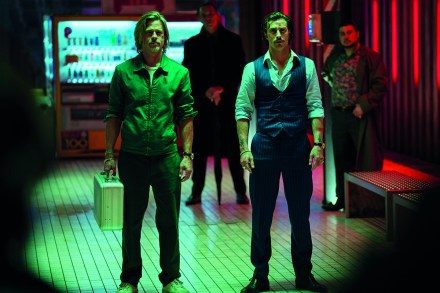
Bullet Train is an unabashedly manly palette cleanser

David Leitch’s new action movie Bullet Train is noisy, bloody, jokey, highly derivative and, in its plot machinations, positively Delphic. It has the character of a cinematic testosterone injection. Yet, in the Year of Our Lord 2022, when American mass media has been overtaken by a spirit of androgynous wokeness, this unabashedly manly flick works more like a palette cleanser. Based on the novel Maria Beetle by Japanese author Kotaro Isaka, Bullet Train stars Brad Pitt as an American assassin living in Japan. As the picture opens, the executioner has a run of bad luck and wants to get out of the whole shady business.

train

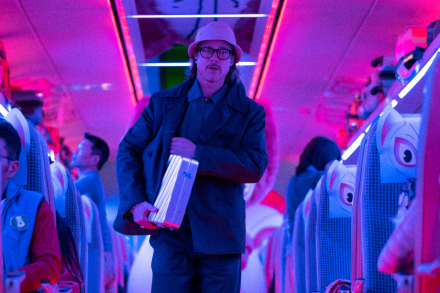
Bullet Train is a neon-washed delight

Based on the trailers, you’d be forgiven for thinking that Bullet Train was a gritty, serious-minded action thriller in the vein of John Wick. Nothing could be further from the truth: the best way to describe this movie is if Quentin Tarantino and Guy Ritchie co-directed a remake of Murder on the Orient Express. And happily, in the hands of director David Leitch — the talent behind Atomic Blonde and Deadpool 2 — it’s a genre mashup that mostly works. As the film opens, an enigmatic man codenamed “Ladybug” (Brad Pitt) boards one of Japan’s famous “bullet trains,” which travel at high speed and stop at each station for only a single minute. His mission: to recover a mysterious briefcase filled with ransom money and escape before anyone’s the wiser.

bullet train

Louis’s comebaC.K.

He's officially back. The past month has seen the quiet return to public life of comedian Louis C.K. as the incredibly popular — but very much canceled — creative genius has gone on a podcast tour promoting his latest film, Fourth of July, which is available to stream at his website starting August 6. His path to a comeback was made possible not just by his stature as a member of most comedians' Mount Rushmore of comics, but also by his innovative approach to connecting with his fans — an approach that was ahead of the curve at the time, and signals the path comedians may increasingly take in an era where their jokes can cause headaches for streaming services. C.K.

louis c.k.

Sinking into the pixels

More than two decades into internet ubiquity, we’re finally seeing the rise of a generation raised by screens as much as by their parents and peers. Smartphones and social media may not have reared their ugly heads completely until the 2010s, but even in the lead-up to the millennium, computers and the “World Wide Web” were a frequent topic of pop cultural conversation. Within those conversations was always an enormous amount of anxiety. Chatroom “stranger danger” and scammers posing as Nigerian princes seem quaint now compared to the overflowing sewers on display daily in the most craven corners of the web. Digital anxiety is done.

world's fair

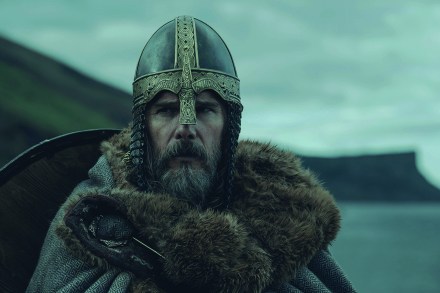
Why did no one see The Northman?

The American director Robert Eggers has had an auspicious early career. His first two movies were smash hits in the arthouse world: 2015’s The Witch, which launched the career of Anya Taylor-Joy, and 2019’s The Lighthouse, which starred Robert Pattinson and Willem Dafoe. Both films were produced on small budgets by indie powerhouse A24, and both have already achieved a kind of cult status among horror buffs and cinephiles alike. So when news broke that New Regency was offering the auteur director a budget of around $70 million for his third film — a Viking revenge epic starring Alexander Skarsgård, Taylor-Joy, Ethan Hawke and Nicole Kidman — movie geeks went wild. Just not quite wild enough to buy actual tickets, apparently.

northman

The final word on the millennial generation

More than anything else, the phrase “I’m still figuring it out” defines the millennial generation. Floating from passion to passion, job to job, lover to lover, possible spouse to possible dead end. In Joachim Trier’s The Worst Person in the World, Renate Reinsve plays Julie, a person that most of us would recognize from life, and certainly from the last ten years of media: approaching thirty; romantic and flighty to a fault (in the prologue, she drops out of medical school to become a philosopher and then a photographer); beginning to feel a void she doesn’t know how to fill.

worst

Troubles in paradise

As Van Morrison’s lovely, Oscar-nominated “Down to Joy” plays over the opening credits of Belfast, I immediately accepted that I was being primed for the tears that would surely be flowing in an hour and a half. It’s obvious from the outset that Belfast, Kenneth Branagh’s touching Troubles-set coming-of-age story, is pure Oscar-bait, a film engineered to produce both weepy breakdowns and awards. The ingredients are all there. It documents a historical sectarian conflict, one pitting Protestants against Catholics. A beautiful young family, struggling financially, must navigate the chaos that has descended upon them.

Belfast