Fiction

The week in books | 24 June 2013

From our UK edition

This week’s issue of the Spectator is packed with book reviews. Here’s a selection of quotes to whet your appetite. Old China hand Jonathan Mirsky finds much to applaud in Rana Mitter’s history of the Sino-Japanese war. ‘Into the Fifties, as Mitter outlines, a storm gathered in the US over ‘who lost China’; and those Americans who had praised Mao and had urged Washington to deal seriously with him were vilified — chiefly by Senator McCarthy — as ‘Comsymps’ who had engineered the ‘loss’. All this is well handled by Mitter. But he appears not to know that one significant figure, John Service, a China-born foreign service officer, more than admired the Communist side.

Constance, by Patrick McGrath – review

From our UK edition

Patrimony and infidelity are defining themes of the Anglo-American relationship, as they are of Constance, a novel with alternating narrators: Sidney Klein is English, in his forties, and an authority on Romantic literature. Constance Schuyler is American, 22, and believes her father hates her. Their new marriage enters crisis when Constance’s family reveals her origins in a Lady Chatterley-like tryst between her English mother and the groundsman at the family’s Hudson Valley estate, who committed suicide before she was born. (Did her parents know that ‘Constance’ was Lady Chatterley’s first name?) New York in the 1960s hosts a tale dense in literary and historical allusion.

The 10 “best” historical novels, sort of…

From our UK edition

The BBC adaptation of Philippa Gregory’s The White Queen, which began last Sunday, has led numerous books editors to pick their 10 best historical novels. I played this silly dinner party game last year (although I forget the inspiration). And, while admitting that it was nigh on impossible to pick 10, I came up with: J.G. Farrell’s Empire Trilogy Paul Scott’s The Raj Quartet Charles Dickens’ A Tale of Two Cities Evelyn Waugh’s Sword of Honour Patrick O’Brian’s Master and Commander Robert Graves’s I Claudius JM Coetzee’s Disgrace Alexander Solzhenitsyn’s A Day in the Life of Ivan Denisovich Pat Barker’s Regeneration Guiseppe Tomasi di Lampedusa's The Leopard There were some frankly lamentable omissions from my list.

Bedford Park, by Bryan Appleyard – review

From our UK edition

Nothing in Bryan Appleyard’s Bedford Park betrays the fact that it is his first period novel: not its deft characterisations, its virtuoso dialogue, its dry and economical wit, or its choice of a narrator and material quite outside the author’s own experience. The 19th century is closing and the 20th is opening in a London seething with foreign sedition and the antics of its own wayward men of genius. The enchanted suburb of Bedford Park, a baroque gem created in 1875 as part of an architectural counter-revolution and renewal, houses W.B. Yeats and the novel’s narrator, Calhoun Kidd.  Kidd has fled Chicago and his domineering father. However, he enters London salon- society through the notorious Frank Harris, whom he knew as a hotel hop in America.

Tom Sharpe nearly killed me

From our UK edition

I was on a train when it happened. I was bent double with my head between my knees, gasping for air and unable to speak. The Surrey matriarch sitting opposite leant forward to ask me if she could help. I imagine she thought that I was choking, or perhaps suffering cardiac arrest. In fact, I was laughing. Laughing so hard I couldn’t stop. And the more I wanted to stop, the worse it got. It was painful. My lungs rasped and the muscles in my sides contracted of their own free will. I was no longer master of myself, so you might say that I was in ecstasy. It was certainly exhilarating. I regained composure and explained myself to this kind woman. She looked stern; her immaculate curls bristling slightly at my wildness.

Crime fiction – review

From our UK edition

‘We no longer believe in God but hope nevertheless for miracles,’ remarks Frederic Mordaunt, one of the characters of John Harwood’s third novel, The Asylum (Cape, £14.99). He’s being over-optimistic, as Georgina Ferrers, the niece of a London bookseller, soon discovers when she wakes in a strange bed to be told that her name is in fact Lucy Ashton and that the year is 1882.  It appears that she has admitted herself as a voluntary patient at Tregannon House, a Cornish mental asylum run by the charismatic Dr Straker. Tregannon, the ancestral home of the Mordaunt family, is tainted with madness; and the young heir, Frederic, assists Dr Straker in his selfless philanthropic work.

AM Homes’ May We Be Forgiven wins the Women’s Fiction Prize

From our UK edition

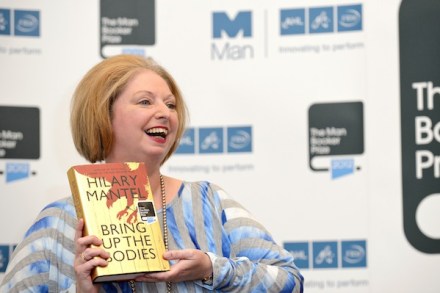
AM Homes’ May We Be Forgiven has won the Women’s Fiction Prize, beating a strong field that included Hilary Mantel, Zadie Smith, Barbara Kingsolver and Kate Atkinson. Homes, who is an American writer, is something of an unknown in this country (certainly compared to Smith and Mantel). On receiving the prize, she said, 'it's my nature to think about big ideas and my gender shouldn't prevent me from doing that.' Her work concerns modern America. Sleepy academic types are disturbed. The normal vanishes. Homes has been compared to Jonathan Franzen, among others. Click here to find out if the comparison is an insult to Homes, an insult to Franzen, or simply a fair observation.

Death of a tyrant

From our UK edition

For a king very conscious of his own power, who gloried in his status and commissioned famous artists to depict that status, Henry VIII’s death, in January 1547, was tawdry and pathetic, yet shrouded in squalid mystery. According to the accepted story, after being weak and ailing for some time, the king died in the early hours of Friday morning, 28 January 1547. However, the official proclamation of the king’s death was not made until the afternoon of Monday, 31 January. Henry apparently had great affection for Katherine Parr and adored his only son, Edward. Consequently, it is intriguing that as Henry slipped towards death, neither Katherine, Edward nor Henry’s two daughters, Mary and Elizabeth, were allowed any access to him whatsoever.

Sheila Heti: ‘I did worry putting sex in the book would eclipse everything else’

From our UK edition

There is a question which writers (and readers) of literary fiction get tired of hearing: which bits really happened? The traditional and respectable answer is that this doesn’t matter. Everything in the book will have been transformed by art, and isn’t something that comes straight from an author’s imagination more autobiographical, more telling, than things that might have happened to them, anyway? But these serious maxims don’t always quell your desire for real-life incident or gossip. Sheila Heti’s How Should A Person Be, subtitled ‘A novel from life,’ had me googling paintings by Margaux Williamson: Heti’s best friend in real life and a character in her book. How Should A Person Be?

Z, by Therese Anne Fowler, Beautiful Fools, by R. Clifton Spargo, Careless People, by Sarah Churchill – review

From our UK edition

The Great Gatsby is one of those great works of literature, like Pride and Prejudice, that appeals as much to the general reader as to the literary bod. It’ll always be around, if not as a movie (there have been five since its publication in 1926) then as an opera or a ballet. Last year a staged reading ran for weeks in the West End, to critical acclaim. It is a short book — a long short story really — about wealth and sex and hope and disillusion and partying. These are the themes, too, of the lives of its author and his wife Zelda. Theirs was a relationship that continues to fascinate as powerfully as any fiction, and so has produced fictions to investigate it.

Last Friends, by Jane Gardam – review

From our UK edition

Any writer who embarks on a trilogy is either extremely confident or taking something of a risk. The danger is that the reader will have forgotten the first two volumes and will have lost any memory of the story and the characters who now occupy the foreground of what might be a fairly mystifying account. So it is with Jane Gardam’s present novel which forms the conclusion to her foregoing Old Filth and The Man with the Wooden Hat, which featured Terence Veneering and Edward Feathers, lawyers and rivals not only in their professional lives but in most other matters, both trivial and significant. They’re not sympathetic characters, and time and distance have not improved them.

Whirligig, by Magnus Mcintyre – review

From our UK edition

I do not have much time for the idea of the redemptive power of the countryside. I am not alone in this. Even theologians tend to dream of the day they enter the City of God rather than 1,000 acres of nowhere. But I will buy into a modern fairytale extolling the virtues of nature and country folk when told with wit and verve. So it is with Magnus Macintyre’s novel Whirligig. This is the story of Gordon Claypole, an English businessman who finds himself among the singular natives of a Scottish island. Or rather, an almost island. Like much in the novel nothing is clear cut. Claypole is half Scottish, but a childhood holiday to Scotland brings home to him how un-Scottish he really is.

The Dark Road, by Ma Jian – review

From our UK edition

If you are considering adopting — that is, buying — a Chinese baby girl, recycling a television or computer, or buying a Vuiton bag, think again. Ma Jian, author of the startling Beijing Coma, prepared for this evocative and sometimes horrifying novel by travelling through Chinese regions few tourists see. There he encountered some of the millions of women who had just given birth to babies declared illegal by the one-child family laws, which were taken away and sold by corrupt officials to rich foreigners eager to adopt. He saw, too, the effects on the poor migrants who disassemble our unwanted televisions and computers and poison themselves by handling the toxic parts.

The Hive, by Gill Hornby – review

From our UK edition

Who would have thought that the idea for a novel about mothers at the school gate would spark a frenzied bidding for world  rights? Not a subject to make the heart race, surely, but race publishers did for a first novel by Gill Hornby, whose inspiration it was. Plainly she did her research at a school gate, and her acute ear has captured every nuance of the motherly buzz that will be universally recognised. Heavens, they’re a lively lot, and how they talk — all in a language that is particular to forty-something mothers. They share a vocabulary — keenos, newbie, yikes, oops.soz, bagsy, delish. The words ping off the page, indicating incredible speed of communication that sometimes leaves the reader breathless. The children all go to St Ambrose School.

All the Birds, Singing, by Evie Wyld – review

From our UK edition

Half in jest, Evie Wyld has described her highly garlanded first book After the Fire, a Still Small Voice as ‘a romantic thriller about men not talking’. The same description more or less fits this second novel, although here a reticent woman takes the place of three generations of silent men. All the better: we expect men (in fiction at least) to be strong silent types, while women protagonists tend to err towards chattiness and disclosure. In this as in other regards Wyld is a writer who reconfigures the conventions of storytelling with a sure-footedness and ambition which belie her age. Even her name is good, suggesting an untamed paradise and man’s exclusion from it, which is one of her themes, too.

Writers in a state of fear

From our UK edition

A State of Fear, Joseph Clyde’s new thriller*, stands out for many reasons. Thrillers only work if they are thrilling, and Clyde’s description of the search for the terrorist who planted a dirty bomb in central London keeps the reader fascinated. The best thrillers are more than just page-turners, however, and Clyde presents a convincing picture of what Britain could look like after law and order breaks down and the economy collapses. Like all dystopian novelists, he takes conflicts in the present and imagines how they will play out in his imagined future. Today’s sectarian divisions and the failure of Britain to deal with them, or even admit they exist, clearly fascinate him.

Dangerous romance – Clever Girl by Tessa Hadley

From our UK edition

‘The bus company’s yellow tin sign on its concrete post seemed for a long while a forlorn flag announcing nothing,’ notes Stella, the narrator of Tessa Hadley’s new novel Clever Girl. Stella moves from childhood in 1950s Bristol through a series of episodes to end up married and financially secure. However, a ‘flag announcing nothing’ might describe some of these discrete episodes, which sometimes fail to contribute to the larger narrative of Stella’s life. It’s as if the book is a study in the misunderstanding of consequence, where this misunderstanding is played out at a formal level. An early encounter between a child and a seemingly dangerous man appears to play no part in Stella’s psychological development.

Tan Twan Eng interview: ‘I have no alternative but to write in English’

From our UK edition

Tan Twan Eng's first novel was long-listed for the Man Booker Prize, his second was shortlisted and then won the Man Asian Literary Prize. To say that his work over the past five years has received praise and attention would be something of an understatement. Likened to Ishiguro and Ondaatje, his work explores the point at which untold personal history collides with the bellicose history of mid-twentieth century East Asia. In The Gift of Rain the elderly Philip Hutton is living out his days as a postcolonial remnant in his childhood home of Penang, with little but his memories to keep him company. These are revisited with arrival of Michiko, the former lover of Japanese diplomat Hayato Endo, with whom Philip had developed a strong relationship in the 1930s.

Seriously eccentric – Chaplin & Company by Mave Fellowes

From our UK edition

Chaplin & Company is an alarming proposition for anyone with a low threshold for the cute and quirky. Its main character, Odeline Milk, is a mime artist. She is serious and eccentric. In bed she lies on her back ‘as if she has been arranged this way and told not to move’. She wears brogues several sizes too big for her feet. When we meet her, she is moving into a canal boat in London. Her mother, with whom she lived in Arundel, West Sussex, has just died. Odeline does not dwell on this. Instead she is thinking about her new life. In London, she thinks, her artistic endeavours will be appreciated at last. Two things work to counteract any offensive cuteness. One is the sureness of the writing; the other is the comedy of Odeline herself. She is brilliantly snooty.

Big Brother, by Lionel Shriver – review

From our UK edition

‘I am white rice’ states Pandora Half-danarson, narrator of Lionel Shriver’s obesity fable. ‘I have always existed to set off more exciting fare.’ The exciting fare on offer is the big brother of the title, the handsome, free-wheeling, jive-talking Edison, a jazz pianist. The siblings grew up in LA, their dysfunctional family life paralleled, almost parodied, in Joint Custody, a prime-time television drama scripted by Travis Appaloosa, their smarmy, self-aggrandising father. This prolonged and subtle betrayal drives Pandora to seek anonymity in quiet Iowa, while Edison, in bohemian New York, craves public attention, and trades on his father’s fame to attain it.