Fiction

A blast from the past

From our UK edition

If you had to choose one book that both typified spy fiction and celebrated what the genre was capable of doing, then John le Carré’s The Spy Who Came in From the Cold is probably the one to go for. Published in 1963, and set within the comfortably binary framework of the Cold War, it combined moral ambiguity and an air of grim authenticity with a steady narrative pull. It also had an unforced literary distinction that made it impossible to dismiss as ‘mere’ genre fiction. Now, over half a century later, le Carré’s latest novel returns to this murky episode and proceeds to make it even more complicated and harrowing than it was before.

The last great adventure

From our UK edition

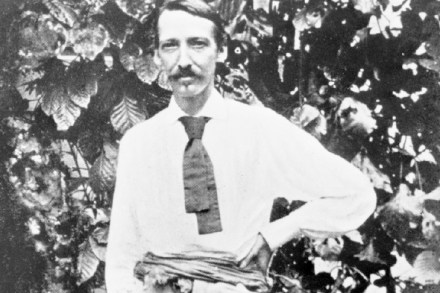
Towards the end of his life, Robert Louis Stevenson travelled widely in the central and southern Pacific Ocean. As well as the region’s exotic reputation, he was drawn by hopes that its benign climate would alleviate his chronic bronchial problems. In 1889 he arrived in Samoa and decided to settle there. He was a hit with the locals. Unlike so many of his peers, he declined to dismiss them as savages. Certainly, he was scathing about their disregard for property rights, which he labelled communism, and he found some of the women’s dancing obscene. But Joseph Farrell tells us that Stevenson was relaxed about extensive tattoos and scanty attire, and that he was a willing participant in kava drinking (kava is a narcotic plant extract, recently banned in the UK).

Rumbles in the jungle

From our UK edition

A CIA agent, a naive young filmmaker, a dilettante heir and a lost Mayan temple form the basis of Ned Beauman’s latest, and arguably most impressive, novel. Two rival expeditions set off from the United States to the jungles of Honduras to find the temple — one with the intention of using it as a location in which to film an absurd comedy, the other determined to disassemble it and take it back to New York. The two sides clash, each refusing to give way. The weeks roll into years; and life around the temple, populated with a disparate and distinct array of characters, steadily deteriorates into greater savagery. Meanwhile, Zonulet, rogue CIA agent (and primary narrator), under internal investigation, needs to unlock the secrets of the temple to prove his innocence.

Return to the lost city

From our UK edition

During a press interview in Bombay about his latest book, the author-narrator of Friend of My Youth feels ‘a surge of bile’ against the novel. That imperialist bully of a genre has ‘squatted on the writer’s life’ and defines his ‘sense of worth or lack of it’. Our narrator, as it happens, is named ‘Amit Chaudhuri’. The circumstances of his return to the Indian city of his youth (but not his birth) match in many respects the author’s biographical data. He’s talking, for a start, about The Immortals, the Bombay-set novel about musicians that Chaudhuri published in 2009.

The violence of poverty

From our UK edition

Neel Mukherjee has had a two-handed literary career, working as a reviewer of other people’s novels and writing his own. In 2014, his second novel, The Lives of Others, was shortlisted for the Man Booker Prize. His latest book is a state-of-the-globalised-nation novel which gives human particularity to those deadened concepts we pass around such as migration, inequality and neoliberalism. A State of Freedom breaks into five chapters, each telling the story of a distinct individual in India, whose connection to the others is only fully revealed in the final pages. Mukherjee has observed wryly that due to stereo-typical ideas about the Indian novel, whatever their formal properties, his fictions tend to be read as family sagas.

A clash of creeds

From our UK edition

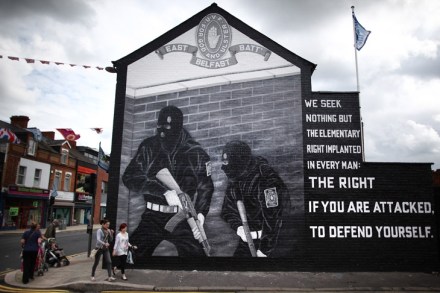
This is a very modern novel. Terrorist atrocity sits side by side with the familiar and the mundane. Where better for this to happen than in Northern Ireland? At the Day’s End pub ‘two eejits in Halloween masks’ enter the bar; ‘Trick or treat,’ they shout. ‘Fut-fut-fut-fut went the gun.’ A woman screams, ‘then a very fast piece of metal entered the side of her head and she stopped’. Throughout the first half of the book, the horror of the pub massacre alternates with the narration of an ordinary family’s home life.

Can these bones live?

From our UK edition

BBC Radio 4  – The Reith lectures A few years back, before I began writing novels about the Tudors, my partner and I bought a new-build house in Surrey. We bought it off-plan, and watched it grow out of an open field. The site looked like a battlefield from the Great War. It was a churned-up wasteland filled with shattering noise, and if you visited it after working hours, you felt as if you had arrived in the middle of a temporary truce, and the ground beneath your feet was still shaking. There was a sea of mud in which stood pipes and half-built walls and shrouded piles of bricks, and abandoned diggers stood in ditches, their jaws encrusted with clay. The evenings were silent. There was no birdsong, because no trees: nature had been eradicated.

Letters | 22 June 2016

From our UK edition

European identity Sir: Alexander Chancellor (Long life, 18 June) echoes the widely accepted view of the European Union as a ‘bulwark against the nationalism that is rising again’. The European project was, of course, conceived as a means of averting the catastrophes that nationalism wreaked upon Europe during the 20th century. However, in practice the EU has stoked nationalism within its constituent member states. As a top-down, elite-driven process, EU integration has crucially failed to mobilise the masses in favour of a common European identity that transcends national allegiances. Combine this with a simultaneous erosion of state sovereignty and the EU’s democratic deficit, and it is not difficult to understand why nationalist sentiment has again resurfaced.

The books the Nazis didn’t burn

From our UK edition

For one who has, since boyhood, regarded the secondhand bookshop as a paradise of total immersion, it is quite shocking to discover Albatross, an unknown imprint from the English literary past. Before Albatross there was Tauchnitz, the Leipzig firm which for 100 years cornered the market in English language books outside the territories of the British Empire and the USA. One often comes across Tauchnitz and I have two of its editions: a Thomas de Quincey, with a stamp from a circulating library in Lausanne; and a Ruskin, with one from a British club in Portugal. I only keep them as curiosities, because normally I avoid Tauchnitz editions: cheap boards with awful print on awful paper.

Redemption for the Ripper

From our UK edition

In the autumn of 1888 London was in a state of terrified excitement over Jack the Ripper. There had never been a killer like this in England before, wrote Meredith Townsend and Richard Holt Hutton, the joint editors of The Spectator. They congratulated the British public on not succumbing to the continental habit of lynching (‘In Naples the doctors would have perished, in Berlin the Jews’) but warned that ‘this devil’ might never be caught. By January 1889, Townsend and Hutton were calling for an end to all the ‘morbid interest’ in the Ripper’s crimes.

Undone by love

From our UK edition

On the Whitsun weekend of 1935 an art student called Denton Welch was knocked off his bicycle by a car and suffered catastrophic injuries, including a fractured spine. Although he made a remarkable partial recovery, he subsequently endured regular bouts of disabling illness, and would die in 1948 aged only 33. Welch continued to paint after the accident, but also began writing the autobiographical fiction for which he is now best known, publishing his first novel, Maiden Voyage, in 1943. By this time he was living in a chauffeur’s flat over a garage in rural Kent.

Perfect Sunday evening schmaltz

From our UK edition

Set in rural England in 1911, Tim Pears’s latest novel tells of a friendship between 12-year-old Leo, a precocious carter, and Lottie, the daughter of the master of the farm on which he and his father work. The Horseman is the first instalment of what will be a trilogy, and it is perhaps for this reason that the pacing of its plot feels somewhat preambular: Leo and Lottie bond sporadically over a shared love of animals, but little else of note happens until the very end. It is the setting rather than the story that is foregrounded in these pages.

The Dwelling

From our UK edition

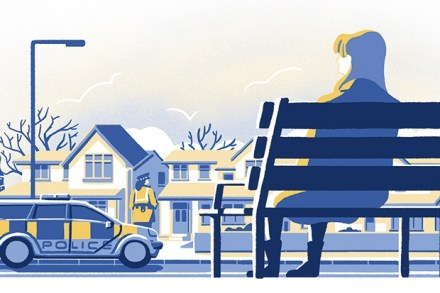
Charlie Zailer wasn’t sure if she’d won or lost. On the victory side of the equation, she’d managed to avoid spending Christmas Day with her sister, and she’d successfully blamed it on work. Her ‘Sorry, but I have to go in for at least a few hours’, delivered in a tone that suggested it was the fault of someone intransigent in a position of authority, had been accepted without question. On the defeat side, here she was: at work, by choice, with a cold steak-and-potato pasty in her bag as a Christmas dinner substitute, struggling to communicate with a stranger who’d judged her to be not worth speaking to. Was it her karmic comeuppance for avoiding her so-called loved ones at Christmas?

Whatever happened to Sir George? A festive finale for an eventful year

From our UK edition

Many (well, several) of you asked me what happened to George, the supermarket chairman who was the anti-hero of my Christmas fable last year. So I tracked him down, somewhere in the provinces, to bring you another episode… ‘Five minutes, Sir George,’ said a young man in black. ‘New boobs OK?’ George nodded, adjusted his embonpoint, and looked at himself in the full-length mirror. How the hell had it come to this? Actually 2016 had begun well. Readers may recall last December’s ‘Free Turkey’ incident, in which a boardroom invasion by carol-singing Santas, led by George’s student son Simon, coerced the supermarket group into giving Christmas fare to the poor in the spirit of King Wenceslas.

Dark and graphic

From our UK edition

A woman birthing bloated speckled eggs from her supernaturally swollen womb. Sushi screaming and squirming. A skull-shaped sweet, bearing the message, ‘I was you.’ Doubting yourself. Knowing you don’t love your girlfriend. Waking beside someone beautiful and new, only to notice a filigree of knife-scars etched across her breasts. If, sensitive reader, these ingredients make you inclined to do a runner (your finger already hooked around the next, less distressing page), then go right ahead. Because Charles Burns’s Last Look (illustrated above) clearly isn’t your kind of book. But if you’re in two or three minds about this, then please hesitate, because I’m not 100 per cent sure, but I think it may be a masterpiece.

In life divided

From our UK edition

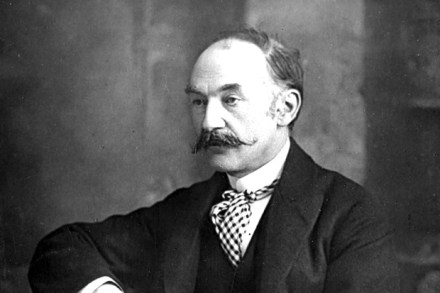
The ten pallbearers at Thomas Hardy’s funeral in Westminster Abbey on 16 January 1928 included Kipling, Barrie, Housman, Gosse, Galsworthy, Shaw and both the prime minister and leader of the oppposition. This distinguished gathering was not strictly necessary for the job at hand, because Hardy’s coffin merely contained his ashes — all that there was room for in Poets’ Corner. At exactly the same time in Dorset, at a smaller funeral, a casket containing Hardy’s unincinerated heart was being borne to its final resting place alongside his parents and his first wife in the churchyard at Stinsford.

Tales out of school | 25 August 2016

From our UK edition

At first glance Sean O’Brien’s new novel appears to focus on England’s devotion to the past. Even its title carries the sense and long-sustained rhythm of things going on as before. As if to underscore the point, Once Again Assembled Here is set in the autumn of 1968, a year often portrayed in fiction to describe a revolt into the new, but which in O’Brien’s novel merely serves as a reminder that whatever ideas were being cooked up elsewhere, here tradition and continuity would prevail. Here, in this case, is Blake’s, a jingoistic public school on the outskirts of a city still marked by the Luftwaffe’s bombing raids.

Losing the plot | 4 August 2016

From our UK edition

Consider it commercially. So powerful is the pull of the Potter franchise that the characters could simply re-enact the plot of ‘Incy-Wincy Spider’ and the fans would swoon with joy. The stage show has been written by a two-man committee, Jack Thorne and John Tiffany, with the help of billionaire equality campaigner J.K. Rowling. Harry is now 37 and working as a Whitehall clodhopper at the Ministry of Magic. He’s troubled by his stompy bed-wetter of a son, Albus, whose tantrums cause the middle-aged miracle-worker to suffer agonies of weepy self-doubt. Together they visit Hogwarts and the multifarious plotlines start to punch each other in the face.

The faceless man in the bowler hat

From our UK edition

Surrealism was, at least initially, as much about writing as painting. A plaque on the Hotel des Grands Hommes in Paris’s Place du Pantheon records that the oneiric movement began in 1919 when André Breton and Philippe Soupault invented ‘l’ecriture automatique’ at numéro 17. Automatic writing, with consciousness suspended, was supposed to open a conduit to an internal dreamworld. René Magritte (1898–1967) became one of the most famous Surrealist painters, but he wrote throughout his life: detective stories, manifestoes, criticism, essays, prose-poems, lectures, surreal bric-a-brac. His Ecrits Complets was published by Flammarion in 1979 and ran to 764 pages.

Beat echoes

From our UK edition

Laid out flat, running the length of the exhibition, the original scroll of Jack Kerouac’s On the Road forms the spine of the large Beat Generation show at the Pompidou Centre in Paris. Even for those familiar with the published version of the manuscript seeing this holy relic — the founding document for all sects of Beat worshippers — is a powerful experience. For about a minute. It’s everything else — the movies, the posters, the paraphernalia — that takes the time and generates an exhibition on such a tremendous scale. But how could it not sprawl? You start with the writers — Kerouac, Allen Ginsberg and William Burroughs — and before you know it there’s jazz, Neal Cassady, the Merry Pranksters, acid, you name it.