Federal reserve

The US currency is under attack like never before

It was, on the surface, a fairly routine proposal. Officials from the BRICS nations, made up of Brazil, Russia, India, China and South Africa, have decided to discuss, at a summit in New Delhi later this year, how to deepen trade and collaboration. No one was paying very much attention when the decision was made. And yet, according to a report in the well-informed newspaper Berliner Zeitung, a resolution was quietly suggested that might turn the global monetary system upside down. It was the start of what might be termed the “plot against the dollar.” America’s currency is likely to face its most serious challenge of the post-World War Two era. BRICS Pay may not sound very exciting.

What to make of Kevin Warsh

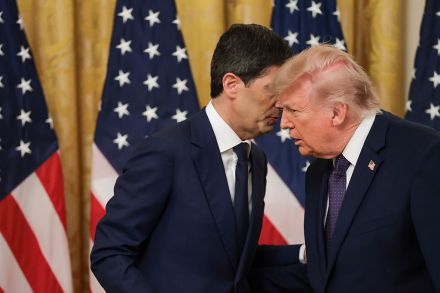
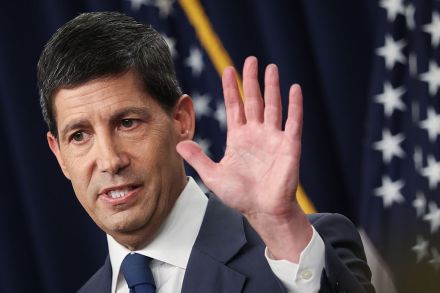
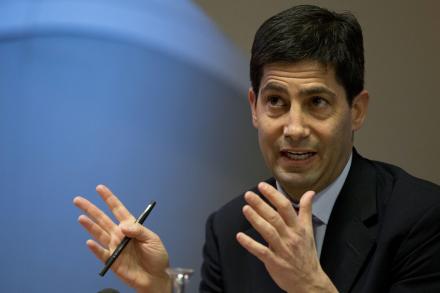
The news broke this morning that Donald Trump has, after considerable deliberation, settled on Kevin Warsh as his nominee to replace Jerome Powell as chairman of the Federal Reserve. "I have known Kevin for a long period of time," said Trump, on Truth Social. "There’s no doubt that he will go down as one of the GREAT Fed Chairmen, maybe the best." "On top of everything else," added the Commander-in-Chief, "he is 'central casting' and he will never let you down." The use of the phrase "central casting" shows Trump’s reality TV brain at work. The President likes people in major government positions who look the part on screen. Inevitably, senior Democrats are attacking Warsh’s nomination as Trump’s "latest attempt to seize control of the Fed.

Is the Supreme Court poised to protect the Fed from Trump?

Rarely has the ideologically divided US Supreme Court seemed so much on the same wavelength. And that is not good news for President Trump.In arguments Wednesday in a case that centers on President Trump’s authority to fire members of the Federal Reserve, the US central bank, both Republican and Democratic appointees suggested giving the president unfettered control would harm financial markets and damage public confidence.“Your position – no judicial review, very low bar (for dismissal) and that the president alone makes the determination – would weaken if not shatter the independence of the Federal Reserve,” said Justice Brett Kavanaugh in an exchange with US Solicitor General John Sauer, representing the Trump administration.

Lisa Cook

The trouble with Jerome Powell

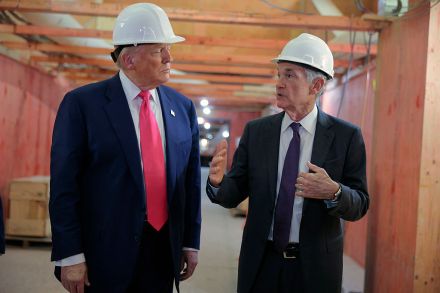
Lost in the hysterical media bleating about a new criminal investigation into Jerome Powell is any attempt to report fairly on his alleged transgressions. The singular lens through which the investigation is being reported in many openly and not-so-openly left leaning outlets is that it is Donald Trump's revenge after Powell refused to do as instructed and lower interest rates But the aperture needs to be widened to see the full picture: the case is about more than the Chair of the Federal Reserve not bending the knee. It is about Powell's competency as the nation’s chief money man after presiding over the central bank’s vast and scandalous renovation project – that started at $1.9 billion, now stands at $2.

Powell

Can Trump fire Lisa Cook for cooking the books?

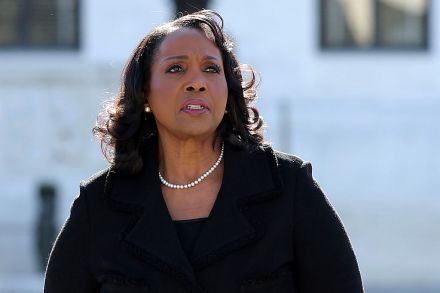
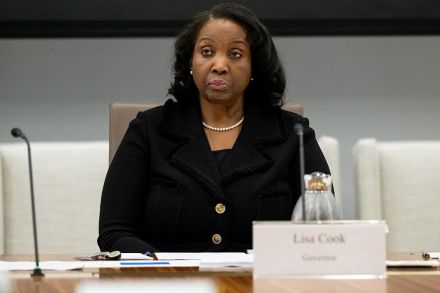
President’s Trump’s efforts to reign in the administrative state and prod the Federal Reserve to adopt more Trumpian policies took a dramatic turn when he ousted Dr. Lisa D. Cook, an alleged miscreant, from the Federal Reserve’s Board of Governors last week. The drama, and there’s always high drama in Trump World, unfolded after Federal Housing Finance Agency Director Bill Pulte made a criminal referral to the U.S. Department of Justice based on Cook’s apparently falsified mortgage documents for homes in both Ann Arbor, Michigan as well as Atlanta, Georgia. Cook claimed the Ann Arbor house as her primary residence, which would allow her to obtain more favorable financing terms. Just two weeks later, Cook claimed her Atlanta condominium as her primary residence as well.

Lisa Cook

Trump’s command economy

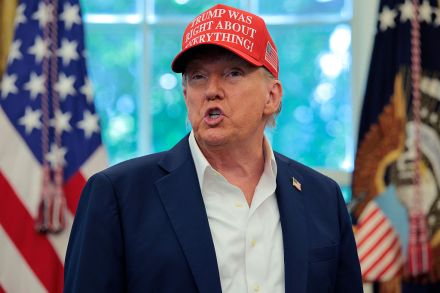
Donald Trump never made a secret of the fact that he wanted to be a commanding president but it wasn’t clear that it included a command economy. In the past few months, though, Trump has been steadily meddling with it, ranging from his insistence on a 15 percent cut of the profits from his threats against computer chip manufacturers Nvidia and AMD to his threats against the independence of the Federal Reserve – including his peremptory demand that Fed Governor Lisa Cook resign, which she has vowed to resist. Others are not as resistant. It appears that Trump has successfully extorted a cool $10 billion from Intel CEO Lip-Bu Tan whom he has previously derided as in cahoots with China. Trump is depicting his move as a grand bargain that will benefit both sides.

Donald Trump

Don’t bet on the Trump economy

The Trump White House took a victory lap on Monday, declaring in its newsletter that the American economy is back – back bigger and better than ever. Core inflation is down. Industrial production is up. Claims for unemployment dropped. Tariff revenue rose. The newsletter even cites the Wall Street Journal—otherwise in bad odor in the Trump White House – for decreeing that the American economy is “regaining its swagger.” Is it time to splurge on a fancy vacation? As it happens, I’m currently visiting Vermont where the number of tourists is distinctly lower than in previous years.

Economy

Trump should bring the Fed to heel

President Trump’s criticism of Jay Powell has increasingly triggered calls for the Federal Reserve’s independence. But those defending Powell’s autonomy are making ahistorical claims about the Fed’s relationship to the executive and legislative branches of government: the Fed has never been independent. The president appoints the Fed’s chairman. The bank enjoys broad authority to implement the policies necessary to achieve its mandates of stable prices, full employment and interest-rate stability, but these objectives are defined by Congress and could be altered by Congress. Congress created the Federal Reserve in 1913 and has amended the Federal Reserve Act more than 200 times. It could do so again.

jerome powell

Are you MAGA or in DRAG-A?

Trash talk Who gets to call themselves MAGA these days, anyway? Politico Playbook declared this weekend that “MAGA is whatever Trump decides it will be” – the administration’s go-to defense when the President does something the further-right side of his base doesn’t care for, such as dispatching military support to Ukraine, say, or running interference for the Ghost of Jeffrey Epstein. Heading into the midterms – and we’re past the halfway point of 2025, so we are heading into the midterms – Republican candidates up and down the country are already attempting to bill themselves as the most “MAGA” in the field, in hope of garnering a Trump endorsement that could see them win office.

nate morris maga drag-a

Trump should have the power to fire the Fed chair

The Chair of the Federal Reserve is arguably the most powerful economic official in the United States. He’s also the least accountable. He sets borrowing costs for households and businesses, opens lending windows to banks deemed “too big to fail,” and decides when to tame or ignite inflationary forces. Unlike the Treasury Secretary or even the President himself, he answers to no one. That may soon change. In Trump v. Wilcox, the Supreme Court is weighing whether the President should be allowed to remove the head of an independent agency.

Fed

Powell pays for past mistakes

Powell pays for past mistakes In the summer of 2020, Fed chair Jerome Powell could not have been clearer. “We’re not thinking about raising rates,” said Powell, before doubling down: “We’re not even thinking about thinking about raising rates.”   Things, as we now know, turned out a little differently. The months marched on, and with the Biden administration determined to spend, spend, spend, inflation went from “high class problem” to “transitory” to the biggest problem facing the US economy. Powell and his Fed colleagues went from not thinking about thinking about raising rates to, well, raising rates. From virtually zero around this time last year to 4.75 percent as of January.

jerome powell

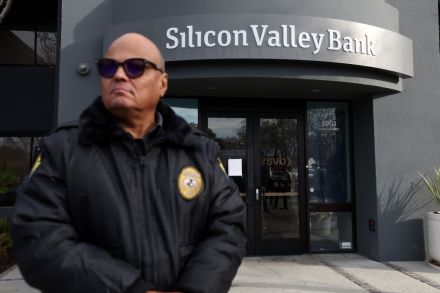
Why SVB was more than just a Big Tech bank

Silicon Valley has finally started to breathe easy, though not too easy. It has been a tense few days for everyone in the technology industry. Startup founders, their employees, their investors, lawyers, accountants, doctors, and countless others who make a living from the innovation ecosystem have been suffering from collective apprehension. The culprit was the seemingly sudden failure of Silicon Valley Bank, or SVB, as it was known around Silicon Valley. SVB, which started as a small regional bank in 1983, transformed itself into a technology-focused bank in the early Nineties. Its rise reflected the growing fortunes of the technology industry at large.

Biden will never let Silicon Valley fail

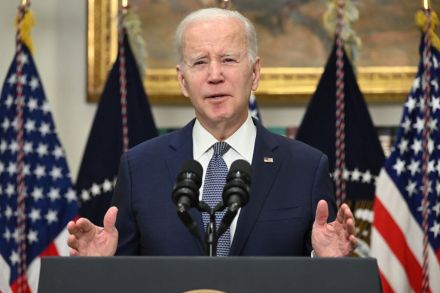
After a bank run on Silicon Valley Bank left the institution in ruins, the Federal Reserve announced it would make whole the bank’s customers, including those with uninsured deposits in excess of $250,000, which should have made them ineligible for the Deposit Insurance Fund. President Biden promised the American people that this was not a bailout because no losses would be borne by taxpayers — a claim the Wall Street Journal assessed as a “whopper.” But the debate we should be having is not over the definition of the authorities' actions, but how to judge them morally — especially given how the Fed has been trying to tame inflation for the past two years.

Here comes the next recession

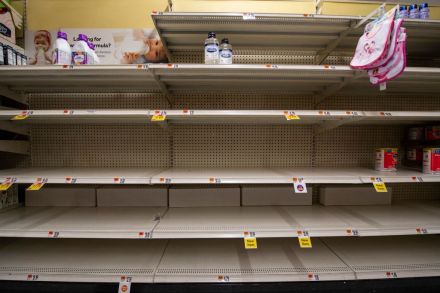
There is no shortage of reasons to feel gloomy about the American economy right now. First, there’s inflation. In 2021, the Biden administration claimed that the cost of a summer barbecue had declined by 16 cents from the year before. It probably now wishes it hadn’t made that claim. This summer, the cost of that barbecue is up not 16 cents but 17 percent. Hot dogs are up 37 percent over a year ago. This is the highest inflation in forty years, with the consumer price index up 8.6 percent from a year ago. Some necessities, such as gasoline and food, have risen even more sharply, with gas having gone from $2.18 a gallon when Biden was inaugurated to $5.

Is stagflation in America’s future?

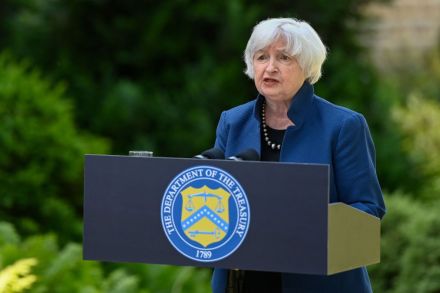
All is not well with the economy. It’s true that 390,000 jobs were added last month, exceeding estimates, while hourly income is up 5.2 percent since May 2021. However, analysts guessed unemployment would drop a tenth of a percent, which didn’t happen. Gas prices keep rising, as GasBuddy.com reports a 43 cent jump over this time last month. It’s enough of a problem that OPEC has agreed to increase production in July and August. The economy remains stricken by inflation, with Treasury Secretary Janet Yellen issuing a mea maxima culpa earlier this week. “I think I was wrong then about the path that inflation would take," she told CNN on Tuesday.

Higher taxes won’t fix inflation

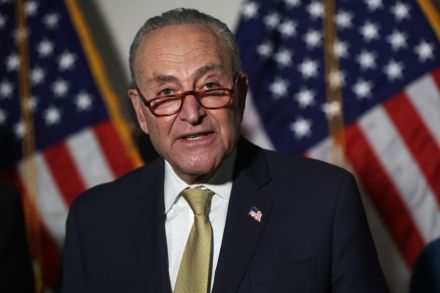
Senate Majority Leader Chuck Schumer knows how to fix inflation: higher taxes. “If you want to get rid of inflation, the only way to do it is to undo a lot of the Trump tax cuts and raise rates,” surmised the New York Democrat to reporters on Tuesday, after meeting with West Virginia Senator Joe Manchin about the budget. “No Republican is ever going to do that. So the only way to get rid of inflation is through reconciliation.” Manchin saw it slightly differently, portraying tax increases as budget reduction tools. He believes debt reduction is “the only way” to fight an inflation problem that threatens to wash away Democratic majorities in Congress.

democrats

The government didn’t miss inflation, they ignored it

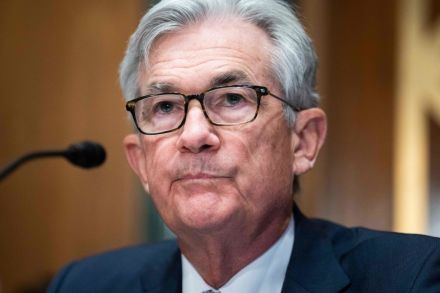
Federal Reserve Chairman Jerome Powell looked calm when he testified before the Senate Banking Committee in February 2021. He’d just been asked by the folksy Louisiana senator John Kennedy whether he had concerns about the dollar supply being the highest it had been since 1946. “Right now, I would say the growth of M2, which is quite substantial, doesn't really have important implications for the economic outlook,” Powell stated. “M2 was removed some years ago from the standard list of leading indicators, and just that classic relationship between monetary aggregates and economic growth in the size of the economy, it just no longer holds. We've had big growth of monetary aggregates at various times without inflation, so something we have to unlearn, I guess.

interest inflation

What does the Fed’s interest rate hike mean?

The Federal Reserve raised interest rates by 0.25 percent last week, the first increase since December 2018. Back then, Donald Trump had been very vocal in his criticisms of the Fed and its chair Jerome Powell, demanding no more rate increases. There was no resistance from the White House this time with press secretary Jen Psaki saying that the Biden administration respected the Fed’s independence. Powell called the rate increase necessary due to inflation coupled with rising prices. “As we emphasize in our policy statement, with appropriate firming in the stance of monetary policy, we expect inflation to return to 2 percent while the labor market remains strong,” said Powell, before warning that it will take longer than expected for inflation to sink.

interest inflation

The Federal Reserve is still political

President Joe Biden’s re-nomination of Jerome Powell as Federal Reserve chairman came as no surprise to financial analysts. Powell remained the most likely candidate given his ability to schmooze and glad-hand with politicians within and outside the administration. He earned the title of “best bureaucrat in Washington, DC” by receiving endorsements from both National Review and the American Prospect despite their divergent policy views. A corresponding vote in the Senate seems preordained, unless Massachusetts Senator Elizabeth Warren gets her way and forces a new pick. “Reappointing Powell is the safest route here,” the Cato Institute’s Norbert Michel told me in an email after Powell’s nomination on Monday.

Powell orders media blackout for Fed staff

Jay Powell, the Federal Reserve Chairman, has banned any public appearances by any member of the Fed, Cockburn hears. Appearances at conferences have been canceled, all scheduled interviews have been abandoned and any comments on or off the record are outlawed. This unprecedented action is a reflection of two pressures. First, there are growing economic indicators that suggest the US is heading into a recession with the Dow plunging 800 points on Wednesday. Second, relations with the White House have reached a new low. President Trump has pinned the success of his presidency upon a strong economy and his qualifications as a businessman who understands the economy. If a recession takes hold, Trump believes his reputation will be destroyed and his chances of reelection dimmed.

jay powell fed