Extraterrestrials

Are aliens really out there?

From our US edition

We have all wondered if we are alone in the cosmos; if beings born under the light of another star embark on fabulous voyages between the stars to reach us – their cosmic cousins. Those who believe the Earth has been visited by aliens must think all their dreams are coming true. The recent rumors are that Donald Trump will break the “truth embargo” and make an alien disclosure speech on May 1. Then there is Steven Spielberg’s film about aliens, Disclosure Day, due out in the summer. This is surely no coincidence. The UFO community is a money-making juggernaut that cannot change direction YouTuber Brian Tyler Cohen recently interviewed Barack Obama and asked what many people want to know from a US President, current or former: are aliens real? All presidents are asked this.

A surprising number of scientists believe in little green men

In 1928, a young physicist and engineer named Karl Jansky began working at Bell Telephone Laboratories, tasked with investigating any sources of static that could interfere with long-distance radio communication. Cobbling together a system of antennae on a merry-go-round, he successfully found that thunderstorms were annoying in just this way. But there was a small bit of noise left over, and he kept scanning the sky to locate the culprit. To his surprise, he eventually found it was coming from Sagittarius in the centre of the Milky Way. He christened it ‘star-noise’. We now know that he had correctly identified the emanations from a supermassive black hole; and, quite by accident, he had invented the new science of radio astronomy.

Patterns in the grass: The Perfect Golden Circle, by Benjamin Myers, reviewed

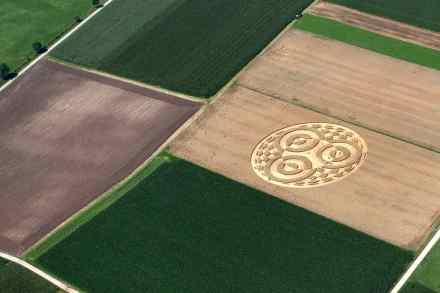
The Perfect Golden Circle is ostensibly about male friendship. Two men, flotsam of the 1980s – Calvert, a Falklands veteran, and Redbone, a failed punk musician – tramp across the English countryside in 1989 making crop circles. ‘Redburn sees life as a thrilling continuum, Calvert considers it a conundrum that can never be solved, only endured.’ How these outcasts met, or what drew them to each other apart from poor personal hygiene, is never made clear. Like two feral Hobbits, they rattle about the dystopian and degraded shires of an England in the death throes of the Thatcher era, making ever more elaborate crop circles. The reader is informed, not infrequently, that Calvert suffered trauma during the Falklands war.