Exhibitions

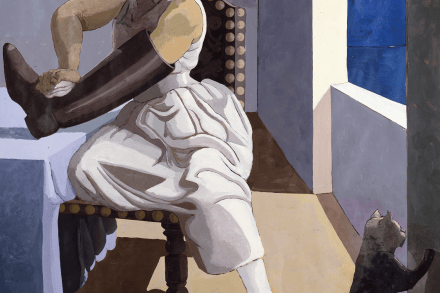
The odd couple: Austen and Turner at 250

From our UK edition

History is full of odd couples: famous but unrelated people who happen to have been born in the same year. 1809: Charles Darwin and Abraham Lincoln. 1926: Queen Elizabeth II and Marilyn Monroe. Yet few historical pairings are as unlikely as the novelist Jane Austen and the painter J.M.W. Turner, born within a few months of each other in 1775. Usually the only time these two cultural icons encounter one another is in our purses or wallets: Turner depicted as a dashing young Romantic on the £20 note, Austen looking demure and doe-eyed (a heavily airbrushed version of the portrait originally sketched by her sister Cassandra) on the £10 note. Otherwise they might appear to have little in common.

Decent redesign, ravishing rehang: the new-look National Gallery reviewed

From our UK edition

A little under a year ago, it emerged that builders working on the redevelopment of the National Gallery’s Sainsbury Wing had discovered an unusual time capsule embedded in a pillar they had been instructed to knock down. It contained a letter signed by Sir John Sainsbury, who, along with his brothers, had thrown the museum a £50 million lifeline to realise the extension in 1990; and clearly, he wasn’t happy with the way his money was being spent. He expressed this with no small amount of elegance: ‘If you have found this note,’ his missive read, ‘you must be engaged in demolishing one of the false columns that have been placed in the foyer of the Sainsbury Wing of the National Gallery.

Art deco gave veneer and frivolity a bad name

From our UK edition

The jazz style was the blowsy filling between the noxious crusts of two world wars. More than 30 years passed between its flourishing and its remonikered second coming as art deco, no longer gaudy ephemera, now a legitimate addition to the inventory of fashions. The coinage was initially ascribed to the antique dealer John Jesse. It is, more probably, Bevis Hillier’s. He was a scholar of the style, then organiser of its first retrospective, far ahead of the game, in Minneapolis-St Paul in 1971.

Poise and gentleness: Hiroshige, at the British Museum, reviewed

From our UK edition

Why is Hiroshige’s work so delightful? While his close predecessor Hokusai has more drama in his draughtsmanship, Hiroshige’s pastoral visions conjure a sense of timeless continuity that appealed to his contemporaries as much as to present-day teens who love the merch. His is a world in which everything has happened before, and will happen again. People race for shelter from a sudden shower of rain; a finely dressed lady adjusts her slipping belt. Human life seems small and predictable against his vast mountains and limpid lakes.

Why were the Scots so much better at painting than the English?

From our UK edition

This exhibition is awash with luscious brushstrokes, but then that’s to be expected: it’s full of Scottish painting. Before the barren era of conceptual art, which most hope is over, people often observed that the Scots could paint while the English could draw. Why is a bit of mystery, but it was true right through the 18th and 19th centuries and well into the 20th. The Dovecot Studios exhibition opens with John Duncan Fergusson’s portrait of his lover and first muse, Jean Maconochie, painted about 1902. It’s a fabulous eyeful of brush marks.

Why is the National Portrait Gallery’s collection so poor?

From our UK edition

The recent announcement that the National Portrait Gallery has purchased two works by Sonia Boyce and Hew Locke for its collection came as something of a shock. The surprise? The art was actually good. Boyce’s quarterised collage ‘From Someone Else’s Fear Fantasy (A Case Of Mistaken Identity? Well This Is No Bed Of Roses) To Metamorphosis’ (1987), reminiscent of an enlarged and doodled upon set of passport photographs is a complex work of art made better the more attention you give it; Locke’s maximalist approach with the bust ‘Souvenir 17 (Albert Edward, Prince of Wales)’ (2024) may not be to everyone’s taste, but his sculpture is full of humour and pathos.

Prepare to feel nauseous at this School Dinners exhibition

From our UK edition

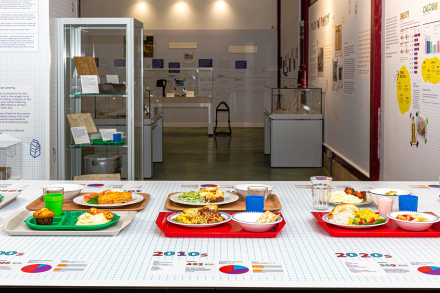
If your stomach turns when you walk past a Japanese restaurant with moulded plastic replicas of sushi on display, prepare to feel even more nauseous in the School Dinners exhibition at the Food Museum in Stowmarket, Suffolk. Here, moulded in that same plastic, in (if anything) even more garish colours, you’ll see a sample two-course school dinner from each decade from the 1940s to the 2020s. If orange PVC cod’s roe looks a bit disgusting, a heap of pale, lumpy, plastic 1970s mashed potato with over-boiled carrots is even worse. The sample plate from the 1940s contains chunks of dark brown liver polluting the inside of a jacket potato. (I’m not sure dinner ladies would have put liver inside a jacket potato in the 1940s.

The polarising poet, sculptor and ‘avant-gardener’ who maintained a private militia

From our UK edition

Not many artists engage in the maintenance of a private militia, and it seems fair to assume that those who do may be bound to polarise. The Scottish poet, sculptor, ‘avant-gardener’ and would-be revolutionary Ian Hamilton Finlay was just such a figure: and boy, did he polarise. To his fans, he is a cult figure in the true sense, a limitlessly inventive visionary whose Lanarkshire home and garden remain a site of pilgrimage. To his detractors – notably, a number of vocal Finlay-bashers in the English press – he was a crank, a provincial megalomaniac possessed of artistic, literary and dictatorial pretensions quite out of proportion to his ability.

Was Sir John Soane one of the first modernists?

From our UK edition

Sir John Soane’s story is a good one. Born in 1753 to a bricklayer, at 15 he was apprenticed to George Dance the Younger and at 18 had moved on to Henry Holland. Later came major commissions, a professorship, a knighthood and gold medals. Fame followed. Along the way he added an ‘e’ to his surname and married Eliza Smith, an heiress whose fortune helped him to buy three houses in Lincoln’s Inn Fields as well as the collection that still fills one of them, which he left to posterity as a museum when he died in 1837. Soane’s son compared the image of his father in a library to ‘a eunuch in a seraglo’ Success attracts critics, though, and one of the keenest was Soane’s estranged son George.

Cartier used to be a Timpson’s for the rich

From our UK edition

In the fall of, I suppose, 1962, my friend Jimmy Davison and I, window shopping on Fifth Avenue, bumped into the glamorous Venezuelan playboy-grandee Reinaldo Herrera. Jimmy asked where he was going. ‘I’m just nipping into Cartier. They’re fixing my skis,’ Reinaldo replied. Autres temps, autre moeurs. I doubt anyone today uses the world’s most famous jewellers as their local Timpson’s, though I suspect Cartier’s unrivalled in-house craftsmen could still run up a supple sapphire USB cable if requested. I doubt anyone today uses the world’s most famous jewellers as their local Timpson’s Because that was partly the firm’s point. Apart from the staggering banque-busting biggies, they, almost uniquely, made the most exquisite smaller things.

Why is the British Museum hiding its great Orthodox icons?

From our UK edition

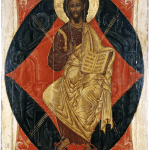
The long neglected art of Byzantium and early Christianity is returning to the world’s museums. Last November, the Louvre confirmed plans for a 3,000 square metre department dedicated to the Byzantine legacy and more than 20,000 works from Ethiopia to Russia that are currently scattered across the museum’s cabinets. Having been initially shelved a decade ago, this monumental undertaking is scheduled to open in 2027, signifying a pivotal moment for the Christian arts of the Eastern Roman Empire to become a serious curatorial subject in European museums once again. (A precursor to the new department established in 1954 lasted but 15 years.) Byzantine art has been the subject of serious study in universities only since the 1940s.

Wonderfully intimate: The Drawings of Victor Hugo, at the RA, reviewed

From our UK edition

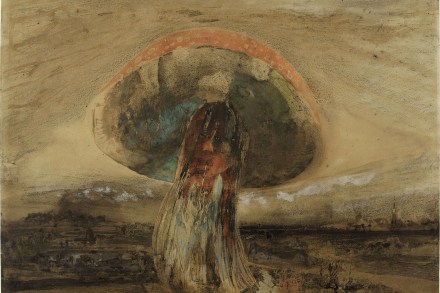
You feel so close to Victor Hugo in this exhibition. It’s as if you are at his elbow while he sighs at his standing desk at the top of his house on Guernsey, where he held France constantly in view as he worked. Here, frustrated by Les Misères (working title), he has thrown down his pen and moved to his art table, sloshing great washes of sepia ink across paper to form lowering clouds. And there, daydreaming, he has cut out a stencil of a castle, and placed it on a cloud of ink. (Hmm, ‘castle on a cloud’ – could make a nice lyric for a song one day…) Here is a person thinking with their pen – or rather, letting their pen think with them There is a wonderful intimacy to his travel sketchbooks, full of minutely well-observed brickwork and staircases.

Why was this fêted Mexican painter left out of the canon?

From our UK edition

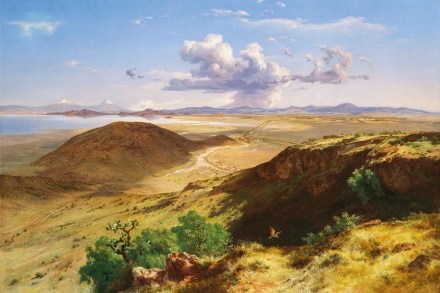
Think of a Mexican painting, and chances are you’ll conjure up an image of an eyebrow-knitted Frida Kahlo, or a riot of exotic figures by her husband Diego Rivera, or a brightly coloured guitarist by Rufino Tamayo. What you’re unlikely to have in mind is an earthy landscape with a dusty road leading to a nascent city, dotted with hyper-real plant life, and an eagle soaring under a vast, cloudy sky. This is ‘The Valley of Mexico from the Hill of Santa Isabel’ (1877), the finest work by a painter who was a household name in Mexico long before Kahlo, Rivera or Tamayo. And from next week, it and many others of his works will hang in London’s National Gallery, the first historical Latin American artist ever to have been exhibited there.

If ‘wokeness’ is over, can someone tell the Fitzwilliam Museum?

From our UK edition

Optimists believe that the tide of ‘wokeness’ is now ebbing. If so, the message has not yet reached Cambridge, whose wonderful university museum has its classical façade covered in sententious phrases in neon, and which has recently opened a new exhibition in agit-prop style: Rise Up: Resistance, Revolution, Abolition. Such activism is fully in step with the Museums Association, the curators’ club that instructs its members to turn their institutions into activist cells. If all this makes its founding benefactor Viscount Fitzwilliam turn in his grave, all the better: he is stigmatised as a profiteer from the slave trade, even before one reaches the cloakroom.

‘The possibilities of paint are never-ending’: Sir Frank Bowling interviewed

From our UK edition

‘I’m full of excitement waiting for this to dry out,’ Sir Frank Bowling exclaims. We are sitting in his studio, a room in a quiet Victorian yard that survives amid the tower blocks of Elephant and Castle. In front of us a semi-finished canvas – a glorious welter of yellow and orange in diverse modulations – is pinned to the wall. It’s executed in acrylics, a water-based material. Bowling, like Turner – one of his heroes – believes in using buckets of water, sometimes more or less literally. ‘I don’t always use conventional tools to mark the surface,’ he confides. ‘Sometimes marks are made by a brush, sometimes by simply flinging the paint at the canvas.’ Such matters have long fascinated Bowling.

The art of sexual innuendo

From our UK edition

Paula Rego’s 2021 retrospective at Tate Britain demonstrated that, among art critics, ambiguity is still highly prized as a measure of merit. Martin Gayford: ‘No one, including its creator, can be aware of everything that’s going on.’ Laura Cumming at least gave examples. Of ‘The Cadet and his Sister’ (1988), she commented: ‘Bondage – physical, emotional, familial – is always in the air.’ The adjectives in that nervous parenthesis are insurance, the critic spreading her bets. The picture shows an older, bigger sister, formally dressed, with her cadet brother in uniform, wearing white ceremonial gloves. Behind them, a careful vista of trees. The painting depicts a milieu of public formality. Except that she has removed her gloves to tie his shoe laces.

The true birthplace of the Renaissance

From our UK edition

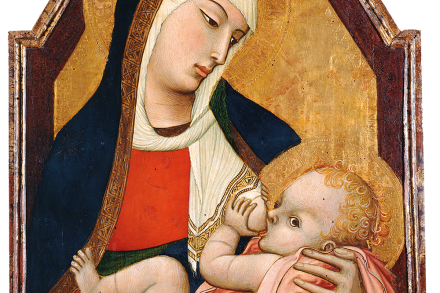
The baby reaches out to touch his mother’s scarf: he studies her face intently, and she focuses entirely on him. There is connection; there is familiarity; there is love. It could be one of the pictures on my phone from last weekend of my daughter with her six-month-old. In fact, it dates from Tuscany c.1290, and the mother and child are the Virgin Mary and Christ. It’s a small painting, tempera on wood; it’s the opener of the National Gallery’s new blockbuster, Siena: The Rise of Painting 1300-1350; and it’s there to make the show’s fundamental point, which is that its creator, the Sienese Duccio, introduced many of the painterly innovations that paved the way for the Renaissance. With this ‘Virgin and Child’, emotion takes centre stage.

The greatest paintings are always full of important unimportant things

From our UK edition

Goya to Impressionism: Masterpieces from the Oskar Reinhart Collection, at the Courtauld, consists of a selection of 25 absorbing paintings chosen from 207. I was disappointed but not surprised that one of the greatest paintings in the world, Pieter Bruegel the Elder’s ‘Die Anbetung der Könige im Schnee’ (The Adoration of the Kings in the Snow, 1563), didn’t make the journey from Winterthur in Switzerland. Too precious to put at risk. There is no requirement for a collector to accumulate thematically consistent paintings. Whim, availability, opportunism, taste, connoisseurship, pleasure, accident, catholicity all play their part. The Oskar Reinhart collection is gloriously heterogeneous, a series of bonnes bouches.

A blast: Leigh Bowery!, at Tate Modern, reviewed

From our UK edition

Tate Modern’s latest exhibition is a bizarre proposition on so many levels. Its subject, the Australian designer, performer, provocateur and club scenester Leigh Bowery, was by all accounts inescapable in London for much of the 1980s and early 1990s. Standing at well over 6ft and weighing 17st, he would have been a conspicuous presence on the capital’s streets even had he not adopted the berserk sci-fi drag attire that became his signature aesthetic. He appeared on TV, at Sadler’s Wells and in a ponderous suite of portraits by Lucian Freud. His life could be read as a kind of Gesamtkunstwerk, but he was not an artist in any conventional sense and there’s no explicit evidence here to suggest he ever identified as such.

Real artists have nothing to fear from AI

From our UK edition

Christie’s is making digital-art history again – or at least trying to. Between 20 February and 5 March, it is hosting Augmented Intelligence, the first major auction dedicated solely to AI-generated art. This follows a series of headline-grabbing stunts, including the first major sale of an AI-generated artwork in 2018 – ‘Portrait of Edmond de Belamy’ ($432,500) by the Paris-based collective Obvious – and the first NFT sale by a major auction house,  Beeple’s ‘Everydays: The First 5,000 Days’, which shattered expectations (and good taste) by selling for $69 million in 2021.