Exhibition

Witnessing Humanity: The Art of John Wilson is a must-see show

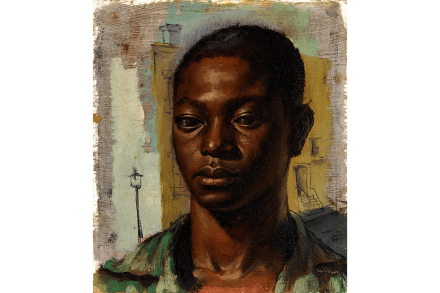
The Metropolitan Museum of Art’s Witnessing Humanity: The Art of John Wilson is a must-see show. Originating as an exhibition at Boston’s Museum of Fine Arts, the Met’s show is certainly the museum’s largest solo exhibition of an African-American artist’s work in recent memory, perhaps ever. It’s definitely the biggest-ever showing of Wilson’s work, but the Met is not patting itself on the back on these points. The show is a tribute to a fine artist of boundless talent, a painter of deeply felt and expertly rendered works, even if it will not rewrite any narratives of art history. Wilson (1922-2015) was an African-American artist of Guyanese descent who had a long and many-chaptered career.

Wilson

Ben Shahn’s work remains as timely as ever

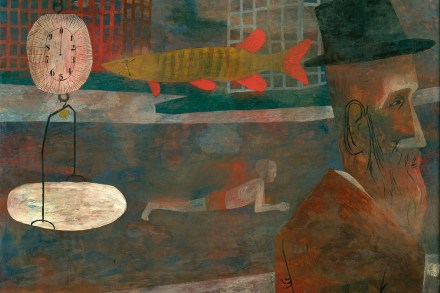
How can an artist express social and political dissent in a polarized, volatile time? Look no further than the sobering and rousing Ben Shahn: On Nonconformity. Throughout his decades-long career, Shahn (1898-1969) crafted paintings, murals, posters, drawings, photographs and prints chronicling the news of the world, with a focus on the suffering of society’s most wounded. This is the first major retrospective of his work to appear in the US since 1976. The country has changed, and yet Shahn’s work remains as timely as ever.  His social-realistic approach fell out of fashion as critics came to prefer abstract and pop art. But Shahn remained true to his own aesthetic, as the show’s 175 works demonstrate.

Shahn
McCartney

Eyes of the Storm revisits an era

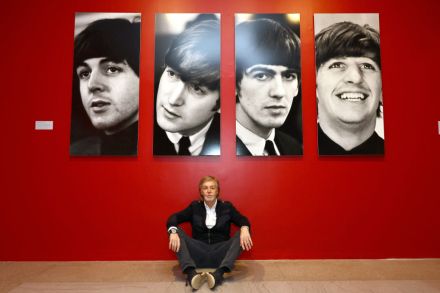
At Eyes of the Storm, the de Young Museum’s exhibition of photographs taken by Paul McCartney, mainly on the Beatles’ first American visit, the typical viewer will be surprised to find herself empathizing more with the rock stars than the audience. In early photos, the crowds – and the band members – are eager, curious and frank. But through the months and the cities and photoshoots, the Beatles learn to pose. They soon find themselves flattened by a camera’s gaze in a way all too familiar to just about everyone today. The collection opens with the Beatles’ British tour in 1963 and residency in Paris in early 1964. “We were just wondering at the world,” McCartney writes, “just excited about all these little things that were making up our lives.

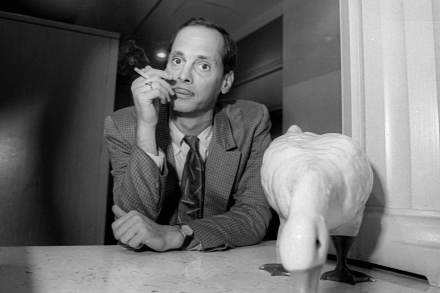
John Waters, the pope of cliché

A decade or so ago, I was on the phone with the filmmaker John Waters, discussing Juggalos, Jesus and Justin Bieber, when I called someone “white trash.” The once-cult-now-mainstream director cut me off. I don’t remember exactly what he said — the transcript is long since deleted — but Waters berated me, called me racist, and rehashed some version of his 1994 statement that “talking trash about ‘white trash’ is ‘the last racist thing you can say and get away with.

waters

Blues for Pablo

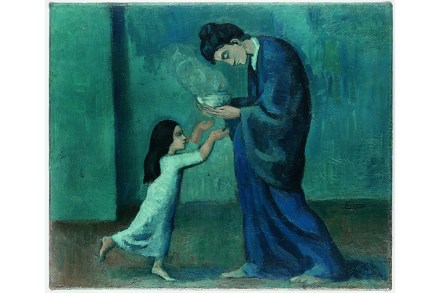
What is there left to say about Picasso? This question, posed by a colleague apropos of Picasso: Painting the Blue Period, an exhibition on display at the Phillips Collection in Washington, DC, is inevitable. There are few cultural figures whose life and accomplishments have been as exhaustively accounted for as the man born — take a breath! — Pablo Diego José Francisco de Paula Juan Nepomuceno María de los Remedios Cipriano de la Santísima Trinidad Ruiz y Picasso. Innumerable exhibitions, books, scholarly tracts and films have been devoted to this relentlessly protean artist. Even after his death almost fifty years ago — Picasso died in 1973 at the age of ninety-one — he looms large in the public consciousness.

picasso

Holbein at the Morgan

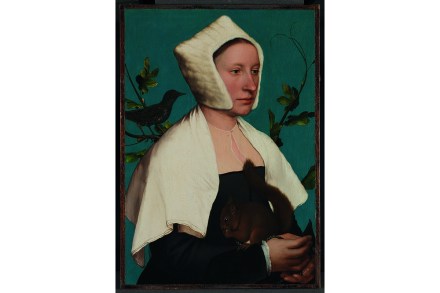
There’s a moment in portraiture when people started having a mind of their own. All of a sudden you see it in the faces: the eyes, the brow, the lip. We are no longer looking at a figure for all time — or even a sitter in a moment in time — but at something more like “me time.” The focus is not on outward appearances but inward looking. These people are lost in thought. That’s just where Hans Holbein the Younger, the great portraitist of the early sixteenth century, found them. The German artist, born into a family of painters around 1497, could conjure the smallest details at his fingertips. He quickly became the most sought-after portraitist in Europe and, by 1536, the court painter of Henry VIII (at a time when Henry himself was courting).

Holbein

Girls on film

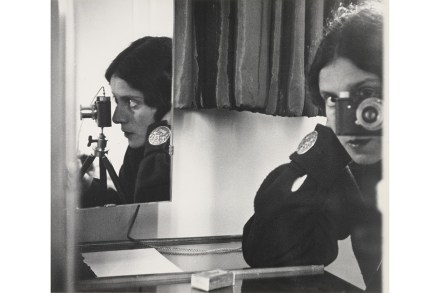
We are familiar with Dorothea Lange’s gritty photographs of Okies during the Dust Bowl. New Woman Behind the Camera, which opens this month at the Metropolitan Museum of Art, showcases Lange alongside over 120 other female photographers who refashioned modernist photography in the same years. Photography developed through an ambivalent relationship to high art: the camera was often seen as a medium for journalism or advertising. Yet the modernist works here showcase the flexibility of the form. Still, there are inherent tensions in an exhibit like this. Georgia O’Keeffe once declined an invitation to be included in an exhibit of ‘women artists’: she wanted to be seen as competing with the best, not as part of an inferior subgroup.

woman

Death in Venice, alive in New York

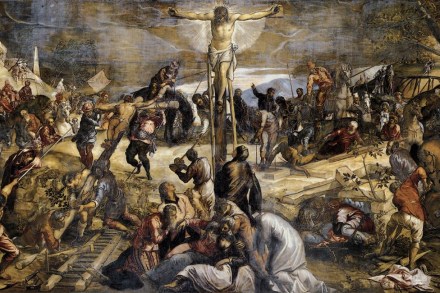
Il disegno di Michelangelo e il colorito di Tiziano: The drawing of Michelangelo and the colour of Titian. With these words, supposedly written on his studio wall, Jacopo Tintoretto staked his claim on cinquecento painting. We are lucky he failed on both counts. Tintoretto was no Michelangelo or Titian, but he could push paint like no one else in La Serenissima. Renaissance means ‘rebirth’, of course. Yet the paintings of Tintoretto can come as deadly shock. His ‘Crucifixion’ of 1565 in Venice’s Scuola Grande di San Rocco strikes like a thunderbolt. The painting is also the single best work of religious art in the Italian Renaissance. With Christ fixed to the cross front and centre, the action of this composition swirls around him like a dark cyclone.

tintoretto crucifixion