Evs

The Trump-Elon bromance is over

From our US edition

The Elon-Trump bromance may have breathed its last today, with their relationship descending into a social-media flame war – on their respective apps, of course. The source of the discord is Musk's opposition to the "Big, Beautiful Bill" presently being debated in the Senate, which, among other things, does not codify the cuts his Department of Government Efficiency had made since Trump's inauguration. The bill also strips away Biden-era tax credits for consumers who purchase electric vehicles, which had been benefiting Musk's firm Tesla. Musk took his grievances to his over 200 million X followers and, let's face it, everyone else on the app too. On Tuesday Musk wrote, "I’m sorry, but I just can’t stand it anymore.

elon maga

Inside the May issue: technology

From our US edition

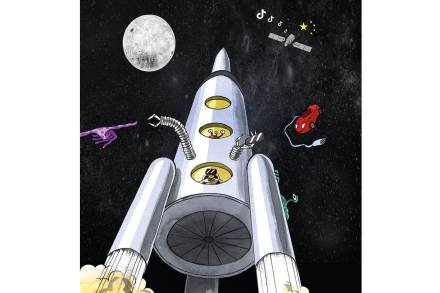
Western governments seem ill-prepared to grapple with rapidly advancing technology. Watch any congressional hearing where a crusty congressman tries to keep pace with Silicon Valley’s top “autists” if you need further evidence — and read Spencer A. Klavan’s analysis of the high-skill but low-status rejects uniting into a formidable social class. The Silent Generation and boomers simply cannot keep up. The Space Race is back on — and tycoons are eager to cash in on the final frontier. Shane Cashman dives into the new wild west of explorers and entrepreneurs commercializing the great unknown. Lionel Shriver brings us back to earth with a look at the electrical grid and our government’s push for green energy and electric vehicles.

technology

China cons US on green energy agenda

From our US edition

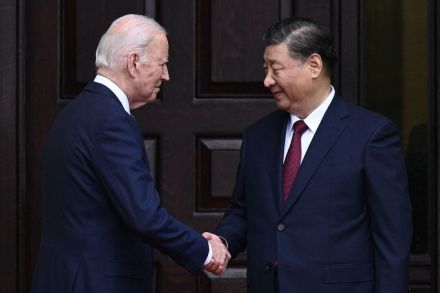
Right before President Biden and Chinese president Xi Jinping met in San Francisco this week, the US State Department and the Chinese Ministry of Ecology and Environment each released a statement on “enhancing cooperation to address climate change.”  “[T]he United States and China reaffirm their commitment to work jointly and together with other countries to address the climate crisis,” the Sunnylands Statement says. Addressing “energy transition,” the statement declares that both countries support pursuing efforts to triple renewable energy capacity globally by 2030 and accelerate renewable energy deployment as a substitute for fossil fuels.

The EV election?

From our US edition

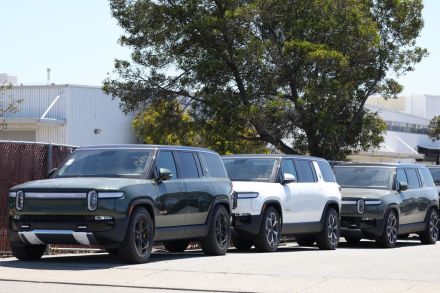
You can lead an electorate to the electronic vehicle charging station, but you can’t make them plug in.   That’s the lesson President Biden is learning as American consumers reject the “green” future the administration has been trying to mandate through the EPA’s proposed emissions standards and billions in EV subsidies and tax credits.   The American people, however, just aren’t buying the climate change is “even more frightening than a nuclear war” line Biden is selling.

Why you no longer need a driveway to go electric

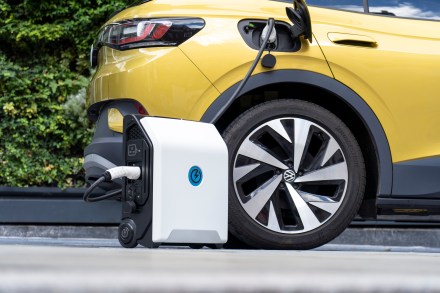
Entrepreneur Jonathan Carrier reckons more people would drive electric cars if they had portable chargers in their boots. The electrical equivalent of a can of petrol. So he's launching one. Called the ZipCharge Go, he claims it’s a design world first. There are portable battery packs that work with electric cars. Generally, these are designed for giant American recreational vehicles, some of which have their own solar panels, and if you search YouTube you’ll come across allegedly comic videos of people recharging moribund Teslas with petrol generators, but the Go has been designed from the off to charge vehicles, and has the necessary software to pair up with them.

The truth about electric cars

EVs have been easy to poke fun at over the years. Comedian Chris McCausland has a popular stand-up sketch about how Jaguar spent four years developing a space age noise for its electric i-Pace, only to silence it because people were looking skywards when they heard one coming towards them. And yet, despite their futuristic novelty, society has actually adjusted remarkably quickly to the advent of electric cars; they are fast becoming commonplace on British roads. Last year the Government’s EHVS home charging point grant scheme, which ends on 21 March, helped fund almost 61,480 charging units, and last November just under 19 per cent of Britain’s new car market was taken by electric models. These vehicles are no longer niche.