Evelyn waugh

Novel advice for incoming STEM freshmen

When college and university students arrive on campus this month, they will choose their courses with an eye on future summer internship and postgraduate career opportunities. Enrollment in the humanities is in free-fall, while the rapid growth of American technology companies suggests that STEM is the only path to a prosperous career. But as the novelist Sigrid Undset writes, 'there is nothing in the experience of man which shows that the raw material of human nature has ever changed.' My advice to students interested in a career in investing or technology: read more novels. Business school courses offer practical case studies to learn from others’ strategy success in key functions and industries.
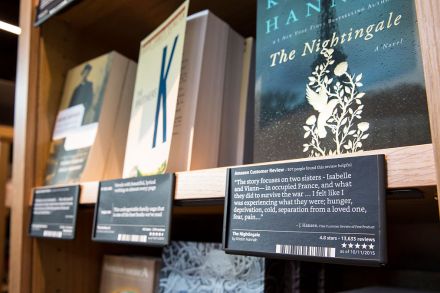

novel books

Anthony Powell gets the superb new biography he deserves

Great novelists come in all shapes and sizes, but one thing they all share is a status of half-belonging. If they had no foot in the world at all, they could hardly understand it; if they completely belonged, they could hardly understand what was distinctive. One of the pleasures of this excellent biography is fully appreciating the peculiar, liminal, not-quite-successful position Powell wrote from, and described with great exactness. In half a dozen social and professional milieux, he was a tolerated, perhaps useful minor presence, like a spare man at dinner. From the standpoint of a rather failed editor, screenwriter, soldier, socialite, he stood by and watched the world. In each case, one suspects, the subjects hardly realized they were being observed.

anthony powell

Letters | 7 December 2017

From our UK edition

The Carlile report Sir: The Bishop of Bath and Wells tells us (Letters, 2 December) that nobody is holding up publication of the Carlile report into the Church of England’s hole-in-corner kangaroo condemnation of the late George Bell. Is it then just accidental that the church is still making excuses for not publishing it, and presumably for fiddling about with it, more than eight weeks after receiving it on 7 October? The church was swift to condemn George Bell on paltry evidence. It was swifter still to denounce those who stood up for him, falsely accusing them of attacking Bell’s accuser. Yet it is miserably slow to accept just criticism of itself. Somehow, I suspect that, had Lord Carlile exonerated the apparatchiks involved, his report would long ago have been released.

Of his time

From our UK edition

Great novelists come in all shapes and sizes, but one thing they all share is a status of half-belonging. If they had no foot in the world at all, they could hardly understand it; if they completely belonged, they could hardly understand what was distinctive. One of the pleasures of this excellent biography is fully appreciating the peculiar, liminal, not-quite-successful position Powell wrote from, and described with great exactness. In half a dozen social and professional milieux, he was a tolerated, perhaps useful minor presence, like a spare man at dinner. From the standpoint of a rather failed editor, screenwriter, soldier, socialite, he stood by and watched the world. In each case, one suspects, the subjects hardly realised they were being observed.

All’s fair in love and Waugh

From our UK edition

I was reminded of Wild West films from boyhood. Then, the beleaguered garrison scanned the horizon; would the US cavalry arrive in time to save them from being scalped? (John Wayne always did.) Now, one was hoping for relief, not from the Injuns, but in the form of an Indian summer. This is of especial interest to those who have a tendresse for Somerset cricket. Its paladins usually have a charmingly amateur quality. As Cardus wrote of an earlier cricketing vintage: ‘[They are] children of the sun and wind and grass. Nature fashioned them rather than artifice.’ Somerset needs a match or two in order to gain points and avoid relegation. That said, the way we were playing earlier in the season, being rained off was the best hope.

Rumbles in the jungle

From our UK edition

A CIA agent, a naive young filmmaker, a dilettante heir and a lost Mayan temple form the basis of Ned Beauman’s latest, and arguably most impressive, novel. Two rival expeditions set off from the United States to the jungles of Honduras to find the temple — one with the intention of using it as a location in which to film an absurd comedy, the other determined to disassemble it and take it back to New York. The two sides clash, each refusing to give way. The weeks roll into years; and life around the temple, populated with a disparate and distinct array of characters, steadily deteriorates into greater savagery. Meanwhile, Zonulet, rogue CIA agent (and primary narrator), under internal investigation, needs to unlock the secrets of the temple to prove his innocence.

Torn between envy and contempt

From our UK edition

Arriving at boarding school with the wrong shoes and a teddy bear in his suitcase, the hero of Elizabeth Day’s fourth novel is the latest in a long literary line of suburban lost boys sucked into the intoxicating orbit of a wealthy friend. F. Scott Fitzgerald, Evelyn Waugh, Patricia Highsmith, Ian McEwan, Alan Hollinghurst and Gillian Flynn have all done it before and we know the story never ends well. Day drops references to them all into her book, like olives into an increasingly dirty martini. We know from the outset that a crime has been committed. We first meet Martin Gilmour in a police interview room, the day after his friend Ben Fitzmaurice’s 40th birthday party in the summer of 2012.

J.K. Rowling’s schizophrenic politics

From our UK edition

On the face of it, there is nothing complicated about the politics of Harry Potter, who made his first appearance in The Philosopher’s Stone 20 years ago. Like his creator J.K. Rowling, who once gave £1 million to the Labour party, he is a left-wing paternalist in the Bloomsbury tradition — the love child of John Maynard Keynes and Virginia Woolf. He feels a protective duty towards the common man (‘muggles’ in the lexicon of the novels) and a loathing for suburban, lower-middle-class Tories like the Dursleys, his Daily Mail-reading foster parents. The arch-villain of the saga is Voldemort, a charismatic Übermensch who believes in purity and strength and in the final novel promotes his own version of the Nuremberg Laws through the Ministry of Magic.

Oh! What a lovely Waugh

From our UK edition

Jack Whitehall could have been perfectly awful as Paul Pennyfeather in Decline and Fall (BBC1, Fridays). He has spent most of his career comically playing up to a common person’s idea of what a posh person looks like: the stand-up who went to the same public school (Marlborough) as Kate Middleton; JP, the Jack-Wills-wearing yah character from Fresh Meat, who went to Stowe; Alfie, the impeccably upper-middle-class, Mumford & Sons-loving history teacher, in Bad Education. But Evelyn Waugh’s class humour is more sophisticatedly snobbish than that, written for a more discerning audience in the days — sigh — when even semi-educated people knew the order of precedence between a duke, a marquess, an earl and, say, a common-or-garden baron.

Big skies and frozen wastes

From our UK edition

We know our way around Raymond Carver’s blue-collar cityscapes and Updike’s urban angst and despair. Rick Bass opens a window onto a wilder America — the far reaches of Montana, Alabama, Texas, Missouri… But to say his stories are about rural life would be like saying Moby-Dick is about whaling. Lauded by American critics and freighted with prizes, Bass is scarcely known in Britain. Praise to Pushkin Press for introducing us to an astonishing literary voice. Life in Bass’s world is often challenging: his people live close to the land; they fish, shoot birds, hunt elk, moose and deer to stock the larder. But while forests, prairies, rivers and lakes form the settings, the vagaries of the human heart ignore boundaries.

Piety and wit

From our UK edition

During the second world war, while one brother was editing Punch as a national institution (‘Working with him was a little like helping to edit the Journal of Hellenic Studies,’ said a colleague), and another brother, given to asking questions like ‘Which way does a clock go round?’, was breaking codes at Bletchley (as an interlude to piecing together fragments of the Greek low-life mime writer Herodas), Ronald Knox was translating the Bible. He did this at Aldenham Park, where he lived as a weekend guest who stayed for ten years, thanks to the hospitality of Lord Acton (whose grandfather was the historian) and more particularly Daphne, Lady Acton (whose grandfather had discovered argon), with whom he was sort of in love.

Wild life | 8 December 2016

From our UK edition

 Kenya I realised I had fallen from grace when we were dropped from the Queen’s birthday party guest list at the British High Commission in Nairobi. I wondered what offence I had caused to the recently arrived plenipotentiary. I worried that it was because one evening, while jogging in the diplomatic suburb of Muthaiga, I had passed him going at a slack pace and barked, ‘Giddy up!’ I have always been so fond of our British HCs. I picture them to be like Waugh’s ambassador to Azania, Sir Samson, less engrossed with unfolding revolutions outside than with playing with his rubber dinosaur at bath time, which he sat on ‘and let it shoot up suddenly to the surface between his thighs ...

We’re all snobs really

From our UK edition

D.J. Taylor’s clever dissection of snobs is really two books in one. Scattered throughout are entertaining, delicious (initially), solemnly related nuggets of hardcore snobbery. He writes brilliantly, for example, about the diarist and National Trust employee James Lees-Milne, who liked a world that knew its place (ideally beneath him). Lees-Milne was steeped so far in snobbery that he couldn’t bear the vulgarity of calling a garage a garage and so called his the ‘motor-house’. Either the absurdity of this makes you snort with laughter or it doesn’t. It does me, though I have to say the cumulative effect of a zillion snobberies is nauseating. You find yourself thinking, ‘My God, these terrible people’ on every other page.

A familiar life (revisited)

From our UK edition

A Life Revisited, as the modest, almost nervous, title suggests, mainly concerns Evelyn Waugh’s life with comments on but no analysis of his books. There have been at least three major biographies already, as well as large volumes of diaries, letters and journalism and many slighter volumes. There is more to come. Waugh’s grandson, Alexander, who has defied current trends by writing a fine book on the males of the family, is editor-in-chief of The Complete Works of Evelyn Waugh, with the first of 43 volumes coming out next year. He has also collected an unrivalled archive containing unpublished notes, letters and interviews, and commissioned this book for the 50th anniversary of his grandfather’s death. All of which presents Philip Eade with a problem.

High life | 14 July 2016

From our UK edition

The Spectator readers’ party was as always a swell affair, with long-time subscribers politely mingling with ne’er-do-wells like myself, the former having cakes and drinking tea, the latter desperately raiding the sainted editor’s office for Lagavulin whisky. But for once I was on my best behaviour, first out of respect for our readers, secondly because of the man I had personally invited to the party, Hannes Wessels, a Rhodesian-born 14th-generation African, whose book A Handful of Hard Men has me shaking with fury at our double standards where whites are concerned, and at the gauzy mythology of PC that has painted white Rhodesians as oppressors.

Oh, what a lovely Waugh!

From our UK edition

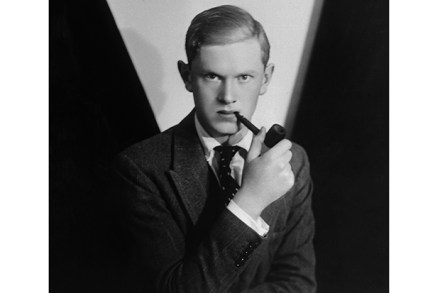
Fifty years have passed since the death of my father, Evelyn Waugh. His remains, together with those of his wife Laura and daughter Margaret, are buried within a ha-ha which is now collapsing into the churchyard of St Peter and Paul, Combe Florey. My nephew, Alexander, and I hope that these graves could be incorporated in the churchyard as only a dilapidated wall separates them. But our efforts have been frustrated by bureaucratic obtuseness. I wonder if the creakiness of the bureaucratic process has been created by the undeserved popular perception of my father as a monster. The portrait is based on his own diaries and my late brother Auberon’s wonderfully comic autobiography, Will This Do?

Correction of the day: Evelyn Waugh was not a woman

From our UK edition

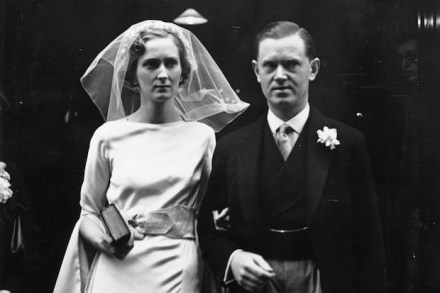
Oh dear. Today Time magazine released a list of the 100 most-read female writers in American colleges. On the list were Jane Austen, J K Rowling, Kate L. Turabian and... Evelyn Waugh. Yes, the Brideshead Revisted author made it onto the all-female list despite the fact that he was a man. In their defence, Waugh's first name has caused confusion before, with his first wife also called Evelyn. The magazine have since issued a correction: Mr S suspects this error is already a frontrunner for '2016 correction of the year'.

High life | 7 January 2016

From our UK edition

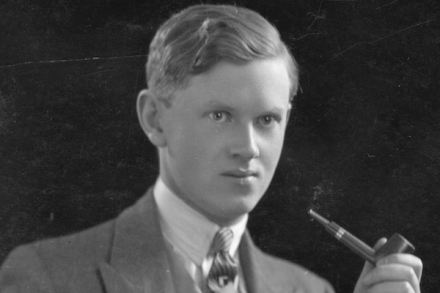
OK sports fans, what do Dame Vivien Duffield and Evelyn Waugh have in common? The answer is absolutely nothing, so why start 2016 with such a dumb question? Waugh was short and round and so is Vivien, but apart from weight and height there are no similarities. So why ask? Easy. I was reading about a dinner party Waugh gave for Clare Luce in November 1949 at the Hyde Park Hotel. He later wrote to Nancy Mitford complaining how much money the dinner had cost him, and how Clare — in my not so humble opinion the greatest woman of the 20th century — had failed to write a thank-you note. Waugh was a hell of a writer but a pretty piss-poor human being. He was petty, a closeted tortured gay with seven children.

King of Kings: The Triumph and Tragedy of Emperor Haile Selassie I of Ethiopia

From our UK edition

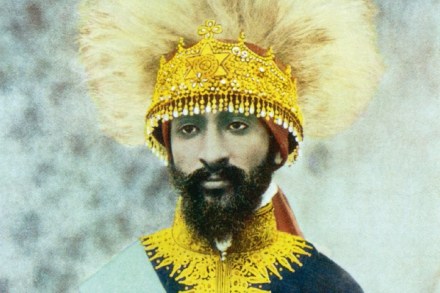
Great men rarely come smaller than Haile Selassie. In photographs, the golden crowns, pith helmets and grey felt homburgs he often donned can’t conceal the fact that he is the shortest man in the room. It didn’t matter: for the 44 years of his reign — with a five-year interruption engineered by Benito Mussolini’s invading troops — he was effectively lord of all he surveyed. Ethiopia’s current government, established by a former Marxist rebel group, has always harboured mixed feelings towards Tafari Makonnen, as he was baptised.

Club mischief

From our UK edition

When it comes to nightclubs, many have written, but none has surpassed the Perroquet in Debra Dowa. Le tout Debra Dowa was present, including Madame ‘Fifi’ Fatim Bey, the town courtesan; Prince Fyodor Krononin, the manager; and Seth, the Emperor of Azania. Tension is caused by the arrival of the Earl of Ngumo, six and a half foot of savage aristocracy, demanding raw camel’s meat for his men, some women and a bottle of gin for himself. But once he does obeisance to the Emperor, every-one relaxes. I thought about Black Mischief while giving dinner to delightful young Alex in a more conventional club in London. Youth has many enviable aspects, including the pleasure of reading Evelyn Waugh for the first time.