Evelyn waugh

Is Industry the Brideshead Revisited of our times?  

From our UK edition

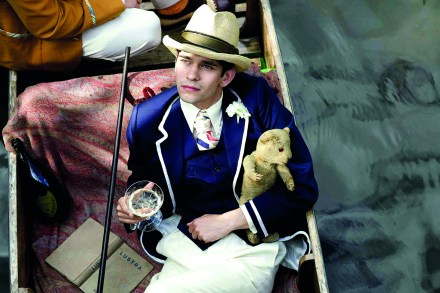
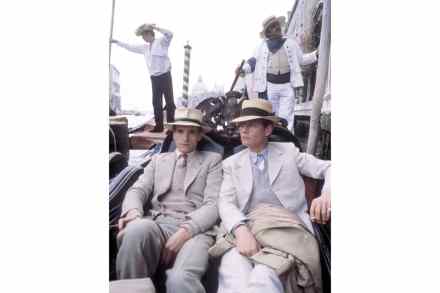
At first glance, there are few similarities between Brideshead Revisited, Evelyn Waugh’s classic 1945 novel – later adapted into an equally classic ITV series – of prelapsarian bliss in Oxford and Industry, the BBC’s adrenaline-fuelled show that exposes the dark iniquity at the heart of the financial industry. The one is a languid examination of (discreetly portrayed) same-sex love and Catholic guilt, and the other is a profane, sexually charged and palpitation-inducing dive into hedonistic self-indulgence. Brideshead is plover’s eggs and Meursault; Industry class A drugs and group sex. They would seem as distinct from one another as chalk and (Comté) cheese.
What do Oscar Wilde, Gwen John and Evelyn Waugh have in common?

From our UK edition

Religious conversions do not, for the most part, make for good anecdotes. An exception can be found in Patricia Lockwood’s memoir Priestdaddy, which describes the author’s father Greg’s road to Damascus experience in a nuclear submarine off the coast of Norway, where he watched The Exorcist 72 times: That eerie, pea-soup light was pouring down, and all around him men in sailor suits were getting the bejesus scared out of them, and the bejesus flew into my father like a dart into a bull’s eye. It was, Greg boasted, ‘the deepest conversion on record’.

Brideshead Revisited, 80 years on: from the archives

From our UK edition

43 min listen

This week's Book Club podcast marks the 80th anniversary this year of the publication of Brideshead Revisited. This conversation is from the archives, originally recorded in 2020 to mark its 75th anniversary. To discuss Evelyn Waugh's great novel, Sam Leith is joined by literary critic and author Philip Hensher, and by the novelist's grandson (and general editor of Oxford University Press's complete Evelyn Waugh) Alexander Waugh. What made the novel so pivotal in Waugh's career, what did it mean to the author and how did he revise it? And why have generations of readers, effectively, misread it?

David Lodge, the master of Anglo-American campus humor

"Literature is mostly about having sex and not about having children.” So said the British novelist, occasional screenwriter and literary critic David Lodge, who died at the beginning of 2025 at the age of eighty-nine. Lodge, who had suffered from encroaching deafness for several decades, had not, in truth, been a major literary figure for a considerable period before his death. This retreat into obscurity had not been helped by a trio of memoirs, beginning with 2015’s Quite a Good Time To Be Born, which perplexed critics — including this one — with their dour, downbeat and decidedly un-humorous tone. Few would have known, from reading them, that their author had once been regarded as one of the late twentieth century’s most accomplished comic novelists.

Lodge

‘Loved ones’ are everywhere at this time of year

From our UK edition

‘My heart will melt in your mouth,’ said my husband gallantly, unwrapping some leeks from a copy of the Sun which bore this suggestion: ‘Create a special Valentine’s Day message for a loved one with this decorate-your-own gingerbread heart, £2, new in at Morrisons.’ Loved ones, even dogs and cats, are fair game for hearts at this time of year. The astrologer Russell Grant warns Pisces about ‘a loved one’s wellbeing weighing on your thoughts’. At other times, loved ones are dead, the phrase being used without irony in broadcast reports of air disasters, war and inheritance tax. It annoyingly presumes that all relations who die are loved. The Oxford English Dictionary finds examples of loved one from the 18th century onwards.

The wonder of cooking with coal

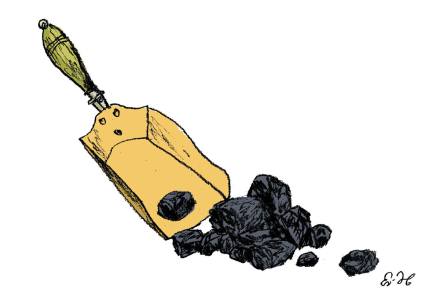
The grandest compliment ever paid me came near the end of a small dinner party last winter from guest and friend Jeffrey who, on settling into an old wing chair as his host stoked the fire with coal, remarked: “I feel like I’ve just stepped into an Evelyn Waugh novel.” It was, he said, the coal. About as close as anyone these days will have come to a domestic coal fire is the screen image of one in Downton Abbey or its predecessor, Upstairs Downstairs. Those television “fires” were all actually gas ones made to imitate the look of coal. In Waugh’s time in houses like that, they all would have burned the real thing.

coal

Barbara Ker-Seymer – Bright Young Person in the shadows

From our UK edition

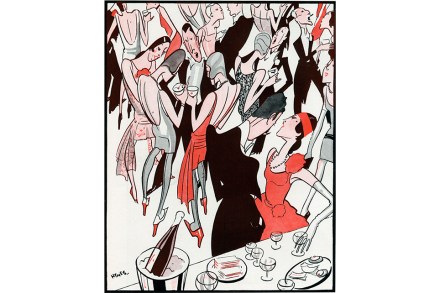
English Modernism was graced by five daring and gifted women who were in many respects well in advance of their native male counterparts: Virginia Woolf and Anna Kavan in prose, Edith Sitwell in poetry, Elisabeth Lutyens in music and Barbara Hepworth in sculpture. Barbara Ker-Seymer is not remotely in this class. She took some attractive photo-portraits before the war in her studio above Asprey’s and that was it. After leaving St Paul’s Girls’ School, Barbara was soon drinking, drugging and dancing round town Not that Barbara cared. Though trained at the Chelsea School of Art, she had a deprecating attitude to her activity which was characteristic of English amateurism and is absolutely maddening when it comes to the arts at a proper level.

Evelyn Waugh’s sincerest form of flattery

T.S. Eliot once made the significant point, in an essay on Philip Massinger, that “Immature poets imitate; mature poets steal; bad poets deface what they take, and good poets make it into something better, or at least something different.” Eliot knew exactly what he was talking about (himself). However, change “poets” to “novelists” and the same pertinence applies. In fact, this wholesale, covert purloining may be true of all artists in all ages in all the seven arts. Let’s start with some backstory. Evelyn Waugh (1903-66), as they say, needs no introduction. William Gerhardie (1895-1977) is almost wholly forgotten today, but in the 1920s he was the luminous young wunderkind of English literature — a kind of Donna Tartt or Sally Rooney of his times.

gerhardie

The power of prayerful washing-up

From our UK edition

My days pass largely in a state of inanition. The fit and able-bodied express their sympathy, claiming it’s much the same for them. ‘How are you?’ ‘I’m sleeping all the time.’ ‘Oh, but so are we in this terrible heat!’ Meanwhile the young get browner and more beautiful every day while going on with their energetic lives as if affected by the heat scarcely at all. For instance, I look at the cheerful lads digging up our road, putting in fibre broadband in 40 degrees of heat. I want to run up to them and implore them, with the fervour of a dying man preaching to dying men, to enjoy it while it lasts. When I was a binman elderly people used to come to the back door and say that to me often.

Searching for the American summer novel

I am convinced that the sweet-smelling tycoons that run candle-making companies must have read too much Proust when they were younger. With scents like “Inspire,” “Bohemia,” and “Sunny Daydream,” they cannot be aiming for something as cheap and transitory as mere tawdry olfactory pleasure. They must have become all but obsessed by À la Recherche du Temps Perdu, and be aiming for something akin to his narrator’s nostalgic odyssey upon tasting a madeleine: “and at once the vicissitudes of life had become indifferent to me, its disasters innocuous, its brevity illusory.” Rather pretentious, oui — but what other excuse can there be for a candle that proclaims it can smell like a cool library at midnight, or the depths of some dreamy reverie?

Waugh in Hollywood

The English author and curmudgeon Evelyn Waugh (1903-66) is today best known for his 1945 novel Brideshead Revisited. A luxuriant evocation of the beauties of pre-World War Two Oxford, coupled with a cautionary narrative about the destructive power of Catholic guilt, it has remained a constant favorite with everyone from college students to literature scholars. It was memorably filmed for British television in 1981, and it launched the careers of Jeremy Irons and Anthony Andrews as, respectively, the novel’s narrator Charles Ryder and the flamboyant aesthete Sebastian Flyte.

waugh

When Oxford life resembled a great satirical novel

From our UK edition

Evelyn Waugh’s Oxford friend Harold Acton, immortalised as Anthony Blanche in Brideshead Revisited, once bumped into the wife of John Beazley, a lecturer in ancient Greek pottery, while she was exercising their pet goose in Christ Church’s Tom Quad. Hopping over the bird, Acton intuitively doffed his hat. Here, Marie Beazley declared, was ‘a true gentleman’. Mrs Beazley was famous in academic circles for her unpredictable remarks. Over dinner with undergraduates she once announced: ‘My husband can make sparks fly from my loins.

The novels that became instant classics

From our UK edition

In the world of books, a modern classic is an altogether more slippery thing than a classic: it must walk a line between freshness and durability; reflect the current age but hope to outlast it. For individual publishers, given many 20th-century writers are still in copyright, a modern classics list will necessarily be partial. However, few such partial lists are as complete as Penguin Modern Classics (PMCs), founded in 1961 four years after Penguin’s general editor A.S.B. Glover said: ‘We don’t want — without outstandingly good reasons — to start any new series such as “Modern Classics”.

Why we should venerate Evelyn Waugh

Evelyn Waugh is popularly known today as a comic author, despite the fact that Brideshead Revisited, made famous by the eponymous 1981 television series, is certainly not a comedy. Not everyone agrees. Years ago, a well-read friend of mine remarked to me that he was not fond of Waugh’s work. When I asked why, he replied, ‘Because I don’t think he’s that funny.’ I answered that the way to appreciate the exquisite wit of Evelyn Waugh is to approach him in the expectation of something other than humor, in which case the absurd incongruities, outrageous juxtapositions and ludicrous extremes that occur throughout the novels are in fact supremely funny. Waugh never set out to write comedic stories in the manner of P.G.

waugh

Granada’s Brideshead Revisited remains the sine qua non of mini-series

From our UK edition

It is 40 years ago today since Granada’s masterly adaptation of Evelyn Waugh’s Brideshead Revisited first beamed into British homes. This 11-part serialisation of a book originally entitled A Household of the Faith soon gathered millions of faithful householders. The autumn of 1981 was an especially cold and wet one and it was still too soon in the Thatcher premiership for her patron saint, Francis of Assisi, to have worked his magic. So while ITV was not able to deliver harmony, truth, faith or hope, it certainly provided 659 minutes of romantic escapism.

Perry Mason was America’s Sherlock Holmes

I was well into my thirties when my parents acquired a television set, for no good reason that I could discern after they’d gone so many years without one without obvious damage to their health or intellects. Growing up in the Fifties and Sixties, my sister and I were permitted to watch two television shows while visiting with relatives. One was Topper. The other was Perry Mason, which they occasionally joined us for: a small family grouping that was the closest thing the Williamsons ever came to resembling a painting by Norman Rockwell. Over the past year and a half, I have been re-watching episodes of the original show starring Raymond Burr as Mason, Barbara Hale as Della Street, William Hopper as Paul Drake, Ray Collins as Lieutenant Tragg and William Talman as Hamilton Burger.

mason

The bizarre art of Scottie Wilson deserves to be better known

From our UK edition

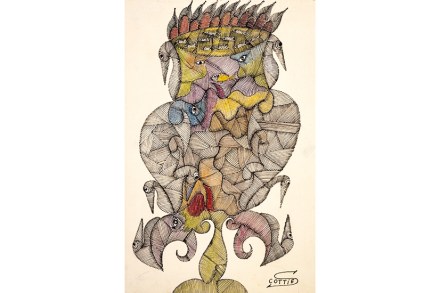
On eBay I have an alert set for ‘Scottie Wilson’. Nine times out of ten, it’s a diamanté Scottie dog from the jewellers Butler & Wilson. Once in a while, it’s a gem. Scottie Wilson didn’t think much of journalists. Art critics were ‘just jugglers — dodgers’. The sort of people who went to art shows — his or anybody else’s — could be counted on to go about ‘blabbing a lot of stupid muck. A lot of blah blah. They get paid for it too!’ Which makes it tricky to write about Scottie (always Scottie, never Wilson). You just know he’d light a cigarette and scowl. I came late to Scottie.

Hidin’ Biden’s basement convention

Not everyone appreciates the extent to which the Democrats pushing Joe Biden for president are students of Samuel Taylor Coleridge. For those of you who think low, let me say straight away that I am not thinking of Coleridge’s penchant for laudanum. No, I am thinking of that other goad to fantasy, Coleridge’s idea, articulated in his book Biographia Literaria (1817), of ‘the willing suspension of disbelief’. (But speaking of thinking low, if we enlarge our gaze to encompass Joe himself, we might also trespass upon the subject of plagiarism. Coleridge cribbed wantonly from the German philosopher Friedrich Schelling just as Joe did from Neil Kinnock and others.

biden basement

Finding the Lost Girls

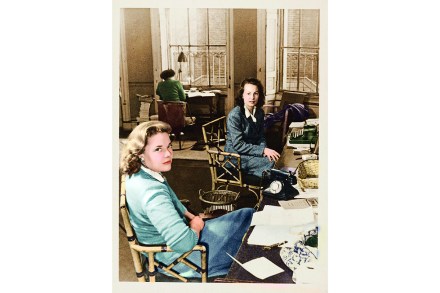
This article is in The Spectator’s February 2020 US edition. Subscribe here. Encapsulations of a particular art-world demographic nearly always fall wide of the mark. Just as there were plenty of people on hand in the 1950s to protest that the Angry Young Men were neither especially angry nor exclusively male, so countless chroniclers of interwar social life complained that the Bright Young People were neither bright nor young. But the critic Peter Quennell’s phrase ‘Lost Girls’ to describe the gang of female twenty-somethings who worked on the magazines and populated the parties of Blitz-era literary London carries an unmistakable tang of conviction.

lost girls

Why do Americans and Brits write about alcohol so differently?

This article is in The Spectator’s inaugural US edition. Subscribe here to get yours. ‘No nation is drunken where wine is cheap,’ Thomas Jefferson famously said, laying the blame for insobriety firmly on ‘ardent spirits’. The third president was a notorious wine-fancier with a particularly soft spot for Sauternes, yet it is true that countries with a long history of winemaking tend towards more easeful drinking. Despite the ghastly interregnum of Prohibition, America has become a serious wine-producing nation — and yet ardent spirits seem to have left far stronger a mark, on the national mindset and on the nation’s prose.

liquor american alcohol