BBC bureaucrats think they can pick a Eurovision winner. Let’s hope they’re right.
listen to ‘Fraser Nelson on Britain's 2014 Eurovision entry’ on Audioboo.

listen to ‘Fraser Nelson on Britain's 2014 Eurovision entry’ on Audioboo.
I am suffering, as we all do from time to time, from a shortage of decent new tunes. Of course, ‘suffering’ may be a slight exaggeration here. Very little physical pain has been involved. But research has shown that music obsessives need a constant upgrade of their personal tunebanks in order to perform at full capacity. It’s all very well going back and playing the Electric Light Orchestra’s Out of the Blue at top volume and singing along to every vocal harmony, as I might have done once or twice this past week, but a long-term solution it is not. It’s where to find these new tunes that has become the problem. I try radio station after radio station, and then I try them all again in a different order.
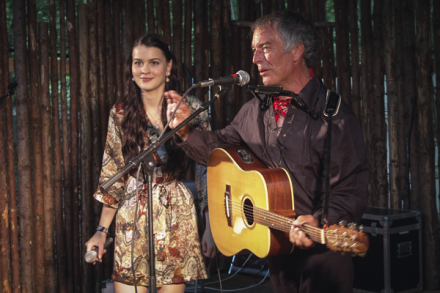
This Saturday’s Eurovision contest was never going to be a triumph for the UK, that much was for certain. What was slightly surprising, however, was the Danish victory with their song Only Teardrops The song might have been one of the favourites to win, but the triumph of what Fraser Nelson described as a collaboration between ‘one of Scotland’s world class folk musicians’ and ‘the voice of a rising star of the Danish folk scene’. In this week’s arts lead Emma Hartley interviewed Eurovision winner Emmelie de Forest’s mentor, Fraser Neill, about the making of a very Scottish performer. Here’s a video of the two of them performing Anne Boleyn was, allegedly, one of Henry VIII’s favourite wives; so why did he behead her?

To be a folk music fan in Britain today is to be jangling the keys to a cultural palace. For a variety of reasons, we seem to have produced the most brilliant young musicians in decades — but the rest of the world has always seemed rather more excited about the fact than we are. We have started to export musicians, from Spain to Novia Scotia, who go on to musical achievements that are seldom recognised, let alone celebrated, back home. Of the ten million Brits who tuned into the Eurovision song contest, not many would have guessed that the Danish winner was yet another young protégée of a British folk musician. Until a few months ago Emmelié Charlotte-Victoria de Forest was as unknown to Denmark as she was to the rest of the continent.
Only in The Guardian could Britain’s humorous disdain for the Eurovision Song Contest be linked to the rise of UKIP and the decline of the British Empire: 'I think Eurovision-bashing reflects a crisis of collective national identity in the UK; it's a way of expressing feelings of unprocessed anger, frustration, and loss about the UK's place in the rapidly changing Europe and in the world more broadly. The great British social theorist Paul Gilroy has written of the UK's post-colonial melancholy, a failure to properly process and accept the end of the country's status as world leader, and I think that's what's at play here. The UK has been suffering a prolonged national identity crisis since the 1950s, in which resistance to European integration became a crucial unifying factor.

Last night’s Eurovision was, as always, a collision of music, culture and politics. As always, the official British entry was dire – but, as always, the invisible hand of Britain’s world-class musicians lay behind many acts that did well. So it was with Denmark’s winner, Emmelie de Forest, whose song Only Teardrops won by quite a margin. For CoffeeHousers who didn’t catch last night’s awards, here it is. From the first note, you can tell something is up. If this is a Danish entry, why the Celtic flute? It wasn’t a homage to Belfast Child. Ms de Forest has, since the age of 14, been learning from and performing with Fraser Neill, one of Scotland’s world class folk musicians. His influence was audible last night.

Does David Cameron have a plan for dealing with the EU? In this week's Spectator magazine, James Forsyth reveals that No.10 has little idea of how they will actually renegotiate Britain's relationship with Europe. Cameron's position risks dividing the Conservative party and pushing us automatically down the road to withdrawal. On the latest View form 22 podcast, Ukip leader Nigel Farage debates the Conservative MP Kris Hopkins on whether the Tories or Ukip are the party of progress on the EU. Are Ukip a party of policy or protest? How does Farage expect to do in the European elections? And will electorate rally round the Conservatives or continue to float away to Ukip in the final run up to the general election?
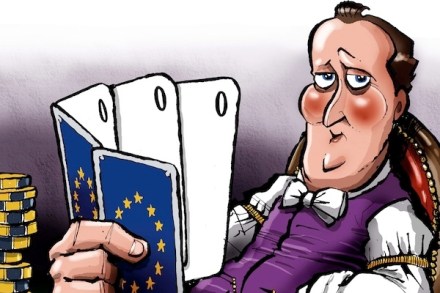

Britain is a stickler for tradition and each May we now observe a relatively new one: we bomb in the Eurovision Song Contest. The protocol now is well-established. Our entry is chosen by a BBC bureaucrat who appears to see the whole thing as a bad joke. We send out Bonnie Tyler/Engelbert Humperdinck etc to face an army of talent from countries who have studied the art of winning and take it very seriously indeed. Electro Velvet (more on them here) can at least reassure themselves that they will not be Britain’s worst-ever entry. That honour goes to Jemini, a Liverpudlian duo who in 2003 made history by being given nul points by tout le monde.