Eu

Did MI6 plot against UKIP?

From our UK edition

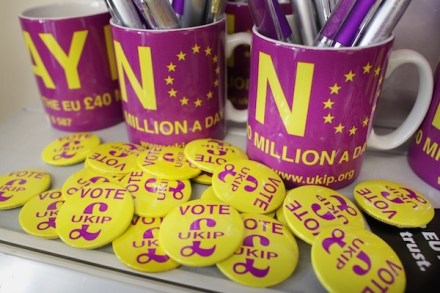
Dirty tricks against UKIP by the establishment are not a new phenomenon. Though in recent days the Conservative party have been found engaging in them, there are far more striking examples from the recent past. On 25 May 2001 the Spectator published a piece by Norman Tebbit that deserves to be far better known.  Tebbit recounts the tale of two serving or former British intelligence agents who infiltrated first Jimmy Goldsmith’s Referendum Party and then UKIP. Tebbit gives examples of how UKIP’s efforts were derailed during the period in which these agents were inside the party. It is important to stress before directing you to the Tebbit piece below that it is not conspiracy theory.

Ken Clarke: decent chap, but wrong about everything

From our UK edition

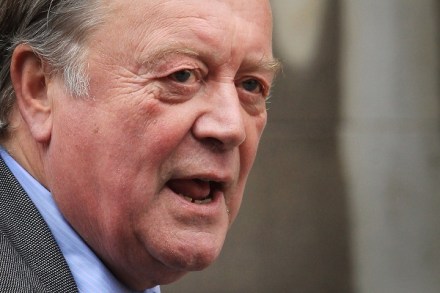
Kenneth Clarke has always seemed, to me, a decent sort. By far the most likeable and least lordly and arrogant of those Euro-wanking wets who plagued Thatcher and, later, Major. Nonetheless, he is always wrong. About everything. If you are ever in doubt about where you should stand on a particular issue, find out what Ken’s thinking and immediately think the opposite. You won’t go far wrong. And so it is with his branding of UKIP as ‘closet racists’. It seems almost superfluous to say it, but of course it is not racist to feel a bit uneasy about the levels of immigrations we have endured in this country of late.

Who stands to gain from the Kosovo-Serbia deal? The EU

From our UK edition

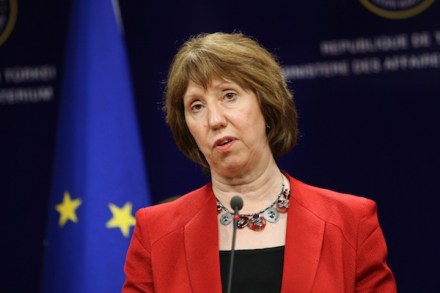
Britain's very own EU High Representative of the Union for Foreign Affairs, Cathy Ashton, has not had a terribly good press after a report from the European Parliament said her department had too many decision-making layers, is top heavy and is indecisive in response to crises. It didn't help that she was looking for a four per cent increase in her department's budget, amounting to £18 million for next year. Which is why she will be doing everything possible to make the most of her one diplomatic triumph last weekend, a deal between Kosovo and Serbia. Implementation talks started yesterday.

Why France’s gay marriage debate has started to look like a revolution

From our UK edition

Paris: Revolutions are often sparked by an unexpected shock to an already weakened regime. As commentators in France remark not only on the crisis engulfing François Hollande’s government but also on the apparent death-rattle of the country’s entire political system, it could be that his flagship policy of legalising gay marriage — or rather, the gigantic public reaction against it, unique in Europe — will be the last straw that breaks the Fifth -Republic’s back. Opposition to the bill has electrified the middle classes, the young and much of provincial France. On Sunday 24 March, in the freezing cold, the 4km stretch from the Arche de la Défense to the Arc de Triomphe was full of people protesting against the bill.

Cameron confident of common ground with Merkel

From our UK edition

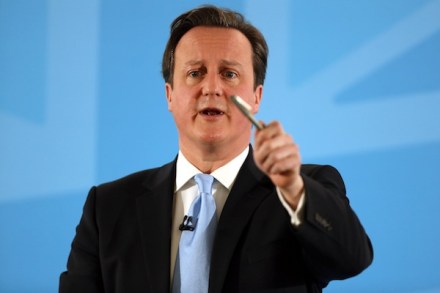
David Cameron is setting off with his children to visit Angela Merkel on Friday. It's part of his EU reform mission that started and was thrown off course on Monday following the death of Margaret Thatcher. As I blogged back then, the circumstances aren't perfect, and one of the reasons for that is that France and Germany recently snubbed an invitation to be involved in the UK's 'balance of competences' review. But today Cameron tried to play down the significance of this. He told Adam Boulton: 'Our review of competences was always and will be a British exercise. We didn't particularly, that story was… anyone's free to feed into our review, but that piece of work is a British piece of work. For years people said you'll never have the European budget cut, I've got it cut.

After the bute revelation, what’s the government doing to prevent another horsemeat scandal?

From our UK edition

When shadow Defra minister, Mary Creagh, first raised the possibility four months ago that the veterinary drug phenylbutazone – aka bute – might be found in horsemeat in supermarket products labelled as ‘beef’, both the Food Standards Agency (FSA) and the agriculture minister David Heath were quick to rubbish her statement. Heath placed his trust in the FSA and their testing procedures, safe in the knowledge that the FSA ensured that all meat was fit for human consumption, with tests for bute carried out regularly, and any positive results thoroughly invested. But then, in February, it was discovered that British horsemeat containing the drug had been exported to Europe and had entered the food chain there.

Mrs Thatcher goes to Brussels

From our UK edition

‘Délégation Royaume Uni. Salle 4’ announces a scruffy piece of paper projected onto the black and white television screens of the Centre Charlemagne. The journalists hurry upstairs for the latest from Mr Bernard Ingham, Mrs Thatcher’s press secretary. Mr Ingham is not conspicuously communautaire. He tells us who spoke in the session — Mr Lubbers, Herr Kohl, Mrs Thatcher and ‘Mr Papandreou — I always call him Mr Papadopoulos’. A nodding acquaintance with recent Greek history would have made Mr Ingham realise that such a slip, though easier on the tongue, is as politically uncomfortable as calling M. Mitterrand ‘Marshal Pétain’. But then Mr Ingham is not paid to spread sweetness and light.

Olli Rehn bosses George Osborne around

From our UK edition

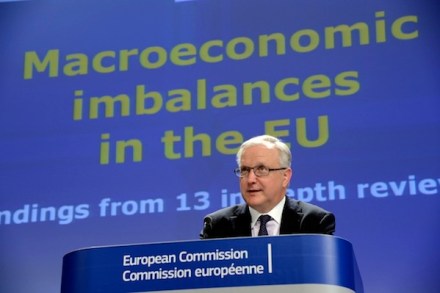
Olli Rehn, the European Commissioner who is in charge of economic affairs, called in the Brussels press corps this afternoon to announce the conclusion of his ‘in-depth review of the macroeconomic imbalances in 13 member states.’ I sat through the launch, and the questions and answers, noting that at no time did Rehn or any of the reporters approach the fundamental question: what exactly is a macroeconomic imbalance and why do we think that Rehn – whose full title includes European Commissioner for the Euro – is the man anyone would trust with analysis of anything macroeconomic? And before you ask, the reason I didn’t ask is that I ration any questions that I know the spokesmen who run these press conferences will consider obnoxious.

David Cameron makes the case for reform in Europe

From our UK edition

Germany has elections on the way, Spain is just about holding a lid on its economic crisis while keeping a wary eye on the uphill struggle that its neighbour Portugal faces to avoid a second bailout, and François Hollande has his own political crisis to deal with (and is apparently also mourning the death of a camel). So is now really the best time for David Cameron to pitch up in Madrid, Paris and Berlin to argue for reform of the European Union? The PM visits the first two cities today, with a meeting with Angela Merkel planned for later this week on the same topic.

Has the taxpayer received bang for buck from Baroness Ashton?

From our UK edition

A great deal of fuss is being made about Baroness Ashton’s retirement salary. She leaves her ludicrous post as High Representative for Foreign Affairs at the European Union next year — and is being given only £400,000 to tide her over the next few years. I think that is quite modest: sometimes, you see, the taxpayer has to take a deep breath and cut his losses. Better this woman be paid £400,000 for doing absolutely nothing, rather than receive her full salary for carrying on doing useless, pointless things in Brussels. It would be interesting, though, to add up how much the state and the taxpayer has forked out for Ashton since she began her career as chairthing of the National Council for Complaining About Everything, back in the 1980s.

Over 100 Tory MPs demand EU referendum bill: exclusive details

From our UK edition

Tory backbenchers have written again to the Prime Minister demanding legislation guaranteeing a referendum in the next Parliament. Conservative MP John Baron delivered the letter, which bears more than 100 backbench signatures, to Downing Street this morning. While its existence was reported in the Sunday papers, Baron has now spoken exclusively to Coffee House about the letter's contents. I understand that though Baron and his colleagues working on the plan approached only backbenchers (and those include former ministers who left the government in September's reshuffle), a number of ministers and PPSs have also approached them to express sympathy with the idea, and there are several individual letters from PPSs going to David Cameron as well.

Despite the fanfare, David Cameron still isn’t doing anything on immigration

From our UK edition

Well, it was right not to expect much. The full text of David Cameron’s speech on immigration is here but it can be summarised in one sentence: ‘mass migration has brought some good things, but it has also brought problems so here is some tinkering we propose.’ There are so many problems when our politicians speak on this subject. Not least is that they expect to be congratulated for saying the utterly obvious. For instance, most British people worked out a long time ago that those of us who already live here ought to have priority in housing over people who have just arrived. We also worked out some time back that an NHS which provides for the whole world is unsustainable and that if people haven’t paid into the system then the system shouldn’t pay out.

The Cyprus drama has only just begun

From our UK edition

Analysts today are talking about the GDP of Cyprus falling by 20 per cent over the next four years, and stressing that this is a conservative estimate. This, and the attitude of the Church there, does make me wonder if the Cypriots might not reject the bailout again, revert back to the Cypriot pound and try and devalue their way to recovery. This could hardly be more painful than a bailout that will make credit nigh-on-impossible to obtain in Cyprus. The second thing is surely any company or institution with large cash reserves is moving them out of any bank in the Eurozone periphery. If, as the head of the Eurogroup has said, Cyprus is a template for dealing with failing banks, then no one should want to have more than €100,000 in anything but the strongest banks.

How long will capital restrictions last in Cyprus? ‘Can’t say’

From our UK edition

To the European Commission headquarters this morning for a briefing with Michel Barnier, the Frenchman who is commissioner in charge of banking. The press pack wanted to talk about – what else? – Cyprus. But Barnier wanted to talk about his green paper on the long term financing of the European economy.  Which made for the usual pantomime: the journalists sat and scrolled through emails while Barnier read out his plans on how to finance the EU economy without depending so much on banking (good luck there, commissioner). When he finished, the reporters looked up and started the questions about the banks in Cyprus. Reuters asked how long capital restrictions would last in Cyprus.

Momentum grows for EU referendum bill

From our UK edition

One other area besides immigration where Tory MPs want their leader to go further than he feels he can is, unsurprisingly, Europe. There is growing pressure within the party for the Prime Minister to get legislation on the floor of the House of Commons which would guarantee a referendum in the next Parliament. This is what Bernard Jenkin, who favours a referendum sooner than 2015, has to say: 'The Prime Minister's veto in 2011 gave his poll ratings a great fillip, but that veto was just ignored. They just decided to go ahead with the Fiscal Union Treaty anyway but without the UK. And the UK did not achieve any safeguards to protect UK banking and financial services which the PM was then demanding.

Europe should shut the door on immigration

From our UK edition

The Prime Minister is giving a speech about immigration on Monday.  I am sure we can all guess the content.  If anybody is interested in a break from this — or indeed if the PM's speech-writers are curious — perhaps I could humbly recommend this debate I took part in a couple of weeks ago in Athens. The motion was 'Europe should shut the door on immigration'.  I used my speech and time in Q&A to explain why although we should not slam the door, let alone lock it, Europe urgently needs to wean ourselves off the habit of mass immigration and, at the very least, to give the door of mass immigration a firm but gentle push.

The European Empire

From our UK edition

The EU’s decision to ignore its own rules and steal money directly from the pockets of the citizens of Cyprus is an important development in the history of an institution that long ago gave up any pretence of being a ‘Union’. It may as well rename itself the European Empire and be done with it. The impetus behind the EU was the prevention of war. So with the Athenian empire. After the Persian Wars (490-479 BC), the Greek city-states decided to form a defensive alliance to end for ever any renewed threat from that part of the world. Each Greek state therefore agreed to donate ships or cash to provide a fleet that would keep the Persians out of the Aegean.

So the Cypriots cop it for having fallen for the honeyed promises of the EU

From our UK edition

I had forgotten about Cyprus. I suppose it was lodged somewhere near the back of my mind as a cheap British Mediterranean satrapy usefully divided into two: a southern bit, where our chavs went on holiday, and a northern bit where our criminals hide out from the filth. I was dimly aware that we had allowed them, some time ago, to go their own merry way and that since had followed a predictable descent into barbarism, yet another Ottoman invasion and some sort of coup effected by the useless Greeks. And that’s it, really.

In Cyprus as in Britain, the prudent must pay for others’ folly – but not like this

From our UK edition

The Cypriots are the authors of their own misfortune, having turned their banking system into a rackety offshore haven for Russian loot and lent most of the proceeds to Greece. But it was madness on the part of bailout negotiators to shake confidence in banks across the eurozone by trying to impose a levy on deposits held by even the smallest Cypriot savers, in what was presumably an attempt to cream off a layer of ill-gotten foreign cash. And even if the proposal has been radically watered down by the end of the week, we now know the European powers-that-be are prepared to pull this device out of their toolbox if the subject government is too weak to resist.

What will it take to keep Cyprus in the euro?

From our UK edition

How will the eurozone respond to the Cypriot parliament's overwhelming rejection of the bank deposit levy? There are only a few days in which to make a deal before the country's banks must re-open, with an ensuing run on deposits. The question is whether Cyprus or the other eurozone countries blink first. Given all members present of the governing DISY party abstained on the vote, there is a chance that an amended bill could come before the parliament again. Indeed, one member, Nicos Tornaritis, said this evening that this would 'strengthen the bargaining position of the Republic of Cyprus'. This will still require action from other countries, whether in the form of concessions on the current plan, or a different deal altogether.