Eu

Janus-faced Juncker sets out his stall

From our UK edition

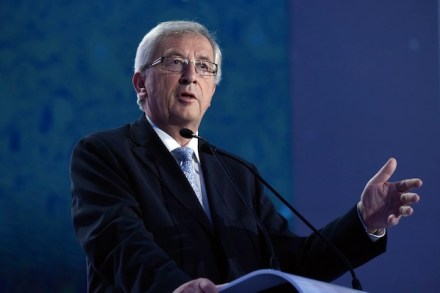
Jean-Claude Juncker delivered a speech to the European Parliament this morning. Its content was, from the British government’s perspective, provocative. Juncker had one watchword: integration: and a clear idea of how to achieve it. He expressed belief in: Tax harmonisation (especially on corporate tax rates) Integration of capital markets Energy integration and the diversification of energy supply 300bn euros extra spending and a commitment to the 'social market' A financial transaction tax No new member states for 5 years (how about that, Mr Salmond?) The euro as a unifying force across Europe Freedom of movement In some respects it was a slightly strange speech for Juncker, a man of the centre-right, to have given.
View from 22 podcast special: reshuffle review

From our UK edition

In this View from 22 podcast special, Fraser Nelson, James Forsyth and Isabel Hardman round up some of the key stories from the reshuffle, including Gove's shock demotion, the increased number of women in the Cabinet and whether the government has become more Eurosceptic and less green.

Britain’s immigration debate must address three key issues

From our UK edition

Politicians tend to get all the blame for immigration policies not working. But politicians are often doomed to fail on migration questions because there are deep-rooted problems with the way we all debate immigration and with what we expect of immigration policy. Following UKIP’s success in the European elections, and given the likely failure of the government to meet its net migration target by 2015, immigration is guaranteed to be a key focal point of public debate in the run-up to the general election next year. There is widespread agreement that Britain needs a ‘better’ immigration debate - but how can that be achieved? Over the past year I have been developing an online course on international labour migration for Oxford University which deals with this question.

Jean-Claude Juncker’s biggest challenge: energy

From our UK edition

‘Energy is the single biggest issue facing Jean-Claude Juncker,’ remarked a seasoned Eurocrat to me earlier this week. Europe’s energy infrastructure is decrepit and insular. Rates of cross-border interconnection, for example, remain very low – at just 8 per cent of their production capacity on average across the union according to the FT. The Commission’s 2030 energy package aims to raise the average rate of interconnection to 15 per cent — part of a string of targets designed to complete the single market in energy. Alas, it’s going to take more than a target or two. The level of investment required is enormous (more than 1 trillion euros by the Commission’s estimate, of which only 5.8bn has been found for 2014-2020).

The Great Brussels Steeplechase: runners and riders to be Britain’s next European Commissioner

From our UK edition

Next week, EU leaders will meet to parcel out the top jobs in the next European Commission. So David Cameron doesn't have long to decide who he is going to nominate—and Berlin is already bugging him for his pick. Here's The Spectator's run down of the runners and riders. Andrew Lansley: Until recently the firm favourite. But in recent weeks support for him has fallen away. No. 10 has been irritated by the hints he has dropped about having been offered the job. It has also grasped that nominating someone as compensation for dropping them from the Cabinet is a recipe for getting a second-tier job.

Podcast: paedomania, the next EU commissioner and the National Theatre

From our UK edition

What kind of idiot tries to stand in the way of a national child abuse panic? Matthew Parris, that’s who. In this week’s Spectator, he suggests that the panic about paedophilia is careering right out of control. Dr Liz Davies begs to differ. In her view, the inquiry is 20 years too late. In this week’s View from 22 podcast, they discuss whether Westminster needs to calm down. For the next EU commissioner, Cameron needs a Eurosceptic Nick Clegg, says James Forsyth. But would the real Nick Clegg accept the role? The Prime Minister doesn’t have long to make up his mind — the makeup of the next commission will be discussed at a European summit next week. James and Isabel Hardman discuss the runners and the riders for this plum position.

Could Michael Howard be the next EU Commissioner?

From our UK edition

[audioplayer src="http://traffic.libsyn.com/spectator/TheViewFrom22_10_July_2014_v4.mp3" title="James Forsyth and Isabel Hardman discuss the EU Commissioner role" startat=732] Listen [/audioplayer]In recent weeks British government visitors to Berlin have been confronted with a persistent question: when will David Cameron make up his mind about who he’ll send to Brussels? Picking a European commissioner is a big decision: Tony Blair sent Peter Mandelson, who went on to become the EU trade commissioner. Gordon Brown nominated Cathy Ashton, who picked up the foreign affairs post. There is a tradition of Brits landing relatively big jobs — and, ergo, power and influence. But prime ministers need to send someone with enough heft and zest.

Brussels will treat Britain as Macedonia treated Sparta

From our UK edition

The EU is a federation of states (Latin foedus, ‘treaty’, from the same root as fides, ‘trust, good faith’). But for how long can such a federation endure a recalcitrant member? At some stage the crunch will come, as it came for Sparta. In 338 bc Philip II of Macedon, father of Alexander the Great, completed his conquest of the Greek city-states (poleis) and formed them — for the first time ever — into a political federation. All poleis sent representatives to the Council meetings, but executive power was invested in Philip, and when he was assassinated in 336 bc, in Alexander, it was Macedon that called the shots, and that was the end of it.

What have we done for ISIS not to hate us?

From our UK edition

After 9/11 the Western world's response fell between two poles; on the one hand lots of people agreed with General Norman Schwarzkopf that it was not our job to forgive the terrorists, it was God's job; ours was simply to arrange the meeting. On the other hand some on the American Left asked the question: why do they hate us so? Perhaps more worrying might be the question: why don't they hate us? This week Abu Bakr al-Baghdadi, head of the lovely Islamic State of Iraq and the Levant—now just 'Islamic State'—issued a statement to the worldwide faithful in his new role as self-proclaimed caliph. In a reasonably slick document issued in several languages al-Baghdadi celebrated the month of Ramadan with his own message, rather like the Pope does at Christmas.

What Britain will lose if Scotland goes

From our UK edition

[audioplayer src="http://traffic.libsyn.com/spectator/TheViewFrom22_3_July_2014_v4.mp3" title="James Forsyth, Fraser Nelson and Eddie Bone discuss whether the UK could survive without Scotland" startat=41] Listen [/audioplayer]On 19 September, people over all Britain could wake up in a diminished country, one that doesn’t bestride the world stage but hobbles instead. If Scotland votes to leave the United Kingdom, it would be Britain’s greatest ever defeat: the nation would have voted to abolish itself. The rump that would be left behind after a Scottish yes vote would become a global laughing stock.

How Napoleon won at Waterloo

From our UK edition

In a one-horse town called Hestrud, on the Franco-Belgian border, there’s a monument which encapsulates Europe’s enduring fascination with Napoleon. The story carved upon this plinth is more like poetry than reportage. As Napoleon passed through here, on his way to Waterloo, he struck up a conversation with a bold little boy called Cyprien Joseph Charlet. ‘You think victory will always follow you, but it always disappears,’ this audacious lad told him, apparently. ‘If I were you, I’d stay at home. Tomorrow your star will surely dim.’ Well, that’s the story, anyway. Fact or fiction, or a bit of both? In a way, it hardly matters.

Angela Merkel offers a sop to the poor old British

From our UK edition

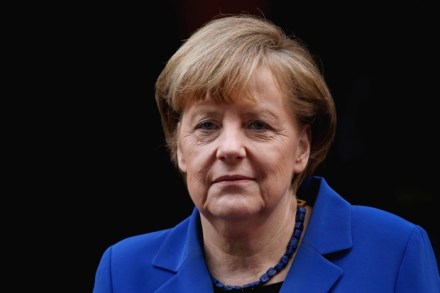
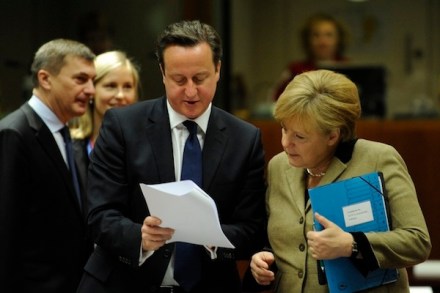
The row over Jean-Claude Juncker was confected outrage which spectacularly failed to achieve what Cameron wanted. It was confected because the alternatives to the ghastly Luxembourg bureaucrat are scarcely less federalist than he is himself. But the real giveaway, the most significant moment, came in Angela Merkel’s statement, issued as a means of giving a sop to the poor old British. Don’t worry, she said, Britain can reach 'ever-closer union' – ie political union – at a slower speed. In other words, there is no question that we will eventually succumb, we’ll just do it more slowly than everyone else. Bring on that referendum. Rod Liddle's new book Selfish Whining Monkeys is available from the Spectator Bookshop for just £12.99.

Video: The week ahead — Juncker and Cruddas

From our UK edition

In our latest View from 22 video, James Forsyth and Isabel Hardman discuss the two top stories from this weekend — the ascension of Jean-Claude Juncker and Jon Cruddas's intervention on Labour's 'dead' hand — and how they will play out over the week.

Confronting the Tories’ original sin: they are still seen as the party of the rich.

From our UK edition

Dominic Cummings is at it again. Michael Gove's former advisor has become a reliably entertaining guide to the Whitehall labyrinth. It is plain, too, that Cummings likes to think of himself as a Teller Of Hard Truths Many Of Which Our Masters Prefer Not To Contemplate Too Deeply If At All. This is fun. His latest post purports to be about swing voters, immigration and the EU but it is really about the biggest problem afflicting the Conservative party: who is it for? And who is it seen to be for? As Cummings puts it: The fundamental problem the Conservative Party has had since 1997 at least is that it is seen as ‘the party of the rich, they don’t care about public services’. This is supported by all serious market research.

Leaked: what David Cameron really told Van Rompuy and the EU leaders last week

From our UK edition

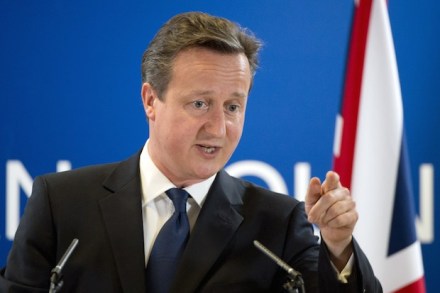
It’s well known that David Cameron voted against Jean-Claude Juncker and tried to persuade his EU colleagues to do the same. Thanks to today’s Mail on Sunday, we know exactly how forceful the Prime Minister was in warning and rebuking his fellow leaders. According to leaked reports, an angry Mr Cameron threw Herman Van Rompuy, outgoing EU chief, out of Downing Street following an argument over Juncker: ‘If it is to be Juncker, I insist on a formal vote,’ said Cameron Mr Van Rompuy blinked: ‘I will decide how the vote is conducted.’ Mr Cameron: ‘You must guarantee there will be a proper vote.’ Mr Van Rompuy: ‘I have said I will decide that.

After being Junckered, the Cameron circle now fear for the renegotiation

From our UK edition

Getting Junckered was not an enjoyable experience for Downing Street. Not only has David Cameron lost his battle to stop the former Luxembourg PM becoming Commission President he has also discovered that Angela Merkel’s assurances to him can be trumped by her domestic political concerns. Considering how Merkel is the hinge on which Cameron’s renegotiation strategy turns, this is worrying for him. As I report in the Mail on Sunday, members of Cameron’s circle are now contemplating that the renegotiation might not deliver enough substantive change for the UK to stay in. As one of those who knows Cameron best puts it, ‘They might plump the cushions for us but the train isn’t slowing down and the points are still set the same way.

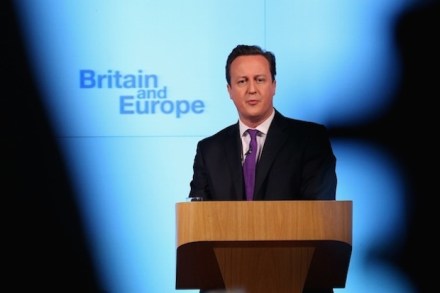
David Cameron has to explain exactly how he intends to reform Britain’s EU relationship

From our UK edition

The results of last month’s European elections demonstrated an appetite for change in Europe among voters – all parties seem to agree on that. Which is why David Cameron went into the most recent set of EU Council negotiations with cross-party support to secure a candidate for Commission President that would make achieving that kind of change and reform easier, not harder. Today there is a widespread and profound sense of disappointment at David Cameron’s apparent failure to build an alliance to secure an alternative candidate for the role.

Cameron defeated as Juncker nominated for European Commission President

From our UK edition

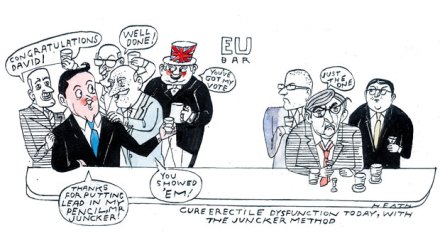
The European Council has nominated Jean-Claude Juncker to be the next president of the European Commission despite David Cameron’s staunch opposition. In the vote that Cameron forced on the appointment, he was defeated 26-2 with only the Hungarians joining the British in opposing the former Luxembourg PM. Junkcer’s appointment casts fresh doubt on whether Cameron will be able to renegotiate a new EU deal for Britain and whether this country will stay in the EU. In the coming weeks, we will have to watch and see whether other EU leaders try and come up with some kind of compensation package for Britain. When Cameron first came out in opposition to Juncker, he was pretty confident of success.

Jeremy Hunt: Better to be isolated and right in Europe

From our UK edition

Is it a good thing that David Cameron now appears isolated in Europe as he continues to dig a hole that Jean-Claude Juncker almost certainly won't fall into? Jeremy Hunt tried to argue on the Today programme this morning that it was, saying that people would respect an isolated Prime Minister who was prepared to make the right argument.