Eu

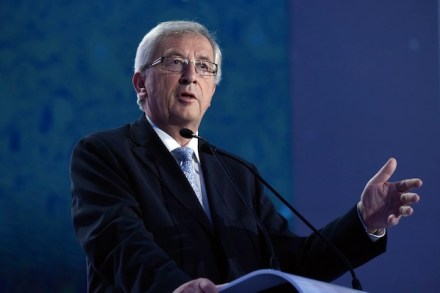
David Cameron is determined to fight Jean-Claude Juncker to the end

From our UK edition

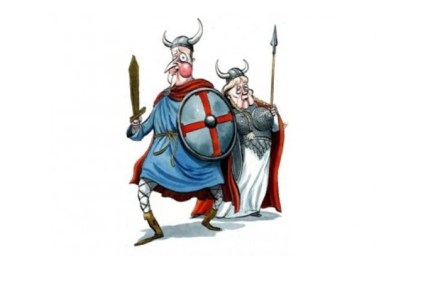
The family photo at this week's EU summit will be a particularly awkward affair. EU leaders will have just come from listening to the last post at the Menin Gate, the memorial to the British and Commonwealth dead of the Ypres campaign, but they will know that they are about to have an unholy row over dinner as David Cameron tries to stop Jean-Claude Juncker from becoming President of the European Commission. Aware of how bad all this looks, the head of the EU Council, Herman Van Rompuy, has been busy trying to prevent a row at Ypres. Cameron and Van Rompuy had a 'full and frank' discussion about the matter today, Downing Street says. But Cameron is still determined to have this fight; he isn't backing down despite only having the Hungarians for allies.
Spectator letters: Islamophobia, breast-feeding and Bach

From our UK edition

Rational fear Sir: An interesting contrast between the articles by Douglas Murray and Innes Bowen on Islamic influence in the UK (‘Save the children’, 14 June), and the one by Matthew Parris. Mr Parris sees no essential difference between faith schools. But Christians do not on the whole advocate holy wars against non-Christians, or demand that adulterous women be stoned to death, or that anyone who insults their religion should be beheaded. True, there was a time when the Church might have done all these things, but that was hundreds of years in the past and we are now more enlightened. Recent events in Syria and Nigeria, and now in Iraq, do not inspire confidence in Islamic moderation. But any criticism is immediately seized on as Islamophobia.

The Conservatives may have damaged their chances of reforming Europe

From our UK edition

Although many MEPs believe that the European Parliament is the centre of the known political universe, in truth the goings on in Brussels and Strasbourg rarely trouble the attention of anyone who is not a dedicated EU geek. That said, the decision by the Conservatives' ECR group to admit the anti-euro Alternative für Deutschland party could have wider repercussions for Anglo-German relations, and therefore the prospects for Cameron's EU reform agenda. For those who are not familiar with AfD here is a potted history: the party was founded by German academics opposed to Merkel's Eurozone policies, specifically the bailouts. As it has grown, AfD has combined a more socially conservative policy agenda with populist rhetoric.

Don’t blame the Guardian if criminals are getting better at hiding online. Blame iTunes and Netflix

From our UK edition

I wouldn’t wish to deny that all drug dealers and crime lords read the Guardian. Indeed, check the circulation figures, and you’d be forgiven for thinking that only drug dealers and crime lords read the Guardian. So, when I read last week about the trouble that GCHQ is now having tracking online criminality, and the way that GCHQ considers recent revelations about state surveillance via the Guardian to be the cause, I did not for a moment think that GCHQ was entirely wrong. I genuinely wonder, though, if the rogue National Security Agency IT boffin Edward Snowden, whom we hear so much about, has damaged national security as much as Apple has. Or Netflix or BT or TalkTalk, or the entirety of the global industries of music, television and film. No, I’m wholly serious.

Cameron’s EU threats must be plausible; nobody likes a Prime Minister who cries wolf

From our UK edition

Angela Merkel is annoyed that David Cameron seems to be issuing threats to other European leaders in order to get what he wants. At a press conference concluding talks held by the centre-right EU leaders in Harpsund, the German Chancellor reiterated her support for Jean-Claude Juncker, and said: 'I made myself clear by saying that I am for Jean-Claude Juncker. But when I made that statement in Germany I also made the point that we act in a European spirit. We always do that because otherwise you would never reach a compromise. 'Thus we cannot just consign to the backburner the question of the European spirit. Threats are not part and parcel of that spirit. That is not part of the way in which we usually proceed.

Cameron calls on his ‘Northern Alliance’ to help stop Jean-Claude Juncker

From our UK edition

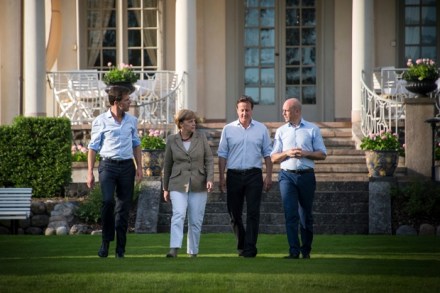
David Cameron visits Sweden today to discuss the future of the EU with the German Chancellor Angela Merkel, the Swedish Prime Minister Fredrik Reinfeldt and the Dutch Prime Minister Mark Rutte. The Prime Minister is attempting to block former Luxembourg prime minister Jean-Claude Juncker from securing the top job in Brussels. Earlier this year, Fraser Nelson explained how Cameron's 'Northern Alliance' may reshape Europe. If David Cameron were to divide Europe up, he’d make some crude distinctions. There would be the basket cases, like Italy, Spain, Greece, France — examples, by and large, of how countries should not be run.

What’s the fuss about Juncker? Better a drunken, useless federalist than an effective, sober one

From our UK edition

David Cameron is surely right to think that Jean-Claude Juncker is not the man to relieve the European Union’s woes, but I wonder if it is worth a fight. It reminds me of a similar battle by John Major, in 1994, to prevent a fat Belgian called Jean-Luc Dehaene from getting the job, on the grounds that he was too federalist. The post then duly went to Jacques Santer — like M. Juncker, a Luxembourgeois with an alleged fondness for alcohol (he was known as ‘Sancerre’). M. Santer was no better, from the British point of view, than M. Dehaene, and some European diplomatic chips were pointlessly used up.

President Obama tries to save Great Britain from itself

From our UK edition

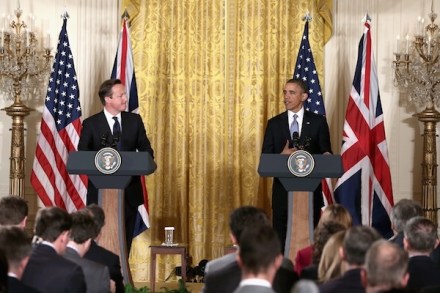
Maybe it's a special relationship after all. President Obama has given David Cameron and the Better Together campaign a rhetorical boost this afternoon. At a press conference held at the G7 in Brussels, the president said: ‘With respect to the future of the United Kingdom, obviously ultimately this is up to the people of Great Britain. ‘In the case of Scotland, there is a referendum process in place and it’s up to the people of Scotland. ‘But I would to say the United Kingdom has been an extraordinary partner to us. From the outside at least, it looks like things have worked pretty well. ‘We obviously have a deep interest in making sure one of the closest allies we will ever remains a strong, robust, united and effective partner.

David Cameron is doing what Eurosceptics want him to do

From our UK edition

Tory Eurosceptics from the Cabinet down have long made clear that David Cameron will only be able to get a sufficiently different deal from the EU if he’s prepared to threaten that Britain will leave if it can’t get what it needs. Many have assumed that Cameron, who has been clear that he would prefer Britain to keep in the EU, would not be prepared to do this. But it seems that he is. The German magazine Spiegel reports that Cameron told his fellow EU leaders that if Jean-Claude Juncker, the Luxembourg federalist, became president of the Euroopean Commission he could not guarantee that Britain would stay in the EU. The threat here is implicit not explicit but it appears to have got the message across.

Does Tony Blair want to be President of the European Commission?

From our UK edition

Tony Blair appeared on the Today programme on Tuesday morning to talk about Europe. The televised version showed him against the backdrop of the Brandenburg Gate. He said somewhat predictable things about Ukip being bad and a reformed Europe being good. The mystery was ‘Why?’ Why was he intervening at this point? It took me several hours to puzzle out a possible answer. It lies, I suggest, in his statement that the European project used to be ‘about peace’ and now it is ‘about power’. He was speaking at the beginning of the week when the contest for the presidency of the European Commission comes to a head. Mr Blair emphasised that the socialists in the parliament had done better in the elections than the conservatives.

If Britain has a culture war, it’s the euro-enthusiasts who started it, not Ukip

From our UK edition

Following last week’s Purple Revolution in which the pro-democracy Faragist rebels liberated Britain from the hated pro-EUSSR LibLabCon stooges (at least this is the version I’m telling my kids to repeat to their teachers), a number of people have written about what appears to be the opening of a ‘culture war’ in Britain. Andrew Sullivan talks about ‘blue Europe and red Europe’ in the sense of America’s blue and red states, and sees Ukip as representing the latter just as the Republican Party does conservative, left-behind America. I think there’s some truth in that.

Labour has proved that it speaks for London – and nowhere else

From our UK edition

So, now almost all the votes have been counted — except for those in the Islamic Republic of Tower Hamlets, where the vibrant and colourful political practices of Bangladesh continue to keep the returning officers entertained. Allegations of widespread intimidation of voters at polling booths, postal voting fraud and a huge number of mysteriously spoiled ballot papers; so much more fun than the usual dull, grey and mechanistic western electoral procedure. You wonder, looking at the exotic political fervour of Tower Hamlets, how on earth the British people could be so mean-spirited as to have developed this sudden animus against immigration. White British people now make up less than one third of this exciting, go-ahead borough; how they must love it there.

The Right loses as Ukip wins

From our UK edition

In Brighton in 1996, an insurgent party held its first and as far as I can see only conference. Liberal journalists gazed on the gaudy spectacle with wonder and disdain. We could see that he Referendum Party was a sign of the coming age of the super-rich. It was created by Sir James Goldsmith, a corporate raider who inspired the English tycoon Sir Larry Wildman, in Wall Street, and, you may not be surprised to hear, was a vain and bombastic censor to boot. (He persecuted Private Eye in the courts for not treating him with the deference a mighty plutocrat deserved.) Goldsmith spent most of his time in Mexico and France. During one of his visits to Britain he found the time spend some £20 million on funding anti-EU candidates in every constituency. What a crew his supporters were.

The Ukip ‘earthquake’ must provoke a proper debate about immigration

From our UK edition

The ‘debate’ about immigration in recent weeks has failed to focus on the crucial issue – the sheer scale that immigration has reached and its inevitable impact on our future. Perhaps this week’s ‘earthquake’ will prepare the ground for a serious discussion of what has to be done while preserving our open society and economy. The fundamental reality is that, under Labour, net foreign immigration was very nearly four million, while one million British citizens emigrated. Of Labour’s four million, only one third were from Eastern Europe, but those are the only ones that they mention. It cannot have escaped their notice that the other two and a half million are from outside the EU and are heavily inclined to vote Labour.

Captain Britannia: Nigel Farage is the Union’s Useful Secret Weapon

From our UK edition

Your enemy's enemy is not necessarily your friend. That is something forgotten too easily. Nevertheless, though he may not be your friend he may, for a time at least, be your ally. And so it came to pass that Nigel Farage is, for the time being, Labour's new best chum. In Scotland, that is. The Tories are quite pleased with him too and, if anyone could find them, perhaps the Liberal Democrats would be too. Of course, officially, there is much tut-tutting and hand-wringing over Ukip's success in Scotland. We're all supposed to be simply appalled that these fruitcakes have won a seat in the European parliament. Terrible stuff. Come off it. These are the lamentations of a crocodile. Secretly - and sometimes not so secretly - Unionists are delighted by Farage's success in Scotland.

The Tories and Ukip: deal or no deal?

From our UK edition

I can understand why some of my Conservative colleagues are calling for a pact with Ukip. At varying times over the past few years I have been concerned that our party isn't doing enough to respond to the electorate's hunger for an EU referendum, and I agreed that Ukip put necessary pressure on all political parties, and especially on the Conservatives in getting them to commit to a European referendum. However, time has moved on and the Conservative Party—and the country—now has that pledge. This is a time to hold our individual and collective nerve – and not to make knee-jerk decisions while we're focussed on today's results and not the broader political landscape. The local election results have removed some able and experienced Conservative Councillors.

A Romanian neighbour? Most people wouldn’t even notice

From our UK edition

Parliamentary privilege Some facts and figures about the European Parliament, according to the parliament: — The parliament annually costs €3.10 per citizen in EU member states (compared with €7.30 for Westminster). — It received 1.4 million visitors over the past four years, with 790,400 visiting the Parliamentarium. And some facts from Single Seat, the campaign for the parliament to stop shuffling between Brussels and Strasbourg: — It costs an extra €180 million a year to have more than one seat. — The Strasbourg parliament building is empty 317 days a year. — Hotel prices in Strasbourg increase 150% when the parliament is in town. Raising the floor Ed Miliband has pledged to link the minimum wage to average earnings.

David Cameron’s plot to keep us in the EU (it’s working)

From our UK edition

I write this before the results of the European elections, making the not very original guess that Ukip will do well. Few have noticed that the rise of Ukip coincides with a fall in the number of people saying they will vote to get Britain out of the EU. The change is quite big. The latest Ipsos Mori poll has 54 per cent wanting to stay in (and 37 per cent wanting to get out), compared with 41 per cent (with 49 per cent outers) in September 2011. If getting out becomes the strident property of a single party dedicated to the purpose, it becomes highly unlikely that the majority will vote for it. The main parties will conspire to push the idea of EU exit to the fringe. Waverers will wobble towards the status quo.

David Cameron’s plot to keep us in the EU (it’s working) | 22 May 2014

From our UK edition

I write this before the results of the European elections, making the not very original guess that Ukip will do well. Few have noticed that the rise of Ukip coincides with a fall in the number of people saying they will vote to get Britain out of the EU. The change is quite big. The latest Ipsos Mori poll has 54 per cent wanting to stay in (and 37 per cent wanting to get out), compared with 41 per cent (with 49 per cent outers) in September 2011. If getting out becomes the strident property of a single party dedicated to the purpose, it becomes highly unlikely that the majority will vote for it. The main parties will conspire to push the idea of EU exit to the fringe. Waverers will wobble towards the status quo.

You know you’re a European when…

From our UK edition

Today’s European election is not just a matter of deciding who gets to represent my made-up region in Brussels’ toy town parliament. It is a celebration of our common heritage as a people, and our proud record of centuries of killing each other in futile wars and thinking up political schemes that never work. Some proud Europeans have described their own ideas about what marks us out as Europeans. Here are mine: 1). You work to live, not live to work, and after 30 years of 30 hour-weeks you get to retire for another 27 years. And you get angry when people suggest that this insane system will leave your grandchildren impoverished. 2).