Eu

If Greece leaves the Euro, Cameron should start the British renegotiation all over again

From our UK edition

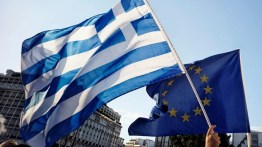
Tonight, it is still not clear how the Greek situation will be resolved. The European Central Bank--which is desperate to avoid being dragged into the politics of this situation--has chosen a middle way on its emergency assistance to Greek banks. It has neither ended it—which would have crashed the whole Greek banking system—nor extended it, which would have enabled the banks to stay open and eased the pressure on the Syriza-led government. Greek banks will definitely be closed tomorrow and probably until the referendum on Sunday. The next big question is what happens on Tuesday when the bailout programme ends and a payment comes due to the IMF which Athens will not be able to make.
Greece: ‘The crisis has commenced’

From our UK edition

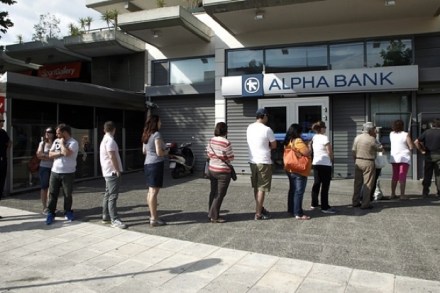
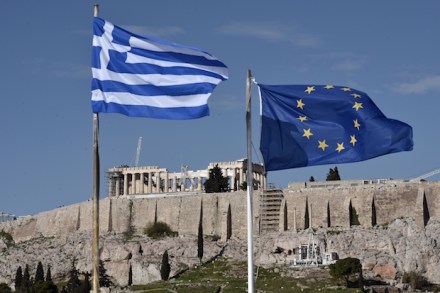
Alexis Tsipras’ gamble in calling a referendum on the bailout deal has failed in two respects. First, it has not prompted Greece’s creditors to offer the country a better deal. Second, they are not going to extend the bailout until the referendum—so, it will end on Tuesday. This means that without capital controls, the Greek banks will not be able to open on Monday morning. As the Irish Finance Minister put it, ‘The crisis has commenced’. We are now waiting for two things. First, will the Greek parliament and president approve the referendum. Second, will the European Central Bank continue to prop up the Greek banks. But, at the moment, it looks as if Greece is heading out of the Eurozone.

Greece to hold referendum on bailout deal

From our UK edition

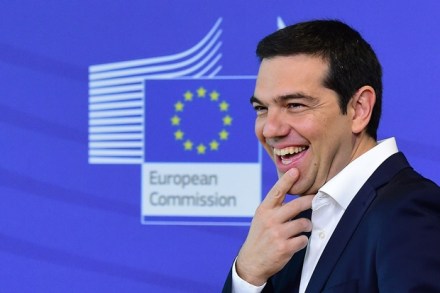
The Greek Prime Minister Alexis Tsipras has just announced that there will be a referendum on the proposed bailout deal next Sunday, July 5th. He will ask for the current bailout to be continued until then to allow the Greek people to have their say. The signs from Athens are that Tsipras will campaign for a No vote unless the creditors offer Greece a radically better deal at tomorrow’s meeting. This move from Tsipras will infuriate Greece’s creditors.  It will also, almost certainly lead to the introduction of capital controls for Greek banks until the referendum. If the creditors don’t blink tomorrow and improve the terms they are offering Athens, then it is hard to see how the current deal can win a referendum in Greece.

Letters | 25 June 2015

From our UK edition

Free trade with Africa Sir: Nicholas Farrell suggests that a naval blockade is the only solution to Italy’s immigration crisis (‘The invasion of Italy’, 20 June). Examining the causes of the situation might identify other measures. Since the European Union effectively closed its borders to trade with Africa to protect European farmers from lower food prices, the agricultural economies of most African countries have been in decline. Of course there is another reason for Africa’s decline. About 60 years ago, the Europeans found it convenient to convince themselves that in Africa self-government was better than good government. It followed that aid would be a convenient substitute for the risks or inconveniences of free trade.

Hesiod on Grexit anxiety

From our UK edition

Why do Greeks want to keep the euro, or remain in the European Union? The combative, creative, competitive, mercantile classical Greeks throve on independence. The farmer-poet Hesiod (c. 700 BC) makes the point about competition by calling it Eris, ‘strife’, which he characterises as painful but also helpful. On the one hand, he said, it creates conflict and discord; on the other, ‘It gets the shiftless working. For when someone whose work does not come up to scratch sees someone else, a rich man, busy himself ploughing and planting and managing his household well, then there is competition between neighbours in the race to riches. This Eris is good for men: potter battles it out with potter, carpenter with carpenter, beggar with beggar and poet with poet.

The Spectator’s notes | 25 June 2015

From our UK edition

People write about ‘Grexit’ and ‘Brexit’ as if they were the same, but they need not be. Grexit is about leaving the euro. Brexit is about leaving the EU. It seems, however, that the Greeks fear that leaving the euro would mean leaving the EU, and so feel paralysed. It simply is not clear what the true situation is. Although Britain has a specific opt-out (as does Denmark), for the other member states, euro-membership is, after a preparatory period is completed, an obligation. Does this mean that, once in the euro, an EU member state cannot leave it? If so, then William Hague’s famous phrase likening it to ‘being in a burning building with no exits’ is exact.

There’s no need for Cameron to rush the renegotiation process

From our UK edition

This EU Council has long been marked in Downing Street’s diary as the moment when David Cameron would tell other EU leaders what his renegotiation demands are. But tonight Cameron’s remarks will be a relatively minor part of proceeding as Greece and the situation in the Mediterranean dominate discussion. I understand that the Council President Donald Tusk is not even expected to go round the table asking other EU leaders what they thought after Cameron’s contribution. In some quarters, the fact that the British renegotiation is being treated as a third order issue at this summit is being seen as a snub to Cameron. But those involved in the renegotiation are actually quietly pleased that it won’t be the centre of attention at this summit.

Some gay people are right-wing. Get over it!

From our UK edition

Is being gay ‘left-wing’?  You wouldn’t have thought so.  If being gay is something which some people just are then there is no obvious reason why gays should not be of every political persuasion and none.  Why should the fact that you are attracted to members of the same sex mean that you are in favour of higher taxes?  Or entirely open borders?  Should being gay affect your attitude towards the European Union (in any case hardly a left/right question)? I ask because this weekend the annual ‘Gay Pride’ event happens in London and the organisers have tried to ban Ukip from attending.  The sweeping generalisation – not to mention political presumption – that this reveals is extraordinary.

If Merkel shrugs…

From our UK edition

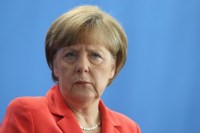
[audioplayer src="http://rss.acast.com/viewfrom22/angelamerkel-sburden/media.mp3" title="Fredrik Erixon and James Forsyth discuss the challenges facing Angela Merkel" startat=36] Listen [/audioplayer]German chancellor Angela Merkel may still be the most formidable politician in Europe, but this week she lost a bit of her reputation as the scourge of Mediterranean debtor nations. Greece’s firebrand leftist premier, Alexis Tsipras, actually gets on well with Merkel, however much his countrymen enjoy burning her in effigy and adorning her portraits with Hitler moustaches. In a recent profile of their relationship in Der Spiegel, Tsipras gushed, ‘She has this East German way of telling you honestly and straightforwardly what she thinks.

Europe’s great game

From our UK edition

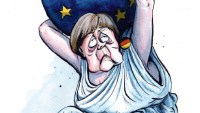
[audioplayer src="http://rss.acast.com/viewfrom22/angelamerkel-sburden/media.mp3" title="Fredrik Erixon and James Forsyth discuss the challenges facing Angela Merkel" startat=36] Listen [/audioplayer]For generations, ambitious politicians have dreamed about having the power to run Europe — but as Angela Merkel can attest, it’s a horrible job. She didn’t want to end up with the continent’s problems on her shoulders, but things have ended up that way. The Greek economic implosion, the seemingly unstoppable wave of immigrants from north Africa, the menace of Russian aggression, the euro crisis — all the multiple, interconnected, crises battering Europe have ended up as Merkel’s problem.

Ten myths about Brexit

From our UK edition

  1. Leaving the EU would hurt the UK’s ability to trade with it.  The fearmonger’s favourite argument. But fear not: the global economy has changed dramatically since Britain joined the EU in 1973, seeking entrance to a common market. The World Trade Organisation has brought down tariff rates around the world; even if we didn’t sign a free-trade deal with the EU, we would have to pay, at most, £7.5 billion a year in tariffs for access to its markets. That’s well below our current membership fee. 2. Three million jobs will disappear.  A bogus figure, heard often from the likes of Nick Clegg.

The questions you don’t ask at the BBC

From our UK edition

There was a remarkable scene in one BBC Today programme morning meeting in about 1995, as all the producers gathered together to discuss what stories would be on the following day’s show. The big story was the European Union; the splits occasioned by the EU within the Tory party and the battle, on the part of racist neanderthal xenophobes, to keep us out of the Exchange Rate Mechanism, from which we had ignominiously exited three years before. The meeting cackled and hooted at the likes of Bill Cash and his assorted fascists on the Eurosceptic right. ‘They think the Germans are determined to dominate Europe!’ and ‘They’re just racists!’ and ‘They’re all old Monday Club little Englanders!’ How everyone laughed.

Contagion of a different kind as Greece wriggles off the hook

From our UK edition

The clear winner in the Greek crisis is the author of The Little Book of Negotiating Clichés, whose royalties must have been pouring in as the clock ticked towards midnight while European leaders took positive steps back from the brink and found themselves speaking the same language, perhaps because they were reading from the same page. But assuming this predictable dance results in terms that Prime Minister Tsipras can persuade his comrades to accept before the IMF’s default deadline and the moment when the Greek banking system can no longer seek life-support from the European Central Bank — which is all still quite a big assumption — who will be the loser?

Greece’s service economy is no match for Germany’s mercantile one

From our UK edition

It sounds a bit odd these days but economics was actually invented by the Greeks. Back then, in ancient Greece, the ethos of economics was to keep the house in order and generally manage finances in a way that would make Wolfgang Schäuble blush with embarrassment for extravagant habits. Now economics is about to get a new meaning for Greeks. Perhaps not a science, but Greekonomics is now the art of killing an economy softly. The Greek tragedy is not that it teeters on the brink of default. Greece is going to get its deal – and its euro membership will live to die another day. The deal that is fleshed out in Brussels now will just help to push the country to the next time it needs financial support to pay its creditors.

Will the Calais crisis create another EU headache for David Cameron?

From our UK edition

The crisis at Calais has once again raised the issue of UK border security. Some of the 3,000-odd illegal migrants residing at the port took advantage of yesterday’s ferry workers strike by attempting to board the delayed vehicles. The immigration minister James Brokenshire told the BBC this morning the situation is ‘hugely regrettable’ and the government will be taking steps to ensure Britain's border security is beefed up: ‘It is hugely regrettable that we've seen these incidents occurring as a result of industrial action in France. ‘We are putting additional resourcing into the port of Dover to enhance screenings and detections there so that we're looking at this on both sides of the Channel.

‘No’ campaign coordinator pushes idea of two referendums

From our UK edition

Dominic Cummings is the man drafted in to put together the putative No campaign for the EU referendum. Cummings has a tendency to surprise and he has done that today with a piece that pushes the idea that the No campaign should say that there would be a second referendum if Britain votes Out. This second vote would be on the terms of Britain’s exit from the EU. Cummings’ thinking is that this would de-risk voting No. People would be simply rejecting the deal that David Cameron had negotiated rather than voting to leave outright. Cummings sums up the advantages of a second referendum for No thus: This approach might allow NO to dodge its biggest problem – the idea that a NO vote is a vote to leave in one jump and is therefore a leap in the dark.

The one thing that might ensure a Greek deal: fear

From our UK edition

On a narrow, sloping street in downtown Athens sits a graffiti-strewn wall that has captured the spirit of a nation. Amidst the spray-painted slogans and flaking posters, a black-and-white stencilled image of Greek Prime Minister Alexis Tsipras looks down benignly (beneath a perfectly-observed monobrow) at passers-by. His arms outstretched, dressed in flowing robes and with a halo circling his head, he is Christ come to redeem Greece. Such is the bitter humour that now pervades the country’s capital city as the prospect of financial implosion nears. Tsipras came to power promising to get rid of austerity and take the fight to Greece’s European partners. Reality, alas, proved less accommodating. The partners didn’t budge. Syriza, the party Tsipras leads, has had to.

Greece: The devil will be in the detail

From our UK edition

The Greek economy minister Giorgos Stathakis has told Robert Peston in an interview that the deadlock between Athens and its creditors has been broken, that $7.2 billion of funds should soon be released enabling the IMF to be paid at the end of the month. But this judgement seems distinctly premature. First of all, the technical negotiations have yet to take place — and it is all too easy to see how a deal could fall apart then. While the IMF tends to take a tougher line than the European Commission and so might not sign off on this deal. It is also worth remembering that there have been times when the Greek view of what has been agreed has differed distinctly from that of the rest of the Eurozone.

Greece may soon face a humanitarian crisis of its own

From our UK edition

Normally, the phrase ‘continent in crisis’ is hyperbole. But it seems appropriate today as we contemplate the situation Europe, and more specifically the EU, finds itself in. In the next few days, Greece could default, triggering its exit from the single currency and financial disruption across the Eurozone. Meanwhile, Rome is on the verge of unilaterally issuing Mediterranean migrants travel documents enabling them to travel anywhere in the Schengen area because—as Nicholas Farrell reports in the magazine this week—Italy simply cannot cope with many more arrivals. Those involved in the British government’s preparations for a Greek exit put the chances of it at 50:50.