Eu

The EU’s woeful response to the collapse of Tunisian democracy

From our UK edition

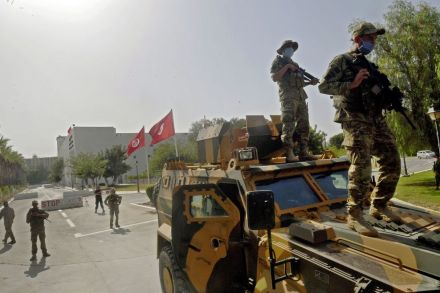
For a political actor that ‘believes in the universal value of democracy and the rights of the individual,’ as the European Commission’s President Ursula von der Leyen put it in her state of the union speech last September, the EU is becoming strikingly inured to threats to democracy in its immediate neighbourhood. Tunisia has been the lone success story of the Arab spring. It has delicately nurtured a parliamentary democracy which has managed to reconcile secular constitutionalism with conservative, Islamist political impulses – until last week, that is. Assisted by the military, the country’s President Kais Saied has suspended Tunisia’s parliament for 30 days, dismissed the prime minister, and has started arresting opposition figures.

Hungary, Poland and the EU’s ‘diversity’ problem

From our UK edition

It is quite something when the self-proclaimed ‘illiberal’ prime minister of Hungary, Viktor Orbán, reminds Brussels of its liberal principles. As part of the ongoing row over a Hungarian law which bans the ‘depiction or promotion’ of homosexuality and gender reassignment, Orbán has argued that: ‘If we want to keep the European Union together, liberals must respect the rights of non-liberals. Unity in diversity.’ ‘Unity in diversity’ has been the official motto of the European Union for over 20 years. The idea that the continent can unite in a common political and economic framework without losing the diversity of its constituent nations underpins the very idea of a democratic union of states.

The EU is failing to stand up for eastern Europe

From our UK edition

Will the EU stand up for eastern Europe? This question is now being asked by Ukraine following the announcement of a deal between Germany and the USA which paves the way for the completion of the controversial Nord Stream 2 gas pipeline between Russia and western Europe. The deal reached by Merkel and Biden may have placated critics in Washington, but it has failed to allay eastern European concerns over the security implications of the project. The state most affected by Nord Stream 2, Ukraine, has now requested urgent consultations with the European Commission and the German government, adding an air of legal weight to its complaints by invoking provisions of its ‘Association Agreement’ with the EU.

The EU’s menacing rule of law power grab

From our UK edition

Officially the European Union may be a union of sovereign states. But its Commission increasingly has the air of an imperial chancellery, or perhaps the headquarters of some vast conglomerate giving instructions to the directors of its far-flung subsidiaries. The Commission’s annual Rule of Law report, published last week, is a case in point. It is well worth reading if you want to understand the EU mindset. Nominally a report to the European parliament and a number of central institutions, essentially it is a 30-page memo reminding the EU27 that the rule of law is part of the EU brand — and ordering member states to uphold it without any backsliding.

Boris’s Brexit deal isn’t worth sacrificing Northern Ireland for

From our UK edition

There will be chaos at the borders. Food will run out at the supermarkets. Travellers will face long queues, and companies yet another round of disruption. As the UK lays the groundwork for breaking with the Northern Ireland Protocol, we will hear plenty of scare stories about how it might mean losing the Free Trade Agreement with the European Union. There is an element of truth in that, of course. The EU may well decide that if we are not sticking to the Protocol then the free trade deal has to go as well. But there is a flaw in that argument, and it is not exactly a minor one. In truth, the FTA is not worth saving – and certainly not worth sacrificing Northern Ireland for.

Is Starmer’s Labour plotting to reopen the Brexit deal?

From our UK edition

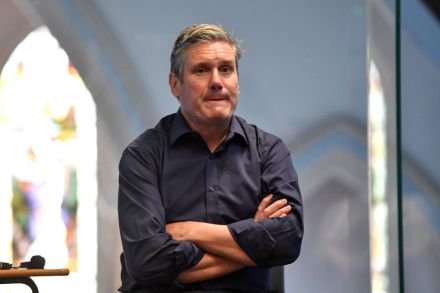
Brexit is done and dusted, but when it comes to playing politics on the UK's departure from the EU, the Labour party is still managing to get itself in a muddle. Rachel Reeves, the shadow chancellor, is the latest Labour frontbencher to send confusing messages about Brexit to voters.  Starmer's party, we are told, wants to come to an arrangement with the European Union on recognition of professional standards, something Boris Johnson's deal lacks. Labour is also seeking a bespoke veterinary agreement with the EU to overcome problems inherent in the Northern Ireland Protocol as it stands. The party also wants to make it easier for British bands to tour on the continent. Yet all the time, Reeves is sticking to the line that Labour would not reopen the Brexit deal.

The EU will regret its legal onslaught against Poland

From our UK edition

When European governments openly disobey courts, ears prick up. When two courts simultaneously contradict each other on the same day and descend into an unseemly shouting-match, all bets are off. Welcome to the mad world of Poland’s legal relations with the EU. The ruling Law and Justice Party in Poland, PiS, is cordially detested in Brussels. Its policies, which are quite popular locally, are anathema to the liberal and cosmopolitan Euro-nomenklatura. Back in 2017, PiS introduced technical changes to the terms of appointment of the Polish higher judiciary, including a disciplinary chamber with political connections armed with powers in certain cases to sanction judges.  The measures were aimed at halting corruption.

The EU’s Brexit bill doesn’t add up

From our UK edition

A dozen hospitals. A hundred million doses of the Pfizer vaccine, and a lot more of the Oxford one. Or even a few trips in one of Jeff Bezos’s new space rockets. Even with inflation, there is still plenty you can buy with an extra three to four billion pounds.  In recent days, it has emerged there is a big gulf between what the European Union insists we owe under the terms of our departure agreement, and what the UK believes is due.  In the EU’s accounts, it put the sum at £40.5 billion. The UK now says it will be £37.3 billion, or £3.2 billion less than the EU reckons. Despite this discrepancy, the EU continues to insist the UK should pay that full sum of money.

The EU’s growing migrant war with Belarus

From our UK edition

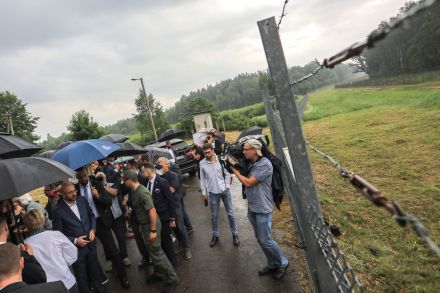
The EU is building a wall — and they’re going to make Belarus pay for it. This week, the tiny Baltic nation of Lithuania began erecting a barbed-wire border fence on its frontier with its neighbour, Europe’s most notorious autocracy. Meanwhile, Brussels is ramping up economic sanctions against Belarus. Lithuania’s parliament has declared a state of emergency, citing a sharp rise in migrants attempting to illegally cross the border. More than 800 made the journey in the first week of July alone, coming from countries like Iraq, Iran, Syria and the Congo. In response, hundreds of troops have been deployed and construction of a 340-mile barrier is underway.

The rule of law is breaking down in the EU

From our UK edition

There are 27 member states in the EU. Two have now declared they are not bound by EU law. Based on the law as set out in the treaty each member state signs when it joins the EU, that means both countries are in breach of international law. The first country in breach of international law was Germany. I wrote about this last year. The German court said it wasn’t bound by EU law because the EU had no power to act on the legality of the ECB’s bond-buying programme during the pandemic. The Germans said ‘you can’t answer this question, so we will’. Crucially, the EU disagreed and the European court gave a judgment on the legality of the bonds. At this point the German court overruled the EU.

Why is the EU copying China’s Belt and Road initiative?

From our UK edition

Much like Mark Twain’s apocryphal quote about arguing with idiots who ‘drag you down to their level and beat you with experience,’ Europeans should think twice about whether they want to try to compete with China when it comes to the use of economic power in pursuit of geopolitical ends. ‘It’s useless moaning about it,’ the German foreign minister Heiko Maas (correctly) told journalists last week, when discussing Chinese economic power at a meeting of EU foreign ministers in Brussels. The EU foreign ministers tasked the European Commission on Monday with preparing a European ‘strategic response’ to China’s Belt and Road Initiative (BRI).

Meet the punk comic taking on Bulgaria’s elite

From our UK edition

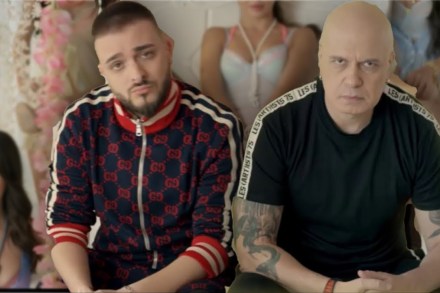
Inconclusive election results following a snap election; a politician at the helm who made his name on satirical TV shows; a football fanbase condemned for its racism; and a population that has a polarised attitude to the EU. Bulgaria perhaps has more in common with England than would first appear.  Dissatisfaction spilled over onto ballot papers this weekend during the country's snap general election. This has culminated in a celebrity-led, anti-elitist party winning the greatest share of the vote by a whisker: 24 per cent compared to the incumbent GERB party’s 23.5 per cent.

A minimum corporation tax is nothing to celebrate

From our UK edition

So is this what the new era of global co-operation looks like? The EU has agreed to delay the introduction of its proposed digital levy until the autumn to allow negotiations for a global minimum corporation tax. Biden had demanded that the digital tax be dropped, seeing it as a direct attack on US tech giants. In other words, the EU appears keen to compromise in the face of US pressure — something that it would have been less likely to do under Donald Trump. The move makes it more likely that a global minimum corporation tax of 15 per cent will now become reality. Is that a cause to cheer? Not if you are Ireland, which has grown wealthy in recent decades by setting a corporation tax rate of 12.

Why has the EU let German car manufacturers off the hook?

From our UK edition

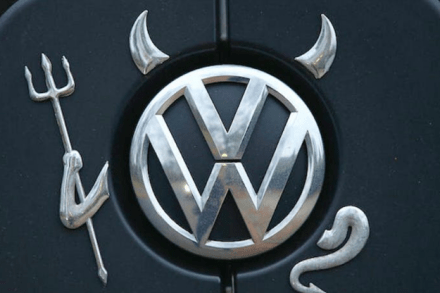
Two billion? Five billion? Perhaps ten billion to make it a nice round number? For colluding on diesel emissions you might think the European Union would hand out a pretty stiff fine to the big German auto-manufacturers. After all, it has hit American tech giants with huge penalties for far lesser transgressions.  Yet in the end, its response was predictable: the EU has largely let them off the hook. The reason? It turns out that protecting German auto manufacturers is what the Commission really cares about – and nothing else matters.

Lukashenko’s migrant warfare against the EU

From our UK edition

When you have already forced a plane down with spurious claims of a bomb threat, just to arrest one dissident journalist, where do you go from there? For the Belarusian dictator Alexander Lukashenko, a man looking to punish the European Union after it imposed sanctions on Belarus, it seems that exploiting would-be migrants and asylum seekers is the way forward. Last week, the dictator threatened to send masses of migrants to the EU, in retaliation for the bloc’s sanctions against Belarus. ‘We will not stop anyone’, Lukashenko said, saying migrants would be on their way to a ‘warm and comfortable Europe’ soon.

Britain should resist copying the EU’s corporate responsibility law

From our UK edition

Big corporations have a lot not to be proud of, and we certainly could do with laws to rein in some of their excesses. But that doesn’t mean that we should necessarily nod those laws through without a careful look.  A case in point is the demand made in recent days for the government to follow an EU initiative and introduce a 'corporate responsibility' law. This would require British companies to vet their entire supply chains for, among other things, human rights violations. The EU scheme in question, based on a European parliament vote in March, is what you have to look at to see just what is being asked for. Its demands are both interesting and, shall we say, not modest.

Should flights be taxed more?

From our UK edition

The European Commission is set to propose EU-wide minimum taxes on kerosene, the fuel for planes, as part of their EU energy taxation plans to meet the new eco 2030 targets. However, it remains to be seen if this tax will be agreed by all member states, as taxation issues require unanimity.  A leaked draft from the Commission proposes a minimum tax on flights inside the EU. Freight flights are to be exempted, so as not to give a competitive advantage to non-EU competitors, which could be seen as a muddled approach to satisfy too many objectives at once. And there are alternatives, such as including aviation companies in the CO2 emissions trading. Taxes are the prerogative of member states, though the EU can set minimum rates Why do planes not have to pay taxes on their fuel?

The UK’s immigration figures are a fantasy

From our UK edition

Journalists filing to deadline are apt to dig only so deep when googling for statistics, which in themselves are sometimes derided as worse than damned lies. Thus we’re often suckers for ‘known facts’. Besides, if the UK’s Office for National Statistics doesn’t produce reliable data, where’s a poor scribbler to turn? Nevertheless, the current uptake of Britain’s offer of settlement status to resident EU citizens exposes even this upright organisation’s immigration statistics as, well, worse than damned lies.

Angela’s ashes: Merkel is leaving the EU in chaos

From our UK edition

Perhaps the most absurd thing ever said about Angela Merkel is that she was the de facto leader of the western world. She has certainly been one of Europe’s most successful politicians, if you define success as political survival. But as she comes to the end of her 16 years in office, her luck is deserting her and the mess she has created is becoming horribly apparent. She leaves behind a split EU that is not just unled but might now be unleadable. Humiliating reminders of Merkel’s imploded authority come regularly. Take her latest idea to keep British tourists out of the EU this summer. Germany is imposing a mandatory 14-day quarantine for UK arrivals, whether they are vaccinated or not, and Merkel wanted other EU states to do the same.

The sausage war ceasefire is a good sign for UK-EU relations

From our UK edition

The sausage dispute between the UK and the EU may sound like something out of Yes Minister but it is the canary in the coal mine of UK-EU relations. In a sign of some progress, Maroš Šefčovič, the Commission vice-president, will announce this afternoon that the EU will agree to a UK request to extend the grace period for sausages and other chilled meats going from Great Britain to Northern Ireland for another three months. Both sides will offer their own unilateral declarations on what the extension means. RTE’s Tony Connelly provides a typically thorough run through of what we can expect. Two things are particularly worth noting. First, the UK is agreeing to a standstill on food standards during this period, not dynamic alignment with EU rules.