Eu

French democracy is in trouble – and the EU is to blame

From our UK edition

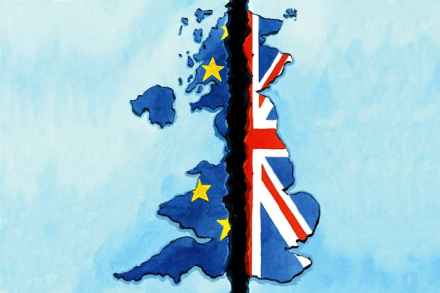
France's airwaves have been crackling with indignation this week, as politicians wring their hands at the record abstention in the first round of voting in the regional elections. Sixty six per cent of French voters found something else to do last Sunday other than vote, prompting Gabriel Attal, a government spokesman, to proclaim that the 'abysmal' turnout 'imperilled democracy'. 'French democracy is sick,' said Emmanuel Rivière of polling institute Kantar Public. It was perhaps unfortunate timing for Monsieur Attal that his remarks were made on Wednesday June 23, five years to the day since the British people voted to leave the European Union.

The British shows beloved by Europeans

From our UK edition

Forget the sausage war; could the real Brexit battle be over streaming services? After all, surely even hardened Remainers will have been appalled by the European Commission's plan to make it more difficult to stream British shows on the continent. Will it happen? Only time will tell. But here are eight shows that are a hit on the continent and that European viewers will really miss: Chernobyl Sky Atlantic/Now TV https://www.youtube.com/watch?v=s9APLXM9Ei8 Keenly watched pretty much everywhere, Sky’s superlative disaster drama is amongst the biggest British televisual exports to the EU (another accolade to add to its various Baftas, Emmys and Golden Globes). What's more, Chernobyl is one drama that really went out of its way to ensure cultural accuracy.

What the EU could learn from the Athenian Empire

From our UK edition

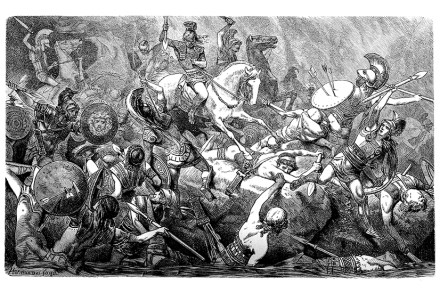
The EU has regularly been likened to the Roman Empire. But its current direction suggests that the Athenian Empire (478-404 bc) is a better parallel. The EU began as an attempt to unify countries economically after the second world war. By slow accretion of powers via the single market, Maastricht, the euro and finally Lisbon, the EU became, drip by drip, a full political union run by an unelected central authority, which now threatens to end vetoes and intervene domestically, suing member states with whose policies on immigration, civil rights, freedom of speech etc it disagrees. After the Persian wars, Athens in 478 bc assembled on Delos an alliance of Greek city-states (poleis) to keep Persia at bay.

The unfairness of London’s Remainer reputation

From our UK edition

Today marks five years since the United Kingdom voted to Leave the European Union. London, as we all know by now, voted the opposite way to the rest of England — by a margin of 60 to 40 per cent. Ever since then, the capital has been portrayed as remote and out of touch, culturally disconnected from the rest of the nation. Brexit is often explained as the victory of the long-ignored Rest of England where the ‘real people’ live. In 2019, Dominic Cummings told reporters to ‘get out of London, go and talk to people who are not rich Remainers’. But is London really so different to the rest of the nation? Let’s start with idea that those reporters would have to get out of town to meet poor Leave voters. London was home to more 2016 Leave voters (1.

Prepare for the EU’s ‘Hamilton moment’

From our UK edition

The EU may boast a common currency like any other state (even if nearly a third of its 27 members do not use it). It may also have, through its regulatory jurisdiction over banks and financial services, a vast say in the running of the financial system throughout the bloc: powers at least comparable to those of a federal government such as that in Canada or Australia. But there is one thing the EU has not yet managed to get: a unified tax system.  Any attempt seriously to impinge on national tax laws still requires unanimity among member states. This irks Euro-federalists.  One reason is that it draws the centre into unseemly squabbles.

Boris shouldn’t write off fossil fuels just yet

From our UK edition

At last week’s G7 summit, Boris Johnson pushed his fellow leaders to back his climate finance plan to support large-scale renewable energy projects across Africa and parts of Asia. The PM received a decidedly lukewarm response to his new Marshall plan, only netting pledges from Canada and Germany – and for good reason. As Rishi Sunak highlighted this week, when he declined to put a ‘specific figure’ on the cost of Net Zero in an interview on GB News, the cost of these climate plans are anything but clear. Fundamentally, Boris’s plan to boost renewables around the world misses the fact that renewables are actually struggling to catch up with traditional energy sources.

Is the EU breaching its UK treaty by failing to protect LGBT rights?

From our UK edition

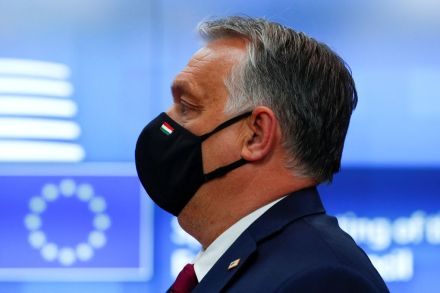
Has the EU Commission lost any sense of moral value? This week, Hungary, an EU member state, voted to impose bigoted and oppressive laws on its LGBT citizens. This amounted to a clear breach of many of our domestic laws – and it is a breach of the shared Human Rights laws. Yet the EU's response has been dismal. Is it time for Britain to show solidarity with LGBT Hungarians – and walk away from its treaty with the EU? The EU Commission said it is aware of what is unfolding in Hungary and that:  'When protecting children from harmful content it is important for member states to find the right balance of relevant fundamental rights, such as the freedom of expression and non-discrimination' But this falls far short of what it needed to say.

The EU’s debt bondage expansion

From our UK edition

In the global market for government debt, worth an estimated $92 trillion (£66 trillion), it amounts to little more than a drop in the ocean. The European Union this week issued the first €20 billion (£17 billion) of bonds to pay for its Coronavirus Rescue Fund. The money itself doesn’t amount to very much one way or another. And yet, the Commission’s President Ursula von der Leyen was surely right when she described it as a ‘truly historic day’. Why? Because, the Commission is already using it to seize control of fiscal policy, just as it used vaccine procurement to take control of health policy.

The protocol may be Boris’s greatest masterstroke

From our UK edition

The jibes thrown at Boris Johnson over his unhappiness with the Northern Ireland protocol — based on the obvious observation that he was the one who signed it — have been based on the assumption that he is either a liar or a fool. A liar because he knew full well what he was signing up to, or a fool for not knowing what he was agreeing to. Does anyone think that officials told him that the protocol would prevent Northern Ireland having access to some cancer drugs? Or guide dogs being unable to move between GB and NI? Keir Starmer has repeated the jibe about Johnson. A further version is that Johnson did not care if Northern Ireland paid the price so long as the UK left the EU.

Brussels has launched a full federalist assault

From our UK edition

It’s not only in Northern Ireland that the EU has taken to acting like some imperial power. Last week, with international correspondents' eyes conveniently fixed on the G7, it quietly began a legal push to take over large areas of its remaining member states’ domestic affairs. On Tuesday, the Commission announced that it was suing no fewer than seven of them in the Court of Justice for breaking EU law. Czechia and Poland are accused of not allowing EU citizens generally to join national political parties, and Hungary of not accepting migrants according to Brussels’s plans. The Netherlands, Greece and Lithuania are charged with failing to have severe enough laws against hate speech and Holocaust denial.

How to fix the protocol

From our UK edition

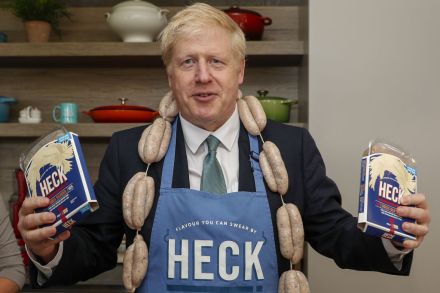
The blame game between London and Brussels over the Northern Ireland protocol obscures the fact that there are solutions waiting to be found. There are, as I say in the Times today, ways to reform the protocol and better protect the Good Friday Agreement while not threatening the integrity of the single market. Three changes would render the protocol far more acceptable Three changes would render the protocol far more acceptable and would better position it to withstand the undoubted pressures it will come under when the EU and UK start to diverge their regulations.  The first of these is a trusted trader scheme for food. This would allow registered suppliers to move goods — including, yes, sausages — from Great Britain to Northern Ireland without checks.

Joe Biden doesn’t understand Northern Ireland

From our UK edition

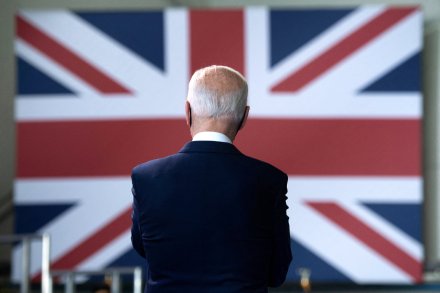
Even a pessimist could be forgiven for being surprised by Joe ‘I’m Irish’ Biden’s ham-fisted intervention in the ongoing row over the Northern Ireland protocol. If Boris Johnson’s remark that the phrase ‘special relationship’ didn’t ring true before, they certainly must after the President opened his visit by quoting Y.B. Yeats on the Easter Rising… while visiting a Royal Air Force base. It will also be a wearisomely familiar routine for Ulster unionists, who have been scorning American pressure to abandon Britain since at least the days of Woodrow Wilson. How will the government respond? There remain many on the right bewitched by yesterday’s Atlanticism.

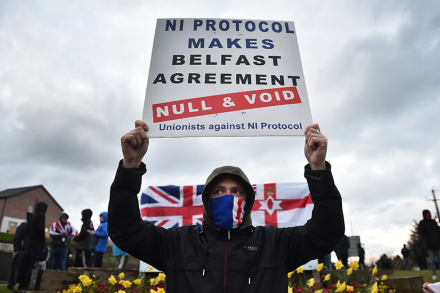
It’s time to revisit the Northern Ireland protocol

From our UK edition

Britain has already seen two ‘Brexit days’ — when it formally left the EU on 31 January 2020 and the end of the transition period 11 months later. But given that it has taken less than six months for the Northern Ireland protocol to unravel, it’s horribly clear that our future relationship with the EU is anything but settled. The transport of sausages and other chilled meats from Britain to Northern Irish supermarkets may seem a trivial matter. But the attempt by the EU to enforce a ban on this trade demonstrates what so many people found problematic about the idea of an internal UK border down the Irish Sea. And it is surely a harbinger of battles to come.

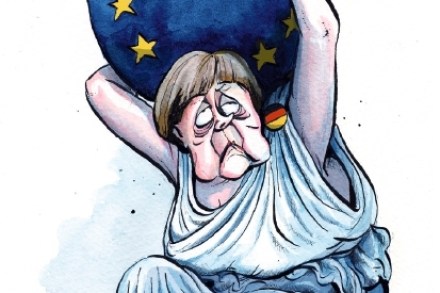
The German takeover of the EU is accelerating

From our UK edition

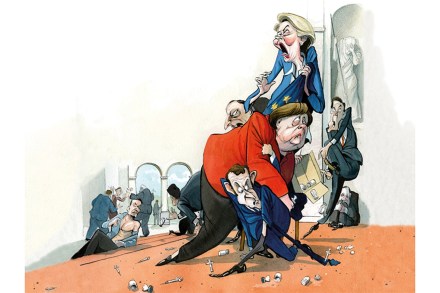
Vetoes should no longer be allowed. Smaller countries should not be able to block the will of the ‘majority’. And the biggest countries, with the largest financial contributions, should be the ones that get to dictate policy. Ever since German re-unification made the country by far the largest in the bloc, there has been a creeping German take-over of the European Union. But with the British no longer around to hold that back, it is starting to accelerate. The real trend is towards an EU that is no longer a confederation of nations, but one that is dominated by Germany We had the clearest indication of that yet with a demand today for national vetoes to be ended.

How a Polish coal mine risks derailing the EU’s climate strategy

From our UK edition

Cracks are appearing in the EU’s climate strategy. An international dispute over the court-ordered closure of a coal mine on the Poland-Czech Republic border has thrown divisions over how to phase out fossil fuels into sharp relief, leading to the first ever environment-related lawsuit between two EU member states. The Czech Republic has taken Poland to the European Court of Justice to oppose the extension of a licence for the Turów coal mine on Poland’s south-western border with the Czech Republic and Germany. The Czech government said that continued operations at the mine constitute a risk to the health of Czechs living nearby due to air pollution and reduced groundwater supplies.

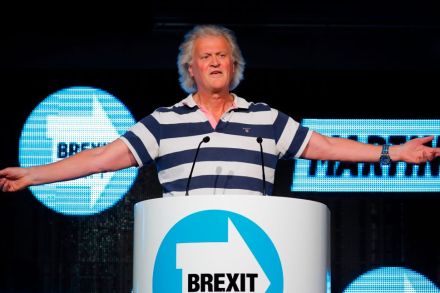
Tim Martin isn’t a Brexit hypocrite

From our UK edition

Heinz is expanding a huge factory in the UK. Tesla is reportedly scouting the north for locations for a new car or battery plant. Even the pound is bouncing to three-year highs.  It has been a difficult few weeks for some hardcore Remainers. Still, at least there is finally something to cheer them up. Tim Martin, the pugnacious founder of the pub chain JD Wetherspoon argued today that the government should relax immigration rules to ease a shortage of labour.  For the dwindling band of believers in the EU, it was a gotcha moment. At last, one of the leading backers of our departure from the EU was experiencing some ‘Bre-mourse’. 'Brexit fantasies succumb to Brexit reality,' tweeted the former editor of the Financial Times Lionel Barber.

Is the euro area at risk of an inflation surge?

From our UK edition

If you like a snapshot of a bang-on target, this is it: headline inflation in the euro area for May came in at 1.99 per cent on an annual basis, which gives a whole new meaning to close to, but below 2 per cent. The number itself, however, is entirely meaningless.  As ever, the more important number is the core rate of inflation, which excludes energy, food and alcohol, and which shows no sign of breaking out its range of around 1 per cent. But even the core rate is subject to some noise. For example, the pandemic-related cut in the VAT rate during the second half of last year contributed to the steep fall in the core rate in August and the steep rise in January.

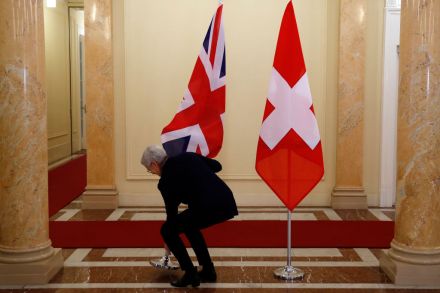
Brexit Britain can capitalise on the breakdown in EU-Swiss talks

From our UK edition

It is a leading player in finance, and it's companies are giants in life sciences and consumer goods. There were already lots of similarities between the Swiss and British economies, except that they are quite a bit richer and more successful than we are. Now we have something else in common: we have both been frozen out of the European Union’s Single Market. But hold on. Isn’t there an opportunity there as well? In truth, this would be the perfect moment to offer the Swiss a deal that would work for both sides – a common market. The Swiss have always had a fractious relationship with the EU.

The EU is overplaying its hand on Northern Ireland

From our UK edition

The EU's decision to take control of the vaccine programme was hardly a roaring success. The eurozone's economy remains stuck in recession. And the EU's foreign policy is a mess, as events in Belarus have just made clear.  Still, despite the evidence that she isn’t very good at managing anything, no one can argue that the European Union’s president Ursula von der Leyen lacks self-confidence. Last night, she made it clear there could be no possible compromise over the Northern Ireland protocol. The trouble is that she could easily bring the whole trade deal between the EU and the UK crashing down.

The Belarus hijacking reveals the West’s complacency

From our UK edition

On Sunday evening an act of appalling state kidnapping took place over the skies of Europe. Four alleged KGB officers and a Soviet-era MIG-29 fighter jet forced a Ryanair flight, travelling between two EU capitals, to divert to Minsk. The hijacking was a carefully planned, outrageous operation. The Belarusian KGB (sadly not an anachronism) had claimed there was an explosive device onboard, but their real target was Roman Protasevich, a 26-year-old journalist. Protasevich is the founder of the NEXTA telegram channel, which supported and covered the anti-government protests that erupted in Belarus last August after falsified presidential elections.