Eu

The Spectator podcast: The Brexit bounce

From our UK edition

On the morning of the 24th June, Britain woke to find its stock market shattered and its pound pummelled. It appeared – for a brief moment – like all the prophecies of the Brexit doomsayers, not least the Great Seer Osborne, had come true. But then, from the wreckage of that mid-summer morning, green shoots began to appear, and now, more than two months down the line, it seems that Britain has bounced back. In his cover piece this week, Ross Clark argues that the Remain campaign fell victim to the perils of believing their opinion to be ‘objective fact’, and that economic recovery has humiliated the Treasury, Bank of England, and the other grand institutions who swore that Brexit would leave us poorer. So is he right?

The Brexit bounce

From our UK edition

Next time it comes to redesigning the PPE course at Oxford, I suggest a module beginning with a quotation from George Osborne. It’s something he said to the Treasury Select Committee in May, back when he was still Chancellor: ‘If you look at the sheer weight of opinion, it is overwhelmingly the case that people who look at the case for leaving the EU come to the conclusion it would make the country poorer, and it would make the individuals in the country poorer, too.’ There might be advantages to Brexit, he said, ‘but let’s not pretend we’d be economically better off’. In other words: it wasn’t just George Osborne’s opinion that Britain would be worse off if we left the EU; it was objective fact.

After Brexit, who should Britain let in?

From our UK edition

Why has ‘trust’ became such a dominant issue in British politics in the early 21st century? Is it the failure to find weapons of mass destruction in Iraq? Or the arrogant ineptitude that led to the financial crisis and the bank bailouts? Or the parliamentary expenses scandal? Or is it, more than the above, the failure of successive governments to meet their immigration targets? Trust in politics will fall to dangerously low levels if-immigration continues as is following this year’s referendum. This is why the government has acknowledged that some control over EU immigration must be part of the Brexit deal. The extent of these restrictions will be key to our agreement with the rest of the EU. The relationship between the Brexit vote and immigration is complex.

Theresa May: We have selection in state schools already, selection by house price

From our UK edition

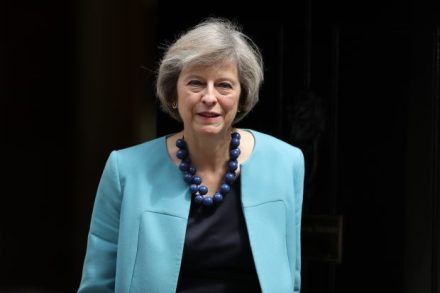
Theresa May received the traditional desk banging reception when she addressed the 1922 Committee of Tory backbenchers. May pleased Tory MPs by emphasising that they  would have more opportunity to feed into policy making process now through George Freeman and the policy board and the green papers that will---once again—precede white papers. But what most excited Tory MPs was what May said about opportunity and grammar schools. May said that she would give a speech on a 21st century education system soon, explaining how selective schools--in other words, grammars--fit into the mix. Strikingly, she defended an ‘element of selection’ arguing that there is selection already in the system, and it is selection by house price.

What we learnt about Brexit from Theresa May today

From our UK edition

Theresa May began her statement on the G20 by talking about Brexit. She insisted that she wasn’t going to give a ‘running commentary’ or reveal the government’s negotiating hand as, she said, that would not deliver the best deal for Britain. In other words, we’ll all just have to wait and see what she negotiates. May’s insistence that she won’t rule anything in or out does lead to some rather bizarre moments. May repeatedly, and rightly, stressed the trade deals that the UK would seek to do outside the EU. But when Labour’s Emma Reynolds asked her to confirm that these deals would require leaving the customs union, May ducked the question.

Let’s not overhype a free trade deal with Australia

From our UK edition

The best thing to say about the UK kicking off preliminary trade talks with Australia is that they're a start. In that they show Britain is looking to do business around the world, they're a welcome signal in the wake of the vote for Brexit. Given that some have taken the referendum to be a sign of Britain slamming the door shut, any talk which counters this false narrative is refreshing. Yet there's also a danger of overhyping the significance of such a deal. And it's worth reminding ourselves that signing such an agreement won't be the answer for all of Britain's troubles. The statistics make it clear that a trade deal with Australia would only cover a very small fraction of the UK's dealings with the rest of the world.

How Alternative für Deutschland forced German politics to the right

From our UK edition

‘When the world ends, I’ll go to Mecklenburg,’ quipped Bismarck, ‘because there, everything happens a hundred years later.’ Mecklenburg-Vorpommern has always been seen as somewhere behind the times, but has this sleepy backwater now become a portent of momentous things to come? In last weekend’s regional elections, Germany’s fledgling anti-immigration party, Alternative für Deutschland, came second, pushing Angela Merkel’s CDU into third place – in her own constituency. So was AfD’s Leif-Erik Holm right to say that this could be the beginning of the end for Merkel? And does this shock result mark the end of the beginning for AfD?

Some clues as to what David Davis means by Brexit

From our UK edition

David Davis has just finished his first statement to the Commons on the process for the UK exiting the European Union. Davis’s initial statement stuck closely to what the government has said already; the coordinated Labour backbench heckle of ‘waffle, waffle’ had some truth to it. But it was striking that Davis said he hoped the UK’s security relationship with the EU would be as close or closer post-Brexit; in Whitehall, Britain’s intelligence and military capabilities are regarded as one of our key assets in the negotiation. But in answer to the questions that followed, Davis--a naturally frank politician—gave a clearer sense of what he means by Brexit.

Theresa May’s honeymoon period comes to an end

From our UK edition

The Prime Minister and her colleagues are very slowly starting to reveal what they think they mean when they say ‘Brexit means Brexit’. This afternoon the Secretary of State for Exiting the European Union David Davis will give a statement to Parliament on what the terms of negotiation might resemble for Brexit - or at least what the terms that ministers have come up with over the summer are. It may be that the Government isn’t actually ready to set very much out at all, but is just trying to avoid an urgent question from a hostile MP by giving a statement.

Is May dropping the ‘Leave’ campaign’s immigration policy?

From our UK edition

'Brexit means Brexit', Theresa May has repeatedly reassured us. But it seems Brexit might not mean an introduction of a 'points-based' immigration policy which Vote Leave - and a number of cabinet ministers, including Boris Johnson - had called for during the referendum campaign. The Prime Minister said the system was no 'silver bullet' and planned to look 'across the board' for answers instead. As is becoming clearer - and as James Forsyth pointed out after May's Marr interview yesterday - the Prime Minister has a style in front of journalists which involves giving little away.

May says general election will be in 2020

From our UK edition

Theresa May is on her way to her first G20 summit. But she has still sat down for the traditional start of term interview with Andrew Marr. Reading the transcript of it, it looks like a classic Theresa May interview: with very little given away. She avoided answering Marr’s questions on whether she would like to see more grammar schools and refused to say whether she shared her chief of staff Nick Timothy’s view that Chinese involvement in the Hinkley point nuclear project would be security risk. On Brexit, May said little new about the deal she would like to strike--confirming the sense that, as one Minister told me, the government is ‘a way away from forming a definitive position’.

The inside story of how the Brexit vote was won

From our UK edition

In the months before the referendum, the 'Leave' campaign's press operation had been in control of the campaign. But in the last three weeks, the baton was passed over to the ground campaign to get us over the line. Running a good ground campaign relies on three key phases. The first two of these - identification and motivation - are largely self-explanatory. Find target voters then work out how to enthuse them. The final stage is about getting out the vote - making sure people actually go to the polling station. This means ensuring your supporters vote in greater numbers than the other side (what's known as 'differential turnout'). The key to the whole process is identifying supporters – collecting what’s called Voting Intention data.

A rotten windfall

From our UK edition

It’s strange that, even now, the Brexit vote is routinely referred to as an expression of anger or frustration — as if the most easily baffled half of the population had voted in response to forces they could not understand. In fact, the result of the 23 June referendum seems to look wiser with every week that has passed. Of course, leaving has its risks. But 52 per cent of voters judged that a greater one lay in staying in a European Union that is changing all the time — and invariably for the worse.

Theresa May’s Brexit minefield

From our UK edition

When David Cameron resigned, the Conservative Party Board pushed back the planned date for the election of a new leader until after the G20 summit had taken place. The official reason was to give the new Prime Minister time to read into the job and save him or her from having to fly off to meet world leaders directly after moving into Downing Street. More cynical members of the board, though, suspected Cameron had another motive: he wanted the chance to say a proper goodbye to Obama and Co. Thanks to Andrea Leadsom’s withdrawal from the leadership race, however, Theresa May now heads to the summit this weekend with almost two months in No. 10 under her belt. She will be a main focus of interest in Hangzhou, China.

Italian Notebook

From our UK edition

 Lido di Dante, Ravenna When the earthquake struck in the dead of night at 3.36 a.m. — the Devil’s Hour — I was in front of my computer in what used to be the cow shed. This is the only time of day when my six boisterous children and their high-voltage Italian mother are not around. The insects, attracted by the light, are worse at night but they can be killed if necessary. As for the toads (we have biblical numbers that emerge from the underworld at night via the open glass doors), I quite like them. Even though there are three on the coat of arms of the Devil himself, I just sweep out with a broom any toad I notice hopping across the floor. The silence is so intense that I can hear the horse and the donkey munching hay in the stable 100 yards away.

Warrant for alarm

From our UK edition

A concerted effort is under way to make sure that, when it comes to the European Arrest Warrant, Brexit does not mean Brexit. The Police Federation, for example, will hear no ill spoken of the system. And the same might be said of the Prime Minister, who as home secretary praised it to the skies. As she put it in October 2014, without the European Arrest Warrant, ‘British criminals would be able to hop on to the Eurostar or fly to Spain, safe in the knowledge we wouldn’t be able to get them back to prosecute them.’ Without it, the UK would become ‘a honeypot for all of Europe’s criminals on the run from justice’. The statistics appear to back her.

Theresa May shows she wants to be defined by more than just Brexit

From our UK edition

Theresa May welcomed the Cabinet to Chequers with this address, just released by Number 10: 'Thank you very much for coming together today. It’s our first opportunity to meet since the summer recess, but also the first opportunity for us to meet since the fantastic success of the GB Team at the Olympics – absolutely great. And also the Paralympics will be starting very soon, so we wish our Paralympic athletes all the very best and success there as well. But obviously over the summer – over the last few weeks – quite a lot of work has been done. We’re going to be having an opportunity today to discuss this.

Theresa May’s great Brexit brainstorm starts today

From our UK edition

Summer is over. Or at least as far as Theresa May is concerned it is, as the PM gathers her cabinet at Chequers today to talk business about Brexit. It's the most important gathering of her time in office so far and a chance to spell out an action plan for Britain's departure from the EU. She put a stop yesterday to talk of a second referendum and today she has repeated her pledge that there won't be an attempt to 'sort of stay in the EU by the back door'. But whilst those words are a reassurance of what won't happen, today's meeting is also a chance for the PM to thrash out what she hopes will happen over the weeks and months ahead. It's also an important opportunity for each cabinet minister to spell out the 'opportunities' of Brexit: this is the key to making Brexit a success.

Apple’s Irish tax bill is bad news for free-market liberals

From our UK edition

So the European Commission has today released its much-delayed iTax. This time, it’s not an Apple innovation but a ruling ordering Ireland to claw back €13bn in back tax from Apple – a record penalty and one that the company and Ireland have both vowed to appeal. The Commission announced its decision in a typically terse ruling, in which they chuck rotten fruit at Ireland’s low corporate-tax environment. But whilst every one is talking about tax, this fracas between the EC and Ireland over Apple’s bill—what we here locally might call a ballyhoo—actually has less to do with one of the two inevitabilities of life, and much to do with the Commission's Competition Commissioner, Margrethe Vestager.

Who’s at the ‘back of the queue’ now, Obama?

From our UK edition

Wasn’t it one of the 'Remain' campaign’s big arguments that leaving the EU would deprive us of the ‘clout’ we enjoy in negotiating foreign trade agreements? I seem to remember someone even warning us that in the event of Brexit we would go ‘to the back of the queue’ for a trade agreement with the US. So much for being at the front of the queue. Today, the French minister for foreign trade, Matthias Fekl, demanded an end to talks with the US over the Transatlantic Trade and Investment Partnership (TTIP). It comes hot on the heels of claim yesterday by German deputy Chancellor Sigmar Gabriel that TTIP has failed. Yet again, the EU has proved hopeless in negotiating a trade deal with a major economy.