Eu

Britain hits back over French threat to scrap Calais ‘jungle’

From our UK edition

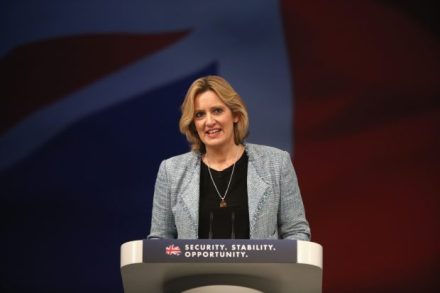
It's no surprise that demands from French politicians to scrap the Le Touquet deal and shift the migrant 'jungle' from Calais to Dover has gone down badly in Britain. Today's front pages are full of talk of 'Le Stitch up'. And the Home Office has waded in to say these plans are a complete 'non starter'. This all sets the scene for a testy meeting for Amber Rudd as she crosses the Channel to meet her French counterpart, Bernard Cazeneuve, for talks today. Their meeting will be a private one but it isn't difficult to work out that Calais will be top of their agenda. What's difficult about finding a solution, however, is that all of this talk is something of a phoney war of words, at least for now.
Mark Carney’s referendum ‘uncertainty spike’ exposed as bluster

From our UK edition

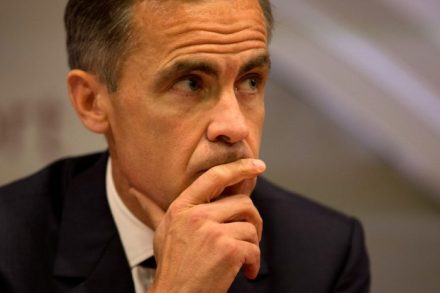
In the runup to the referendum, we heard repeated warnings that, whatever the outcome of the actual vote, the damage to the UK economy had been done. The Bank of England, whose governor has been accused of becoming something of a fellow traveller for Project Fear, warned in its Monetary Policy Committee meeting in March that: ‘There appears to be increased uncertainty surrounding the forthcoming referendum on UK membership of the European Union’. In April, the BoE was at it again, downgrading second-quarter growth from 0.5 per cent to 0.3 per cent. Warnings such as these risk of being self-fulfilling: if you talk about uncertainty, it’s hardly surprising that investors feel uncertain, creating a knock-on effect out of nowhere.

France’s burkini ban was an own goal for secularism

From our UK edition

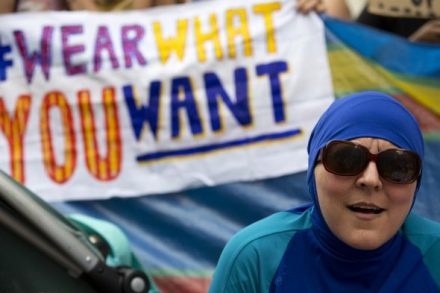
I’ve always hated the beach. The water? Great. The sunshine? Terrible. It starts with the hot trek across the sands to find a square of free ground – loaded up with factor 60, several books, a comedy floppy hat, two towels, three bottles of water and the rusty family parasol. Then there’s the bodily anxiety. Find me a woman who doesn’t fret about her body on the beach, and I’ll find you a liar. Just over a year ago, I wrote a post for The Spectator about my own fraught history with my body on the beach. I still don’t understand how it ever became acceptable to wear an itsy bitsy bikini around one’s dad. And even in a one-piece, if I don’t draw attention to my thickening waist, my mother will.

Barometer | 25 August 2016

From our UK edition

Golden years How many Olympic events would Team GB have to win before we could earn back the gold reserves sold by Gordon Brown? — Olympic gold medals are in fact gold-plated silver and contain only 6g of gold. Between 1999 and 2002 Gordon Brown sold off 395 tons of gold — enough to mint 64.7m medals. Assuming the number of golds on offer at the summer Olympics remains 812, as at Rio, that would mean winning every event at 79,679 Olympiads, taking us to the games of ad 320736. — It would be a different story if, as last happened in 1912, the medals were solid gold. With 500g of gold in each medal, we could achieve the feat by ad 5848.

Today’s net migration figures show the huge task facing Theresa May

From our UK edition

The good news for the Government is that net migration is down. The bad news? It's down by so little (a fall of 9,000 to a total of 327,000) that you won't hear anyone crowing about today's figures. That the 'tens of thousands' target made by the Government still hasn't been met is no surprise at all. And we can expect to see a continuation of the semantic shift from that Tory 'promise' down to a 'pledge'. So apart from telling us that, as far as net migration is concerned, it's business as usual, what do today's figures show us? For one, they make it clear that solving this issue won't be easy for the Prime Minister. Net migration from certain EU countries like Romania and Bulgaria is at a record high.

The Bank of Wonderland

From our UK edition

What should we think about negative interest rates? What kind of Alice in Wonderland world are we living in when companies and households are paid to borrow and charged if they save? Seemingly crazy, negative interest rates are spreading nonetheless. Implemented by central banks in Europe, Japan and elsewhere, they now apply in countries accounting for a quarter of the global economy. Should we be worried? Could we see negative rates in Britain? Earlier this month, the Bank of England cut interest rates for the first time in seven years, from 0.5 per cent to a new record low of 0.25 per cent.

The Boris-bashers should be ashamed

From our UK edition

Throughout this fractious summer, one thing has united all the warring pundits and politicians. Left, right; Leave, Remain, everyone at least agrees that it was crazy to leave the country in Boris’s hands. He’s not serious, they say, looking, as they make this pronouncement, jolly pleased with their own relative gravitas. They should instead be ashamed. The endless jeering at Boris isn’t justified — he was a decent mayor of London — and it is not in good faith. What purports to be considered criticism is almost always just sour grapes. Why the bitterness? More often than not, Boris-bashers — in Parliament or press — are his contemporaries. A lot of them went to Oxford with him and they measure their success against his. It makes them cross.

Brexit won’t finish the EU, insist Merkel, Hollande and Renzi

From our UK edition

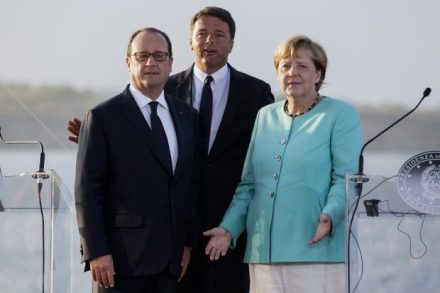
It's no surprise that Italy’s prime minister Matteo Renzi chose to host a press conference with Angela Merkel and Francois Hollande on an aircraft carrier; this was a piece of theatre designed to show the EU is fighting back. 'Many thought the EU was finished after Brexit,' said Renzi. Not so, he claimed. Instead, Britain's decision to leave the EU was the chance to 'write a future chapter' and 'relaunch the powerful ideas of unity and peace, freedom and dreams', the Italian PM insisted. All very well, you might think, but what does that mean? Defending the continent against the threat of Islamic terrorism was a key topic. Angela Merkel called for intelligence services across the continent to share more information to help fight extremism. So far, so sensible.

Revealed: the bureaucrat who advised Theresa May to use EU nationals as bargaining chips

From our UK edition

The biggest puzzle of Theresa May’s premiership so far is why someone who pioneered laws against modern slavery and was so tough on stop-and-search should take such an extreme and heartless position on EU migrants. Her declaration – that she’d use them as bargaining chips in Brexit talks – struck many who would otherwise support her as bizarre and repugnant. The Times reveals today that this idea was dummed up, as you’d expect, by the Whitehall machine. Sir Ivan Rogers, Britain’s ambassador to the EU, advised all candidates for the Tory leadership to use Britain’s three million EU nationals as bargaining chips in Brexit talks because he thought it would be the only bargaining chip Britain had.

Out – and not proud

From our UK edition

‘Many people are mourning,’ said Sam West on a BBC panel show discussing the response of the arts world to Brexit. According to West’s figures, ‘96 per cent of those polled were for Remain. Collaboration and connection are our bread and butter.’ The atmosphere of bitterness and anger was palpable at the Edinburgh Festival. I spent four days immersed in comedy shows and I heard only one pro-Brexit gag. The excellent Geoff Norcott said he was puzzled to meet Remainers who told him the result had been swung by ‘thick’ Leave voters. ‘Thick?’ he said. ‘The Remain campaign waited until after 23 June to stage their street protest.

Barometer | 18 August 2016

From our UK edition

Four-letter surveys A judge at Chelmsford Crown Court who was sworn at by a man she was sentencing to jail swore back at him from the bench. How common is swearing? — A study in 1980 by Timothy Jay of the Massachusetts College of Liberal Arts analysed 11,609 words of everyday conversation and found 70 taboo words — a rate of 0.7%. — A similar study in Britain in 2006 suggested that between 0.3% and 0.5% of words we utter are swearing, and a 2007 US study suggested a rate of between 0.5% and 0.7%. According to the latter, Americans utter between 15,000 and 16,000 words a day, 80–90 of them taboo.

What performing stand-up in Ukip country taught me about racism

From our UK edition

Most people would say UKIP lends itself to comedy better than Denis Healey’s eyebrows lent themselves to tweezers – but not the people of Walton-on-the-Naze, as they live in the party’s only constituency. I’m a stand-up comic, and I was booked to play the town’s first comedy night this month. I don’t know if the lovely promoter realised I was Asian when he booked me; for my part, I didn’t realise Douglas Carswell was Walton’s MP, and only discovered while Googling the town on the way to the gig, when it was too late to turn back.

Economists, not the economy, are the only ones taking a battering from Brexit

From our UK edition

There are queues outside the money exchanges as we desperately try and swap our worthless pounds for euros. The Red Cross are flying in food parcels. The IMF is arranging an emergency aid package, whilst house prices are in freefall and interest rates are soaring. If you cast your mind back only a few weeks, that was meant to be an accurate description of the British economy by now if we were crazy enough to vote to leave the European Union. That, however, is not how it has worked out. In fact, the economy is fine. It is the economists who are taking a beating. This week, we have had the first hard data after the referendum. And it has all been surprisingly good.

Italy’s migrant purgatory

From our UK edition

 Ravenna At a car park a short walk from Dante’s tomb, one of the gang of illegal immigrants who tell motorists where to park and hound them for cash agreed to talk to me for €20. His name was Billy, he said, and he was 22. He was from Senegal and a Muslim. He had come to Italy by fishing boat 14 months ago from Libya, where he had arrived via Mali and Algeria. He paid €200 for the trip (the going rate is said to be at least €1,000) and his boat landed at Lampedusa, 160 nautical miles from Tripoli. ‘Why did you come?’ I asked. ‘In Senegal, no jobs,’ he replied. No war either, I pointed out: ‘You’re not refugees.’ ‘Yes, we are,’ Billy insisted. ‘Tribes are fighting in Senegal.

Why lining shareholders’ pockets is more productive than plugging black holes

From our UK edition

The revelation by actuarial consultants Lane Clark & Peacock that 56 of the supposedly blue chip companies in the FTSE 100 index are running deficits totalling £46 billion in their defined benefit pension schemes puts the BHS story into a new perspective. It tells us that the £571 million ‘black hole’ in the chain’s pension fund was by no means out of the ordinary — it is a small fraction of the deficits declared by the likes of BT, Tesco, BAE Systems and BP, even if it might have been mitigated by wiser decisions on the part of the scheme’s trustees and greater generosity on the part of former BHS owner Sir Philip Green.

Forget the ‘Norway model’. Germany suggests UK could get ‘special’ EU status

From our UK edition

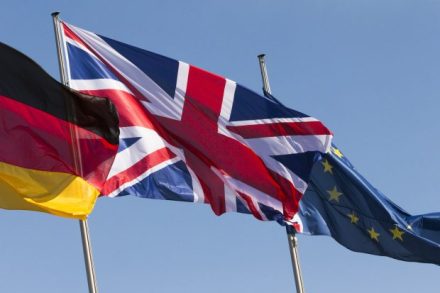
Britain’s decision to leave the EU sent shockwaves crashing throughout the continent. As Europe struggled to interpret the outcome of the referendum, we heard calls for Brussels to drive a hard bargain with the UK in order to contain the 'Brexit contagion'. The European Council President Donald Tusk's warning that the UK must not be allowed to 'profit' from leaving the bloc summed up this mood. But now, it seems, our neighbours in Europe are coming to terms with Brexit. And with it, the desire to punish the UK appears to be dampening. Michael Roth, Germany's European Affairs minister, has this week suggested that a 'special status' could be achieved which would take into account Britain’s size and previous commitment to the European project.

Will Theresa May finally stick up for EU workers’ rights?

From our UK edition

Theresa May has somewhat shamefully maintained her reticence over the rights of EU workers to stay in Britain after Brexit. But some in the 'Leave' campaign are continuing to pile pressure on the PM to do the right thing and give assurance to the 3.5million Europeans living and working in Britain. Gisela Stuart was clear throughout the referendum that these workers should not be booted out of Britain in the event of a 'Leave' vote. And in a campaign which painted few in glory, Stuart is an exception for actually sticking by what she said. Here's what she had to say this morning: 'I think there is no debate about guaranteeing rights, it's a question about what point does the Government become explicit that existing rights will be honoured.

Letters | 11 August 2016

From our UK edition

The hate is real Sir: It is clearly an exaggeration to call Britain a bigoted country (‘We are not a hateful nation’, 6 August), but downplaying the recent wave of xenophobic and racist incidents across the UK as ‘somebody shouting something nasty on a bus’ is equally wrong. Verbal abuse in itself is worthy of condemnation, yet the character of recorded harassment is actually much more serious. In the past few weeks, Poles in this country were shocked by vulgar graffiti (West London; Hertfordshire; Portsmouth) and hurtful leaflets (Cambridgeshire) urging them to ‘go home’ in most offensive ways possible, while a family in Plymouth fell victim to an arson attack.