Eu

The Spectator’s Notes | 28 September 2017

From our UK edition

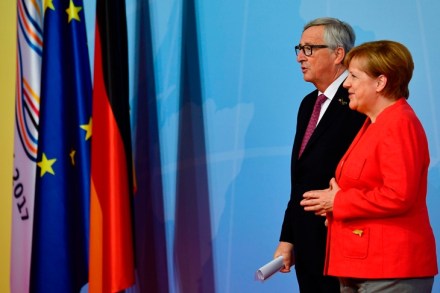
You can see why Theresa May said in Florence that the British wished the European Union well in its plans for greater integration, while choosing a different path ourselves. There is no point in causing antagonism over what we cannot prevent. But in fact greater European integration will do great harm to all Europeans, including us. The rise of AfD in the German elections was caused almost entirely by Mrs Merkel’s extraordinary decision to admit a million Middle Eastern migrants in a year. The spread of the Schengen area — proposed by Jean-Claude Juncker — combined with recrudescent migrant pressure can only confirm freedom of movement as the impossible issue of our time.
High life | 28 September 2017

From our UK edition

I think this week marks my 40th anniversary as a Spectator columnist, but I’m not 100 per cent certain. All I know is that I was 39 or 40 years old when the column began, and that I’ve just had my 81st birthday. Keeping a record is not my strong point, and it’s also a double-edged sword. I once planned to publish my diary, but then I stopped keeping one. I’d found passages in it that were dishonest, written in the heat of the moment, most likely under the influence, and the result was a bum-clenching embarrassment. Now I don’t use any social media, certainly not Twitter, Facebook or Instagram, being a firm believer that Zuckerberg and Bezos should be locked up for life (Zuckerberg for not doing enough to tackle terrorist content).

Barnier: it may take months to get to phase two of Brexit talks

From our UK edition

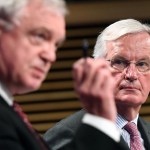
Theresa May's Florence speech last week certainly prompted a warming of words from Brussels – but so far it has triggered little action. At today's press conference between Michel Barnier and David Davis to mark the completion of the fourth round of Brexit talks, the EU's chief negotiator said not enough progress had been made to move to talking about a UK/EU trade deal in the next round of talks: 'I think it’s positive that Theresa May’s speech made it possible to unblock the situation, to some extent, and give a new dynamic to the situation. But we are far from being at a stage - it will take weeks, or maybe even months - where we will be able to say "Yes, okay, there has been sufficient progress on the principles of this orderly withdrawal.

Alternative für Deutschland’s success tells the tale of Germany’s forgotten East

From our UK edition

Back in the early 1990s, a few years after the Berlin Wall came down, I went back to the house in Dresden where my father was born. The house was on the outskirts so my father and grandmother survived the bombing – they got the last train out of Dresden before the Red Army arrived. The family I found there had been there since 1945. They’d been expelled from Silesia when Stalin handed the region over to Poland, and had ended up in Dresden along with so many other displaced Germans. They’d been living there for half a century, three generations under the same roof. They didn’t own this house – like almost everything in East Germany, it had been owned by ‘the people’ (i.e. the government).

The real winner of Germany’s election is Jean-Claude Juncker

From our UK edition

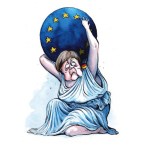
Even if Germany had Britain’s first-past-the-post electoral system, Angela Merkel would be struggling this morning to form a government. With 33 per cent of the vote, her Christian Democrat and Christian Social alliance has suffered its weakest showing in 68 years – tempered only by the equal failure of the socialists. It might have been a moment for Emmanuel Macron to seize the crown of de facto leader of Europe were it not that he, too, suffered a lower-profile though no less significant electoral reversal over the weekend – in Senate elections the La Republique En Marche party won only 23 of the 171 seats up for grabs. With his popularity ratings plummeting and his labour market reforms hardly begun, the Macron bubble has well and truly been burst.

Germany’s shy AfD voters hand the Bundesrepublik a seismic shock

From our UK edition

The German Embassy in London threw an election party yesterday, but as the guests gathered round the big screens to watch the exit poll the mood became subdued. Of course diplomats are supposed to be neutral and even German journalists strive to be objective, but off the record everyone here in Belgrave Square was saying the same thing: ‘Anyone but AfD.’ [caption id="attachment_9940622" align="aligncenter" width="620"] The exit poll from Germany's election[/caption] Alternative für Deutschland, Germany’s anti-immigration party, has been a thorn in Angela Merkel’s side ever since it was founded four years ago. In Germany’s last election, in 2013, it polled 4.

‘Long and vain’: Europe’s press reacts to Theresa May’s Florence speech

From our UK edition

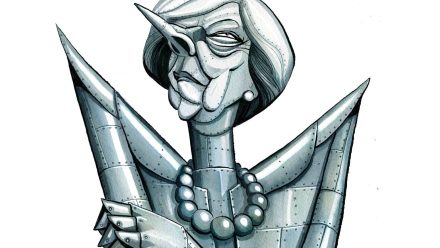
Following months of tortured negotiation between the UK and the EU, Theresa May delivered her speech in Florence yesterday in an attempt to break the Brexit deadlock. Mrs May proposed a two-year transition period during which Britain would retain its access to the single market and confirmed that the UK Government will honour its commitments to the EU budget. She also spoke of the ‘shared challenges and opportunities’ that face the UK and the EU in a bid to build consensus. Here’s how Europe’s press reacted to the long-awaited speech. France France’s centre-left daily, Le Monde, agrees with Theresa May that Brexit negotiations can be extended beyond March 2019, however, points out that all member states must be in favour of such a move.

Britain may have lost faith – but Germany still believes in the EU

From our UK edition

Theresa May’s Florence speech may have been welcomed with cautious optimism by Michel Barnier, but the reaction in Germany has been decidedly more downbeat. ‘In substance, May is bringing no more clarity,’ tweeted German MEP Manfred Weber. ‘I am even more concerned now.’ Weber is Chairman of the centre-right European Peoples Party, the biggest grouping in the European Parliament, and a rising star in Angela Merkel’s Christian Democratic Union. So does he speak for Merkel? Well, that would be pushing it, but while ‘Mutti’ maintains her deafening silence about all matters Brexit, it’s probably the closest we’re going to get.

Jacob Rees-Mogg sees red

From our UK edition

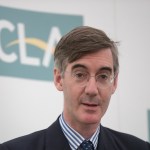
Although Theresa May did manage to prevent a revolt breaking out after her speech in Florence yesterday, that's not to say anyone in Cabinet is particularly pleased by her words. The Prime Minister did buy herself more time – but failed to clearly say where she what direction she was planning to go in that period. On the backbenches, Conservative MPs have less reason to hold their tongue over such concerns – as Jacob Rees-Mogg demonstrated on Newsnight.

Barometer | 21 September 2017

From our UK edition

Roll up, roll up Party conferences this year revolve around the familiar settings of Bournemouth, Brighton and Manchester. But one party used to be more adventurous. — For its first conference in 1981 the newly formed Social Democratic Party (SDP) opted to have a rolling conference with meetings in Perth, Bradford and London, with the entourage travelling between them (to quote the Conservative Research Department) ‘rather like Trotsky in his armoured train’. — The following year the train rolled between Cardiff, Derby and Great Yarmouth, but broke down between Peterborough and Ely on the last leg.

Seeing the light | 21 September 2017

From our UK edition

‘You can’t lie… on radio,’ says Liza Tarbuck. The Radio 2 DJ was being interviewed for the network’s birthday portrait, celebrating 50 years since it morphed from the Light Programme into its present status as the UK’s best-loved radio station — with almost 15 million listeners each week. ‘The intimacy of radio dictates you can’t lie because people can hear it.’ She’s absolutely right. As she went on to explain, when you’re driving and it’s just the radio and you, no distraction, ‘You can hear things in my voice that I don’t even know I’m giving away.

Brexit wars

From our UK edition

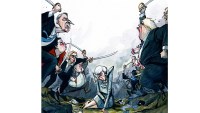
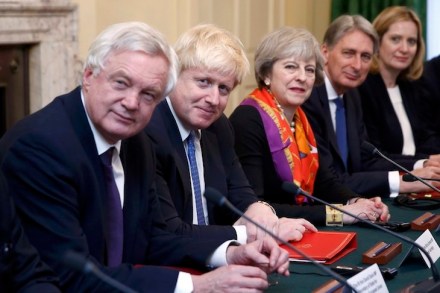
The time for choosing is fast approaching for Theresa May. Soon she must make a decision that will define her premiership and her country’s future. The past few days have shown how hard, if not impossible, it will be for her to keep her entire cabinet on board with whatever EU deal she signs. It is imperative that she now picks what kind of Brexit she wants. But doing so will risk alienating — or even losing — various cabinet members. She has been trying to blur the lines for months, but as one of those closely involved in this drama warns: ‘She can’t fudge this forever.’ Another participant in the struggle says: ‘She’s got to decide who she wants sitting round the cabinet table.

A court’s contempt

From our UK edition

The issue of sovereignty has mysteriously disappeared from the debate over Brexit. Some business-focused commentators even like to assert that in a ‘global, interconnected world’, sovereignty is meaningless. But a court judgment, delivered earlier this month, perfectly illustrates what is at stake. The case is about national security. Specifically, it is about the legality of techniques used to identify and disrupt people intent on unleashing terror: the kind of terror we have seen recently in Manchester, Westminster, Borough Market and Parsons Green. The technique at issue is the bulk collection of communications data (BCD). This data is the ‘who’, ‘where’, ‘when’ and ‘with whom’ of communications, not what was written or said.

Theresa May’s singing birds can only hold the same tune for so long

From our UK edition

After concerns about the Foreign Secretary's job security bumped Vince Cable's keynote leader's speech at Lib Dem conference off the news agenda yesterday, a sense of stability has been restored to Cabinet. Boris Johnson has told hacks in New York that he is not going anywhere – likening Cabinet harmony to 'a nest of singing birds'. The message from Downing Street, too, is one of quiet confidence that Johnson won't be departing the frontbench – at least, not this weekend. This suggests two things. Firstly, that May's Florence speech won't be as drastic as had first been thought. Secondly, Johnson is coming round to the idea of payments to Brussels continuing during a transition period.

Roger Bootle: A post-Brexit Britain could be ‘more open, less protectionist and more competitive’

From our UK edition

One of the City’s best-known economists, Roger Bootle, discusses whether a success could be made from Brexit, just over a year after Britain to leave the European Union. Bootle begins by explaining the ‘overblown’ nature of the ‘European Single Market’ concept: I don’t think what has been clearly said or argued is that the [European] ‘Single Market’ is vastly overblown. There are advantages and disadvantages of not being part of it. However, I do think it has become a protectionist entity. The original idea for a [European] ‘Single Market’ was a British one supported by former Conservative Prime Minister, Margaret Thatcher.

The great Brexit bus delusion

From our UK edition

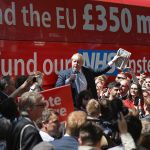
I know many Leave voters. Most of my family. Around half of my friends. Lots of the people in the immigrant community in London I grew up in. (We’re bad immigrants, being anti-EU, so we never feature in the migrant-sympathetic commentary of EU-pining hacks.) And not one of them has ever said they chose Brexit because of that £350m-for-the-NHS thing on the side of a bus. The idea that that bus swung the referendum, that it duped the voting hordes, has become one of the great, and nasty, myths of the Brexit era. The bloody bus is back in the news this week after Boris Johnson said he’d like to get our cash back from the EU and possibly give some of it to the NHS.

Multiculturalism is Europe’s new faith

From our UK edition

Never mind the terrorists, chaps, London will just keep calm and carry on. We'll put the kettle on or defy them by going out and getting pissed, because life will just continue as normal. That's the fitting response to terrorism, and it won't affect our lives. Except it will. It will affect your life when you're queuing endlessly to be searched by security in every public building. When you pass by bollards and barriers put in place to stop mass vehicular homicide. The nervousness you'll feel whenever you're on the Tube or when your child gets on public transport in the morning. As the attacks increase, you'll hear more and more anecdotal stories about acquaintances or Facebook friends or even actual pals caught up in these events.

Old habits die hard for Russell Brand

From our UK edition

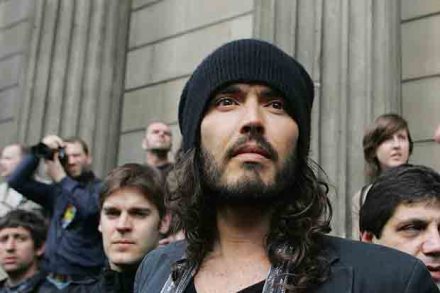
Oh dear. Although Russell Brand once said he had never voted, and never would, as a result of his 'absolute indifference and weariness and exhaustion from the lies, treachery and deceit of the political class', he went on to change his tune when her urged his fans to vote Labour in the 2015 election – and later endorsed Jeremy Corbyn. So, Mr S was curious to discover that Brand has now returned to his old tricks. The comedian-turned-left-wing revolutionary tells the Sunday Times that he didn't vote in the EU referendum as he was on 'holiday': 'How did he vote in the referendum? He mumbles: “I was on holiday.” He didn’t vote over Brexit? “No,” he says sheepishly.

Jean-Claude Juncker’s EU expansion plans make a powerful case for Brexit

From our UK edition

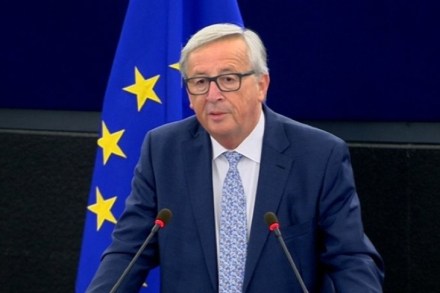
The choice which faced us at the EU referendum has often been presented as lying between the status quo and the unknown, between security and uncertainty. Until the early hours of 24 June last year I was convinced that this would be the clincher: that the British public, though heavily Eurosceptic, would not quite have the balls to overcome their native conservatism and take what many would see as a leap in the dark. Yet Jean-Claude Juncker’s ‘state of the union’ speech today dispels the notion that voting Remain would have been a vote to keep things as they are. Remaining in the EU as it now is was not an option on the ballot paper.