Eu

EU-UK reset: ‘brexit betrayal’?

From our UK edition

15 min listen

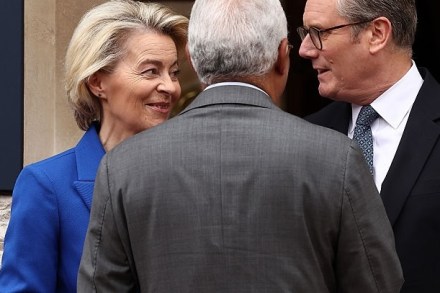
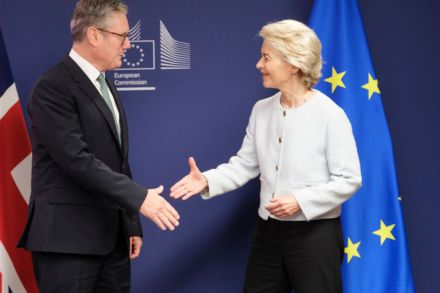
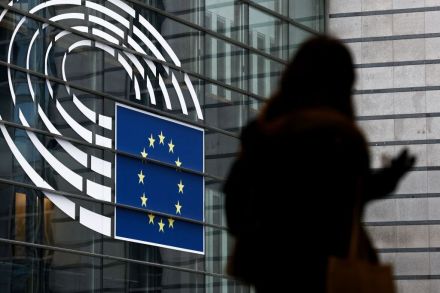
As EU leaders arrive in London for a summit hosted by Keir Starmer, there has been an announcement that the UK and EU have reached a deal. The UK has extended its agreement on EU fishing boats in British waters, while in return fewer checks on British food exports are expected. There have also been discussions about a defence pact, reduced tuition fees for EU students and access to electronic passport gates for British holiday-makers.  While we await further details, deputy political editor James Heale and director of the Centre for European Reform Charles Grant join Lucy Dunn to unpack what we know so far. Will the deal be an easy sell, or does it risk being seen as a ‘brexit betrayal’?

Is Poland’s revival a mirage?

From our UK edition

In 1988, when I was six months old, my British father and Polish mother took me to meet my family in Krakow. My parents brought an extra suitcase filled with disposable nappies because such luxuries weren’t sold on the other side of the Iron Curtain. At the time, there was only one shop in Krakow that sold foreign goods, but my father was pleased to discover that a gallon of whisky could be bought for only $8. He was a member of the House of Lords and, I’m told, we were trailed for our entire stay. Everywhere we went, a large Polski Fiat 125 driven by a suited man followed us. My parents always said that apart from drinking in people’s homes, there wasn’t a lot to do in Krakow back then. There were a couple of run-down cafés in the main market square but that was it.

Europe should listen to America’s uncomfortable truths

From our UK edition

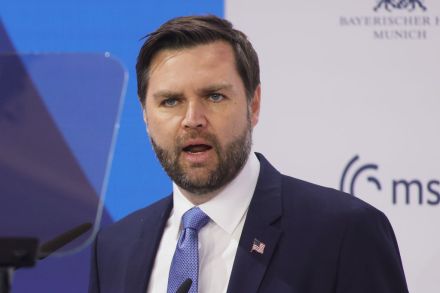
The response in Europe to J.D Vance’s speech at the Munich Security Conference last Friday was one of predictable outrage. Media outlets described it as a ‘rant’ or a ‘sermon’, and politicians and diplomats queued up to criticise the vice-president of America. Kaja Kallas, the EU's High Representative for Foreign Affairs and Security Policy, accused the Trump administration of ‘try[ing] to pick a fight with us, and we don't want to a pick a fight with our friends’. Apparently, there were ‘dry laughs’ from some of the audience when Vance talked about ‘shared’ values.

Trump vs Europe

From our UK edition

15 min listen

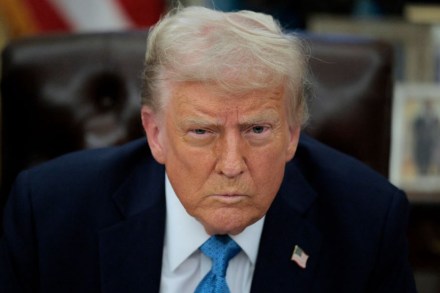
Trump's tariff spree continues... After making good on his election promise to opt for another round of tariffs – a 25 per cent tax on imports from Canada and Mexico and a 10 per cent levy on Chinese goods – Trump has now turned his attention to Europe. In an interview with the BBC, the president said that while the UK would likely avoid tariffs, the EU might not be so lucky and described the trade relationship with Europe as an ‘atrocity’. This comes on the day that Keir Starmer is in Brussels and will likely be trying to smooth the road ahead of a post-Brexit ‘reset’. Can Labour continue to play both sides? Katy Balls speaks to Kate Andrews and Charles Grant, director of the Centre for European Reform. Produced by Oscar Edmondson.

Calin Georgescu has exposed the rotten European Union

From our UK edition

To the great surprise of very few the European Court of Human Rights this week rejected an appeal by Calin Georgescu to overturn last month’s annulment of Romania’s presidential election. The Eurosceptic Georgescu had won the first round of November’s election, but days before the second round Romania’s Constitutional Court cancelled the result because of alleged Russian interference on social media. In its decision, the ECHR said that Georgescu’s appeal fell outside its jurisdiction. That was the bad news for Georgescu. The good news was the publication of a poll this week that puts him firmly in front to win the election when it is re-run in May.

The Irish laugh in the face of EU regulations

From our UK edition

Our house was suddenly shrouded in a thick, grey mass of cloud and it felt like a sea fog had descended. The Irish could not give a damn for rules and regs and no one is going to tell them what they can set fire to To some extent it had, but the fog grew in density until it wasn’t feasible that this was coming off the sea. The builder boyfriend came in from the stable yard and reported an acrid smell in the rain. This is what happens when fog descends. People burn their most difficult and illegal waste when visibility is low. ‘It’s the plasticky dew,’ said the builder b, who likes an Irish republican song.

Would Brexit voters really accept the return of freedom of movement?

From our UK edition

19 min listen

New research this week suggested that a majority of Brexit voters would accept the return of freedom of movement in exchange for access to the EU single market. The poll, conducted by the European Council on Foreign Relations (ECFR), found that 54% of Brexit voters – and 68% of all respondents – would accept this. Facing their own changing domestic concerns, how close can the UK and EU governments really get? Could Defence hold the key for collaboration? And how much is this driven by a more volatile geopolitical landscape ahead of Trump’s return as US president? James Heale speaks to Anand Menon, director of the think-tank UK in a Changing Europe, and Mark Leonard, director at the ECFR. Produced by Patrick Gibbons.
Can the EU fend off the threat of Chinese electric cars?

From our UK edition

30 min listen

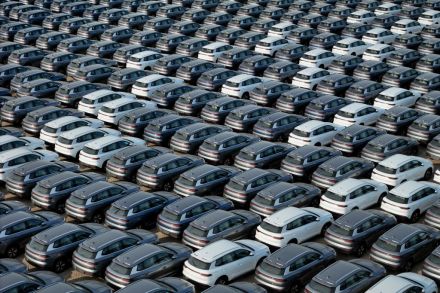
The EU and China are in the foothills of a trade war. After a seven month investigation, the European Commission has announced tariffs of up to 38 per cent on electric cars from China, citing that they’ve found ‘subsidies in every part of the supply chain’. In retaliation, China has ramped up its own investigations into imports from the EU. This, of course, comes after the US has announced its own 100 per cent tariff on Chinese electric cars. Listeners will know that Chinese electric cars are becoming ever more competitive. In just three years, the value of the EU’s imports of Chinese EVs have surged tenfold – from $1.6 billion in 2020 to $11.5 billion last year. The Commission has warned that Chinese electric cars could make up 15 per cent of the EU market by next year.

Georgia is on the brink of revolution

From our UK edition

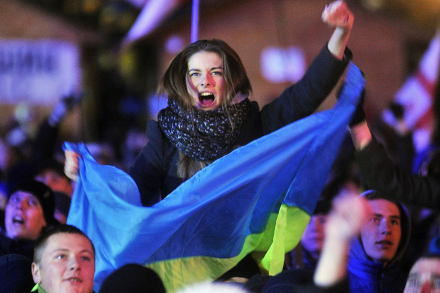
For weeks, the Rustaveli Avenue in Tbilisi has looked like a battlefield. Thousands of protestors, mostly in their twenties, have been met by riot police armed with tear gas, water cannons and rubber bullets. On the face of it, the protest is about a new repressive bill in its final reading in the Georgian parliament. In reality, it’s the struggle between a government that is turning towards Moscow, and a citizenry who by and large believe the future lies with Europe. The crunch point comes next week when the Georgian parliament will vote on a bill which, if passed, would label as a ‘foreign agent’ any political or civil society pressure group that receives more than 20 per cent of its funding from abroad.

Letters: the admirable strength of Ukrainians

From our UK edition

The bravery of Ukraine Sir: Few articles could resonate as strongly as that of Svitlana Morenets (‘Scrambled logic’, 20 April). She brings the agony of her brave countrymen and women home to us, and the effect of dithering and equivocation by the West. As a volunteer with a refugee charity, I weekly admire the character of our Ukrainian clients, mainly older ladies who spend their time bringing us delicious homemade cakes, volunteering in charity shops and signing up to English classes at the local college.

Poland’s battle with the EU over migrant quotas

From our UK edition

Another day, another spat between Warsaw and Brussels. This time, Poland has declined to participate in the European Union’s latest plan to relocate migrants and asylum seekers within the bloc, with countries who refuse being expected to pay €20,000 per refugee. Hungary has also voted against the pact, while Malta, Lithuania, Slovakia, Bulgaria have quietly abstained.  On 15 June, the Polish parliament (the Sejm) went further and passed a resolution opposing the plan, with the ruling conservative Law and Justice party (PiS) announcing a national referendum on the matter. The referendum will take place on the same day as the general election in either October or November this year.

How Justin Trudeau caved to Putin

From our UK edition

When Russia invaded Ukraine, the West was certain that its sanctions were worth the pain. But there always was a question as to whether this resolve would last once the domestic difficulties actually started. This week, western countries moved closer to admitting it might be too much to bear. At the time of the invasion in February, a massive Russian turbine was being repaired in Montreal. It was one of many turbines used to send gas through the Nord Stream 1 pipeline from Russia to Germany. When the Russians moved into Ukraine, it was kept in Canada as punishment. Over the next few weeks and months Russia replied, cutting off gas supplies to the continent.

Sunak is taking a gamble on the Protocol

From our UK edition

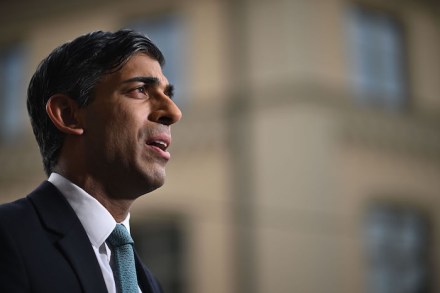
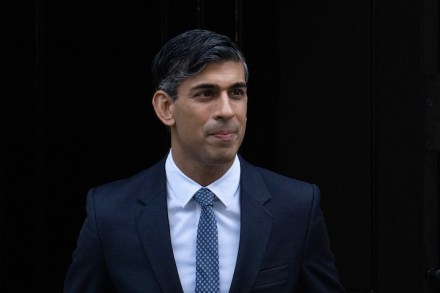
Westminster is back to the Brexit wars this week. Once again, a Conservative leader is trying to finalise a deal with Brussels while facing warnings from their own side that it could prove a compromise too far. On Friday, there was much fanfare that a new deal on the Northern Ireland Protocol could be imminent. Rishi Sunak flew to Northern Ireland to meet with the DUP – where talks proved amicable. Then the Prime Minister met European Commission President Ursula von der Leyen on the fringes of the Munich security conference. However, since then a string of Tory MPs have spoken publicly to raise their concerns and Sunak has been warned that up to 100 of his own MPs could rebel against any deal that is struck.

Is Sunak heading for trouble on the Protocol?

From our UK edition

There has been excited chatter in recent days that a breakthrough on the Northern Ireland Protocol could be imminent. Last week, the UK government and Brussels agreed a new technical arrangement on sharing trade data, which was heralded as a ‘new basis’ for talks, following a meeting between EU chief negotiator Maros Sefcovic, and James Cleverly, the Foreign Secretary. Since then, there has been speculation that the two sides could enter the ‘tunnel’ – the intensive end stage of negotiations – as soon as this week. There is a desire on both sides to find an agreement on changes to the Protocol could ahead of the 25th anniversary of the Good Friday Agreement. However, today Downing Street urged caution – with No.

Qatargate has exposed the staggering hypocrisy of the European left

From our UK edition

Ravenna, Italy Everyone in Britain has focused on what the Qatargate corruption scandal reveals about the European Union – but not on what it tells us about the European left. The fact is that all those so far accused of taking bribes from Qatar and its ally Morocco are left-wing MEPs – or former MEPs – and their assistants, or else bosses of left-wing human rights charities or trade union leaders. Most are Italians who are members, or ex-members, of Italy’s post-communist party – the Partito Democratico (PD). The hypocrisy of these prize exponents of the Euro left – some of whom, according to leaked transcripts of their interrogations, have already in part confessed – is staggering.

Sadiq Khan’s strange stabbing statement

From our UK edition

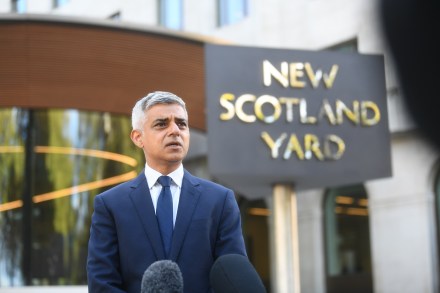
What an odd thing Sadiq Khan said following this morning’s stabbings in central London. Shortly before 10 a.m., three people were attacked by a man on a bike in Bishopsgate. The criminal is still at large, according to the Telegraph. This horrifying incident was no surprise to Londoners, so you would think that the Mayor would – from experience – strike the right chord. Instead, Khan had this to say: The good news is, it’s not a terror attack. And another piece of good news is the three victims of the stabbing are not in life-threatening situations, thank God. But it’s just a reminder of the dangers of carrying a knife… Where was the Mayor while the carnage was unfolding?

Europe’s descent into deindustrialisation

From our UK edition

The rapid economic collapse that Britain is facing is simply an accelerated version of what the whole of Europe is about to go through; unsustainable borrowing to fund the gap between high energy prices and what households can actually afford. With the sabotage of the Nord Stream pipeline, there is now no feasible way back. Europe can no longer physically import Russian gas – prices will remain high until Europe builds more energy capacity, which could take years. What is likely to come of this? High energy prices will render European manufacturing uncompetitive. European manufacturers will be forced to pass through the higher energy costs in the form of higher prices and consumers will find it cheaper to buy products from countries with normal energy prices.

Are sanctions against Russia actually working?

Six months ago this week, the United States and its European allies enacted one of the most comprehensive, stringent sanctions regimes against a major economy in history. Russia’s unprovoked invasion of Ukraine on February 24 not only shocked the West’s sensibilities, but pushed Washington and Brussels to take actions that would have been unthinkable only a few weeks prior. As far as the West is concerned, Vladimir Putin’s Russia is nothing less than a dangerous pariah state — and its aggression against a neighboring country meant it had to be treated as one.

Is war brewing between Serbia and Kosovo?

From our UK edition

Serbia and Kosovo are close to conflict. Of all things, a dispute over car number plates is threatening the fragile peace won 23 years ago, after a Nato bombing campaign against then-Yugoslavia. For that, Serbs have never truly forgiven the West. On Sunday night, roads were blockaded by Serbs in northern Kosovo. Their anger was directed at an edict from the Kosovan government requiring Serbs to re-register their cars with Kosovar number plates. Serbs currently use number plates with acronyms of Kosovar cities, just one example of Serbia’s ongoing refusal to accept Kosovan independence. New documentation requirements were also to be imposed on Serbs entering and leaving Kosovo. Some have claimed that tensions have calmed, but they are only on hold.

The EU never understood Northern Ireland

From our UK edition

At the heart of the crisis over the Protocol is its failure to deliver on its own stated aims. To understand this crisis, it is necessary to know some key aspects of the Protocol’s genesis and history. Exactly a month after Theresa May triggered Article 50, the European Commission was instructed by the member states (the European Council of 27) with ensuring the UK’s orderly withdrawal from the EU, including finding arrangements for the island of Ireland. That meant securing the Good Friday Agreement and avoiding a hard border.