Eu

Isn’t it time Michel Barnier retired?

From our UK edition

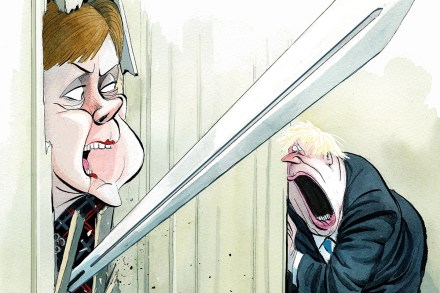
He took the European Union to the edge of a no-deal Brexit, creating logistical chaos on both sides of the Channel. His high-handedness and patronising manner hardened positions on both sides. And his brinkmanship clearly failed, leading to a far more distant relationship with the UK than might otherwise have been possible. It would be hard to conclude from the wreckage of the last four years that Michel Barnier had been a great success as the man in charge of negotiating Britain’s departure from the EU. But heck, this is Brussels we are talking about, and you can’t let a little thing like success or failure derail the careers of its chief functionaries (after all, if you started down that track, you might want to start asking where the vaccines are).

The empty promise of Turkey’s charm offensive

From our UK edition

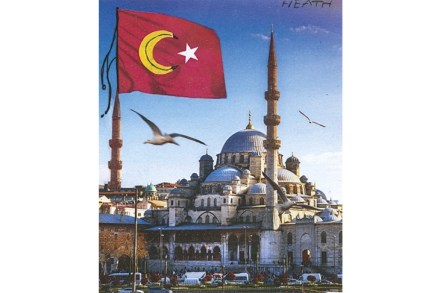
On Thursday, Turkey Foreign Minister Mevlüt Çavuşoğlu will land in Brussels to meet with European Union officials to start to ‘build Turkey’s future in Europe’. Next week, Turkey is expected to resume talks with Greece to resolve their maritime disputes after a five-year hiatus. The clash in the eastern Mediterranean between Ankara and Athens has brought the two states to the brink of war and is one of a long list of reasons why Turkey has so far failed to ‘build’ that ‘future in Europe’.

Why the ECJ still has a role to play in Britain’s lawmaking

From our UK edition

Now that Britain has left the EU, we are no longer bound by the European Court of Justice. Some may view that as something to celebrate. Yet there may also be downsides. The ECJ is the final court of the EU. It hears lots of cases about EU member states who break EU law. It then reaches conclusions which form case law. All 27 members of the EU are bound by this, but Britain, outside the EU, is not. But here’s the catch: some of those decisions might actually be good ones. The solution is that we should borrow these good ones for ourselves. English law is a magpie. We pick up shiny bits of ‘good law’ that other places have and we make them ours. It is what lots of sensible sovereign states do, and there is nothing wrong with this. There is no copyright in law.

France’s vaccine problem

From our UK edition

France is the only permanent member of the UN Security Council not to have developed a coronavirus vaccine, and it hurts. USA: two; UK: one; Russia: one; China: one, France nul points. To make matters worse, France also has an embarrassing international ranking in the number of its citizens it has vaccinated.  ‘France is the laughing stock of Europe’, cry a range of politicians and media. How is this possible in the land of Louis Pasteur, the French ask themselves? Even discounting Edward Jenner a century before Pasteur (whom France’s health minister graciously acknowledged), the French see this as the continuation of the country’s ‘déclassement’, a relentless historical decline from better days.

The scandal that collapsed the Dutch government

From our UK edition

The Netherlands has a reputation as one of the sensible, efficient countries of Europe. Asked to predict which government was most likely to collapse in the face of a national scandal, many EU watchers would not have bet on Mark Rutte’s government. But while the political fallout has been extraordinary — Rutte cycled to the palace earlier today to tender his entire cabinet’s resignation to the king — the scandal that preceded it has a curiously Dutch feel. Their failure? Mismanagement of the country’s complex child benefit system. Thousands of parents have been driven to financial ruin.

Reforming workers’ rights is an upside of Brexit

From our UK edition

Of all the arguments put out against Brexit during the bitter referendum debate, one of the least convincing was that it would give a UK government the opportunity to repeal employment law, thereby impoverishing Britain and its people. Jeremy Corbyn once asserted that a Conservative government would turn the country into a 'low-wage tax haven'. That is an interesting concept, which like the chemical element Seaborgium might theoretically exist but which has yet to be discovered in the real world – most tax havens seem to be pretty wealthy, at least compared with similar countries which haven’t set the fiscal and regulatory conditions to attract businesses and wealthy individuals.

The EU’s vaccine shambles is turning into a re-run of the euro crisis

From our UK edition

Rewind a few months, and it was all meant to be very different. With Covid-19 rampant across the world, the European Union would take charge of sourcing vaccines from the major drugs companies. Its massive buying and regulatory power, coupled with its finely-tuned administrative machine, would make sure its 440 million people were protected from the virus before anyone else. It would be a magnificent demonstration of the whole point of the organisation. The trouble is, not only has the project already started to come off the rails, it is getting worse with every day that passes. Europe’s vaccine alliance is crumbling with potentially far-reaching consequences. Europe’s vaccine alliance is crumbling with potentially far-reaching consequences.

Rosie Duffield’s re-join remarks will haunt the Labour party

From our UK edition

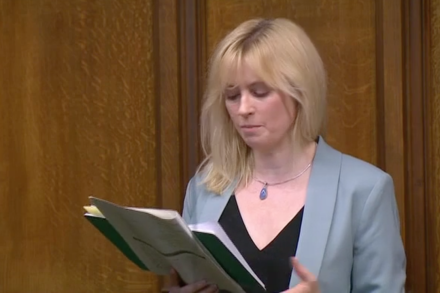
Every party keeps on file a list of rash things politicians in other parties have said that can be used against them at a later date. Way back when I was directing Ukip’s 2014 European parliamentary campaign, I built up a ‘helpful contributions’ folder containing print-outs of gaffes and embarrassing admissions made by pro-EU MPs and MEPs. Conservative Campaign Headquarters probably has at its disposal a far more sophisticated and comprehensive digital system for logging the own-goals of its adversaries. But one thing is certain, someone will imminently be inputting an entry marked something like ‘Duffield, R. – Labour’s plan to re-join the EU’.

The FTSE is defying the Brexit doom mongers

From our UK edition

The banks would all flee. International investors would take fright. And the pound would turn into the Great British peso. We heard a lot over the last four years about how leaving the European Union would be catastrophic for the UK economy. But here is something odd. With the transitional arrangement coming to an end with the close of the old year, and with the UK now out of the Single Market and the Customs Union, and with just a loose trade arrangement with the rest of the continent that doesn’t even cover financial services, so far the FTSE is loving Brexit. True, it is only the first week of trading, and even that is not over yet, but so far the benchmark FTSE-100 index has risen from 6,500 on Monday to 6,850 on Thursday.

What parking disputes have taught me about Brexit

From our UK edition

Our battle with the EU has given me an insight into the parking disputes outside my house. Or is it that the parking disputes outside my house have given me an insight into Britain’s battle with the EU? Either way, I was reading through this Brexit trade deal we’ve accepted because we can’t be bothered to counter illogic with logic any longer, and it suddenly occurred to me why my neighbours persist in parking outside my house. And why, when I then park outside their house or someone else’s, I’m the one getting the funny looks. People push each other about for no better reason than the way one horse kicks another in a field.

The EU has botched its vaccination programme

From our UK edition

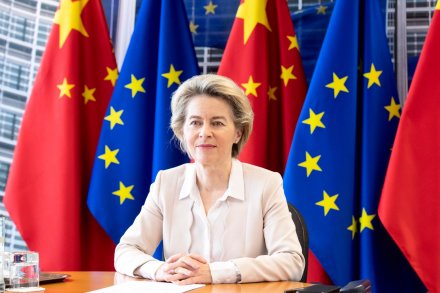
It was the most excruciating moment of Ursula von der Leyen’s short tenure as President of the European Commission. On Friday morning she hastily put together a press conference to counter the growing media storm across Europe over the EU’s handling of vaccine procurement. She doubled down on ‘solidarity’, announcing that the Commission had managed to secure more doses of the BioNTech/Pfizer vaccine, but also that the EU would stick absolutely to buying together. ‘We have all agreed, legally binding, that there will be no parallel negotiations, no parallel contracts,’ she insisted testily. ‘We’re all working together.’ At the same moment, however, her former colleagues in Berlin, where she was never popular, were busily undermining her.

The EU must ditch its deal with China after the arrests in Hong Kong

From our UK edition

Earlier this morning, 53 democrats from Hong Kong were arrested. Their crime? Trying to win last September’s elections. As absurd as it sounds, the new reality in Hong Kong is that it is now effectively a criminal offence, under the National Security Law, for the opposition to have the audacity to try and boost its representation in parliament. 'The operation today targets the active elements who are suspected to be involved in the crime of overthrowing, or interfering (with)...the Hong Kong government’s legal execution of duties,' said John Lee, Hong Kong’s security minister. But, as he later suggested, in reality this meant that those who were arrested were simply trying to win a majority of seats in Hong Kong's legislature.

The EU is taking a gamble with China

From our UK edition

It took Brussels and Beijing seven years to agree an investment deal. A deal that, until its conclusion a few days ago, had been largely eclipsed by the Brexit process. Once the negotiations had concluded, however, the European side suddenly came under intense criticism — China, detractors said, was not the sort of country the EU should be cosying up to. That the deal was finalised on the penultimate day of the year was a sure sign that Angela Merkel was pushing for closure. She had stated before the pandemic that advancing EU-China relations would be one of the goals of Germany’s EU Council presidency (now passed on to Portugal). A goal for Germany perhaps, but there was substantial opposition to the deal among European heads of states.

My fellow Rejoiners are living a fantasy

From our UK edition

On New Year’s Eve at 11 p.m., the United Kingdom departed both the single market and the customs union, making the end to the country’s former membership of the EU complete. It was a moment to celebrate for Brexiteers; the commemoration of sadness for some Remainers. Or should I say 'Rejoiners' — there is no remaining now, Great Britain having departed the European Union. Many Rejoiners have set out their stalls already. ‘When they tell you to "move on" DO move on — to the long, strong, campaign to rejoin,’ tweeted Simon Schama, the historian and noted fan of the UK’s membership of the EU, ‘However hard the road, however long it takes; it starts now.

Thatcher was completely right about the Euro

From our UK edition

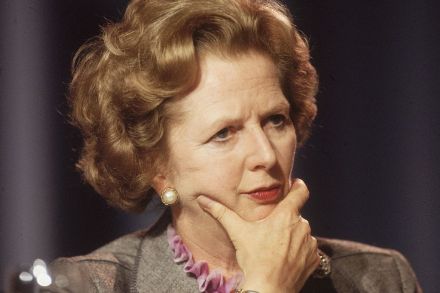
It was a ‘rush of blood to the head’. Its central bank would prove to be hopelessly ineffective. And cultural differences would remain too deeply ingrained for an internal market to ever work as it should. We learned this week from papers released in Dublin that Mrs Thatcher was completely damning about the idea of a single currency for the European Union. Looked at with the benefit of 30 years of hindsight, however, it is clear that the most remarkable point about her views is not just how intransigent she was but that she was completely right. The Euro has been a comprehensive failure, just as she said it would be. Rewind three decades to the fading months of the Thatcher premiership and she was facing what turned out to be terminal trouble over her views on Europe.

The EU is a divided house

From our UK edition

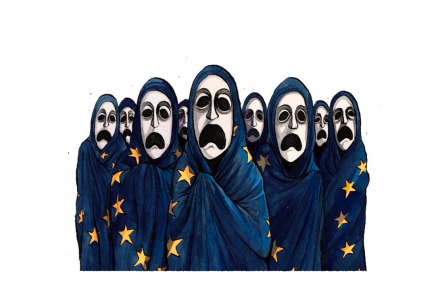
What does 2021 hold for the European Union? At the end of 2020 Brussels has gone out of its way to engage in unity-signalling, announcing that all 27 members will begin vaccination on the same day and feigning a united front in the face of the UK’s new strain of coronavirus. But in truth its 27 member states are confronted by serious structural divisions in three fundamental areas: economics, culture, defence. Deep economic divisions surfaced in the EU after the 2008 financial crash along a north-south axis. The split between the richer ‘frugal’ northern economies and the ‘profligate’ southerners was starkest in 2012-13 over Brussels’ treatment of Greece.

Britain should now brace itself for a barrage of Brussels red tape

From our UK edition

Should we be worried that the UK didn’t get all that it wanted for financial services in the UK-EU Trade deal, as the PM mentioned to the Sunday Telegraph? Financial services are our biggest export industry by some margin, including to the EU, as well as (arguably) our biggest taxpayer, so anything that hampers it could have serious economic repercussions. The EU for its part has said that it will consider in its own time if it will grant ‘equivalence’ to UK financial services, making it easier for UK based institutions to serve customers in the EU, and will only do so if it is in the EU’s interest. The Chancellor, Rishi Sunak, has already unilaterally granted EU equivalence status, providing continuity for EU financial services companies operating here.

The trouble with Erasmus is not just the cost

From our UK edition

It was curious to see the explosion of outrage over the UK no longer participating in the Erasmus scheme. We were told it broadened young people’s horizons by sending British undergraduates to study at a European university. We were told our young people are being deprived of this opportunity. But having spent my pre-politics career working with young people, Erasmus and deprivation are not things I’ve ever associated with one another. The outrage is largely coming from a collection of the firmly middle class and affluent anti-Brexit folk – TV broadcasters and QCs among them.

Is the SNP’s Brexit strategy paying off?

From our UK edition

Ursula von der Leyen quoted TS Eliot’s poem ‘Little Gidding’ in her press conference today: ‘What we call the beginning is often the end. And to make an end, is to make a beginning.’ The free trade deal between the UK and the EU marks beginnings (new arrangements on commerce, fishing and security cooperation) and ends (the single market, free movement, Erasmus), but what we can’t yet be sure of is which category Scottish independence falls into. We might glean the answer from the 2,000-page agreement when the text is published but it is more likely that the question will remain open for some time.

Will Farage change his mind about Boris’s Brexit deal?

From our UK edition

It will be some days before the full character of the Brexit trade deal and other future partnership arrangements with the EU become clear. The smoke and mirrors that often accompany budget statements surround this deal as well, and we must wait for expert analytical eyes to go through the body of the 500-page text and tell us what troubling details lurk inside it. But nonetheless, the very striking of a deal which can be argued to observe Boris Johnson’s basic red lines and bring an orderly switchover of trading arrangement stymies those who were seeking to catastrophise the final phase of Brexit.