Eu

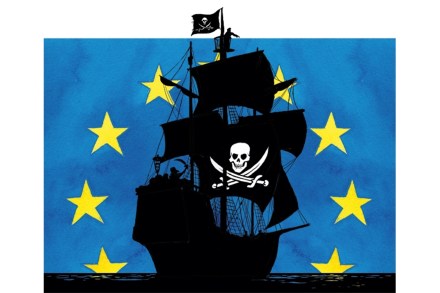
The EU needs to stop punishing Britain for Brexit

From our UK edition

There have always been those on the European side who believe that for the EU project to succeed, Brexit must fail and must be seen to fail. So it is a problem that the first major act of Brexit Britain — going its own way to obtain and approve vaccines — appears to have been a success. For this reason, EU leaders must cast doubt on the achievement. As I say in the magazine this week, look at how Clément Beaune, Macron’s Europe Minister, went out of his way to tweet out his criticisms of the UK approach. (To be fair, there is a Brexiteer version of this hostile sentiment. You can find those on the Tory backbenches who think that Britain’s success requires the EU’s failure.

The City is losing its battle with Brussels and Amsterdam

From our UK edition

No sign of progress towards a workable deal with the EU for financial services, on which news is due next month. Bank of England Governor Andrew Bailey warned in unusually frank terms this week that although the UK has granted ‘equivalence’ to the EU in some financial activities, ‘the EU has not so far done likewise to the UK’ and seems unwilling to do so by reference to a ‘common framework of global standards’. Instead, Brussels is seeking to apply to the UK ‘a standard that the EU holds no other country to’, amounting to ‘rule-taking pure and simple’. Given the importance of financial services to the UK economy, that’s a major defeat of the Brexit principle which seems to be passing almost unnoticed.

Power jab: the rise of vaccine diplomacy

From our UK edition

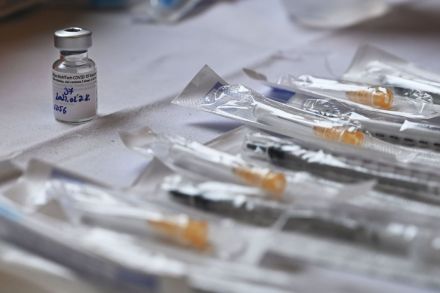
At the end of January the President of Chile, Sebastián Piñera, gave a speech on the tarmac of Santiago airport. ‘Today is a day of joy, excitement and hope,’ he said, standing in front of a Boeing 787 which had just arrived from Beijing. Inside it were two million vaccine doses produced by the Chinese company Sinovac. It was the first of two similar-sized shipments arriving that month. A few days earlier, the President of Mexico, Andrés Manuel López Obrador, had emerged from Covid confinement to thank a ‘genuinely affectionate’ Vladimir Putin for pledging 24 million Sputnik doses to Mexico in the coming months. Hopes of vaccinating his country with the Pfizer vaccine had dissipated when supply dried up.

It is time to make friends with the EU

From our UK edition

On Monday morning, Clément Beaune, Emmanuel Macron’s Europe Minister, clipped out the section of his media interview criticising Britain’s vaccination strategy and posted it on Twitter. He declared: ‘What is happening in the UK is not something I envy. It is a strategy of massive acceleration which also means taking more risks because the Covid situation is much worse there.’ Such remarks are becoming something of a habit for Beaune. He fired off tweets lambasting Brexit in the days after the deal was done and grinned broadly in an interview this year when he was questioned about reports that British cabinet ministers had asked him to tone it down on his Twitter account. Macron has also been critical of the UK vaccination programme.

David Frost will need to learn to work with the EU

From our UK edition

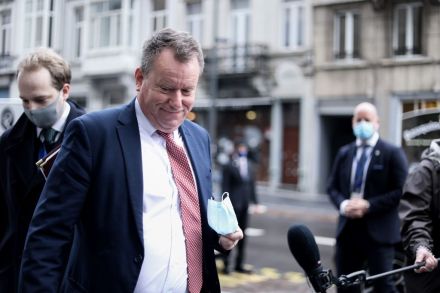
Boris Johnson has made his Brexit negotiator David Frost a full member of the Cabinet and the UK chair of both the partnership council, which manages the UK/EU trade deal, and the joint committee, which handles the Northern Ireland protocol. Frost’s appointment is a recognition that someone is needed at the heart of government to handle the EU relationship – that it can’t be treated as simply a Foreign Office matter, and that it needs to be a full-time job (Michael Gove had previously been the UK chair of these committees). The challenge for Frost will be to get out of the negotiations mindset. The withdrawal negotiations and the trade talks were necessarily tough and Frost pushed hard.

Even Guy Verhofstadt has seen through the EU’s vaccine fiasco

From our UK edition

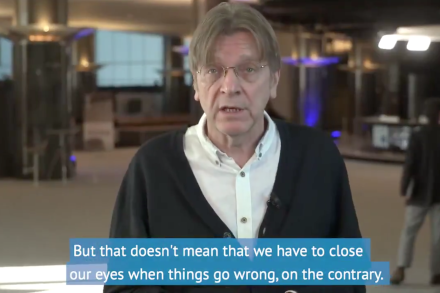
It is a rant worthy of Nigel Farage in his pomp. One of the leading figures within the European Parliament has launched a blistering tirade against the Commission's ineptitude in securing vaccines. The EU is a world leader in making inoculations, he points out. And yet there is a shortage of supply in every country within the Union. The measures taken to fix that so far have been ‘symbolic,’ ‘insufficient’ and sometimes even ‘counterproductive’. Worse, there has been a shocking lack of accountability, with no one held responsible for the failure. The critic? None other than the arch federalist, scourge of Brexiteers, and hero of Lib Dem party conferences, Guy Verhofstadt.

Biden’s rift with Brussels is only set to grow

From our UK edition

It was meant to be a special relationship. After the tumultuous Trump years, President Biden was planning to reset relations with the European Union, Inherently liberal, rules-based, and engaged with climate change, it would be a natural ally, and far more so than a UK still tainted by Brexit. The Biden team were no doubt looking forward to working closely with officials in Brussels, Paris, and Berlin to repair the damage of the last four years and put the world on a more rational course.  But hold on. It is not going according to plan. There are already reports that the White House is growing increasingly frustrated with the EU. And in truth, that rift is only going to get wider and wider in the months to come.

The Northern Ireland protocol problem

From our UK edition

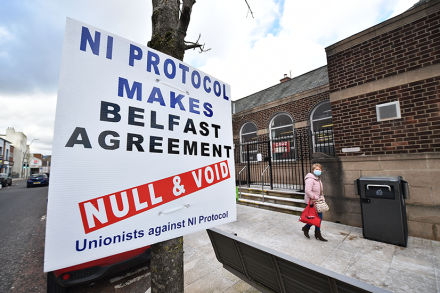
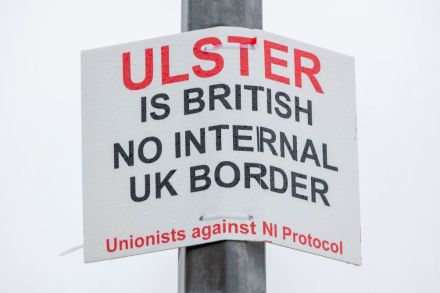
Ursula von der Leyen now admits that she overreacted in the EU’s vaccine row with the UK. She has spoken of her ‘regret’ that Article 16 of the Northern Ireland border protocol was triggered by the European Commission in a Friday night fit of pique at the end of last month. But there is a sense in Brussels that the British are still trying to exploit her misstep. This claim is not entirely baseless. The UK is getting increasingly worried about the protocol, and clearly does see a chance to push for concessions now that the Commission has surrendered the moral high ground. The Northern Ireland protocol was agreed by Boris Johnson as he struggled to get a Brexit deal in time for the 2019 general election. The bureaucracy it causes is already leading to problems.

Hungary’s vaccine strategy risks showing up the EU

From our UK edition

You have to admire Hungary’s chutzpah. Not only has it bypassed Brussels to pursue its own vaccine procurement strategy, it is also backing two of the most controversial horses in the race: Russia’s Sputnik V and China’s Sinopharm jab. It has just secured enough Sinopharm doses to vaccinate 250,000 people a month while its Sputnik V deal will mean 1 million Hungarians are vaccinated – a tenth of the population. The Sputnik V vaccine may start being rolled out as soon as next week. Hungary’s strategy may appear reckless but its hand has been somewhat forced by EU policy, which prohibitively states that individual member states may only enter into negotiations with vaccine suppliers who are not in talks with the EU.

Watch: EU’s jab at Britain’s vaccine arms-race

From our UK edition

The EU Commission President, Ursula von der Leyen, has been in the firing line in recent weeks, over the EU’s failure to procure enough vaccine doses. The Commission’s haphazard programme has left officials scrambling for excuses to explain why the bloc has come up short, with various EU leaders hitting out at AstraZeneca, Britain’s one-dose strategy, and our medicine approvals process. Could those excuses be wearing thin? That might explain why the EU President appeared to come up with a new strategy this weekend for deflecting blame: by accusing Britain of a Cold War mindset.

What the EU still doesn’t understand about Britain’s vaccine strategy

From our UK edition

Since the outrage caused last Friday, when the European Union looked set to undermine the Northern Ireland protocol less than one month after the Brexit deal came into force, there has been little apology from those in charge. This is not terribly surprising: European Commission President Ursula von der Leyen has a reputation for passing the buck whenever possible. It’s also thought that last week’s mistakes are particularly hard for the EU to grapple with: desperate to prove Brexit was a mistake, it has been difficult for Brussels to watch Britain's reputation for handling the Covid crisis change so quickly for the better. Yesterday we got a hint of acknowledgement from von der Leyen that perhaps there are some benefits to being outside the EU.

Ten things we’ve learnt about the Brexit deal

From our UK edition

The UK-EU trade deal has now been operating for a month, and the lengthy queues at ports and empty supermarket shelves predicted by some (the ‘cliff edge’ we heard so much of) have failed to materialise. But equally, it is clear that businesses were not fully prepared for new trade arrangements and that EU trade rules on agri-food products are extremely restrictive.  The last month has also confirmed that the Northern Ireland Protocol is unworkable. If unchecked, it will seriously harm the province’s economy. The UK government needs to be ready to take radical unilateral action, if necessary, to alter it. But what else have we learnt about the deal?

France is furious at the EU’s vaccine bungle

From our UK edition

Ursula von der Leyen has clung to an increasingly implausible narrative this week: that the EU made the ‘right decision’ with its vaccine strategy. It’s the clearest sign yet that Brussels is going into panic mode. The Commission president is reported to have turned down requests to hold a public debate in the European parliament on the vaccine roll-out. Von der Leyen decided to only answer questions behind from a select group of MEPs behind closed doors. Finally, left without much choice the Commission president seems to have grudgingly accepted to appear before the European Parliament on Wednesday. The Commission feels increasingly cornered, and rightly so, for the EU’s vaccine struggle may well turn into an existential crisis.

Von der Leyen gets that sinking feeling

From our UK edition

HMS Britain seems to be a nippier beast after her Brexit refit. That is, at least, according to EU Commission President Ursula von der Leyen.  Earlier today the embattled Eurocrat admitted that when it comes to Covid vaccine procurement, the European bloc is a 'tanker' by comparison to the UK's 'speedboat'. When asked about her ability to get hold of life-saving jabs, she told reporters:  I'm aware that a country might be a speedboat and the EU more a tanker. If we conclude a contract, we need another five days for the member states to say, 'yes' — and these are five days, five working days.So, obviously, of course a decision taken by 27 lasts longer than if you just go by yourself, but I am deeply convinced that the European approach is the right one.

Barclays has woken up to the good news about Brexit

From our UK edition

The bankers would all move to Frankfurt. The hedge funds would all decamp to Zurich. The asset managers would be off to Paris and Dublin, and the lawyers, accountants and consultants would swiftly follow them.  For much of the last four years since the UK voted to leave the European Union, it has been assumed across most of the continent that one of the big prizes of Brexit would be repatriating the lucrative financial services industry out of the City of London to a series of European centres. Indeed, Paris was confidently expecting to boom on the back of all the business that would hop on the first Eurostar to make sure it stayed within the Single Market. But hold on.

How the EU can help calm Brexit tensions in Northern Ireland

From our UK edition

The next Northern Ireland assembly election must take place by 5 May next year. The MLAs voted in then will decide whether or not to continue the Northern Ireland protocol, which requires the UK authorities to apply EU rules on various goods entering Northern Ireland. If a majority voted against (that is all that would be needed as the petition of concern, which requires a higher threshold, would not apply), then the protocol would fall. At the moment, it looks very unlikely that the election will result in an anti-protocol majority. But it would clearly be bad for stability in Northern Ireland if the campaign turned into an attempt by Unionists to rally a majority that could vote down the protocol.

Keir Starmer’s misleading European Medicines Agency remarks

From our UK edition

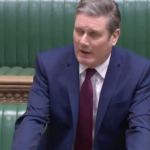
Oh dear. Sir Keir Starmer was in a particularly prickly mood this afternoon, as he faced Boris Johnson at PMQs, and the pair clashed over border closures. But the Labour leader appeared most riled when the Prime Minister pointed out that Starmer had fought for Britain to stay in the European Medicines Agency – a move that could have potentially slowed our vaccine roll-out. An indignant Starmer suggested that the PM’s claim was ‘complete nonsense’ and added that: ‘The Prime Minister knows I’ve never said that, from this Despatch box or anywhere else, but the truth escapes him.’ https://www.youtube.com/watch?v=NsTSBF-FJrg A strong rebuke.

The vaccine disaster has fatally undermined the EU

From our UK edition

It might be a bit late, but the supply will come on tap eventually. France’s Sanofi has partnered with Pfizer to start manufacturing its vaccine. BioNTech has just bought a factory in Marburg, Germany from Switzerland’s drugs giant Novartis to retrofit into a vaccine plant. With plenty of money being splashed around, production will arrive soon. Making vaccines is tricky, but not that tricky. By the summer, Europe should have enough Covid-19 shots to jab everyone who wants one. Crisis over, right? Ursula von der Leyen can get back to setting diversity targets, or making climate pledges, or whatever it was she was up to before people started asking why the Israelis and the British were inoculating people so much faster than she was.

Martin Selmayr’s EU vaccine boast backfires

From our UK edition

In the aftermath of the EU's vaccine bungle, Brussels remains in damage limitation mode, determined to ensure that someone else gets the blame for its own crisis. But Mr S wonders whether top EU diplomat Martin Selmayr's bid to put a positive spin on what has unfolded over the last few days was really so wise. Selmayr, who revelled in his nickname 'the Rasputin of Brussels' during his time serving as Jean-Claude Juncker's aide, attempted to make a comparison between Europe's vaccine rollout rate and that of Africa, the poorest continent on Earth. Selmayr, who now serves as the EU Commission representative in Austria, wrote: 'The EU, thanks to the joint work of 27 governments, EU Commission, researchers and companies vaccinated 12 million people in 3 weeks.

One year after Brexit, Britain is reaping the benefits

From our UK edition

A year ago today Britain awoke to a rather muted celebration – which seemed to consist largely of a bubble car driving around Parliament Square with a Union Jack in tow – ready to face up to a brave new future outside the EU. Who would have imagined then that the Observer would mark the first anniversary by running a leading article condemning the EU as 'shambolic' and instead praising Boris Johnson’s government for something Britain did all by itself? Of course, the Observer’s judgement is only in respect to one thing: the EU’s joint vaccination procurement programme. Nevertheless, it is something rather important, on which a great number of people’s lives are dependent.