Eu

Will a Greek exit mean an EU referendum?

From our UK edition

A couple of weeks ago, James revealed that the promise of an EU referendum is almost certain to feature in the 2015 Tory manifesto. But might we actually have one before then? If the speculation by ‘senior government sources’ in today's Times is to be believed, we might indeed. According to No.10 and the Foreign Office, a Greek exit from the euro — which could follow soon after the country's new round of elections on 17 June — would necessitate a rewriting of EU treaties. And that, the Times says, ‘would trigger “aggressive” demands by Tory MPs to hold a referendum on Britain's EU membership.

Off target on immigration

From our UK edition

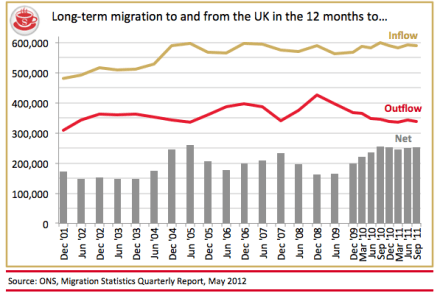
How goes the Tories’ plan to reduce net migration to the ‘tens of thousands’ over this Parliament? Not too well, judging by the latest ONS figures released today. As it is, net migration was 252,000 in the year up to September 2011. That, lest you need reminding, is over double the Tory target. No.10, however, has been fairly defiant in response. ‘It's still our intention to bring levels of net migration back down to tens of thousands,’ said a spokesman today, before adding that, ‘clearly that's going to take some time.’ They also cited different Home Office statistics, which record the number of visas issued up until March of this year.

Why reason doesn’t apply to the Eurozone

From our UK edition

The Eurozone is a kind of lunacy if you look at it as an economic project. But this isn’t about economics, or rationality — it's about emotion, as the leader in today’s Telegraph says. The Brits and Americans often fail to understand this fully because we judge a currency union in terms of its economic merits. But many European nations see it as part of another, wider, agenda. For the Spanish and Portuguese it’s about not going back to dictatorship. For Greece it’s about being Western rather than Eastern (and not being run by the military).

Merkel heads to the G8

From our UK edition

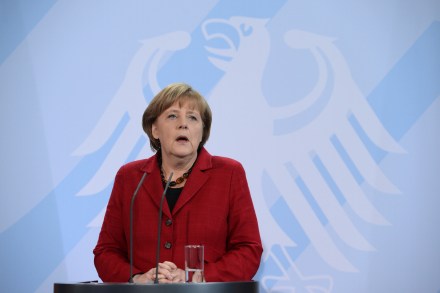
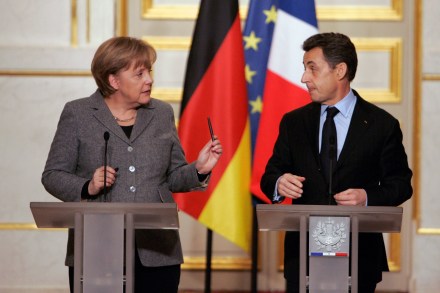
I doubt that Angela Merkel is looking forward to the G8 summit very much. It will mostly consist of the other world leaders telling her to give ground on austerity. But I suspect that Merkel won’t budge much, if at all. She clearly believes that the Greeks can be whipped into line by telling them that the election is really a referendum on euro membership. Hence both her suggestion of a simultaneous referendum on election-day and her backing for the European Central Bank cutting off support to Greek banks which shows that while there’s no formal mechanism for ejecting a country from the single currency there are ways of doing it. The German government, intriguingly, seems more accepting of the idea of the Greeks leaving the Euro than others do.

The View from 22: Greece is burning

From our UK edition

The upcoming Greek elections will push the nation into a confrontation with the European authorities, reports Faisal Islam, the economics editor of Channel 4 News, in his cover feature for the latest issue of The Spectator. And in this week's episode of The View from 22 podcast he provides an insight into the changing attitudes he witnessed during his most recent visit to Athens last week: 'Six months back, there was certainly a high stakes game of poker. But to me, it was pretty clear 6 months ago that the Greek people would do what was necessary to stay in the Euro. When you asked people on the streets, politicians, businessmen, yes things were taken to the edge of the abyss. They were told to peer over but they would still go for the Euro.

Basel III and the EU’s strange desire not to compete

From our UK edition

Greece is the centre of European attention, but as George Osborne met with other EU finance ministers today there was another issue bubbling in the background — Basel III. This had been brewing for a while and is yet one of those matters that threatened to isolate Britain from the rest of the EU (though some would argue this is a good place to be). The Chancellor this morning appears to have agreed to the Basel III accord, which stipulates the amount and quality of capital that banks are required to keep. But this was after much haggling — and an Osborne outburst where he said signing on to the original banking capital rules would make him look ‘like an idiot’ — saw amendments being added.

Greece is still the word

From our UK edition

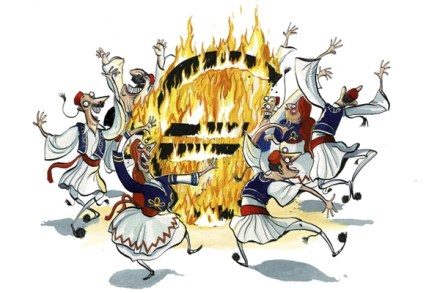
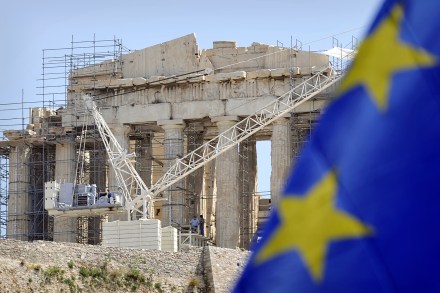
Remember when Europe’s leaders were basically saying, ‘Don’t worry, it’s all sorted’? Remember when they were putting out communiqués that started ‘The euro continues to rest on solid fundamentals’? No doubt they’ll do so again, but those past shows of certainty still look kinda funny this morning. Despite some last-minute concessionary efforts by Europe’s beancounters, it still appears that Greece’s main parties will be unable to form a coalition, and are heading for another election. And we know what that could mean: victory for the left-wing Syriza coalition, a severe swing against austerity, Greece’s exit from the euro, etc. etc.

The View from 22: Will the riots return?

From our UK edition

We haven't done enough to prevent the riots of last summer happening again, says Simon Marcus in this week’s cover feature. And in the latest episode of our The View From 22 podcast he expands on this, discussing his personal experiences with the Boxing Academy in Tottenham and Hackney: ‘What enabled us to engage in strong debate during the whole process was what I saw on the front line at the Boxing Academy for many years. But what I was being asked, in many ways, to accept was wrong. When you're being told that your eyes and ears have deceived you for five years, that's something I can't accept.’ James Forsyth also discusses why an EU referendum is becoming more likely — thanks to a combination of UKIP, Boris Johnson and public opinion.

Why the Tories are shaping up for an EU referendum

From our UK edition

An EU referendum pledge in the next Tory manifesto is ‘basically, a certainty’ according to one of those most closely involved in the party’s electoral strategy for 2015. The current plan is for the manifesto to declare that a Conservative government would renegotiate Britain’s membership of the European Union and then put the new terms to the people in a referendum within 18 months of the general election. I understand that the Tory line would be that they would urge staying in the EU if Britain’s concerns could be met through this process. But if the rest of the European Union refused to play ball, they would be prepared to advocate leaving.

Hollande, Cameron and the 21st arrondissement

From our UK edition

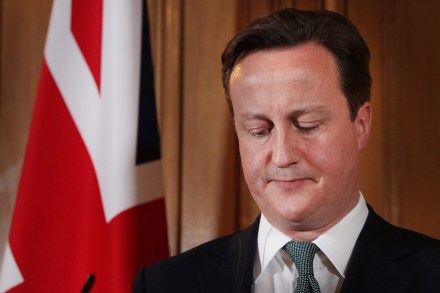
While David Cameron has good cause to be glad of Sarkozy’s defeat, he has even better cause to be nervous about this trend of lefty nerds being elected. Much of the Cameroon’s re-election hopes are pinned on the idea that their boss will trounce the geeky Ed Miliband. Nowadays, the argument goes, these ex-special advisers who have no charisma and alarming leftist policies just don’t win modern elections. But, as Ben Brogan argued in the Telegraph last week, the French may well be about to prove that even dullards can get elected — if the incumbent fails to deliver the change he promised. At least Hollande says he’ll balance the books by 2015, which is more than Osborne is planning to do.

How to get around the EU (and weed smokers)

From our UK edition

The Dutch government has just banned foreigners from the country’s ‘coffee-shops’ — aka, cannabis cafés. Given how often we’re told that you can’t ban EU members from doing anything, how did they manage it? Basically, it all comes down to residency. If you live there, then you can apply for what’s being called a ‘weed pass’. If you don’t live there, then no dice. But is it legal for the Dutch government to ban entry to EU citizens in this way? A group of 19 coffee-shop owners decided to go to court over the matter, worried about this potential loss of custom.

Comedian-in-Chief

From our UK edition

Every year, the White House Correspondents’ Dinner boasts an eclectic guest list, and last night’s was no exception. Stars of the political world — including Colin Powell and Chris Christie — were joined by Hollywood stars including George Clooney, Steven Spielberg, Kevin Spacey and Lindsay Lohan. Late night TV host Jimmy Kimmel provided after dinner entertainment, but — as last year — the best jokes came from Barack Obama. He poked fun at himself: ‘Some have said I blame too many problems on my predecessor. But let’s not forget, that’s a practice that was initiated by George W Bush.’ The Republican primaries: ‘[Mitt Romney] took a few hours off the other day to see The Hunger Games.

The Eurocrisis persists

From our UK edition

Holland and Hollande; they're the non-identical twins that are causing palpitations across Europe today. Holland, because the country's Prime Minister yesterday resigned after failing to agree a package of cuts for his country’s budget. Hollande, because he's the socialist candidate set to win the presidential election in France, probably eroding that country’s commitment to fiscal consolidation in the process. The markets quivered in fear at this morning’s headlines — and what they mean for the eurozone — even if they have, in some parts, slightly recovered since. It’s all another reminder that the Eurocrisis just isn't going away — neither for countries such as France and the Netherlands, nor for George Osborne.

Encouraging signs from talks with Iran

From our UK edition

The weekend’s six power talks with the Iranians about their nuclear programme were more fruitful than many, including I, expected. It seems that the EU sanctions on Iranian oil and gas, which are due to come into force in July, have concentrated minds in Tehran. However, we won’t know whether the Iranians are just playing for time again until the next set of talks in Baghdad on the May 23. These six power talks are an imperfect vehicle in that the Russians and the Chinese take a far softer line than the French, British, Germans and Americans. But as James Blitz blogs over at the FT, one of the most striking things is that the Europeans are tougher on Tehran than the Americans who are very keen to avoid having Iran dominate Barack Obama’s re-election campaign.

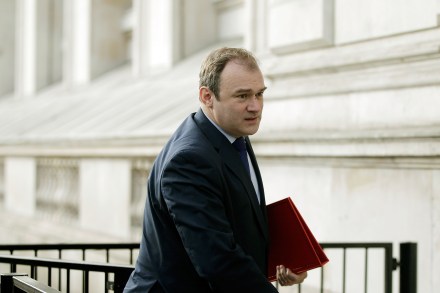
Ed Davey’s ‘pro-European’ claim has Tory ministers fuming

From our UK edition

There’s barely disguised fury among Conservative ministers about Ed Davey’s claim that the coalition may well be more pro-European than the Labour government was. One complained to me earlier that it was typical Lib Dem mischief making and that ‘if they are not going to behave like normal ministers then we shouldn’t either’. Indeed, this minister went on to suggest that William Hague should publicly slap down Davey for his comments. I doubt this is going to happen. Davey is the leading Lib Dem on the Cabinet’s European Affairs Committee and I suspect there’s little appetite in the Foreign Office for a coalition row over Europe.

How do you solve a problem like Baroness Ashton?

From our UK edition

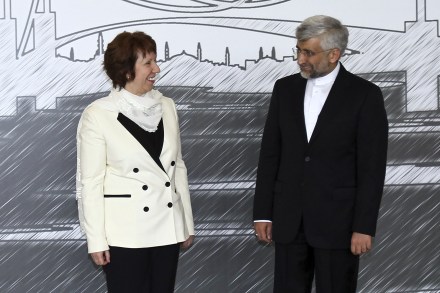
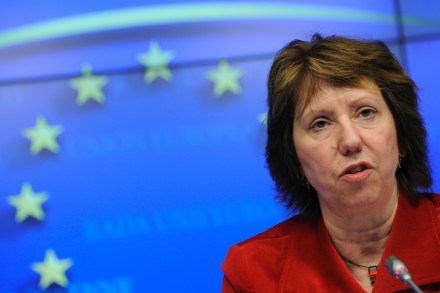
Baroness Ashton has managed a return to diplomatic form by comparing the murder yesterday of three children and a Rabbi at a Jewish school in Toulouse with ‘what is happening in Gaza.’ Plenty of people have already deplored her comments. But they present an opportunity to address one of the underlying and too infrequently asked questions of our time: if you do not think Ashton is a very good politician, what can you do about it? Ordinarily if a politician says or does something you do not like we, the electorate, are at some point given the opportunity to vote them out. There used to be considerable pride in this arrangement.

Cameron’s Human Rights quandry

From our UK edition

The combination of the European Court of Human Rights and the European Convention on Human Rights is, I predict, going to give David Cameron an increasing number of headaches in the coming months. As Fraser wrote yesterday, Michael Pinto-Duschinsky’s principled resignation from the coalition’s Commission on the British Bill of Rights has revealed that this body was never really serious about dealing with the problem. The exposure of this Commission as merely a holding device will add to the pressure on the Prime Minister to clarify what he actually intends to do about the problem.

The role of Baroness Ashton

From our UK edition

Recent reports have suggested that David Cameron is interested in swapping Cathy Ashton’s job as the EU’s high representative for foreign affairs and security policy for another commission post. But sources close to Number 10 tell me this ain’t happening. Supposedly, Cameron was interested in swapping Ashton’s current role for the post of commissioner for the internal market, currently held by the Frenchman Michel Barnier. But, in reality, this was never on the cards for a whole host of reasons. Foremost of these was that Nicolas Sarkozy was never going to give up the French claim to this job just weeks away from a French presidential election.

Europe is being strangled by the Franco-German alliance

From our UK edition

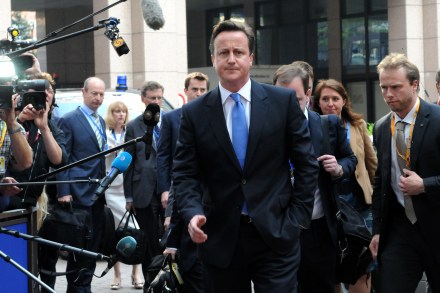
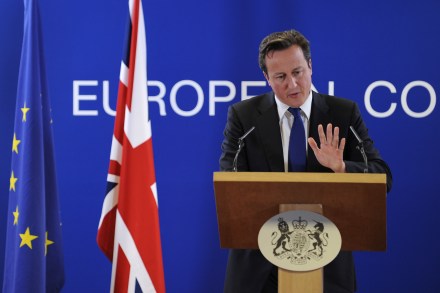
David Cameron’s complaints at last night’s EU meeting about the lack of a growth agenda have, in part, been addressed by the new draft conclusions. Cameron — who was supported by the Dutch, Italians and Spanish — seems to have secured promises on the completion of the single market, deregulation and the services directive in the summit’s draft conclusions. This isn't going to turn around the European economy. But it is a step in the right direction and a small, but possibly significant, victory for the PM.   I understand from sources in Brussels that there has been frustration with the extent to which the conclusions presented last night simply echoed the views of the Germans and the French.

Imagine if Cameron hadn’t vetoed…

From our UK edition

When David Cameron headed to Brussels last December, it was far from certain that he would veto the proposed treaty. It was only when Nicolas Sarkozy proved totally uninterested in accommodating Britain’s demands that the Prime Minister decided that he could not sign up to it. In a way, Sarkozy did Cameron a favour. Imagine if Britain had got the safeguards the Prime Minister wanted and had signed up to the treaty. How would he then have reacted this week, when the Irish announced that they were going to hold a referendum on it? The pressure from the Tory benches to let the British people vote on it would have been immense.