Eu

European integration that we can get behind

From our UK edition

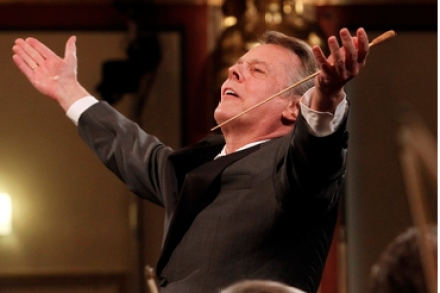
Part of the magic of the New Year's Day concert from the Vienna Philharmonic is knowing that millions are watching the same event live, right throughout Europe. It's perhaps the only cultural event that unites the continent in this way (other than Eurovision). Politically and economically, not very much binds us together, as the tensions within the European Union demonstrate. The continent is a model of diversity, which is why homogenisation attempts fail. But when it comes to culture, it's a different story altogether — with classical music being, perhaps, one of the strongest unifying factors. Turn up to a concert hall in Edinburgh, Leeds or Athens to listen to classical music, and the odds are it'll be from a relatively small number of central European composers.
How democracy fared in 2011

From our UK edition

Even before we were a month in, 2011 was an historic year. Principally because in a region of the world where governments shift through military coup or foreign intervention, dictators fell — and others tottered — thanks to local popular uprisings. Whatever the outcome of those events (and I have expressed my fears elsewhere, here) they remain a landmark worth observing. Whether or not the coming years are any good at all for them, 2011 was a great year for democrats in the Middle East. In the older democracies of the West, however, 2011 was more disconcerting.   If anyone doubts this, consider the following experiment. It is the beginning of any year other than this one over the last two decades.

The latest act in Europe’s comic opera

From our UK edition

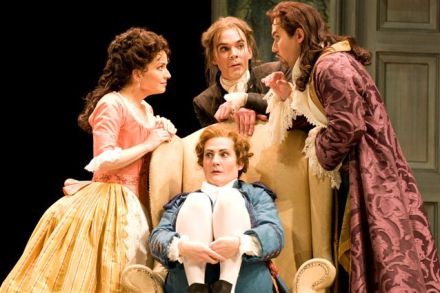
If it was not all so serious, the efforts to save the single currency would be worthy of a comic opera: the Germans could compose the score, the Italians could write the libretto, and the French could take care of the stage directions. The latest IMF-related effort is, perhaps, best described by the website ZeroHedge, which is required reading during these troubled times: “Germany will be responsible for €41.5 bn, France at €31.4 billion, and Italy will need to provide €23.5 billion and Spain another €15 billion.

Rudd’s straw man argument about our EU membership

From our UK edition

As the isolation hysteria over Cameron’s EU veto starts to fade, attention is now shifting to the more existential question of what kind of relationship the UK should have with Europe. In a piece for today's Times (£), the chairman of Business for New Europe, Roland Rudd — who, incidentally, used to argue passionately in favour of the UK joining the euro — takes aim at those who want Britain to replicate a Norway-style model of European cooperation. Arguing that Norway endures so-called ‘fax machine diplomacy’ — no influence over EU laws that it must nonetheless accept — Rudd says that ‘the choice now is to do what Norway does, or remain in the EU.

Another sign of coalition splits over Europe

From our UK edition

Coalition tensions over Europe are again threatening to be the story this morning. Nick Clegg has told The Guardian's Patrick Wintour that Britain has 'signalled we are happy for them [the Eurozone plus group of countries] to use EU institutions' to enforce any new treaty they agree between themselves. This is a striking claim given that David Cameron has not publicly said that he would accept this. If the Deputy Prime Minister's summary of the coalition position is accurate, then Cameron will face criticism from eurosceptics that he is backsliding on his veto. But for all Clegg's criticism of Cameron handling off the summit, he remains unconvinced by the plans that the eurozone plus countries are now pursuing.

Clegg tries to rebuild EU bridges

From our UK edition

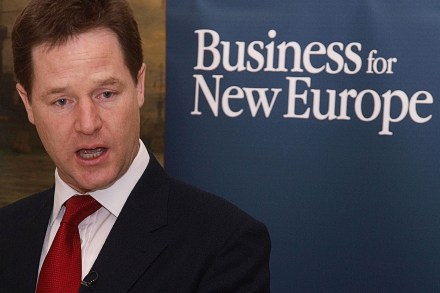
What are the Lib Dems up to? On Tuesday, Clegg, Cable, Alexander, Huhne and Laws met with 'Business for New Europe', a group of pro-European business leaders, in what the FT describes as as 'a very public display of engagement with business over Europe' and the front page of today's Mail calls 'plotting to rally business chiefs against Cameron over Europe'. It is, of course, not surprising to see senior Liberal Democrats talking to pro-EU business people and advocating more engagement with Europe. But it does highlight what will be a key goal of the Lib Dem leadership over the next few months: building bridges with Europe, particularly to reconnect with traditional, europhile Lib Dem supporters following the PM's veto last week.

The veto arguments rumble on

From our UK edition

The Times has a very interesting story (£) today on page 17. It claims that David Cameron had agreed to inform Nick Clegg if it appeared that Britain was going to be isolated at last week’s European Council. The significance of this is that it suggests that the Lib Dems believed they would be consulted before the government vetoed anything. This news emerges after senior Liberal Democrats have privately questioned why their leader did not insist that Cameron only use the veto once he had Clegg’s explicit agreement. The Times also reports that this negotiating protocol did not envisage a situation where Britain was left in a minority of only a couple of countries.

Was the PM reasonable?

From our UK edition

As the effects of last week's European Council become clear, debate about the rights and wrongs of David Cameron's diplomacy hinge on one question: were his demands ‘reasonable and modestly expressed’, as a source in No 10 put it to me? Everyone knows that there were chronic failures in the run-up to the meeting itself. I laid a few of them out in an earlier post, but, basically, they amount to a failure of prioritisation: the UK eroded the goodwill it needed by fighting tooth-and-nail on every issue beforehand, thereby blocking things that other EU states care about but which are not important, except symbolically, to the British. International — and especially European — cooperation is about give-and-take. It cannot just be take.

Clegg ducks Cameron’s conciliatory speech

From our UK edition

The text of David Cameron's statement on the European Summit was clearly designed as balm for the coalition's wounds. He devoted a large chunk of it to defending Britain's membership of the European Union in a clear effort to reassure the Lib Dems about the future direction of European policy. But this effort was rather undermined by the absence of the deputy Prime Minister. This was, predictably,  the story of the session. In response to repeated Labour questions about where Clegg was, Cameron replied 'I'm not responsible for his whereabouts. I'm sure he is working very hard.' Nick Clegg has now given a TV interview in which he has escalated the coalition divide over Europe.

Good news from Brussels

From our UK edition

While the debate over Europe rumbles on, it's worth highlighting one bright spot in the OBR's recent document of doom which has largely slipped past Westminster's radar: by their forecasts, we will pay the EU £2 billion less this year than we were expecting to in March. Instead of the £9 billion 'net contribution to the EU budget' forecast for 2011-12 nine months ago, the OBR now estimates it'll be £6.9 billion. That represents a 17 per cent real terms cut on the £8.1 billion we paid last year, instead of an 8 per cent increase: Why the reduction? The OBR gives a few reasons:  By themselves, each of these factors means just a few hundred million less sent to the EU.

Expect today’s eurosceptic celebrations to be muted

From our UK edition

The real Tory celebration of David Cameron's veto will be on Wednesday. Then, behind closed doors, Cameron will address the 1922 Committee of Tory backbenchers. With no Lib Dems present, the Tories will be able to thump the desks and be rude about the EU without worrying about what their coalition partners might think. But in the chamber today, Tory MPs are being urged to be calm and forensic. The whips keep pointing out to ambitious MPs that a question on what Labour's position is would be most helpful. Eurosceptics, though, should be in good cheer today even if Cameron's statement is more downbeat than they would like.

Europe is the story again

From our UK edition

Today was one of those days when we saw just how divisive the European issue can be to the Conservative party. The sight of Malcolm Rifkind and Nadine Dorries treating each other with barely disguised contempt on Newsnight was a sign of just how poisonous relations in the parliamentary party could become. Intriguingly, the Daily Mail reports in its first edition that ‘Even some of Mr Cameron’s closest Cabinet allies are understood to be shifting to a much more Eurosceptic position, with a five-strong group of ministers planning to visit the Prime Minister as early as today to urge him to toughen his stance.

Ed the arch-bungler lets Cameron off the ropes

From our UK edition

Ed Miliband had an open goal today. And he whacked it straight over the bar. Cameron was in trouble from the start. Having placated the rebel wing of his party with vague talk about ‘repatriating powers’ he is now expected to deliver. But he can’t make specific demands without weakening his hand at the negotiations so he has to talk in generalities. The Labour leader spotted this weakness and tried to exploit it with one of his lethally brief questions. ‘What powers would the Prime Minister repatriate?’ Cameron gave several answers without addressing the issue. His aim in the negotiations, he said, was to resolve the eurozone crisis, ‘and that means countries coming together and doing more things together.

Owen Paterson: A referendum on the EU is inevitable

From our UK edition

It is becoming increasingly clear what the Conservative party expects of its Prime Minister. If he is going to agree to 17 eurozone countries pushing ahead with the Franco-German plan for fiscal union, he needs to secure a new deal for Britain in exchange.   Just what this new deal should look like is a matter of intense debate in Conservative circles. If France and Germany turn the eurozone into a ‘fiscal union’, what does that mean for Britain’s standing in the European Union? At the weekend, Iain Duncan Smith suggested that the nature of the EU would change so much that a referendum would be necessary. No. 10 quickly ruled that out. Cameron confided to Cabinet colleagues on Monday that he feared another referendum would bring down the coalition.

Merkel’s fiscal union won’t solve the euro’s problems

From our UK edition

Few people have been as vindicated about the failings of the euro as Marty Feldstein, who was chairman of the Council of Economic Advisers under Reagan. In 1997 he wrote a piece for Foreign Affairs called 'The EMU and International Conflict'. In it, he argued that far from furthering peace and stability in Europe, the Euro would actually endanger it. Watching the events of the past few months, few could disagree with him. Feldstein has now returned to the debate pointing out that none of the current fixes being suggested will solve the single currency's problems.

Iran lashes out

From our UK edition

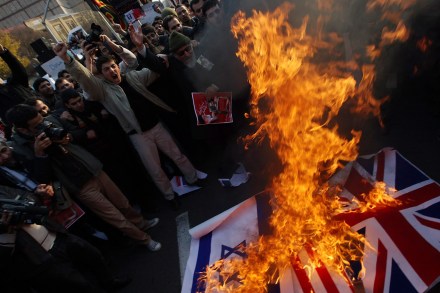
The pressure is piling up on Iran – from below, as people demand greater freedoms; from the region, where Iran is about to lose its one ally, Syria, to a popular revolt; and from the international community, which is tightening the economic sanctions in response to Tehran's illegal nuclear programme. So Iran is hitting out the only way it knows how – through the use of state-sanctioned and illegal violence. They hope to divert attention from the country's problems and internecine struggles, reheating old tropes about Britain as the 'Little Satan' and maintaining the decades-old decolonialisation rhetoric that all the problems of the region can be explained by outside interference.

Meanwhile, in Europe…

From our UK edition

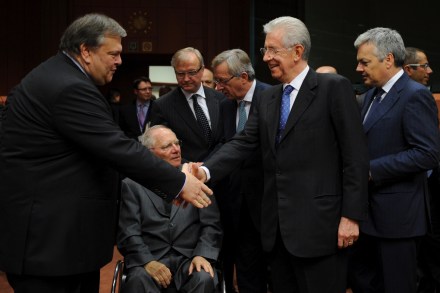
There probably hasn't been a meeting of European finance ministers as important as the one tonight. The euro is still at risk; with new governments in Spain, Italy, and Greece incapable of calming the markets, and Angela Merkel unwilling to let the ECB act. In a speech in Berlin, Polish foreign minister Radek Sikorski put it clearly: ‘I fear German power less than I am beginning to fear German inactivity.’ It is a fear shared in London and Paris as well. The 17 finance ministers will discuss the range of options on the table: from setting up an EU Treasury to the possibility of eurobonds or establishing a supra-national process to monitor national budgets.

On the road to break-up?

From our UK edition

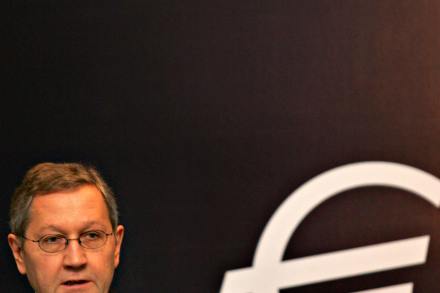
Before we plunge into the Autumn Statement, we really ought to mention the poison cloud hanging over Brussels today. European finance ministers, including George Osborne, are meeting there later — and it's certainly not going to be good for their collective health. Klaus Regling, the head of the European Financial Stability Facility (EFSF), is expected to tell them that there's basically no chance of them boosting the bailout fund to €1 trillion in the near future, as was promised at the end of last month. Back then, David Cameron urged eurozone leaders to bring a ‘big bazooka’ to the fight. They have barely managed a cap gun. This is far from surprising.

Cameron may have more leverage in Europe than he thinks

From our UK edition

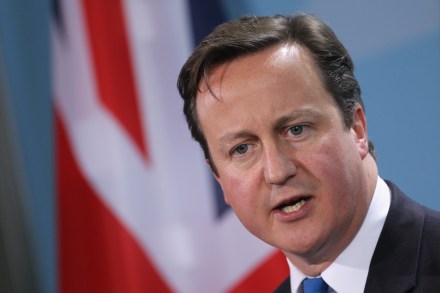
There's just over a week to go until the crunch EU summit on 8-9 December, so David Cameron has to decide how best to play his cards — and quick. The problem, as Daniel Korski has pointed out, is that Britain faces the risk of ‘structural isolation’ in Europe in the short-term. To counter this, Cameron effectively has two options. First, work with allies on both sides of the euro divide to seek political assurances — formal or informal — against the formation of a two-tier Europe with a more integrated eurozone in the driving seat. Or, second, press ahead with UK-specific carve-outs from the EU structure.

Europe’s debt overspill

From our UK edition

That Italy is now paying around 7.8 per cent for two-year borrowing, compared to the 4.5 per cent it was paying just last month, is a reminder that the imposition of a technocratic government was far from a solution to the country’s problems. With €8 billion more debt to be sold on Tuesday, there’s little respite for Italy coming up. One does have to wonder how long they can carry on like this.   But Italy’s troubles need to be seen in conjunction with what happened at the German bund auction this week.