Eu

The View from 22 — the fight for press freedom and an EU problem for Cameron

From our UK edition

What effect would any form of statutory regulation have on the press in this country? In this week's cover feature, Nick Cohen writes that if the Leveson Inquiry recommends strong measures to curtail the press, they will not be practical thanks to the constant evolution of the media industry. On this week's View from 22 podcast, Nick explains the problems of defining who exactly is the press and who are journalists: 'You can't say what a newspaper is and you can't say who a journalist is. When I started in journalism, people used to say it was a trade, not a profession...that was true in theory but false in practice — you couldn't be a journalist unless you worked for a state or private media conglomerate.

Government expects to lose EU budget vote

From our UK edition

While the rebel whips are still rounding up Tory MPs to vote against the government on the EU budget motion, which starts in the Commons shortly, a senior government source tells me that they now expect to lose the vote. David Cameron's line at Prime Minister's Questions that 'at best we would like it cut, at worst frozen, and I'm quite prepared to use the veto if we don't get a deal that's good for Britain' may not have taken the sting out of the rebellion itself, but it might be easier for the government to now argue that losing a vote on an amendment which calls for a cut is less embarrassing when the Prime Minister himself says he would prefer a cut himself. The real damage may well be to the whips, who appear to have been completely wrong-footed by this amendment.

David Cameron reassures MPs that he’d prefer a cut in EU budget

From our UK edition

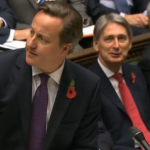
The Prime Minister needed to reassure his own side at PMQs today on the EU budget and give his whips something to work with. He largely did that, saying almost immediately that his position was that at best, he’d like it cut and at worst, frozen. That Cameron has said he’d like it cut will give those of his backbenchers who stick with him tonight some cover. They’ll be able to say that they’re supporting the government which already wants a cut. Ed Miliband’s decision to lead on the issue and try and use it to paint Cameron as ‘weak’ has also made the issue more partisan. I suspect that a few Tory MPs who might otherwise rebel will balk at walking through the lobbies with Ed Balls.

PMQs: David Cameron needs to show he has control of EU vote

From our UK edition

At PMQs today, David Cameron will need to go some distance to meet his backbenchers and head off a government defeat tonight on the EU budget. He’ll need to say that he personally would like to see the EU Budget reduced and that if other countries are prepared to agree to that, he’d be delighted. But that the one thing he’ll guarantee is that he’ll veto any real terms increase. He’ll also need to take the fight to Labour on the matter, pointing out how Blair gave up a chunk of the rebate for the vaguest of promises on CAP reform. Part of the reason that Europe votes keep causing Cameron so much trouble is that Number 10 goes into Maastricht mode every time one comes along.

Why David Cameron can threaten to veto the EU budget

From our UK edition

When in 1996 the US Congress threw out Bill Clinton’s Federal budget they precipitated a partial shutdown of the US Government. However, anyone looking at the growing prospect of a UK EU budget veto and cheerfully imagining Eurocrats being shut out of their offices on 31 December 2013 will be disappointed. Because when it comes to EU budgets, a veto is not quite a veto - the EU will continue one way or another to claim its dues. Nethertheless, a UK veto is not meaningless. Not least because, as we have set out here, the scenarios that could play out after a UK veto may not be that much worse for the UK than those already on the table (including, ironically, the UK’s own suggested 'freeze').

Tory whips in a flap over EU budget rebellion deploy Rees-Mogg

From our UK edition

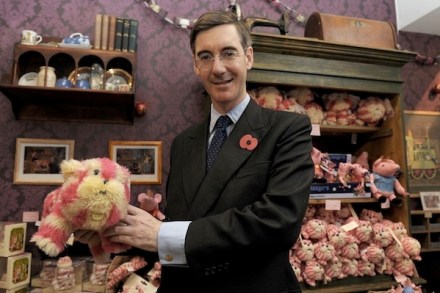
At this morning's Cabinet meeting, ministers discussed tomorrow's debate on the EU budget, which is shaping up to be a big row. MPs I have spoken to who have either signed or are considering putting their names to the amendment calling for a real-terms cut in the budget have found their whips to be in quite a flap about the issue. Even though it might be convenient for the Prime Minister to use a vote in parliament calling for a cut as a weapon at the budget summit itself, the party leadership is clearly sufficiently nervous to have pushed for a rival amendment from Jacob Rees-Mogg and Peter Bone.

Tony Blair’s ‘Grand Bargain’ for Europe: elect a President

From our UK edition

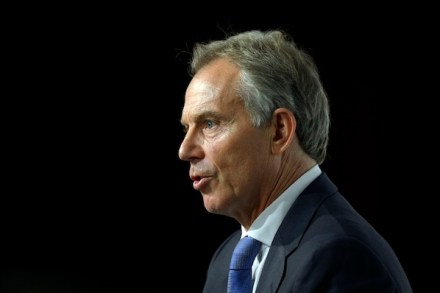
Tony Blair gave a speech today in which he proposed a 'Grand Bargain' to revive the European Union. One of the proposals in this grand bargain is - and Blair is clearly speaking entirely without self-interest - that there be an elected president of the European Commission or European Council. The former Prime Minister told the Council for the Future of Europe in Berlin: 'Let me make a few quick reflections. A Europe-wide election for the Presidency of the Commission or Council is the most direct way to involve the public. An election for a big post held by one person - this people can understand. The problem with the European Parliament is that though clearly democratically elected, my experience is people don't feel close to their MEPs.

Why David Cameron isn’t proposing a cut in the EU budget

From our UK edition

Cutting the EU budget is a very good idea. Much of it is spent inefficiently and its priorities are all wrong, 40 percent of it goes on agriculture. Given that a cut would also be popular with voters, why doesn’t David Cameron propose one? The reason is that there’s virtually no chance of getting agreement to it. If there’s no agreement, the EU will move to annual budgets decided by qualified majority voting—stripping Britain of its veto. But Labour’s tactical positioning in calling for an EU budget cut has been, as Isabel said earlier, extremely clever. It has left Cameron defending a complicated position which puts him on the wrong side of public opinion and many of his own MPs.

Cameron outfoxed from right and left on EU budget

From our UK edition

David Cameron now appears to have been outfoxed by his own backbench and the Labour party on the European budget. A Downing Street spokeswoman confirmed this morning that while the opposition and a group of rebellious MPs will campaign for a real-terms cut in the multi-annual budget, the Prime Minister remains committed to negotiating for a real-terms freeze. The spokeswoman said: 'His position is a real terms freeze: there has not been a real terms freeze in the multi-annual budget in recent years. That's what we are committed to negotiating for.' As I blogged earlier today, moves are afoot within the Conservative party to push for a real-terms cut, and there is now no backbench motion supporting the Prime Minister.

EU budget: Cameron’s leadership under pressure

From our UK edition

David Cameron is already irritating European leaders with his refusal to support any real-terms increases in the multi annual EU Budget, but this week, the Prime Minister is going to come under pressure to go even further and force a real-terms cut. This morning, he has Ed Balls and Douglas Alexander breathing down his neck, with a piece in the Times arguing that a cut is 'difficult but achievable with the right leadership and the right approach from the UK'. In his own party, Liam Fox says it is 'obscene' to 'even increase for inflation the inflated wages of the eurocrats' and is arguing in a speech today that weaker members of the eurozone should leave the currency at the same time.

The Conservative renegotiation strategy

From our UK edition

In The Spectator this week, Charles Moore argued that David Cameron — despite his oft-stated desire to renegotiate the terms of Britain’s EU membership — doesn’t actually have a European policy. Charles’ criticisms have clearly stung. For in his Telegraph column, he outlines what post-2015, the Conservatives would seek in any renegotiation: “In essence, the scheme is to turn the EU into two concentric rings. The inner ring shares the euro and undergoes political union. The outer ring avoids both these things and has a looser, trading membership grounded in national parliamentary sovereignty. You could say that this split already exists, in fact if not in theory, but the difference is that, in the emerging model, the EU would be legally reconstituted.

The Brussels budget imbroglio

From our UK edition

The EU budget negotiation, now a month away, promises to be David Cameron’s next big European test. The Prime Minister has repeatedly declared that he wants to see the EU budget frozen at 2011 levels and that he’s prepared to use the need for unanimity to achieve that. The Economist this week has a very useful scene-setter for the budget talks. It sketches the contours thus: ‘Countries are coalescing around loose (yet often divided) groups. There are the 'friends of cohesion': the net recipients of regional spending, such as Poland, Hungary and the Baltic states. And there are the 'friends of better spending': the net contributors, such as Germany, France, Britain and several northern European states.

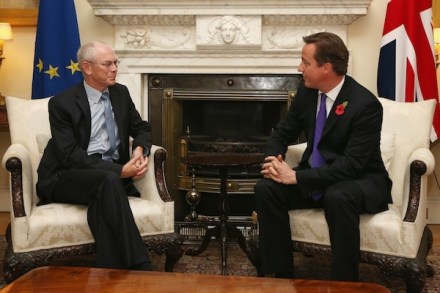
Herman van Rompuy’s revelatory Downing Street lunch

From our UK edition

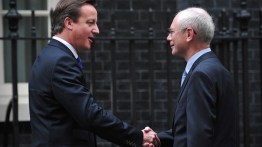
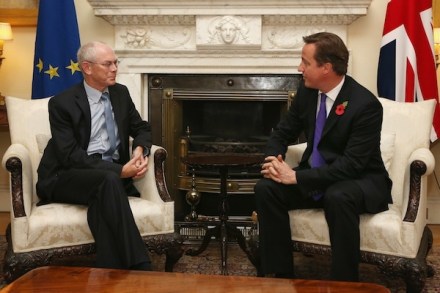
David Cameron had lunch with Herman van Rompuy in Downing Street today to discuss the UK's position on the EU budget. Despite the Prime Minister's tough talking in public about his determination to veto any real-terms increases in the money available for the multi-annual budget, the Downing Street spokeswoman refused to confirm that there was in fact any mention of this threat at today's meeting, which Nick Clegg apparently popped into briefly. She said: 'Discussions focused on the multi-annual budget. Both the Prime Minister and the Deputy Prime Minister made clear the Government's position that we do not support a real-terms increase in the EU budget.

The View from 22 — BBC in crisis, a Major problem for the Conservatives and Lost in Europe

From our UK edition

What is going to happen next with the BBC Jimmy Salvile saga? In this week’s magazine cover, Rod Liddle blames institutional problems within the organisation and predicts there will be plenty of buck-passing to come. Fraser Nelson says in this week’s View from 22 podcast that although he sympathises with the decision the BBC took, he believes there are more scalps to come: ‘As an editor myself, I know that if you are to come up with a story that makes an explosive allegation it has got to be absolutely nuclear-proof nowadays and if it’s not, if there is a slightest bit of chink in your armour, it could sink the whole publication or programme. ‘…I think we are going to end up with a great long list of resignations — a domino chain.

Cameron irked on Europe as backbenchers rattle the referendum cage

From our UK edition

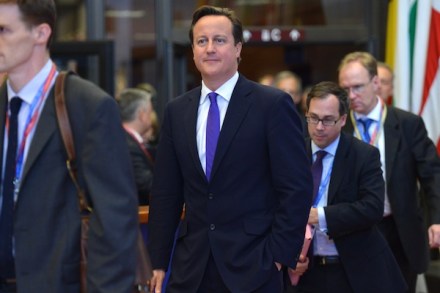
Throughout his statement on the European Council, David Cameron seemed slightly irritated. One sensed that the headlines of the last few days have rather got under his skin. Cameron began by declaring that the Council meeting had made ‘limited progress’, which is hardly much to report to the House. He also was unable to resist another pop at Chris Bryant; complaining that he still hadn’t apologised to him when the Labour MPs asked a question. It was striking what a pro-European tone Ed Miliband took in his response to Cameron. It was all about how Cameron was losing control of his party over Europe and needed more friends there.

The EU commissioner who resigned on the grounds he was innocent

From our UK edition

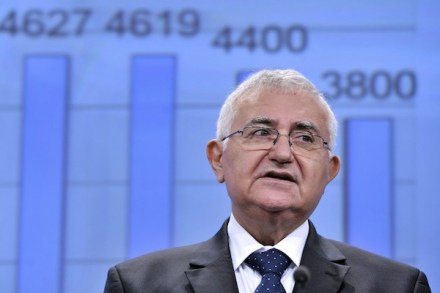
I don't suppose too many Coffee House readers will have noticed, but the EU is currently without a dedicated health commissioner. This is because the holder of that important office, a nondescript former Maltese politician called John Dalli, resigned last week in connection with an alleged lobbying scandal. So, until they can find another nondescript Maltese politican to replace him (the country's foreign minister looks as if he is to be the lucky guy), our health needs at euro level are in the acting hands of one Maros Serfcovic, a Slovak, who is also the Commission's commissioner for administration. This makes him the EU-equivalent of Jim Hacker, the Minister for Administrative Affairs, though in his case that was meant to be satirical.

David Cameron’s EU dilemma

From our UK edition

David Cameron is determined to renegotiate the terms of Britain’s EU membership. But to get a good deal and to show his own eurosceptics  - let alone UKIP voters  - that he’s serious about this, he is going to have to be prepared to say that he would be prepared to leave if the rest of the European Union doesn’t play ball. (This poker game is why the other northern European countries that Cameron is relying on to help him secure a better deal have been quick to suggest that they wouldn’t mind Britain leaving that much.) Cameron, though, is highly reluctant to do this. Not only does he think EU membership does provide genuine benefits to Britain but he also worries about how business would react to any threat of withdrawal.

The Home Office hokey-cokey on EU law and order opt-outs

From our UK edition

Yvette Cooper was in a stern mood this afternoon when she responded to the Home Secretary's announcement about plans to opt-out of 130 European law and order measures and then re-adopt those which it fancies. Her main gripe was that she hadn't been sent Theresa May's statement about the plans until 45 minutes before it was delivered in the Commons, but she was also peeved about the content. The Shadow Home Secretary argued that ministers 'haven't actually told us anything today at all', arguing that the different limbs of the coalition were doing entirely different things on this matter. While David Cameron had spoken about an opt-out, Nick Clegg had said the government was 'minded' to opt out, and May had only given the 'current thinking, Cooper complained.

David Cameron’s big European week

From our UK edition

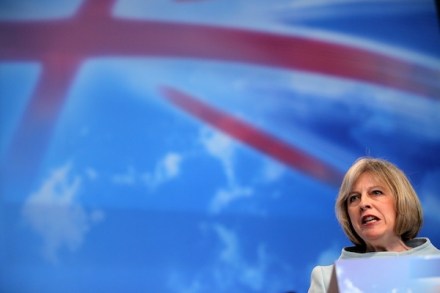
David Cameron's plan for this autumn was to largely avoid the topic of Europe at his party's conference, then to focus on the issue later in the year. It's only a few days since the Tories gathered in Birmingham, and the Prime Minister is already facing a big week on Europe. Home Secretary Theresa May will kick things off by announcing today that she wants Britain to opt out of more than 130 European Union measures on law and order, including the European Arrest Warrant. The opt-out itself, which the Home Secretary is expected to say Britain is 'minded' to do, is not the tricky bit: it's which measures to then opt back into.

The Nobel Prize’s EU joke prompts questions about the nation state

From our UK edition

The award of the Nobel Prize to the European Union is a tremendous joke; and like all great jokes it has brought people together. Commentators of left and right are united, for the most part, in condemning the Nobel Committee’s revision of history that claims the EU, a body that has only existed since 1993, deserves credit for securing ‘60 years of peace’ in Europe. Iain Martin and the legal commentator David Allen Green give the fullest accounts, rightly commending America’s enormous contribution to Europe since 1945. The timing of the award adds to the general mirth because there can be little doubt that events in the Eurozone are threatening the European project; or indeed that the European project is the author of its own misfortune.