Espionage

Cowboys and Muslims: that’s the new global power struggle, according to the latest great American novel

From our UK edition

‘I’m pleading with you, with tears in my eyes: if you fuck with me, I’ll kill you all.’ When ‘The Bumper Book of American Foreign Policy’ gets written, General James Mattis’s line to Iraqi leaders after the 2003 invasion will be an obvious choice for the cover blurb, but meanwhile it makes a striking epigraph to Bob Shacochis’s furious, sprawling novel about a half-century of US espionage and powerbroking. Like Norman Mailer’s Harlot’s Ghost, Don DeLillo’s Libra and Denis Johnson’s Tree of Smoke, this is the spy story tricked out as the great American novel, vaulting over the conventions of the cloak-and-dagger genre in dogged pursuit of larger questions of the national heart and mind.

The Spectator at war: The peril from aliens

From our UK edition

From The Spectator, 14 November 1914: Men guilty of helping the enemy are simply spies within our lines, or traitors to their adopted country. There cannot be any dispute about that. If the penalty visited on them is one of laughable leniency, the spy or traitor, so far from being deterred, has an actual incentive to continue his business. He sees himself in an heroic light—and he will get rich rewards when peace is restored and the time comes to acknowledge his "dangerous" services. Imprisonment, even for a considerable period, is certainly not a practical way of dealing with guilty aliens. They know that with the war will end all imprisonments for war offences.

Harry Chapman Pincher – ‘Fleet Street’s spy-hound’ (1914 – 2014)

From our UK edition

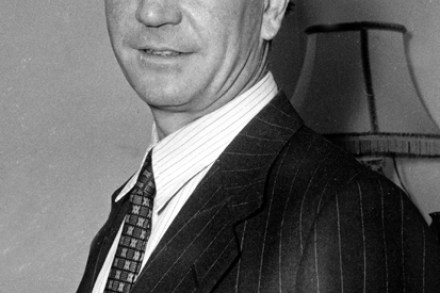
Harry Chapman Pincher, the veteran investigative journalist, has died aged 100. He was renowned for unearthing military secrets and exposing spies. Earlier this year, The Spectator published a review of his book 'Dangerous to Know': Dangerous to Know Chapman Pincher Biteback Publishing, pp.386, £20, ISBN: 9781849546515 Anyone brought up as I was in a Daily Express household in the 1950s — there were approaching 11 million of us readers — knew the writings of Chapman Pincher. His frequent scoops, mostly defence- or intelligence-related, sometimes political, scientific or medical, were unusually well-sourced and headline-grabbing. Now, aged 100, he has written his autobiography. He writes as directly and vividly as ever.

The threat from Russia’s spies has only increased since the fall of Communism

From our UK edition

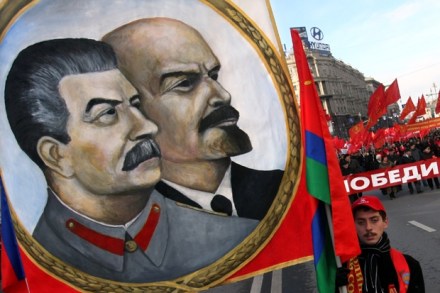
‘No, we must go our own way,’ said Lenin.  The whole world knows him as Vladimir, while he was in fact Nikolai. ‘Nikolai Lenin’ was the party alias of Vladimir Ilyich Ulianov, a terrorist leader and psychopath whose ideas changed the history of the greater part of the 20th century. This era ended on 26 December 1991 with the collapse of the 74-year-old Soviet Union, founded by Lenin, who seven years after the Bolshevik revolution died of syphilis, only to be succeeded by Stalin. ‘Stalin’ was also an alias. The Soviet dictator’s real name was Ioseb Vissarionovich Jugashvili, born into the family of a Georgian cobbler. His education, which he never finished, was limited to a theological seminary.

The traitor Melita Norwood should have been prosecuted

From our UK edition

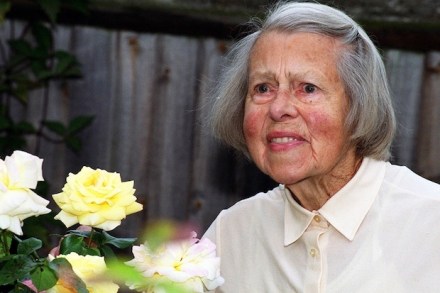
Today brings a fresh reminder of a national disgrace, the failure to prosecute Melita Norwood for treason. Newly released files from the Mitrokhin archive make clear how vital a KGB source Norwood was; Moscow regarded her as an even more valuable asset than Kim Philby. Norwood's treason was exposed in 1999 when she was still alive. But she was, absurdly, not prosecuted. This was a failure of national nerve. She might have been an old woman by the time her spying was revealed, but she was an agent of one of the most unpleasant authoritarian regimes in history and one which this country was involved in a decades-long struggle against. She should, as a matter of principle and honour, have been subject to the full force of the law.

You know something’s up when MI6 moves its head office to Croydon

From our UK edition

Alan Judd’s spy novels occupy a class of their own in the murky world of espionage fiction, partly because they blend two elements of the genre that are rarely seen together. First, they are grounded in a wholly plausible version of the intelligence community, where decisions evolve in Whitehall committee rooms and the wiles of politicians and bureaucrats are just as important as the machinations of moles. Secondly, their central characters often recall an older tradition of gentlemen patriots that goes back to John Buchan’s Richard Hannay. The combination shouldn’t work but in Judd’s novels it does. These elements meet in the character of Charles Thoroughgood, who has already appeared in three earlier books, first as a soldier and later as an MI6 officer.

The one-man spy factory who changed history

From our UK edition

With two new biographies of Kim Philby out, an espionage drama by Sir David Hare on BBC2, and the recent revelation that the aristocrat superspy John Bingham was the model for George Smiley, there is little doubt that Britain is currently going through one of its fitful bouts of spy fever, and this book can only add to the excitement. Philby has a walk-on role in Jason Webster’s gripping and stylish new account of the extraordinary career of Juan Pujol, aka Agent Garbo — and a multiplicity of other monikers — arguably the second world war’s most successful double agent apart from Philby himself.

Kim Philby got away with it because he was posh

From our UK edition

The story of Kim Philby is, of course, like so many English stories, really one of social class. He was one of the most scandalous traitors in history, and from within the security services sent specific information to the Soviets during the early years of the Cold War that resulted directly in the deaths of thousands of men and women. Among them were the Albanian guerrillas, hoping to liberate their country, who found Soviet-sponsored troops waiting at their landing places to shoot them. A list of non-communist opposers to the Nazis in Germany was passed on to the Russians who, advancing into Germany in the last years of the war, summarily executed 5,000 named people.

Sir David Frost: Hoover’s ‘hippie’

From our UK edition

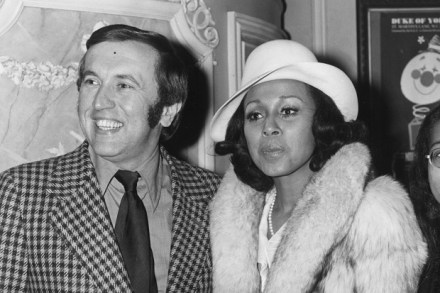
News of J. Edgar Hoover’s interest in Sir David Frost resurfaced in yesterday's Sunday Times. In an FBI memo, which Mr S has seen, Hoover wrote, ‘Check with our legal attaché in London. Frost shows every indication of being a hippie’. A cable instructing the London office to conduct an ‘extremely discreet check re-Frost’ is below. Needless to say, the Feds never found anything on Frost. Mr S wonders why Hoover suspected Frost of being a ‘hippie’. At the time in question, Frost was doing 8 TV shows a week on both sides of the Atlantic: leaving little time for daisy chains and hemp knitting. Maybe his sideburns were seditious?

By the book: The NSA is behaving like a villain in a 1950s novel

From our UK edition

The continuing drip-feed of stories about governments and friendly-seeming internet giants sifting through our data has left some citizens feeling outraged and a bit duped. I have no doubt that they would sympathise with poor deceived Ellen North in Dorothy Whipple’s brilliant 1950s novel Someone at a Distance. ‘Ellen was that unfashionable creature, a happy housewife’, who works herself to the bone to make a cheerful home for her children and indolent, self-satisfied husband, Avery. When Avery’s mother employs a young French companion — the vain and poisonous Louise Lanier — we sense that Ellen may not be a happy housewife for long.

British journalists lock each other up and throw away the key

From our UK edition

In the past few days, my colleagues on the Guardian have been publishing stories of national and international significance – indeed, if truth be told, they have been publishing them for most of the autumn. The international scoop was that America’s National Security Agency tapped Angela Merkel’s mobile phone (along with the phones of many more world leaders). As the shock of the revelation has sunk in, most observers have grasped that the shrug-of-the-shoulder explanation that 'spies spy', doesn’t really work in this instance. Spies in democratic countries are meant to be under democratic control. Elected politicians have few problems authorising surveillance on their country’s enemies.

Have Edward Snowden and the Guardian started a ‘debate’?

From our UK edition

The Snowden files continue to dominate the news today. Vince Cable has said that the Guardian newspaper had provided a ‘considerable public service’ by publishing Edward Snowden’s leaked material. This contrasted with Nick Clegg’s effort on LBC Radio yesterday (above). Clegg said that it was important to have a debate about technology and privacy, before condemning the Guardian for releasing ‘technical’ material that would have interested 'those who want to harm us'. Rarely have the tensions running through the Liberal Democrats (a protest movement and an aspiring party of government) sounded more clearly in my ear. Our own Douglas Murray is rather more clear-minded than either of these august gentlemen.

Edward Snowden and the Guardian have started a debate…in the Kremlin and Beijing

From our UK edition

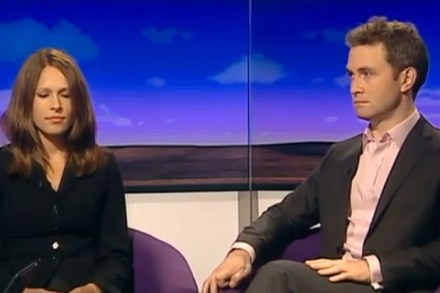
I was on the Daily Politics earlier, discussing the Guardian / Snowden leaks and debating against a representative from the campaign group 'Liberty'. The 'Liberty' representative kept saying what a lot of apologists for the actions of the Guardian (now including Vince Cable) have been saying - that Snowden and the Guardian should in some way be respected because they have started 'a debate'. They appear incapable of realising that while such leaks may be simply fascinating to them, they are infinitely more fascinating to the Kremlin, Chinese Communist Party, al-Shabaab et al. One other thought.

Of course spooks snoop. More power to them

From our UK edition

Can I just share with you my satisfaction that the CIA has access to my emails and all the social media sites I visit from time to time? This has been a big story in the liberal press: US fascist spooks can access loads of details about you through the online stuff you’ve been doing. It never occurred to me for a single second that they wouldn’t. And if they hadn’t been doing that, I’d want sackings all round. They’re SPIES, for God’s sake. What are they meant to do?

A Delicate Truth, by John le Carré – review

From our UK edition

John Le Carré is one of a select group of novelists whose vivid and internally coherent imaginative worlds are so recognisable that their names have become adjectives — Dickensian, Wodehousian,  Kafka-esqe. Thus, we all know what we mean by Le Carré-esque — the shifting sands of the Cold War, its depths and shallows reflected in the moral composition of those who fought it, sinister and impersonal state interests pitted against the individual, the inevitability of doing the wrong thing for the right reasons, London grey in fog and rain, the outward manifestation of the inner landscape.

Did MI6 plot against UKIP?

From our UK edition

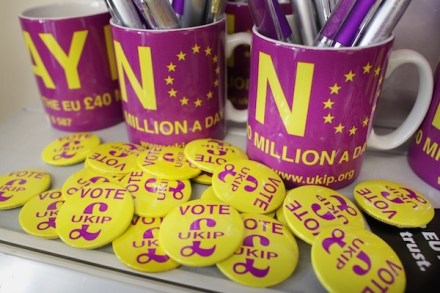
Dirty tricks against UKIP by the establishment are not a new phenomenon. Though in recent days the Conservative party have been found engaging in them, there are far more striking examples from the recent past. On 25 May 2001 the Spectator published a piece by Norman Tebbit that deserves to be far better known.  Tebbit recounts the tale of two serving or former British intelligence agents who infiltrated first Jimmy Goldsmith’s Referendum Party and then UKIP. Tebbit gives examples of how UKIP’s efforts were derailed during the period in which these agents were inside the party. It is important to stress before directing you to the Tebbit piece below that it is not conspiracy theory.

The spy who went into the fold?

From our UK edition

What are the Times trying to say about noted Spectator fan and new Archbishop of Canterbury Justin Welby? They have delved into his past. It turns out to have been rather eventful; but they’ve left unexplained the connections between the many interesting dots in Welby’s life. The Thunderer exposé reveals that Welby and his wife ‘volunteered as a young couple to brave the secret police of communist Europe by smuggling Bibles’, adding, intriguingly: ‘The newlyweds were provided with a camper van by the Dutch-based East European Bible Mission for their trips to Czechoslovakia and Romania. Secret compartments and a false floor hid the biblical contraband.

The Iraq fury still burns, fuelled by unanswered questions

From our UK edition

I was fascinated to read the reaction to Nick Cohen’s article expressing his view that after 10 years he still believed the invasion of Iraq was the right thing to do. The heart of Nick’s argument is this: ‘I regret much: the disbanding of the Iraqi army; a de-Ba'athification programme that became a sectarian purge of Iraq's Sunnis; the torture of Abu Ghraib; and a failure to impose security that allowed murderous sectarian gangs to kill tens of thousands.For all that, I say, I would not restore the Ba'ath if I had the power to rewind history. To do so would be to betray people who wanted something better after 35 years of tyranny.

Journalist, novelist, patriot, spy

From our UK edition

When I was a new MI5 recruit, working in Leconfield House in 1970, there was a group of middle-aged men who came and went at unusual times of the day, often gathering in the late afternoons, talking loudly and cheerfully. They were the F4 agent runners and I envied them; they seemed to be having a lot more fun than I was. F Branch, the counter subversion branch, was responsible, amongst other things, for monitoring the activities of the Communist Party of Great Britain and in particular for identifying its members, in support of Clement Attlee’s 1948 ‘Purge Procedure’, excluding communists and fascists from work vital to the security of the state. By 1970, the F4 agent runners, of whom John Bingham was one, had done a pretty thorough job.

Hasty exit strategy

From our UK edition

For years after the rug was pulled from under it, the British Empire — with a quarter of the globe, the largest the world has known — seemed an unfashionable subject for historians. Did they fear political incorrectness, or was it simply that they had to wait for sufficient archival material to emerge? Whichever, there is now some very welcome sprouting in this part of the historical garden, already well-watered by the Cambridge historian Ronald Hyam, and few shoots could be more welcome than Calder Walton’s important contribution. Walton draws on recently released MI5 files to reveal the role of intelligence in the transitions from colony to independent state.