Espionage

Not quite cricket

From our UK edition

To the French, Albion’s expertise in perfidy will come as no surprise. But centuries of warfare have given them time to learn. With their experience only dating back to 1914, the Germans clearly found it difficult to grasp during the second world war that nowhere is the truth more expertly and instinctively spun than in the land of the gentleman. While a schoolchild soon masters the lie simple, and the lie financial merely requires a degree of brazenness easily developed by proximity to other people’s money, the lie belligerent demands an instinct for dis-simulation that must be bred in the bone of its practitioners to be carried off convincingly.

The end of the affair?

From our UK edition

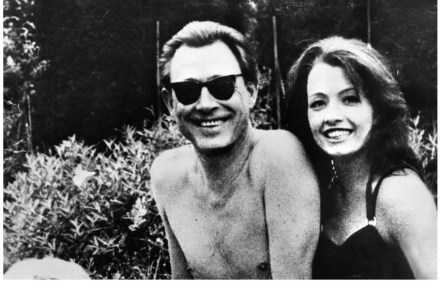
Of those caught up in the 1963 Profumo affair, the only winner seems to have been that blithe spirit Mandy Rice-Davies. Everyone else lost. Profumo’s family bore the brunt, of course, especially his son David, archetype of the boy sent crying home from school, who wrote a brilliant book about it, Bringing the House Down (2006). Harold Macmillan and the Conservative party were driven from office. Yevgeny Ivanov was recalled to Russia. Stephen Ward was hounded to death.

Who Killed Hammarskjöld? by Susan Williams

From our UK edition

When I was a Reuters trainee, long hours were spent in Fleet Street pubs absorbing the folklore of journalism from seasoned veterans. One popular story concerned the hapless correspondent sent to verify that Dag Hammarskjöld, head of the United Nations, had safely landed at Ndola airport in Northern Rhodesia on his way to talks with separatist Congolese leader Moise Tshombe. A plane landed, the police confirmed it was the UN secretary general, the hack duly filed his story. Trouble was, the disembarking white man was someone else. Hammarskjöld was dead, killed as his DC-6 crashed on night-time approach to Ndola. Rival reporters, drinking at a nearby hotel, heard the news and rushed to correct their stories.

And then there was one . . .

From our UK edition

The English fascination with spies is gloriously reflected in our literature, from Kim to A Question of Attribution, and while their Egyptian and Israeli counterparts remain untranslated, and the Americans unreadable, English spy novelists rule. Compromised, divided and alienated, the spy is a model modern hero, and the spy’s world, with its furtive and fetishistic arcana, is an admirable theatre of identity, of English attitudes to sex and class, hypocrisy and betrayal. (The best recent spy novel is John Banville’s The Untouchable, which tells the story of Anthony Blunt more freely than Alan Bennett’s play, nudging the facts into outrageous fiction — casting Graham Greene as the villain, for example.

Two wars and three Cs

From our UK edition

When in 1909 a 50-year-old retired naval officer, Mansfield Cumming, was asked to set up what became today’s Secret Intelligence Service — better known as MI6— the suggestion that there might one day be an official history would have been unthinkable. When in 1909 a 50-year-old retired naval officer, Mansfield Cumming, was asked to set up what became today’s Secret Intelligence Service — better known as MI6— the suggestion that there might one day be an official history would have been unthinkable. Indeed, for the next 85 years, MI6 had no official peacetime existence, let alone any thought of a history. Cumming later remarked that if ever he published an autobiography it would be quarto, bound in vellum and of 400 pages — all blank.

All eyes and ears

From our UK edition

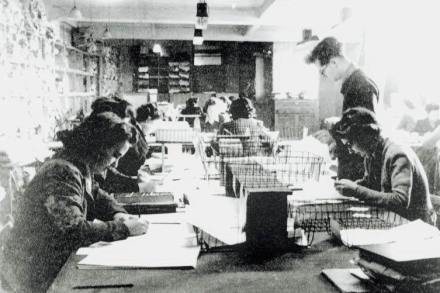
Both of these books aim, in their different ways, to cater for Britain’s long-standing obsession with espionage and other forms of political and military intelligence. Both of these books aim, in their different ways, to cater for Britain’s long-standing obsession with espion- age and other forms of political and military intelligence. But they have virtually nothing else in common. Sinclair McKay’s The Secret Life of Bletchley Park is about daily life at the famous wartime headquarters of the Government Code and Cipher School. There is very little new material to be mined about the work done at Bletchley Park.

Gary McKinnon should convert to radical Islam

From our UK edition

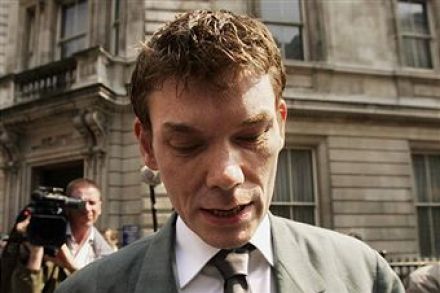
The European Court of Human Rights is an essential check on executive excess, but today it has perverted justice. It has halted Abu Hamza’s extradition to the US, where he was to be tried for colluding with al Qaeda. Its view was that Hamza would likely be subject to inhumane and degrading incarceration. In other words, the ECHR has decided that the US prison system is not compatible with the standards agreed by signatories to the European Convention on Human Rights. Fine. Except, of course, it has not. There is a pernicious double standard at work here. Gary McKinnon, the aspergers sufferer who hacked into the Pentagon’s computer systems, is to be deported to the US.

Learning to live with the bomb

From our UK edition

The call consisted of three short blows of breath. A minute later, the phone rang again. Once more: three short blows of breath. Mr Cowell, under diplomatic cover, was the MI6 handler for Colonel Oleg Penkovsky, the West’s single most important asset in the Kremlin — and the calls he took were the prearranged code that Penkovsky was to use to tell him that a Soviet nuclear attack on the West was imminent. I’d have shat a brick. Wouldn’t you? But Cowell kept his cool. He didn’t call London and get the counterstrike underway. He didn’t put his head between his knees and wait for oblivion. The sky could have been black with Russian nukes, but he didn’t, in fact, do a damn thing.

Reds under the bed

From our UK edition

This Russian spy story just gets better and better. First a young, attractive Russian woman called Anna - with a penchant for uploading suggestive pictures of herself onto Facebook -- is seized in an FBI swoop for being at the centre of a Russian espionage network. Next, it emerges that the agents from Moscow had outwitted the FBI by going back in time. Aware that electronic messages — via mobile, or online -- are are an open book to any decent spook-catcher, they simply learnt from the past and used invisible ink and messages in buried bottles to send information their colleagues in South America. Some of the spies even are said to have been schooled in Morse code.