Environmentalism

Will we ever stop predicting the end of civilisation?

From our UK edition

In the sphere of British environmentalism, Paul Kingsnorth is admired as a maverick in thought and deed. Starting out as a journalist with the Ecologist magazine, he co-founded the Dark Mountain Project, an online portal devoted to stories about the more-than-human world in a time of ecological collapse. On resigning from both, he retreated as a self-proclaimed ‘recovering environmentalist’ to an Irish smallholding, where he has embraced the Romanian Orthodox church. Against the Machine, his tenth book, is billed as a summary of his intensifying disillusionment with events in the past 30 years. It is a serious work leavened with sardonic humour and is by turns rich in unsettling ideas and deeply pessimistic.


One of the best plays about the 1980s ever staged

From our UK edition

Alan Hollinghurst’s The Line of Beauty has been turned into a stage show directed by Michael Grandage. We’re in the early 1980s and Nick has just left Oxford with a literature degree. He lodges with his wealthy friend, Toby Fedden, in their family home and he offers to keep an eye on Toby’s troubled sister, Cat, who suffers from depression. Despite her disorder, Cat is a rebellious type who quizzes Nick about the intimate details of his casual flings with men. Her father, Gerald, wins a safe Tory seat and persuades Mrs Thatcher to attend a ball at their mansion in the country. The prime minister’s arrival throws the Feddens into a panic but Nick saves the day by smoothly asking Mrs Thatcher for a dance. ‘Do you know,’ she says, ‘I would like that very much.

How justified is climate-change alarmism?

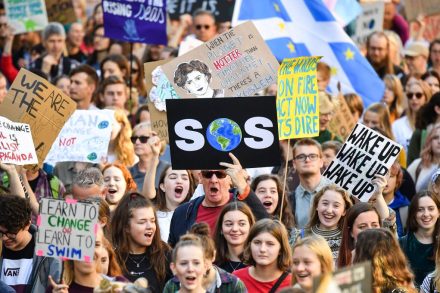
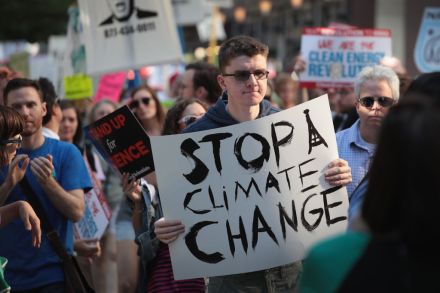
For decades, the picture of Earth’s future – as laid out by journalists and climate scientists alike – has been bleak. By 2070 we will see famine, economic collapse, a sun that cooks us, melted icecaps, flooding, extreme hurricanes and ever-present tropical storms. "Vast swathes" of the planet will be inhospitable for human life. And Greta Thunberg, in her late sixties, will wear a gas mask as she sits on the steps of Swedish Parliament with a cardboard sign declaring, "I told you so." Advocates have poured gasoline on the climate-alarmism fire earnestly, backed by reports declaring, "There really is no serious scientific debate remaining about climate change.

Global Climate Strike on September 20, 2019 in Edinburgh, Scotland (Getty)

Madcap antics: The Pentecost Papers, by Ferdinand Mount, reviewed

From our UK edition

Ferdinand Mount has had an illustrious career, including posts as head of the No. 10 policy unit under Margaret Thatcher, literary and political editor of The Spectator and editor of the TLS. He is a prolific author to boot, with 29 fiction and non-fiction books under his belt. His latest novel, The Pentecost Papers, is an ‘ill-starred odyssey through an incurably slippery world’, he writes, ‘recorded by several hands – most of them unsteady’. Our first narrator is Dickie Pentecost, a diplomatic correspondent (‘an anachronism,’ he admits, ‘like still keeping a hat-stand in the hall’). Dickie will be familiar to readers of Making Nice (2021), a satire of spin dedicated to Mount’s ‘fellow Wonks and Spads’.

Is there hope for California, after all?

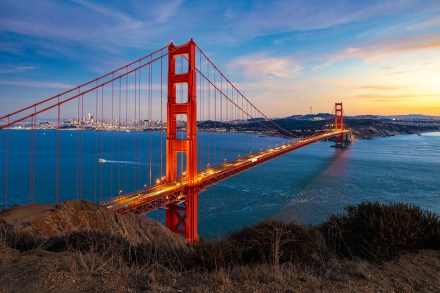
California is catching the deregulation bug. The state legislature has apparently realized that people need houses too, and sometimes the endangered insects have got to go. On Monday, Gavin Newsom signed a bill streamlining permitting for building projects mired in environmental review.  About time, says Cockburn. Consider for a moment the California High-Speed Rail, a project to connect San Francisco and Los Angeles, which has yet to emerge from environmental clearance despite starting in 1996. The budget has multiplied, in the meantime, from $30 billion to $100 billion. The segment just from San Francisco to San Jose, where the train would use pre-existing Caltrain rail, almost limped across the permitting finish line in 2021.

california

A road to healthier forests

The US Department of Agriculture rescinded the 2001 Roadless Rule last week, a regulation that restricted road building and timber extraction in about 30 percent of land managed by the National Forest System. Judging the pushback from environmentalists, you might think that President Trump was selling Yosemite to a logging company. But the red-tape cutting actually increases public recreation access and opens neglected forests to fire-mitigation projects. Conservationists should be celebrating. On paper, the Roadless Rule preserved America’s most beautiful landscapes. In practice, the regulation proved burdensome and ecologically counterproductive. For instance, some 2,400 Tinglit Native Alaskans reside on islands in the Tongass National Forest.

forests road

The climate has changed on climate change

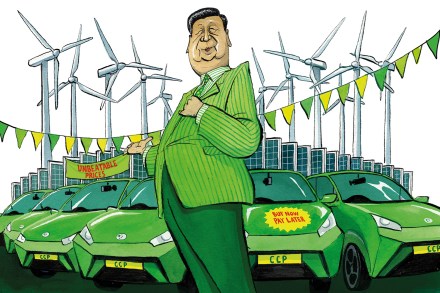
Like the Marxist dialectic, or the predictions of the Gospels, the green movement has long seen its triumph as preordained. Yet sometimes the inevitable turns out to be not so. Over the past few years green policies — notably the drive for “net zero” — have been failing. Both markets and politicians have seen the light. WhatJoe Biden’s treasury secretary Janet Yellen once called “the greatest business opportunity of the twenty-first century” has revealed itself to be something of a disaster. The new American President is likely to be blamed for the implosion of the green agenda, but its collapse long pre-dates his re-ascension.

Tate’s finances are on the skids and I think I know why

From our UK edition

Among the many destructive after-effects of the pandemic, the impact of two years of lockdowns has had serious consequences for public museums and galleries, particularly so for our national museums and galleries. More than two-and-a-half years since the last restrictions were lifted, visitor numbers to many of the big London institutions have yet to return to the levels seen pre-pandemic, according to the latest figures released by the DCMS. Although the British Museum and Natural History Museum have come roaring back, surpassing their 2019/20 figures (the NHM attracting some half a million more visitors alone), the picture varies wildly, mostly between the more ‘scientific’ museums and those whose remit is visual art.

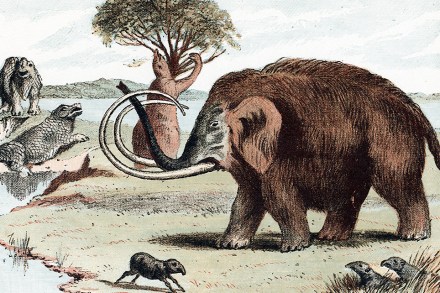
Man’s fraught relationship with nature extends back to prehistory

From our UK edition

It is now almost a prerequisite of any dispute among environmentalists to recall a judgment offered by the literary critic Raymond Williams – that ‘nature’ is perhaps the most complex word in the English language. Attempts to unravel its meaning are fraught with challenge. Does it signify just the living elements of the biosphere, or does it include inanimate parts, such as mountains and rivers? The extreme heat of the Sun at its core makes it the place least hospitable to life – yet it is equally the source of the whole process. Perhaps the greatest of all associated questions is whether humans are subsumed within, or inexorably separated from, the Sun’s operations. Jeremy Mynott’s book does an exceptional job of teasing out most of nature’s multiple meanings.

Don’t let climate activists stop you from traveling

A decade ago, when I first started contributing to the New York Times’s annual “52 Places to Go” list, the top user comments were about the destinations: Why was Calcutta chosen but not Chattanooga? This year, in a sign of the times, the most popular comments suggest that we should all just stay home to save the planet. The climate-obsessed among us are falling out of love with travel, particularly with the idea of exploring far-off places where your carbon footprint is greater. If their movement gains steam they won’t save the world, but they might well wreck the global economy and deprive themselves and others of much-needed perspectives and experiences that make the world a better place.

travel

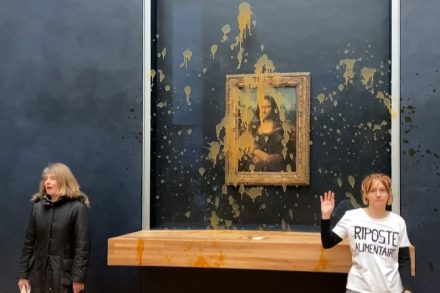
Environmentalism: from concern about clean air to throwing soup at the Mona Lisa

Garrett Hardin was a professor of biology and environmental studies at UC Santa Barbara. His “commons” was a metaphor drawn from the traditional English practice of shared grazing and agricultural land to which all members of a community had access. Commons were inherently prone to abuse, Hardin argued, because every user of the commons will exploit it to maximize personal benefit without regard to the other users, leading ultimately to the collapse of the commons as a useful resource. Hardin extended the metaphor of the commons to include all natural resources, including the air, water, other species, even the entire Earth. The tragedy of Hardin’s expansive commons was the inexorable march to environmental doom, driven by the folly of human freedom.

tragedy commons

Plogging: Europe’s bizarre eco-friendly fitness craze

The first finisher crossed the line sweaty, tired and almost black with dirt, his white Decathlon shirt turned gray and his standard-issue blue gloves transformed into a deep midnight. He dragged behind him a refrigerator-sized plywood box, piled high with swollen rubbish bags and secured with a hooked rubber bungee cable — where he grabbed that, nobody knew. Yet José Luis Sañudo Lamela’s smile was wide, and he laughed heartily when onlookers and fans expressed amazement at his feat. But despite Lamela’s assuredness that he would take home top billing in the annual World Plogging Championships, one man outdid him — if not in diversity of goods, in pure heft.

plogging

Why ‘dirty’ coal is vital to a ‘clean’ green future

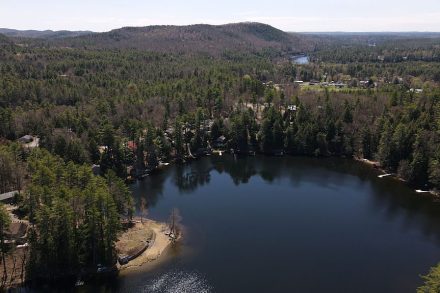
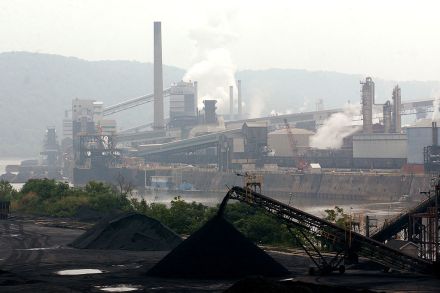
The Central and Western regions of Pennsylvania are known for their majestic, untamed landscapes. Seen from on high, you’d think the forested wilderness here was yet untouched. Though that’s far from the truth, the area has, for the past few decades, for better and worse, been largely forgotten — except by the people who live, work and play among the lands and waters scarred and poisoned by abandoned deep-coal mines and unreclaimed strip mines. The Allegheny section of the Appalachian Mountain range resembles an accordion poised in compact, scrunched-up, ready-to-perform mode.

coal

The war on life’s simple pleasures

There are few things better in life than taking a hot shower at the end of a long day, crawling into a freshly made bed and passing out into the deepest sleep ever. There are also few things that ruin this uniquely cozy experience more quickly than stepping into a shower with dinky water pressure. Luckily, I’ve rarely dealt had to deal with that issue because I grew up with a plumber for a dad. We eschewed so-called “water-saving” shower heads in our home in favor of ones with such high water pressure that showers felt like a deep-tissue massage. When I moved out after college, my dad would drop by my various apartments to drill a hole in the non-removable flow restrictors put in shower heads by management.

simple pleasures

Don’t deprive Americans of July 4 fireworks

The Fourth of July is an opportunity to reflect upon the miracle that is the founding of the United States, a process that has been instrumental in the spread of freedom, democracy and human rights across the globe. That, unquestionably, is something worth celebrating. Fireworks have been a part of this celebration from the start, with displays gracing the skies of Philadelphia and Boston in 1777. For some parts of the country, however, the days of fireworks may be numbered, as the displays’ environmental and health impacts collide with politics. Reuters published a piece on June 30 detailing all of the dangers associated with the patriotic explosions.

fireworks

Policed conviviality: Serpentine Pavilion 2023 reviewed

From our UK edition

As I sat down at this year’s Serpentine Pavilion, I overheard a curious exchange. ‘You mustn’t create art within art,’ said an invigilator frostily. He was telling off Fred Pilbrow, an architect, who had been taking in the Pavilion’s sociable atmosphere with friends and painting a watercolour of the scene. They proceeded to enter a perverse negotiation as the invigilator struggled with the theoretical parameters of his orders; apparently the watercolour may stain the furniture but dry media like pencils aren’t allowed either; actually, all art-making is not allowed in any of the exhibitions, ‘but photography is OK’.

Wildfire apocalypse, not

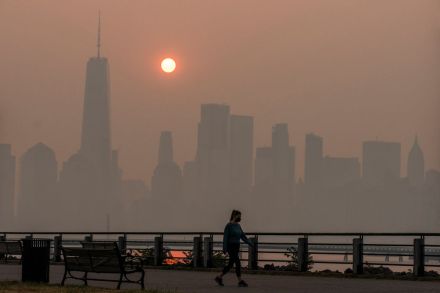
There was nothing new about springtime wildfires in Canada until the wind shifted unexpectedly last week. That shift blew smoky air all over the northern and eastern US, producing memorably apocalyptic-like orange air in New York City. Not wanting to waste a crisis, the lamestream media jumped right in with both feet. They blamed the wildfires on the much-dreaded “climate change,” scared the daylights out of everyone about the air quality and then warned that more like it was on the way unless we changed our fossil fuel-burning ways. Not unexpectedly, the media’s knee-jerk take was all wrong. Wildfires and smoky air have always occurred wherever there are forests. At least eighteen of these dark or “yellow days” occurred in the US and Canada from 1706 to 1910.

wildfire

Stop ignoring the real environmentalists

What does throwing soup on a piece of art have to do with the environment? When we hear the word environmentalist, what comes to mind is something like an Extinction Rebellion or JustStopOil activist: young, urban, progressive, with an expressly political agenda. But what if there are other categories of environmentalists that are expressly ignored, that may have the insights we need to solve the very real environmental problems we face? In my PhD research, I spoke with people who produced a significant amount of food for their own consumption in and around Chicago. Many of them were were disaffected by the focus on climate change and the obsession with consumption as activism.

environmentalists

Biden must decide the environment’s price tag

Boris Johnson is considering doing something that should be a duty for every leader. In the wake of sanctions poised to disrupt the 8 percent of domestic oil and 18 percent of diesel the UK imports from Russia, Johnson is reportedly toying with the idea of putting his country first and on the road to self-sufficiency by lifting the UK’s moratorium on fracking. The British government banned hydraulic fracturing, or “fracking,” in 2019. Fracking is a method of extracting oil and natural gas by drilling deep underground and fracturing shale rock with a fluid mixture (99 percent water and sand) that allows fossil fuels to flow out, be captured, processed and used to myriad ends (including gasoline).

Liberalism and existential insecurity

After 1789, conservatism was the party of insecurity, pessimism and fear, liberalism the party of confidence, optimism and eager anticipation, down to the early years of the twenty-first century when the mood of hubristic triumph that followed the collapse of the Soviet Union deflated almost overnight, in the United States especially, where liberal democrats have come to resemble the “normal American of the pure-blooded type” whom Mencken described as going “to rest every night with an uneasy feeling that there is a burglar under the bed, and... [getting] up with a sickening fear that his underwear has been stolen.

liberalism