Enlightenment

We must reclaim the word ‘progressive’

From our US edition

I’ve grown tired of hearing the term progressive used to describe people and policies that embody anything but progress. The word suggests a movement toward liberty, reason and human dignity. But what now passes for “progressive” ideology is a regressive assault on foundational principles: race-based social engineering, denial of biological truth, hostility toward the rule of law and an obsession with censorship disguised as compassion.Progress gave us the abolition of slavery, universal suffrage, constitutional government and equal protection under the law. It was built on Enlightenment ideals – reason, open inquiry and the primacy of the individual over tribe. The ideologues now claiming the label have rejected those very foundations.

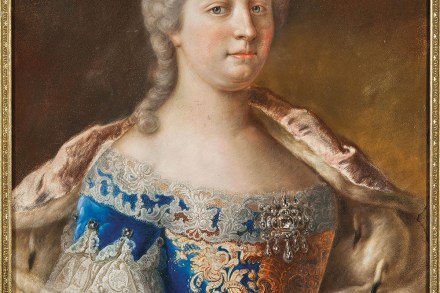
The enlightened rule of the Empress Maria Theresa

The role of personality and charm in running a state is one theme of Richard Bassett’s superb book, the first English biography of the Empress Maria Theresa since Edward Crankshaw’s in 1969. The different parts of the Habsburg monarchy – Austria, Tyrol, Bohemia, Hungary, Croatia and Milan – had little in common except dynasty, geography and Catholicism. Yet, partly owing to Maria Theresa’s force of character, this complex tapestry of nationalities remained a great power After she came to the throne in 1740, she felt ‘forsaken by the whole world’. Encouraged by France, Austria’s neighbours Prussia, Saxony and Bavaria invaded the monarchy in order to divide it between them.

How French absolutism powered a techno-progressive revolution

The Enlightenment is back. Despite the best efforts of the past decade of handwringing about cultural imperialism and wailing over machismo, money and majesty, the future keeps crashing in. The Science Museum has now laid its cards on the table with Versailles: Science and Splendour. Think gilt, not guilt. Is there anything in our lives that could compare to witnessing the first successfully grown pineapple? It’s marvellous, and unusual these days, to visit an exhibition and feel the colossal force of history without anyone bashing you over the head with infantile morality tales. Expanding on a 2010 display at the Palace itself, lead curator Anna Ferrari ought to be saluted for this unabashed celebration of genius – perhaps with a three-hour firework display.

Jordan Peterson and the crisis of totalitarian academia

From our US edition

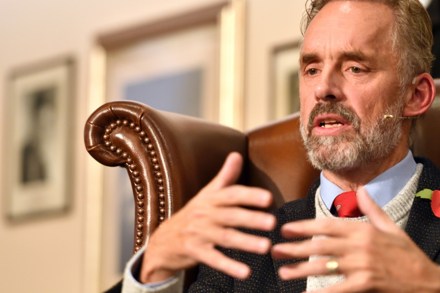
Jordan Peterson has left his professorial post at the University of Toronto. He announced his departure with characteristic blunt honesty in Canada’s National Post. Peterson first came to my attention in 2016, as he did for many, for his refusal to bow to demands to use novel pronouns preferred by the transgendered. For this, he was denounced as a bigot, his university threatened his career, his speaking events were disrupted, all done under the cloak of civility: all transgender people wanted was respect, to be addressed as who they were. How dare Peterson be so uncivil? Lost in the shrieking winds that enveloped him was his basic point: it’s no longer civility when it's backed up by the force of law.

jordan peterson

Can the University of Austin spark a new Enlightenment?

From our US edition

The University of Austin, America’s newest university, was launched this month. I am one of five founders, because I am convinced that higher education is at considerable risk. A new ideology — sometimes called social justice, and revealed in numerous ways, but most succinctly called “woke” — is taking a huge toll on the free exchange of ideas. Safe spaces and trigger warnings are demanded by students, and many faculty as well, rather than recognizing that challenge, risk, and discomfort create strength of will, and wisdom. Instead of being the adults in the room, scared and hapless administrators capitulate to their demands.

austin

The great awakening: Henry Shukman becomes a child of the universe

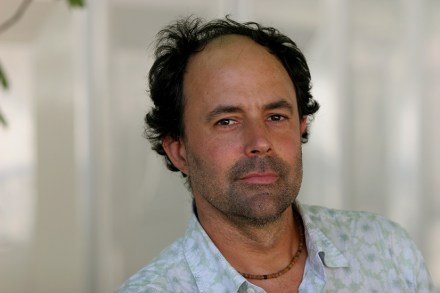
For eight years I rented a small house in Oxford overlooking the canal. The landlord, a poet and novelist younger than myself, had moved with his family to New Mexico. At his desk I managed to write three books, beneath shelves containing editions of his work. I can’t explain why it took me so long to reach up and open those books, but when I finally did, it was extraordinary to discover how similar were our trajectories: same prep school and university; two young sons; novels set in North Africa and Peru; a gap year working on an Argentine estancia. Until that moment, I had cultivated a self-protective disconnect with my landlords, hardly unique, indeed part of a tradition — rather like V.S. Naipaul behaved towards Stephen Tennant when living in Wilsford.

Ignore the activists – Humboldt’s Enlightenment project deserves celebrating

‘What a loss is the excellent Humboldt. You and Berlin will both miss him greatly,’ Prince Albert wrote to his much-beloved daughter Vicky, Crown Princess of Prussia, on news of the death of the author, explorer and celebrity Alexander von Humboldt in 1859. ‘People of this kind do not grow upon every bush [‘an den Blumen’] and they are the grace and glory of a country and a century.’ After some delays and bad luck, the grace and glory of the Humboldt name flourishes once again with the opening of the Humboldt Forum.

Macron is preparing for intellectual battle against Islamism

It’s easy to see why so few western leaders have come to Emmanuel Macron’s defence: when they scrutinise extremists, they are accused of being ‘Islamophobes’. Since the French President’s speech last month about Islam in the West, he has been accused — by populist Muslim politicians such as Recep Tayyip Erdogan and Imran Khan, as well as publications that should know better, such as the New York Times — of being anti-Muslim. Yes, he was frank about the dangers of Islamism, but his speech was also a defence of what he called the ‘Islam of the Enlightenment’. Rarely for a political leader, he was able to point not just to the problem but to the alternative too. He understands that Muslims have faced these internal enemies before and won.

The forgotten female composer fêted by Mozart and Haydn

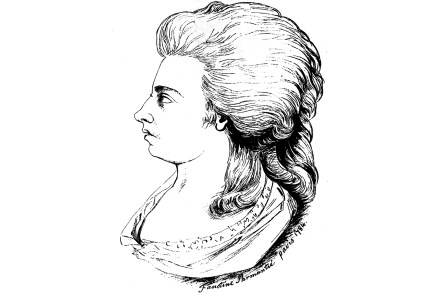
A few years ago, I was sitting in the London Library researching a book about blind people across the ages. As a semi-blind person myself, I sighed at the lack of women, other than the endlessly chipper Helen Keller, who never had a bad day. Ever. My sister, however, drew my attention to a two-line wiki entry for the 18th-century composer, singer and professor — and darling of the Viennese musical court — Maria Theresia von Paradis (1759–1824). Ten years passed, and after many hours of research in libraries and chats with music scholars, we now find ourselves — to our utter amazement — co-writing a chamber opera about her life.

What on earth has happened to Simon Schama: The Romantics and Us reviewed

‘You may think our modern world was born yesterday,’ said Simon Schama at the beginning of The Romantics and Us. If you do, though, I can only imagine that you’ve never seen any history documentaries on television — where, as a rule, the modern world is born in whatever period the documentary happens to be about, from Ancient Rome to the 1980s. After all, how can the past possibly be interesting if we can’t see ourselves reflected in it? As the title indicates, Schama’s choice, this time, of an era important enough to lead to us was the romantic movement.