Energy

Portrait of the week: Gas prices soar, cabinet reshuffled and a green light for travel

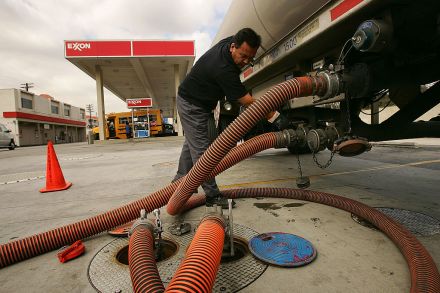
Home To prevent a shortage of meat, which relies on carbon dioxide in its packaging, the government gave millions of taxpayers’ money to an American company to reopen a fertiliser works at Stockton, Co. Durham, that produces the gas as a by-product. The plant had been shut down because of a rise in wholesale gas prices caused by calm weather preventing rival wind-energy production, a fire at an interconnector reducing electricity supplies from France, and Russia putting up the price of its gas exports. Gas-supply companies began to go bust because the government price-cap prevented them from charging as much as they paid for gas. There was clamour for money

The legacy of Stephen Toope

Stephen Toope, Vice-Chancellor of Cambridge University, has begun this academic year by announcing it will be his last in the post. Professor Toope says, no doubt truthfully, that he wants to see more of his Canadian family, dissevered from him by Covid. But I think it reasonable to relate his departure to wider issues. When he arrived in 2017, the ‘Golden Era’ of UK/Chinese relations still, in theory, existed. Cambridge uncritically welcomed Chinese government and business participation. In 2019, speaking in China, Professor Toope hailed the China Development Forum’s ‘Greater Opening Up for Win-Win Cooperation’ and praised President Xi Jinping’s Belt and Road Initiative. A preface composed in his name

Is this Boris's 'Crisis, what crisis?' moment?

Will it turn out to be Boris Johnson’s Jim Callaghan moment? Briefing reporters on his plane to the US on Sunday, the current PM tried to play down the energy crisis, saying:  ‘It’s like everybody going back to put the kettle on at the end of a TV programme, you’re seeing huge stresses on the world supply systems.’  The gas price spike would be over just as soon as it occurred, he implied, and was caused by nothing more than the global economy rebounding after many months on the Covid couch. It all had faint overtones of the moment during the Winter of Discontent 42 years ago when the then

We'll all pay the price for reckless energy firms' gambling

You know that mate of yours who is always boasting they pay way less for energy than you because they’re constantly surfing for the best deal on price comparison websites? Well they are still going to have the last laugh, even though the energy company that supplied them is going bust. That is because the energy secretary Kwasi Kwarteng promised today that he would protect consumers and keep the official cap on prices, which means that the amount your mate pays for energy will hardly go up at all. And they’ll probably end up paying what you are paying. But as if to rub salt into your wounds, it is

Are low wind speeds to blame for Britain's energy crisis?

Why has Britain suddenly been plunged into an energy crisis, with day ahead auction prices for electricity rising to over £400 per MWh, ten times what they were this time last year? The spike in global gas prices caused by economic recovery from Covid has been commented on often enough, as has the failure of Britain to maintain sufficient gas storage reserves – we have closed a large gas storage facility as other countries have been building up theirs’. So, too, we have learned of the failure of many smaller energy companies to hedge the prices of their energy, thus putting them at risk of spikes in wholesale prices. Global

The battle for Eastern Europe’s energy sector

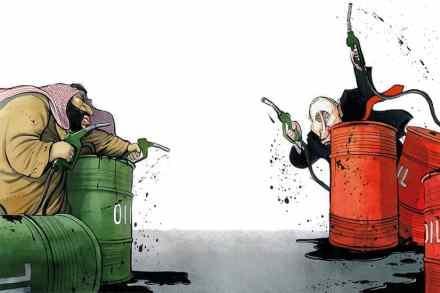
The fight to power eastern Europe is heating up. As Ukrainian president Volodymyr Zelensky prepares to meet Joe Biden at the White House, competition for Ukraine’s energy market is increasingly being framed as a battle between East and West. And as western investments into renewables vie with fossil fuel imports from Russia, the struggle for the nation’s energy supply is assuming a moral dimension reminiscent of the Cold War. Tens of thousands of panels at Ukraine’s huge Nikopol solar farm harvest the sun’s energy for nobody. In late 2019, the Canadian owners of the farm, TIU Canada, were informed that the nearby Nikopol Ferroalloy Plant, owned by the notorious Ukrainian oligarch Ihor

In defence of net zero: yes, we can afford it

Late in 2013, David Cameron snapped. ‘Get rid of all the green crap,’ the then prime minister told energy ministers. His demand came after a backbench revolt over the surcharges tacked on to household energy bills to support onshore wind power. Not for the last time, his decision was based on a spectacular failure to see one of the big trends of the age: the stunning fall in the costs of renewable energy that was already under way. In the past decade, the cost of generating electricity from onshore wind has fallen by 40 per cent. For offshore turbines, it’s down almost a third. Globally, it’s now generally cheaper to

Is the airline ‘booking surge’ a load of hot air?

Be glad you’re not in Dr Mike Lynch’s shoes. A London judge has ruled that the founder of the Cambridge-based software venture Autonomy can be extradited to the US to face multiple fraud charges in relation to the takeover of Autonomy in 2011 by Hewlett-Packard of California. This was, undoubtedly, a disastrous purchase: HP paid a huge premium over Autonomy’s market value, swiftly found all was not as expected, wrote off most of the $11 billion price and accused Lynch of having artificially inflated the company’s numbers. His fate now hangs in the legal balance. The Serious Fraud Office looked at the file but dropped it on grounds of insufficient

The troubling truth about Britain’s nuclear deal with China

The most shocking thing about the news that the government is looking to remove China from Britain’s nuclear power programme is that it has taken so long. But it will not be a straight-forward process. It will likely provoke tantrums from Beijing, as well as grumbles from a nuclear lobby that will have to find somebody else to stump up the billions needed for their pet projects. China General Nuclear should never have been allowed anywhere near such a critical piece of national infrastructure. The state-owned company has been accused by the US government of stealing technology for military use and placed on a national security blacklist which severely limits

Portrait of the week: Channel crossings, chain-gangs for criminals and Tesco Bank shuts up shop

Home The daily number of coronavirus cases detected by tests fell from 54,674 on 17 July to 23,511 by 27 July. About 92 per cent of adults in England and Wales had coronavirus antibodies at the beginning of July, according to an estimate by the Office for National Statistics. In the seven days up to the beginning of the week, 447 people had died with coronavirus, bringing the total of deaths (within 28 days of testing positive) to 129,130. (In the previous week deaths had numbered 284.) In a week, numbers remaining in hospital rose from 4,121 to 5,238. By the beginning of the week, 88 per cent of adults

A tree is for centuries, not just for COP26

We are being urged — and, in some cases, paid — by the government to plant more trees. Actually, this happens most years. I can even remember ‘Plant a tree in ’73. Plant one more in ’74’. It is a bit like saying ‘Have more babies’, without any provision for their care once born. It all depends which trees, where you plant them and how you tend them. If you walk through the country nowadays, or near new-build housing estates where trees have been planted in ‘mitigation’, you will see large numbers of saplings dead or dying, still in their tree guards, planted too close together and then forgotten. New

How likely is a false positive from a Covid test?

Positive thinking The government wants us to test ourselves for Covid-19 twice a week, using lateral flow kits which will be freely distributed. What is the risk of being ordered to self-isolate as a result of a false negative? — While the NHS claims that these tests produce false positives in 0.1% or fewer cases, an evaluation by Porton Down and Oxford University last year found a false positive rate of 0.3% in a hospital setting, rising to 0.39% in the community — in other words, about one in every 256 tests. — According to the Office for National Statistics infection survey, in the week to 27 March one in

Biden vs Merkel: the battle over Russian gas is heating up

Two months ago, a Russian pipe-laying ship called the Akademik Cherskiy left the Baltic island of Rügen to finish the last few miles of the most controversial gas pipeline in the world. Germany hopes that Nord Stream 2 will improve its access to Russia’s vast reserves of natural gas. In America, however, the project is seen as a way for Moscow to exert influence over Europe. Its completion marks the biggest diplomatic crisis in transatlantic relations since the Iraq War and now, as then, we see Germany pitched against the US. But this time, Germany is far more determined. Since its inception, the pipeline —which runs directly from Russia to

Letters: The Church of England’s Covid shame

Paradise lost Sir: After reading Jonathan Beswick (‘Critical mass’, 16 January) I am writing to express the shame I feel as a lifetime member of the Church of England at our Church’s attitude to this pandemic. Here was the greatest opportunity in 70 years to demonstrate care for our fellow people, to advertise our faith and love and to keep the Church in the public eye. I hoped that there would be thousands of Church members flocking to help the lonely and the isolated. But I find my local church locked. This was the chance for the Church to show commitment and sacrifice for the good of the community, to

Letters: Lockdowns ruin lives

Lockdown damage Sir: I am sick and tired of people taking the moral high ground and looking down on ‘lockdown sceptics’ like me as if we don’t care. It’s ironic, because while there is no clear evidence to date that national lockdowns actually save more lives (contra the interview with Matt Hancock, 9 January), there is plenty of evidence that lockdowns ruin lives. If anyone should take the moral high ground it is those, like myself, who witness this ‘collateral damage’ on a daily basis. Yes, the health issues are complex. And who would want to govern at this time? But when you know that your chosen strategy will result

My memories of Sir David Barclay

Even with its 27 amendments, the US Constitution is only 7,591 words. I keep it beside me, and find in it — as Sir Walter Elliot found in the Baronetage — ‘occupation for an idle hour, and consolation in a distressed one’. The final part of Section 3 of Article 1 is relevant in this distressed week: ‘Judgment in Cases of Impeachment shall not extend further than to Removal from Office, and disqualification to hold and enjoy any Office of Honor, Trust or Profit under the United States.’ To use, after Donald Trump’s departure, a device designed to remove a president seems strange. Surely there are two important things to

Letters: Is cycling really conservative?

Veritas vincit Sir: Professor Dawkins eloquently and engagingly defines true truth for us (‘Matters of fact’, 19 December). It seems to me that ‘true’ is a poor little four-letter word with a heavier workload than is reasonable. Historic truth may include ascertainable facts, which I suppose he would pass, but combined with conclusions based on available evidence or ‘true-to-life’ conjecture. Theological truth combines historic fact with unassailable moral principle and a journey of imagination beyond the reach of experience. It cannot be called untrue — only unproven. Perhaps we need to find a word with more gravitas than ‘truth’ for the scientists. I suggest ‘veritas’ — as found in vino.Charles

Building Sizewell C would be a nuclear-sized disaster

I love Suffolk. This Christmas I will be there with my family and we’ll almost certainly walk up the coast, joining dog-walkers, bird-watchers, hikers and even swimmers in one of the most beautiful and unspoiled parts of the UK. The secret of Suffolk is its relative inaccessibility. No major motorway connects it and once you arrive you’re committed to a sprawling network of country lanes that twist through heathland and grazing marsh, mudflats and reedbeds. Minsmere, a nature reserve that’s home to 6,000 wildlife species, is among its glories. The nightjar, the woodlark, the Dartford warbler and the silver-studded butterfly are just some of the rare species found there. At

Ruthless Ryanair could show us the future of aviation

Aviation, nuclear power and public transport — along with good restaurants, golden retrievers and hand-knitted bed socks — are, as Julie Andrews put it, a few of my favourite things. So in a week when the news is as depressing as I can remember since the dark winter of 1973-4, I might as well write about all of them. I’ll try to find points of light along the way but it’s not going to be easy. First the plight of airlines, now so extreme that it’s hard to foresee any outcome other than nationalisation for many major carriers. Even if the new ban on leisure travel ends, only pre-flight Covid

The Blackburn brothers who are bringing Asda home

What a triumph of entrepreneurial empire-building — if that’s still an acceptable phrase — is the £6.8 billion acquisition of the Asda supermarket chain by Blackburn-born self-made billionaires Mohsin and Zuber Issa. Sons of Gujarati immigrants, these brothers have advanced from a single petrol station in Bury to a chain of almost 6,000 in ten countries with convenience stores and coffee shops attached. Now their company EG Group has brought Asda back into British ownership after two decades as part of Walmart, the big-box monster of American shopping. The pair’s success has been built on boosting the profitability of fuel retailing, in an era when big oil companies were pulling