Energy

The flaw in Britain’s net-zero plan

From our UK edition

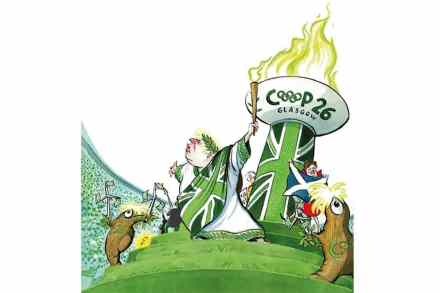
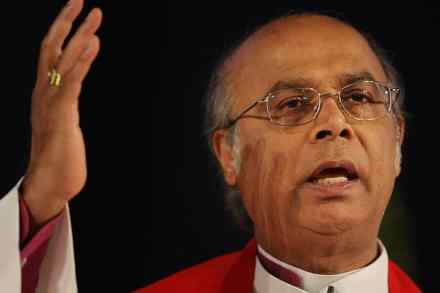
The COP26 summit is unlikely to be an outright flop. There has been no shortage of drama, with speakers seeming to compete with each other to see who could use the most histrionic language. Justin Welby, the Archbishop of Canterbury, went so far as to compare the attending leaders to Nazi appeasers. He later apologised. Some progress, albeit small, is being made. A hundred countries have been persuaded, some on the promise of sweeteners worth £14 billion, to sign a pledge to end deforestation by 2030. Brazil, the most important of all, is among them. India has agreed, for the first time, to set itself a date for achieving net-zero greenhouse gas emissions — although its target, 2070, is two decades beyond what the United Nations would have liked.

America isn’t leading the fight against climate change

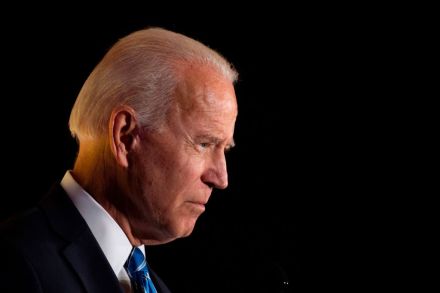
President Joe Biden is set for his rendezvous with climate destiny at the Scottish Event Campus in Glasgow on Monday. The president left Washington on Thursday empty-handed after congressional Democrats abandoned an attempt to put his infrastructure and climate package to a vote. “I need you to help me. I need your votes,” Biden implored them. “I don’t think it’s hyperbole to say that the House and Senate majorities and my presidency will be determined by what happens in the next week.” At least he wasn’t invoking anything as serious as the future of the planet to get their backing. Nancy Pelosi weighed in, according to Politico’s Laura Barrón-López, telling her colleagues that overseas parliamentary leaders had asked whether American democracy can survive.

climate change

Letters: The contentious issues of religious conversion

From our UK edition

Hard to reconcile Sir: Although not an Anglican, I appreciate Michael Nazir-Ali’s dilemma (‘A change of mind and heart’, 23 October) and know many Anglicans whose loyalty to the C of E is being severely tested. But insofar as his theology is classically Protestant and evangelical, it is difficult to see how the former bishop can reconcile it with the teaching of the Roman Catholic Church on the sacraments, the office of the Pope, the role of Mary, purgatory and justification, to name but a few contentious issues. He speaks of how ‘what Anglicanism in its classical form has held most dear is being fulfilled in the progression of the Ordinariate’.

Why are we so afraid of nuclear power?

From our UK edition

The climate change summit in Glasgow will have one important part of the discussion missing: the role of nuclear power. It seems the government is in no mood for a discussion with the nuclear industry — every one of its applications to exhibit at the COP26 summit has been rejected. That’s a shame, because there are plenty of myths to be addressed. We could discuss the lessons from the plant at Fukushima, seriously harmed by a tsunami in March 2011. Sometime later, two of the reactors overheated, burst and released a small quantity of radioactive material into the environment. At the time of this event, my wife Sandy and I were at our home in St Louis, Missouri. Our daily paper, the Wall Street Journal, had a detailed account of the tsunami.

Letters: How to feed the world

From our UK edition

Doom and gloom Sir: The depressing article by Tom Woodman (‘You must be kidding’, 16 October) confirms my growing fears about the damage being wrought by the promoters of apocalyptic climate change, which has become a dangerous cult with alarming echoes of millenarian doom which has stretched through many previous centuries. While sensible care for the environment is a good thing, the descriptions of a frightening future of the imminent end of the world through drought, flood and fire now imbues every aspect of education and politics. Constantly bombarding young people with the news that the end of the world is nigh has led many of them into completely unnecessary visions of death and disaster.

The government’s net zero strategy doesn’t add up

From our UK edition

The commitment to reach ‘net zero’ emissions by 2050 is the most expensive government proposal in modern history. Yet it was rushed through parliament with minimal debate or scrutiny, thanks to a last-minute pledge by Theresa May in 2019, weeks before she left office. She had no credible plan, just a lofty ambition without costings. It has taken the government two-and-a-half years to come up with a proposal — and it is not convincing. The Net Zero Strategy document published this week opens with the Prime Minister’s trademark optimism. ‘We can build back greener, without so much as a hair shirt in sight,’ he writes.

This heat pump scheme is a bung to the rich

From our UK edition

Who does the government think will be the 90,000 lucky people who succeed in pocketing £5,000 grants to replace their gas boilers with heat pumps? Just-about-managing homeowners in ‘Red Wall’ seats who strained every sinew to buy a draughty two up, two down – or well-off homeowners with nice period houses, lots of capital and three cars on the drive? Here’s a little clue: even taking into account the £5,000 grant it will still cost upwards of £5,000 to install the heat pump itself, plus another £10,000 for insulation and to install larger radiators – so it is really not an option for the first group. As for the second, they are bound to lap up those grants, just as they have every other environmental handout on offer.

The sleepwalkers

It is customary for presidencies to lose vitality and purpose in their last months. It is unprecedented for a presidency to lose its way in its first year, and when it still holds a majority in both houses of Congress. The Biden presidency has donned Jimmy Carter’s cardigan of shame in only nine months. If, that is, it ever was the Biden presidency. It was sold from the get-go as the ‘Biden-Harris presidency’. Double-barreled names are an inveterate mark of snobbery, and in this case the snobbery is that of the higher tokenism. Even the Democrats’ own members didn’t want Harris on the card in 2020. Harris’s symbolic merits as a woman of color seem to have been outweighed by her blatant falsity and opportunism.

biden

Why Covid means the big state is back

From our UK edition

History suggests that when the state expands in a crisis, it doesn’t go back to its pre-crisis level once the emergency is over. After the first world war, the Lloyd George government extended unemployment insurance to most of the workforce, fixed wages for farm workers and introduced rent controls. The second world war led to Attlee's nationalisations, along with the creation of the NHS and the modern welfare state. In the magazine this week I ask if Covid will lead to a permanently bigger state. There is another danger in all this intervention: can the country afford it? Last year, state spending exceeded 50 per cent of GDP for the first time since the end of the war.

Why the Treasury shot down Kwasi Kwarteng’s energy crisis response

From our UK edition

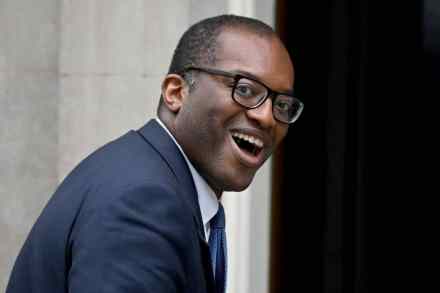
As Boris Johnson's holiday in Marbella gets underway, back home his ministers are making headlines for infighting following a hostile briefing from the Treasury. The stark rise in energy prices has led industry leaders to warn that some UK factories are at risk of closure within days unless the government steps in to help with spiralling fuel costs. But there appears to be little unity among ministers as to the right response.  In a Sunday media round, Business Secretary Kwasi Kwarteng spoke of the steps he was taking to try to ease the pressure on businesses.

China is using the climate as a bargaining chip

From our UK edition

China’s President Xi Jinping has apparently not yet decided whether to travel to Glasgow next month for the big climate conference known as COP26. That is no doubt partly because he’s heard about the weather in Glasgow in November, and partly because he knows the whole thing will be a waste of his time. After all, the fact that it is the 26th such meeting and none of the previous 25 solved the problem they set out to solve suggests the odds are that the event will be the flop on the Clyde. But another reason he is hesitating was stated pretty explicitly by his Foreign Minister, Wang Yi: ‘Climate cooperation cannot be separated from the general environment of China-US relations.

There’s one upside to having Parkinson’s disease

From our UK edition

I am just back from my final salmon fishing trip of the year. I have never had a worse season and have hardly cast a line. This autumn’s almost unprecedented sunshine has been terrible for fishing; the river Tweed had been reduced to a dribble, through which even Alex Salmond could easily lead an invasion force from Scotland to England while wearing a three-piece suit. I returned to find a letter from Salmon & Trout Conservation lying on the mat. It is bizarre that the only friends these fish have are those who want to stick a hook in them. The chief executive sounded at his wits’ end as he appealed for funds.

Why didn’t we listen to the free marketeers?

From our UK edition

Economic liberals may feel vindicated by events of the past fortnight. It turns out energy price caps, limits on immigration, over reliance on wind power and IR35 – the taxman's crackdown on contractors – are all bad ideas, just as they had forewarned. Those same free marketeers may experience a strong temptation to enjoy the schadenfreude. In 2017, some insisted that the only good argument for energy price caps was the Leninist principle of 'the worse, the better,' as the move would bring forward the day when the entire policy collapsed. But governments bought into the baseless narrative propagated at the time that energy companies were greedy, price gouging profiteers, and since 2019 a cap on unit prices for consumers has been in place.

Could the squeeze on living standards bring down Boris?

From our UK edition

There is about to be a two-phase onslaught on the living standards of those on low-to-middling incomes. On 1 October the energy price cap, for dual fuel, rises from £1,150 to £1,277. This is a rise of 11 per cent, at a time when furlough is ending and just a few days before the £1,000 a year uplift to Universal Credit is removed (which presumably Boris Johnson will not be swanking about in his big speech to Tory conference). That’s the first hit to living standards. There’ll then be a gradual further erosion of living standards with rising food inflation (of around five per cent, as per what Tesco’s chairman John Allan said on my show this week).

Which countries have the highest energy bills?

From our UK edition

Seeds of change The Chelsea Flower Show opened in autumn for the first time, delayed thanks to the pandemic. The show has been cancelled before due to the world wars — during the second world war the site was used for an anti-aircraft gun emplacement. But it wasn’t always held in Chelsea. It began as the Royal Horticultural Society show in Chiswick, held from 1827 onwards. It moved to Kensington Gardens in 1861 when rival flower shows were attracting visitors away. In 1888 it moved to Temple Gardens, between Fleet Street and the Thames. It was first held in Chelsea — in a single marquee — in 1913. Highly charged Energy prices spiked. Which countries have the most expensive electricity for domestic customers (US cents per kWh)?

Is government preparing to shake the magic money tree again?

From our UK edition

Will my bath water still be hot by Christmas? That’s not a question I’d normally feel a need to share with you, but shortly after this morning’s ablutions I read that Bulb Energy — the UK’s sixth-biggest energy supplier with 1.7 million customers, including me — ‘is seeking a bailout to stay afloat amid surging wholesale gas prices’. The spike in the global gas-price graph is extraordinary, up 250 per cent since the start of 2021 and steeper in August. It has many causes beyond our shores, including depletion of stocks last winter, restricted supplies from Russia, hurricane-hit US refineries and increased Asian demand post-Covid.

Portrait of the week: Gas prices soar, cabinet reshuffled and a green light for travel

From our UK edition

Home To prevent a shortage of meat, which relies on carbon dioxide in its packaging, the government gave millions of taxpayers’ money to an American company to reopen a fertiliser works at Stockton, Co. Durham, that produces the gas as a by-product. The plant had been shut down because of a rise in wholesale gas prices caused by calm weather preventing rival wind-energy production, a fire at an interconnector reducing electricity supplies from France, and Russia putting up the price of its gas exports. Gas-supply companies began to go bust because the government price-cap prevented them from charging as much as they paid for gas. There was clamour for money from the government, either for gas companies or to keep down consumers’ bills next year.

The legacy of Stephen Toope

From our UK edition

Stephen Toope, Vice-Chancellor of Cambridge University, has begun this academic year by announcing it will be his last in the post. Professor Toope says, no doubt truthfully, that he wants to see more of his Canadian family, dissevered from him by Covid. But I think it reasonable to relate his departure to wider issues. When he arrived in 2017, the ‘Golden Era’ of UK/Chinese relations still, in theory, existed. Cambridge uncritically welcomed Chinese government and business participation. In 2019, speaking in China, Professor Toope hailed the China Development Forum’s ‘Greater Opening Up for Win-Win Cooperation’ and praised President Xi Jinping’s Belt and Road Initiative.

Is this Boris’s ‘Crisis, what crisis?’ moment?

From our UK edition

Will it turn out to be Boris Johnson’s Jim Callaghan moment? Briefing reporters on his plane to the US on Sunday, the current PM tried to play down the energy crisis, saying:  'It’s like everybody going back to put the kettle on at the end of a TV programme, you’re seeing huge stresses on the world supply systems.'  The gas price spike would be over just as soon as it occurred, he implied, and was caused by nothing more than the global economy rebounding after many months on the Covid couch.