Employment

Was furlough the worst £70 billion ever spent?

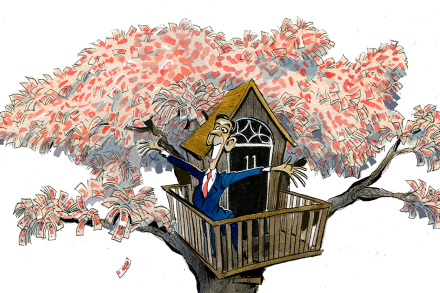
Concorde obviously. The Iraq War perhaps? Or Scottish devolution? It is not hard to come up with a list of really terrible ideas that the British government has wasted money on over the last 50 years. Even so, and despite some tough competition, we now have a fresh contender. It looks as if the furlough scheme will top them all. The scheme ends today, with roughly a million people still collecting a slice of their wages from the Treasury. The total bill is set to come in at around £70 billion. To put that in context, for the same money we could have tripled spending on policing and just about eliminated crime. Or we could have suspended student loans for four years and made university free again.

The pandemic’s employment paradox

The pandemic continues to cause surprising events in the labour market — and challenges too, many of which were wholly unanticipated when the Covid crisis began. Today’s update from the Office for National Statistics on labour market numbers is case-in-point: the unemployment rate again, down to 4.6 per cent from May to July. Forecasts of nearly 12 per cent unemployment, once predicted by the Office for Budget Responsibility, are long in the past. The furlough scheme has starved off an unemployment surge and there’s good reason to think it’s been avoided altogether. Over one and a half million people were still on furlough at the end of July.

How to solve the looming pigs-in-blankets crisis

This is getting serious. Never mind global shortages of microchips, plastics, copper and container ships; now we’re running out of pigs in blankets. The British Meat Processing Association says its members are so understaffed that annual production of 40 million packs of this popular pork item for the Christmas market is under threat. The British public have so far stoically accepted occasional empty supermarket shelves as a pandemic knock-on, to be blamed in part on necessary pinging of key workers and delivery drivers and in part on neighbours’ stockpiling, rather than on systemic government cock-up. But if the succulent sausage-in-bacon delicacy is nowhere to be found, trouble will surely follow.

Giving workers a ‘right to switch off’ could backfire

Millions of workers are 'never quite switching off' and are answering emails out of hours, warns Autonomy, a think tank. It suggests that the 1996 Employment Rights Act should be amended to give employees a legal 'right to disconnect'. Unfortunately for Autonomy, Labour’s new deal for workers, outlined last month, somewhat stole its thunder. Spearheaded by deputy leader Angela Rayner, the party’s radical package of labour market reforms includes a default right to flexible working, new worker status for those in the gig economy and, of course, a French-style law barring employers from contacting workers outside strictly regulated hours. Nonetheless, Autonomy’s suggestion has received fawning coverage.

Letters: Why aren’t Italians fighting for their liberty?

Wage concern Sir: Martin Vander Weyer’s call for higher wages to end the shortage of British HGV drivers (‘Your country needs you at the wheel of a lorry’, 7 August) should be extended to other hard-pressed economic areas which have lost cheap labour from the poorer EU countries. For far too long, farming, hospitality, construction, care homes and other vital services have failed to recruit and train local staff or pay a decent wage. Low wages at the bottom of the economy increase the cost of social welfare benefits, bring in less or no money from income tax and VAT and thus adversely affect the whole economy.

Is it time for a Dad’s Army of lorry drivers?

Here’s a patriotic proposal: let’s form a Dad’s Army of lorry drivers, of which the Road Haulage Association reckons there’s currently a 100,000 shortage. Daily headlines tell us this is causing supply disruptions that have led to reduced factory output and half-empty supermarket shelves, slowing recovery and contributing to the blip in inflation. We need Walmington-on-Sea’s trusty platoon at the wheel to compensate for the million-plus exodus of foreign-born workers that has afflicted the economy from hospitality (see this week’s last item) to fruit farms, slaughterhouses and construction sites — compounded in haulage by delays to thousands of HGV tests for new applicants last year.

Vaccine passports could threaten the employment recovery

Alongside the UK’s latest step in reopening, optimistic forecasts have been rolling in concerning the economy’s timeline for returning to pre-pandemic levels. This morning, we got another positive indication that businesses are resuming normal operations. The latest update on furlough figures shows 1.9 million workers are still on the scheme as of the end of June — the lowest level of people having their wages paid by the state since furlough was first introduced during last year’s spring lockdown. The number of people on the scheme fell by half a million last month, and by roughly three million since March. The continued fall is hardly surprising, as each month since April more economic activity has been permitted.

The ‘alpha migrants’ are here – why don’t we let them work?

We’re all slowly becoming aware that there’s a new migrant crisis. Last week Jon Donnison of the BBC, cruising the English Channel looking for asylum-seekers heading to the UK, found four young men, paddling by hand their tiny rubber dinghy. They’d come from Sudan via France, and for the last leg of their journey they’d dodged the oil tankers and container ships ploughing the world’s busiest shipping lane; only one of the young men even wore a life jacket. These were the latest of more than 9,000 people who have risked their lives to arrive by sea this year. The other story of the summer is the shortage of labour. Desperate farmers are being forced to leave vegetables rotting in fields for want of pickers and packers.

In the post-pandemic economy, the workers are the boss

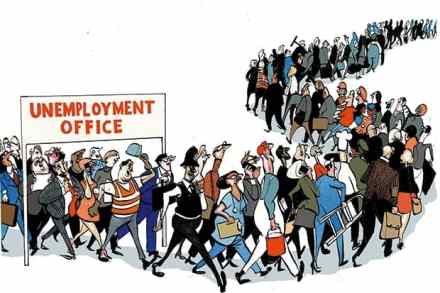
The world of coronomics continues to surprise us. Last summer forecasters warned of a wave of redundancies after the biggest economic crash in 300 years. Peak unemployment — spurred on by lockdowns — was expected to near 12 per cent, ushering in a new era of chronic financial pain and instability for millions of workers. But the Treasury’s furlough scheme has kept the headline figure down. Unemployment has hovered around 5 per cent, less than half the original prediction. The problem this summer isn’t mass unemployment but worker absenteeism. Job vacancies are now more than a third above pre-pandemic levels. There is no shortage of available work, only a shortage of those willing to do it. At the last count, 2.

The CV trick that guarantees you an interview

Sometimes the opposite of a good idea is, as Niels Bohr said, another good idea. But the converse is also true. The opposite of a bad idea can easily be an even worse idea. Something like this seems to have happened with the expansion of British higher education. When I left university in 1988, if you wanted a reasonable first job, a degree from a Russell Group university was probably sufficient but not necessary. Now it seems to be necessary but not sufficient. The result is that a large number of perfectly capable but non-academic people are excluded from having a stab at many jobs, where for all we know they could be brilliant. But it has also led to the emergence of bizarre and wasteful forms of hyper-competitive behaviour among those who play the credentials game.

Japan’s punishing workplace culture

Are the world’s hardest workers about to get a well-earned break? That seems to be the hope of the Japanese government, which is trying to encourage companies to ease off a bit and allow their exhausted staff the luxury of a four-day working week. It is hoped this will lead to a healthier work-life balance — or at least give workers a chance to retrain. As an idea, it sounds great. Whether it will actually work is another matter entirely. In January, the ruling (always and forever) Liberal Democratic party drafted a proposal that firms should offer staff the option of a three-day weekend.

The social tyranny of singing ‘Happy Birthday’

Among the horrors, some aspects of lockdown were bizarrely less gruelling than expected; indeed for some people, the experience was mildly positive. It’s time to ask ourselves why. One possible explanation is ‘jomo’ — the joy of missing out. Much ostensibly voluntary human activity is not really voluntary at all. Like dressing for dinner in the 19th century, many elements of life are performative — things done to signal commitment or driven by social pressure.

Is Britain facing a jobs crisis?

The ONS recorded a sharp recovery in economic growth in March. The Bank of England has already increased its forecast for the growth of the UK economy in 2021. Now comes more evidence of rapid growth. The quarterly CIPD/Adecco Labour Market Outlook, published today, shows a sharp rise in the number of organisations that are hiring extra staff or are expecting to do so over the next few months. The survey, which goes out to 1,000 employers in the private, public, and voluntary sectors, found that 36 per cent of employers are planning to increase staff levels over the next three months. Nine per cent said they are expecting to shrink staff levels, 50 per cent will keep numbers the same and 6 per cent don’t know.

Devil of a job: the curious occupations recorded in the census

Even before the first census was made in 1801, the plan was regarded with fear, hatred and ridicule. And this year, on 21 March, households have another chance to mock, embrace or ignore the census. When parliament debated a bill in 1753 for an annual census, Matthew Ridley, MP for Newcastle, warned that his constituents ‘looked on the proposal as ominous, and feared lest some public misfortune or an epidemical distemper should follow’. They were aware that, by the Bible’s account, ‘Satan rose up against Israel and caused David to take a census of the people of Israel’. God was so angry that he gave the King three choices: seven years of famine, three months of fleeing his enemies or three days of pestilence. He chose the last and 70,000 died.

The problem with the Supreme Court’s Uber ruling

They are monitored by the firm. They don’t have the option of working for other companies. And they are entitled to all the protections that come with being an employee. The Supreme Court today potentially blew up Uber’s business model, and the model of many other fast-growing ‘gig economy’ companies as well, with a ruling that drivers for the app operator are not self-employed after all, as the company likes to claim, but staff, and should be treated as such. In truth, you can argue the case for or against that decision, as the lawyers have just done expensively in court. But in reality, this is a hugely important verdict about the kind of economy we want to create.

The cult of London

The phrase ‘rich people’s problems’ has its uses. I once overheard a group in a Knightsbridge restaurant sympathising with a companion in tones fit for a bereavement or life-changing injury. ‘Oh, poor you!’ It turned out that their nanny had been ill for two days while they were in Zermatt, and that Farrow & Ball was temporarily unable to supply an obscure shade of paint. To be fair, there are problems unique to the seriously rich. Take Marci Klein, daughter of Calvin. Not only was Marci kidnapped aged ten, but she later complained that in the midst of any passionate encounter with a new boyfriend, she would suddenly find herself confronted with her own dad’s name in inch-high letters. The 99 per cent never have to cope with anything like that.

Universal Credit and the future of the welfare state

Amid the many failures of public policy during the Covid crisis, one success has gone largely unnoticed. The Universal Credit system coped with a huge uplift in applications without breaking down. In February last year 2.6 million households were signed up; six months later that had swelled to 4.6 million. Some 554,000 people made new claims in the first week of lockdown, ten times the normal levels. For a benefit which not so long ago was being damned for the poor execution of its rollout, it is remarkable that the system coped. Its unexpected success offers plenty of lessons for the future of the welfare state. The digitisation of the system, controversial at the time, enabled the service to be delivered to those in urgent need of help.

Letters: How to revive Britain’s orchestras

Good conductors Sir: Yes, it is sad to see talents like Sir Simon Rattle and Mirga Gražinyte-Tyla leaving our shores (‘Rattled’, 30 January) and yes, the Brexit complications faced by British musicians are ludicrous. But both might be bearable if there were sufficient investment in grass-roots music here. At least then we could hope that the gap left by departing maestri would be quickly filled by homegrown talent. Unfortunately, the government continues to turn a blind eye to musical education, despite the many studies evidencing its benefits.

Reforming workers’ rights is an upside of Brexit

Of all the arguments put out against Brexit during the bitter referendum debate, one of the least convincing was that it would give a UK government the opportunity to repeal employment law, thereby impoverishing Britain and its people. Jeremy Corbyn once asserted that a Conservative government would turn the country into a 'low-wage tax haven'. That is an interesting concept, which like the chemical element Seaborgium might theoretically exist but which has yet to be discovered in the real world – most tax havens seem to be pretty wealthy, at least compared with similar countries which haven’t set the fiscal and regulatory conditions to attract businesses and wealthy individuals.

The real problem with the Fatima advert

An advertisement from GCHQ provoked angry comment because it seemed to suggest that some ballet dancers would be better working with computers, or as it put it: ‘Fatima’s next job could be in cyber.’ The angry brigade said that ballet dancers should not have to give up their art. I suspect too an element of hatred of the state’s security apparatus. No doubt the advert gave the dancer the name ‘Fatima’ hoping to attract people of a Muslim background (Fatima being Mohammed’s daughter). The man who took the original photograph expressed outrage. The woman depicted, from Atlanta, Georgia, is called Desire’e Kelley, who apparently uses an apostrophe in her first name rather than the conventional acute accent.