Emmanuel macron

Macron’s Covid passports are causing intergenerational warfare

From our UK edition

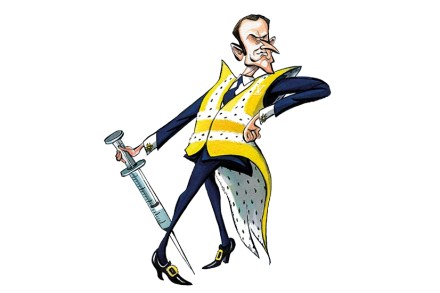
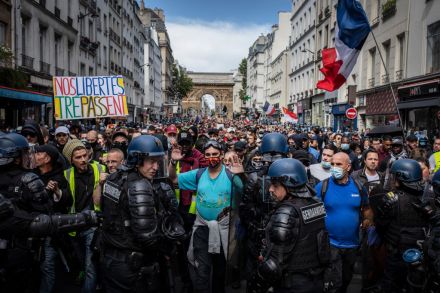
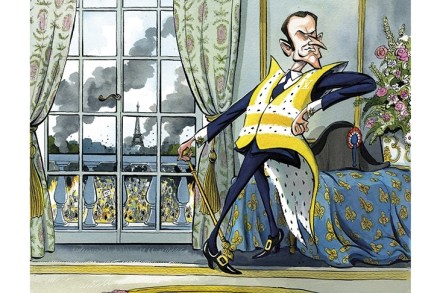
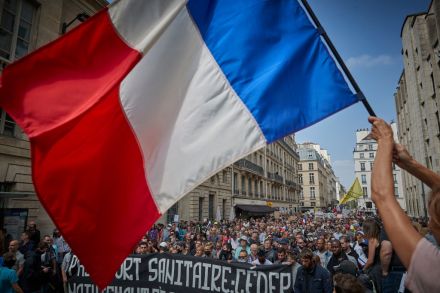
The protest movement against Emmanuel Macron’s Covid passport, which comes into full effect today, continues to grow in France. On Saturday over 200,000 men, women and children took to the streets, more than twice the number that demonstrated when the protests began on July 17. As a veteran of the Paris protests, I’ve found one of the most interesting aspects to be the reactions of passers-by as the cortège files through the streets of the capital. Some clap, some look on in contempt, others shout words of encouragement and a few hurl terms of abuse.

The French are rebelling against Macron’s Covid Passports

From our UK edition

A manager of an attraction park in France was reportedly assaulted on Sunday after he denied entry to a customer. It's alleged the man lost his rag when he was turned back because he didn't have a valid Covid passport. It is unlikely to be the last such incident. In the space of a fortnight, the atmosphere in France has turned toxic. A hospital in Saint-Étienne was invaded on Monday by 60 demonstrators, mainly medical professionals, opposed to the measure that will force them to vaccinate or be suspended without pay. That is also a strike at a Lyon hospital that will start tomorrow. Elsewhere cinemas, theme parks and fitness centres have been labelled 'collaborators' for their participation in the government's Covid Passport scheme.

Emmanuel Macron’s dangerous infantilisation of the French

From our UK edition

From St Tropez to La Rochelle to Deauville, there is a familiar sight this summer in many of France’s most popular coastal resorts. A year after the wearing of masks outside was made mandatory they are back, and French and foreign sunseekers are forced to muzzle under a broiling sun. It was only a month ago that the government relaxed the rule on the wearing of masks outdoors, but that was before a rise in cases caused by the Delta variant. Most of the infected are the young and unvaccinated, hospitalisations are stable and deaths remain minimal: there were 11 in the last 24 hours, compared to ten last Saturday.

Macron’s vaccine passports are a betrayal of French values

From our UK edition

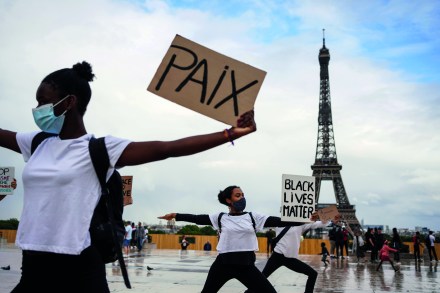
What a celebration of diversity I witnessed in Paris on Saturday as tens of thousands of demonstrators marched through the capital. Organisers put the figure at 50,000, the government at 18,000; I'd say the former is the more accurate estimation. It took two hours to walk the one and three-quarter miles between the start of the march, in the Place du Palais Royal, to its terminus at the Place Pierre Laroque outside the Ministry of Health. In total, and again depending on your source, between 114,000 and 150,000 people demonstrated across France on Saturday to protest against the planned introduction of the 'Pass Sanitaire', France’s vaccine passport. All ages, sexes, classes and colours were represented.

Macron’s Covid crackdown is a risky bet

From our UK edition

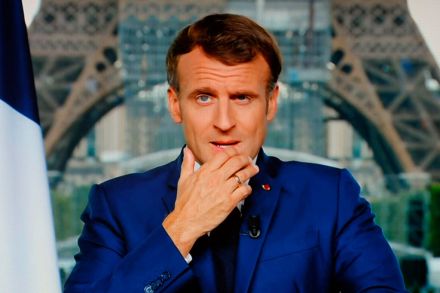
Will the French accept compulsory vaccination against Covid? Health passports to get on a plane or train? Children of 12 jabbed, whether their parents wish it or not? As fears are stoked of yet another wave of infection, we may be about to find out. In recent days, France has seemed rather normal with restaurants open, summer holidays in full swing, tourists returning, shops open. But we’re told that none of this will last. ‘We must vaccinate all of France,’ president Macron announced last night in his fifth Covid television address so far. It was a striking elocution. Macron ditched his habitual black undertaker outfit for a smart blue suit, and his office in the Elysée for the dome of the Grand Palais, framing the Eiffel Tower.

Le Pen is just another establishment politician

From our UK edition

One Saturday in March, I attended an anti-lockdown rally in central Paris. I was there partly out of journalistic curiosity but also out of solidarity with those Frenchmen and women who believed it was high time life returned to normal. What struck me was the similarity between the protestors and those I had walked with in 2018 in the early weeks of the yellow vest movement in Paris — overwhelmingly middle-aged blue-collar workers. The yellow vests famously had no leader because it was a protest movement that arose not out of any strong political conviction but from what the French call ras-le-bol: despair at what was perceived as an arrogant and out-of-touch political class who seemed intent on punishing the poorest in society.

Is Marine Le Pen’s presidential bid doomed?

From our UK edition

Nothing went as predicted in France's regional elections. Marine Le Pen's Rassemblement National did not win a single region and Emmanuel Macron's La République en Marche failed to grow roots in local government, or even act as a kingmaker. All incumbent regional candidates were re-elected, sometimes with quite a comfortable margin. Does this mean we are back to the good old left-right divide in French politics? Regional elections are not national elections, of course. Abstention reached a record high in this election and voters from RN and LREM have shunned the regional vote more than left-wing and conservative voters.

Why an EU-Russia summit was always going to fail

From our UK edition

When Emmanuel Macron and Angela Merkel unilaterally proposed a European Union summit with Vladimir Putin, they managed to open deep fault lines in the continent over the EU’s Russia policy. Soon afterwards, Macron and Merkel were forced into an embarrassing reversal, largely by the countries of Central Europe, and had to cancel the proposed summit. In the process the two world leaders highlighted that this was not the right time for a summit, that the EU is divided over Russia, and that this kind of initiative plays into Russia’s misunderstanding of the Union. The suspicion must be that Macron and Merkel wanted to emulate the success of Joseph Biden’s recent meeting with Putin. It certainly did not seem like they had a specific and sensible agenda in mind.

The electoral humiliation of Macron and Le Pen

From our UK edition

Five years ago, Emmanuel Macron was ‘en marche’ to his improbable ascent to the presidency of France. Last night, having united France against him, the certitude that he will be re-elected in 270 days has evaporated. Results of the second round of regional elections can only be described as a disaster for the President. His bespoke political party, La République en Marche, has collapsed. And worse, his preferred presidential opponent, Marine Le Pen, lost any remaining credibility as a serious alternative. That could leave him facing a traditional conservative next year – one who might not be eliminated in advance, as François Fillon was last time, by a convenient criminal investigation. The message is loud and clear.

Boris Johnson’s Northern Ireland problem

From our UK edition

In an at times grouchy press conference, Boris Johnson tried to calm the row over the Northern Ireland protocol. The Prime Minister declined to comment on what Emmanuel Macron is supposed to have said about Northern Ireland’s position in the UK. He said that the whole issue of the protocol had taken up a ‘vestigial’ amount of time at the summit. (Interestingly, Mujtaba Rahman of Eurasia Group, who is particularly well connected in EU capitals, says that he has been told it took up two-thirds of the conversations in the margins of the summit).  Instead, Johnson wanted to emphasise the vaccine commitments that the summit had made and how these would help ‘demonstrate the benefits of democracy and freedom and human rights’ to the rest of the world.

Macron is wrong. Nato must stand up to China

From our UK edition

Joe Biden wants to use his visit to Europe for the G7 summit and the Nato meeting to rally democracies to take on the autocratic threat posed by Russia and China. But in a sign of how difficult that will be, Emmanuel Macron made clear last night that ‘the line I’m advocating for France, and I hope for Europe, is not to be made a vassal by China nor be aligned with the United States on this subject.’ He has also said that China should not be a Nato priority. If Nato is to stay relevant, it will have to become more involved in the effort to contain China This is a mistake. If Nato is to stay relevant, it will have to become more involved in the effort to contain China, as I say in the magazine this week.

Why is Macron feigning outrage at the Danish spying scandal?

From our UK edition

The feigned outrage in Berlin – but mostly in Paris – at the USA’s proxy use of Denmark’s intelligence services to intercept submarine cable traffic to spy on European leaders raises more than a wry smile. Allies have always spied on allies for legitimate reasons. Few have done so, and continue to do so, as much as the French.  As president of France and commander-in-chief of the French armed forces, Emmanuel Macron will be perfectly aware of this. The French foreign intelligence service, DGSE, runs an interception programme on submarine cables that listens in to potential enemies and friends in similar fashion to the US National Security Agency or Britain’s GCHQ.

Why Boris is loved by the French

From our UK edition

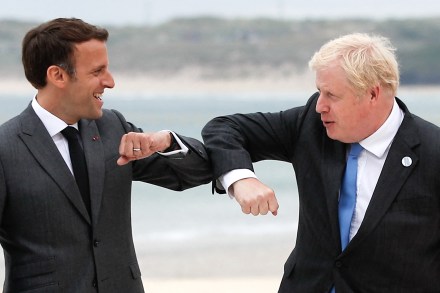
Boris Johnson is more popular in France than Emmanuel Macron, which might not be a high hurdle to overcome, since Macron is rather generally unloved. Except Johnson is not just marginally more popular, but massively so. Indeed, the French seem to like him even more than the British. And he’s popular right across the French political spectrum, from the extreme right to the extreme left. Chouette! According to a study in the news magazine Le Point, 51 per cent of French voters have a favourable opinion of the Prime Minister, at least 10 points clear of recent polls assessing the popularity of the President.

Boris’s continental appeal

From our UK edition

After a month of Franco-British naval conflict, Brexit barbs and, most importantly, the release of Michael Barnier’s diaries, one might expect Boris Johnson’s stock in France to be low. For a certain kind of #FPBE bien-pensant, Johnson represents all that the continent should hate: British belligerence, slapdash scruff and Little Englander jingoism. Yet polling reveals that 51 per cent of the French public hold a ‘positive opinion’ of Boris Johnson, making him more popular in France than he is in Britain — and 11 points ahead of Emmanuel Macron.

The rapid rise of Pascal Blanchard, Macron’s favourite diversity tsar

From our UK edition

In October last year Emmanuel Macron had a long list of around 300 to 500 names drawn up. These were no ordinary figures but rather a number of renowned French immigrants who were being lined up as candidates for new street names and statues. Among their number was Martinican philosopher and activist Frantz Fanon, Moroccan war veteran Hammou Moussik, and the Egyptian French singer Dalida. And yet the man behind the scheme, Pascal Blanchard, is arguably more interesting than any of the names on the list.

Macron is playing politics in the Channel

From our UK edition

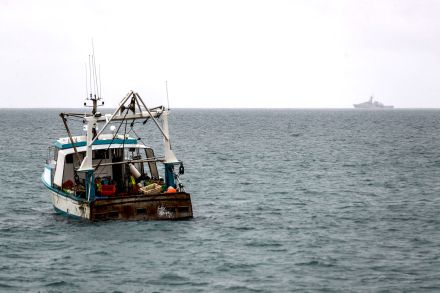
The stand-off between France and Britain has escalated into something altogether more serious. Yesterday, the French maritime minister called for Jersey’s electricity supply to be cut off in response to a dispute over fishing rights. Egged on by French officials, around 80 boats began blockading the port of St Helier this morning in a move that is reminiscent of Ursula von der Leyen’s aborted plans for a hard Irish border to stop the flow of vaccines into the UK. Now there are scenes of British Navy vessels approaching the fishing boats as French ships chart a course for the Channel island. Some on the Continent are claiming that the stand-off has been manufactured by Boris Johnson to deflect from his various scandals ahead of today’s elections.

France wakes up to Woke

One crisis can conceal another. While France has been distracted by COVID, a new menace is lurking. The specter haunting the republic is le Wokisme, the mutating ideology of race and identity that has found unexpectedly fertile ground here. French elites are unsettled. Those who assumed the French possessed herd immunity against such barbaric American ideas are having their complacency tested. Superficially a modern country, with iPhones, Amazon and electric cars, France is still often introspective and late to understand what’s happening in the wider — especially Anglophone — world, which is how wokeness has somewhat taken it by surprise. Woke had been happening in America for many years before the French noticed.

woke

France’s growing German scepticism

From our UK edition

Britain's favourite Frenchman, Michel Barnier, is in the Calais region today where he will address a conference about his part in Brexit and perhaps give a further indication as to his presidential aspirations. The EU's chief Brexit negotiator was described in yesterday's Le Figaro as the man who can 'unite the right' and in doing so present a credible alternative to Emmanuel Macron and Marine Le Pen in 2022. Barnier presides over a political initiative called Patriotes et européens and he explained its concept to Le Figaro: 'Patriot and European, this means that I believe in the force of the nations, the respect of national identities and France as a country of influence at the head of the European nations.

Macron blames the British variant for French lockdown

From our UK edition

Tonight President Macron announced a wave of new national lockdown measures across France, following reports that more than 5,000 people across the country are now in intensive care. In a television broadcast he said that schools would move to remote learning from next week, that a 7pm curfew would now be in place and that all non-essential shops will close from Saturday.  Macron cited the so-called 'Kent variant' as one of the main reasons for the lockdown, telling viewers: 'This variant which was identified for the first time from our British neighbours at the end of last year and to a certain extent, of course, gave rise to an epidemic within the epidemic and that is greater than last spring.

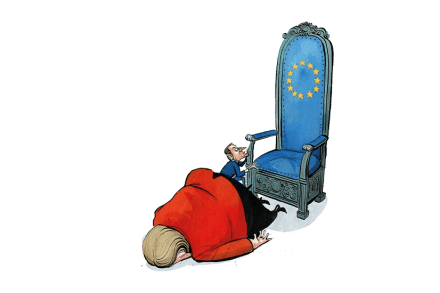
Merkel and Macron’s Sputnik U-turn

From our UK edition

The last three months have seen a litany of humiliations for Brussels as its leaders try to procure and roll out much needed vaccines across the continent. Whether it's been Ursula von der Leyen almost erecting a hard border in Ireland or Handelsblatt being briefed misinformation from a misread excel table, impounded meningitis jabs in Italy or doctors forced to destroy unwanted vaccines in Germany, every week seems to bring fresh ignominy and embarrassment. But now a new low appears to have been reached with today's news that France and Germany are in negotiations to buy Russia's Sputnik V vaccine from their implacable opponent Vladimir Putin.