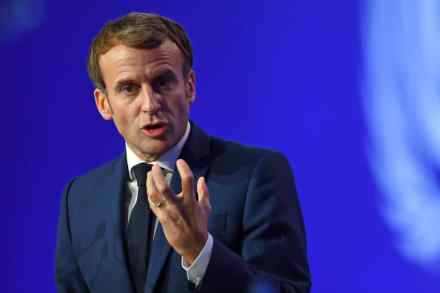
Emmanuel macron

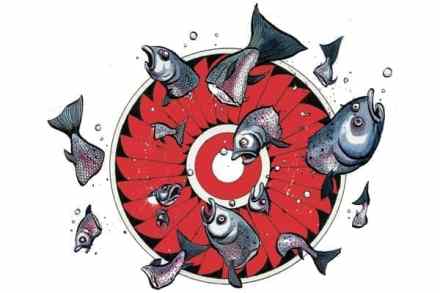
Macron’s fish war on Britain is no laughing matter

From our UK edition

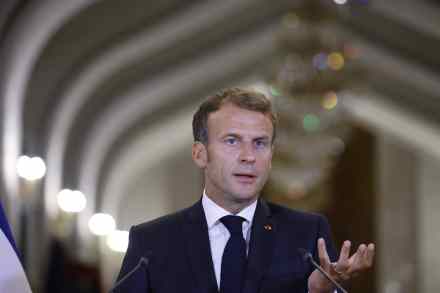
Once upon a time, the insolence demonstrated by Emmanuel Macron in his fish war with the United Kingdom would have been met with a firmer response than inviting the French ambassador to the Foreign Office for a chat. Bombarding the ramparts of Saint-Malo hardly seems on the menu today, however – even were our navy capable. Boris Johnson has promised to do ‘whatever is necessary’ to protect British vessels but threatening ‘rigorous checks’ on French boats is as feeble as it is improbable, given that the Royal Navy has just eight small boats patrolling 756,000 square kilometres (300,000 square miles) of water, almost four times the surface area of Great Britain. It’s akin to two police cars patrolling all of England, Scotland and Wales.

Macron’s pointless fish war

From our UK edition

During the now virtually forgotten cod wars between Iceland and the United Kingdom from 1958 to 1976, the diminutive foreign office official Sir Donald Maitland invited to King Charles Street for a dressing down the Icelandic Ambassador, a 6’7” Nordic giant. When the ambassador arrived, Sir Donald climbed on to his massive desk, drew himself up to be eye-to-eye with his visitor and declared: ‘I have been instructed to deliver this from the highest level.’ The moral of this story is, if you wish to avoid seeming ridiculous, avoid fish wars. Ultimately, little is at stake. Outcomes are frequently embarrassing. There will inevitably be terrible tabloid jokes about herrings and floundering, et cetera ad infinitum.

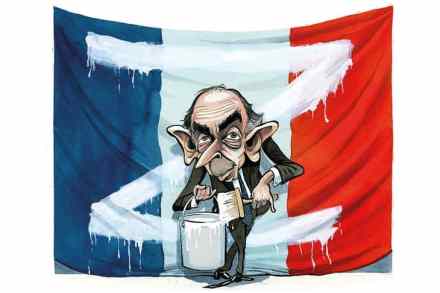
Plan Z: the rise of Éric Zemmour

From our UK edition

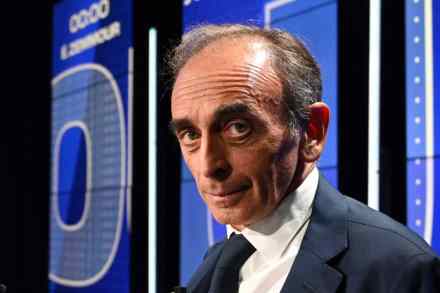
The fact that Éric Zemmour hasn’t yet declared himself a candidate in next year’s French presidential election is a bit of a joke. A Harris poll last week put him on 17 per cent, ahead of all other rivals to President Emmanuel Macron. And he’s holding rallies across France at which adoring fans in ‘Zemmour 2022’ T-shirts chant: ‘Zemmour! Président!’ He’s still pretending to be a TV personality on a big book promotion tour. But Mr Z is running and everybody knows it. He has a devoted and surprisingly professional campaign behind him, the nucleus of a political party, conceived with a clear mission: to restore la gloire de la France.

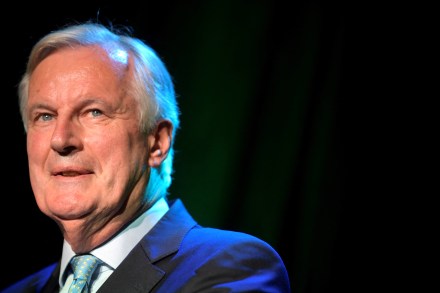
Who do you think you are kidding Mr Barnier?

From our UK edition

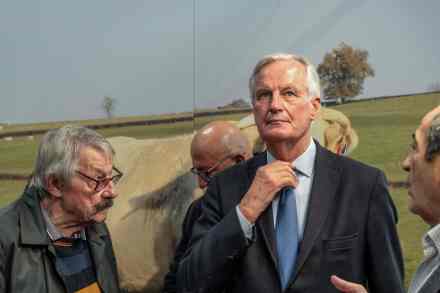
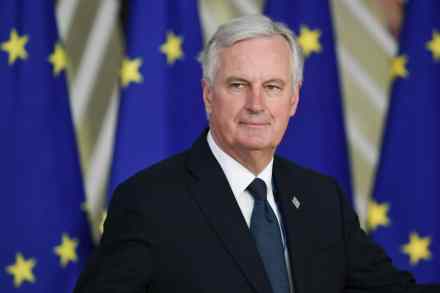
Michel Barnier is running for president of France as a Eurosceptic. He’s talking about pulling back powers to the French state and installing ‘a sovereign shield’ to allow France to impose its own immigration policy. But he’s about as credible as a vegan crocodile. Barnier was at the scene of the crime when the French voted (by a 55 per cent majority) in 2005 to reject the treaty establishing a new European constitution. In a great betrayal of democracy, voters were simply ignored and the government signed the document anyway, relabeled as the Lisbon Treaty.

Don’t underestimate Barnier

From our UK edition

No one really expects Michel Barnier to be chosen as the Républicains's candidate for the French presidency. Success in Brussels does not make it easier to win at home. The most famous example of this rule is Martin Schulz, who returned from a long career in Brussels to become German SPD leader and chancellor candidate in 2017. He was seen as a political curiosity partly because he was unknown. But he couldn't keep up the momentum after German voters saw him on the domestic stage. Brussels insiders become detached from what's going on at home. It is much easier to go to Brussels than it is to come back. But don't write Barnier off just yet. He remained more connected to French politics than Schulz was to Germany.

Macronism is dead

From our UK edition

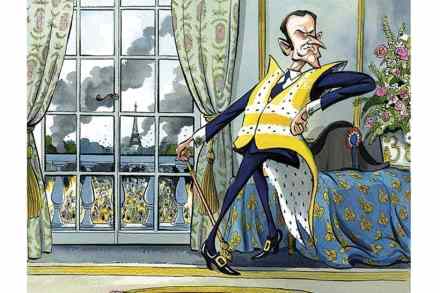
President Emmanuel Macron was in an expansive mood this week as he presented his vision for France 2030 from the Elysée palace before an audience of business leaders and students. Macron is incapable of brevity. In a slick production that must have cost a fortune, presented to a fawning hand-picked audience, he spoke for two hours. His elocution was framed by a slick, Tik-Tokish video recalling the 30 glorious years of French economic growth and grand projects after the war. Macron is nothing if not busy. He’s just been on a series of pre-election grand tours, dispensing billions of euros in promises like confetti. That includes a proposed repair of a national education system on its knees and of a criminal justice system overwhelmed by extremism and gang warfare.

Is Eric Zemmour France’s answer to Trump?

From our UK edition

Eric Zemmour, a right-wing French essayist, has had a stellar rise in the media and public opinion. He has now reached 17 per cent in the latest Harris Interactive poll for the first round if he were to run as a candidate. After Macron’s ascent to power from nowhere only five years ago, will Zemmour become the Donald Trump of French politics? It looks unlikely. Zemmour certainly hit a raw nerve with his anti-immigrant theme, but whether he can dominate the campaign will depend on events outside of his control. If the voters' concern turns towards the energy crisis and purchasing power, Zemmour would be without an offer.

Macron’s selective defence of free speech

From our UK edition

In the early years of his presidency, Emmanuel Macron became known as Monsieur 'En Meme Temps'. The president of France was in the habit of setting out one vision but, 'at the same time', presenting an alternative point of view. He acquired the reputation of a man who was ideologically elusive. What does he stand for? Neither left, neither right, was his campaign slogan in 2017, and four years on he continues to flummox the French. Nowhere is this equivocation more apparent that in Macron's attitude to free speech. Twelve months ago, the French teacher Samuel Paty was brutally slain outside his school because he had shown a caricature of the prophet during a class discussion about freedom of expression.

Eric Zemmour is eating Marine Le Pen alive

From our UK edition

French opinion polls are best taken with a generous bucket of sel de Guérande but this evening’s drop of a Harris Interactive survey of intentions to vote in the 2022 presidential election might genuinely be described as explosive. This poll contains the crucial assumption that Xavier Bertrand will emerge as the candidate of the centre-right Les Républicains, but it nevertheless suggests that trends are moving in unpredicted directions. Bertrand is currently only marginally ahead of Eric Zemmour, whose insurgent campaign from the right is starting to profoundly unsettle the conventional wisdom. If Zemmour, who still hasn’t officially announced his candidacy, continues to climb and Marine Le Pen to decline, something extraordinary might happen.

Von der Leyen is the real winner of the German elections

From our UK edition

The bald guy who leads the Social Democrats. The earnest looking Green lady. Or perhaps the guy in the charcoal-grey suit who leads the oddly named Free Democrats — free from what exactly? — who may end up picking the next chancellor. Lots of commentators will argue for a long time about who is the real winner of the German elections. But in fact there can be no real dispute about who has come out in a far stronger position. The President of the European Commission Ursula von der Leyen. A power vacuum in Berlin will be filled by a hyper-active, ambitious Commission There are two reasons for this. First, she is now by far the most powerful German politician.

The German elections are good news for Macron

From our UK edition

The German election result means that a three party coalition will almost certainly be needed to form a government. Olaf Scholz, the SPD leader, has made clear just now that he is going to try and form a coalition with the Greens and the Free Democrats. Whoever succeeds her will take time to build up the authority that Merkel had in these meetings Scholz has a strong claim on the chancellery. The SPD came first in the election and polls consistently showed that he was Germans’ preferred choice for candidate. Despite being from a different party, Scholz successfully positioned himself as the Merkel continuity candidate. The results might suggest a shift to the left among the German electorate. But German voters clearly want more Merkelism.

Is this the real reason Macron dislikes Brexit?

From our UK edition

As I read The Wet Flanders Plain by Henry Williamson, a veteran of the first world war who encountered hostility from locals when he returned to the western front in 1927, a thought struck me: have I stumbled upon the source of Emmanuel Macron's Anglophobia? Let's not beat around the bush; the president of France does not like us. Politicians and diplomats may gainsay, and claim that Macron has the greatest respect for the United Kingdom. But his behaviour during the last four and a half years indicates that the current resident of the Elysée is the most Anglophobic president since Charles de Gaulle. Throughout the Brexit negotiations Macron was the most intransigent of the EU leaders, and following Britain's departure he has been the most embittered.

Ticking off the French was strategic genius

In December 2020, in the aftermath of the presidential election, Jake Sullivan, President-elect Joe Biden’s national security adviser, urged European officials to delay a European Union vote on a proposed economic agreement with China, called the Comprehensive Agreement on Investment. Sullivan, communicating with French and German officials, explained that the incoming Biden administration wanted to have 'early consultation' with the Europeans on China, and urged them to hold off until Biden took office to devise a common approach toward Beijing. Resisting the pressure from Biden, the European Commission announced that the agreement was concluded in principle, pending approval by the European Parliament.

french

Macron’s ambitions have been torpedoed by Aukus

From our UK edition

Today France is outraged. First, explicitly because Australia has broken a large contract to have a French company design their submarines and for that contract to be switched to a US-UK substitute. Secondly, sotto voce, because Emmanuel Macron’s Indo-Pacific strategy has been shaken by an Australian, American and British strategic agreement entitled Aukus, to which France has not been invited. What are the facts of the matter? In 2016 Australia signed a contract with France to buy 12 conventional French-designed diesel-electric submarines for the Australian navy. The contract worth €35 billion was badged by the French as ‘the contract of the century’. In reality, only €8 billion was to go to the 60 per cent state-owned French company Naval Group.

Macron is playing Eric Zemmour’s tune

From our UK edition

In a big speech yesterday, Macron presented himself in almost Nixonian terms as guardian of law and order. He said he would rewrite the penal code and double the number of police on the streets. But only if he’s re-elected. He further promised at least ten specific security measures and €500 million in additional spending. Ever the triangulator, he mixed hard with soft — promising also a parliamentary oversight body to clamp down on police brutality. Nobody can accuse Macron of lacking policies, though they’re mostly more show than go. His attempt to co-opt the security agenda is thus far merely rhetorical.

Hidalgo has trashed Paris. Can she do the same for France?

From our UK edition

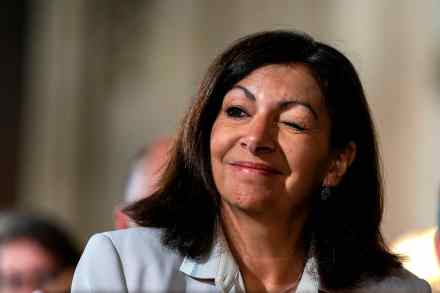
Anne Hidalgo, the socialist mayor of Paris, whose reign has submerged the city in debt and rubbish, is the latest no-hoper to declare her candidacy for the 2022 presidential election. She’s in fifth place in the polls, although these are rarely credible at this stage and currently ignore several candidates for reasons that seem obscure. Hidalgo, the daughter of Spanish immigrants, is to run on a platform of social justice. She says she is doing so with humility, although this is not a characteristic that has so far been evident in her personality. Ruthless ambition comes closer.  It is rather obvious that Hidalgo has zero chance of finishing in the top two of the first round of voting next April.

Afghanistan could fatally undermine Macron’s election strategy

From our UK edition

To nobody’s great surprise, France’s Minister of Health, Olivier Véran, announced last week that the Covid Passport may have to be extended beyond 15 November – the initial expiry date of the government’s controversial measure, first introduced in July. I’ll hazard a guess that come April 2022 the French will still have to show their passport to enter cafes, shopping centres, sports clubs and cinemas. April, of course, is the date of the presidential election and Emmanuel Macron is banking on his response to Covid helping him to secure a second term. His belief is that the electorate, particularly the over-50s, will be reluctant to change presidents in the midst of a pandemic. Better the devil, and all that.

Michel Barnier’s doomed presidential bid

From our UK edition

The French President Emmanuel Macron has, it is revealed, forbidden all talk at the Elysée of the forthcoming presidential election and has refused to discuss even whether he will be a candidate. His entire attention is focused on France and the French, he claims. Of course this is entirely the opposite of the truth as his entire attention is focused on being re-elected. Nevertheless, he was likely to have been opening a bottle of something sparkling in which to dip his croissant this morning with the announcement that Michel Barnier, yet another no-hoper, has thrown his beret into the ring to oppose him. Divide and conquer seems to be Macron’s strategy.

Boris Johnson’s Macron-esque pettiness

From our UK edition

How we all hollered with outrage in May when Emmanuel Macron closed France’s borders to people arriving from Britain on the dubious basis that Britons, and Britons alone, were in danger of infecting France with the Indian variant. I believed, and I still believe, that Macron and his government were in part motivated by Brexit — it was part of our ongoing punishment for daring to vote to leave the EU. It certainly wasn’t justified on scientific grounds: if Briton had more recorded Indian variant (or Delta) cases than other European countries at the time it was largely thanks to more samples of Covid being sequenced here. Some countries, France included, were not analysing more than a tiny fraction of cases.

Liberté, égalité, vacciné: France’s Covid passport revolt is just beginning

From our UK edition

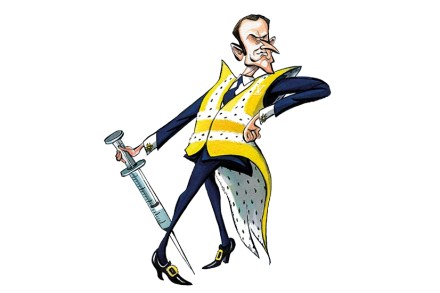
Montpellier Three weeks ago, 100,000 demonstrators turned out on the streets of France to protest President Emmanuel Macron’s hastily passed law to require vaccination passports to get on a train, eat at a restaurant or visit a shopping centre. A week later, the number had more than doubled. Last Saturday, it doubled again. One police union estimated that close to 500,000 had turned out, although as usual the Interior Ministry claimed a much lower number. Enormous demonstrations were staged not just in Paris but in more than 150 cities and towns across France, as well as in the overseas territories of Guadeloupe and Réunion. All this in the middle of the sacred summer holiday season. On the current trajectory, one million could be on the streets by September.