Egomania

An obscure 18th-century Bavarian continues to inspire the wildest conspiracy theories

The Illuminati – in case you didn’t know – were members of a Bavarian secret society that first convened in the late 18th century. Their mission, it was said, was to subvert established religion, ‘overthrow every throne’ and eventually take control of the way the entire world is run. In this project they have been extraordinarily successful. Having masterminded the French Revolution, they, or their successors, fomented uprisings in Ireland and England and have been responsible for the Bolshevik revolution in Russia. They have promoted various wars, and devised countless plots against the US, including the 9/11 attacks as well as other matters too dreadful to describe in polite society.
Why Stephen Hawking will forever embody the triumph of mind over matter

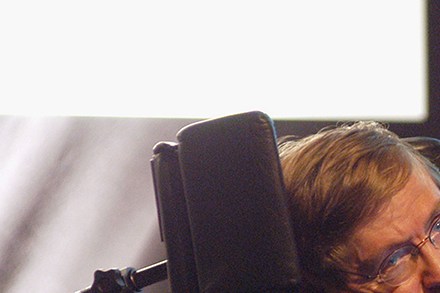
Was Stephen Hawking a world-historical scientific genius? No. Was he nonetheless a scrupulous and collegiate collaborator with others? Also no. But was he basically a nice guy? Well that, as so often, depends on who you ask. His sister Mary is quoted here calling him ‘one of the most self-centred people I’ve ever met’. Yet his friend Kip Thorne, a Nobel-winning physicist, remembered him very fondly. Hawking had a complicated love life, to be sure, but then he had a complicated life in all sorts of ways. This superb biography, authorised by the family, will be the definitive account of it. Graham Farmelo is himself a Cambridge physicist, and his explanations of the scientific issues with which Hawking and his contemporaries grappled are beautifully clear.

Dancing on Terence Conran’s grave

‘Who,’ asks Stephen Bayley, in one of the ‘S.B’ chapters of this irresistibly spiky co-written book, ‘could countenance working for a man like Terence, a man of such fluid principles, of such day-glo opportunism, of such sun-dried narcissism, guiltless hypo-crisy and Hallelujah Chorus egomania?’ Well, both S.B. and R.M. (the ad man Roger Mavity) did work for Terence Conran, in exalted positions. Both fell out with him, and both experienced at first hand all those qualities and more. In their separate chapters they take turns to express the essence of his genius and to get their own back for his disdainful treatment of them. One of his worst traits was his refusal to acknowledge the vital contributions of his seconds-in-command.