Education

The toxic cult of the superhero

From our UK edition

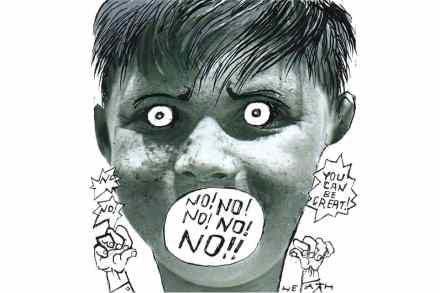
‘We don’t need another hero,’ sang Tina Turner back in the sexy-greedy 1980s. How times have changed. These days we have Superheroes Are Everywhere, a children’s book written by the Vice-President of the USA, Kamala Harris. Puffs tell us that ‘the book teaches that superheroes can be found everywhere in real life, from family members, to friends, to teachers at school and college’ and that it is an ‘encouraging, uplifting book [which] inspires kids to recognise the super-heroes all around them and promise to be, like them, brave, kind, helpful, and more’.
Boris, Sherwood and the politics of the past

From our UK edition

It feels like the end, but we’ve been here before. The past months of Boris Johnson’s teetering administration have felt like the final act of a Shakespearean tragedy and yet the curtain just won’t fall. This week saw one of those rare electric nights of drama when a prime minister looks set to be toppled. At least, they used to be rare. In the first 25 years of my life I had only three prime ministers. The past chaotic decade looks to be about to produce its fourth. The axe hovered in the air for Johnson, but was prevented from falling – at least at the time of writing – by Nadhim Zahawi, the MP for Shakespeare’s Stratford-upon-Avon, denying us the climax. The question many have is – why?

Will my kitchen be designated a ‘safe space’?

From our UK edition

As the father of four children who will be entering higher education in the next few years, I’m worried that my home will shortly start to resemble a university campus. In other words, I’ll be forced to declare my preferred gender pronouns, the kitchen will be designated a ‘safe space’ and the collected works of J.K. Rowling will be burnt on the garden lawn. You may think I’m joking, but a new poll from the Higher Education Policy Institute lays bare just how thin-skinned today’s students are.

Oregon’s nasty woman

Tina Kotek could be well on her way to being the thirty-ninth governor of Oregon. The Democrat, who previously served as speaker of the state’s House of Representatives, won her party’s primary this Tuesday. And with a Democratic supermajority in the legislature and a governor’s mansion that hasn’t housed a Republican since 1979, that’s likely a one-way ticket to victory in November. Kotek is, in many ways, a creature of the state Democratic establishment. Yet in Oregon — and in blue states like it — “establishment Democrat” means something very different than it once did.

The courage of Katharine Birbalsingh

From our UK edition

Five years ago, I put my friend Nell Butler in touch with Katharine Birbalsingh, Britain’s most outspoken headmistress. I was hoping Nell, who runs a TV production company, would persuade Katharine to let ITV make a documentary about Michaela, the free school she opened in 2014 and which she’s led ever since. I was director of the New Schools Network at the time, a free schools charity, and was convinced there could be no better advertisement for the controversial educational policy. At the time, Michaela had yet to be inspected by Ofsted and didn’t have any exam results, but knowing Katharine as I do, and having visited the school a few times, I had no doubt it would succeed.

Wandsworth shows politics is now all about education

From our UK edition

Wandsworth, London I’m writing this in Labour-controlled Wandsworth, my leafy bit of south London. More precisely, I’m writing it sitting outside the sort of coffee shop where the drinks come in jam jars and everyone has a beard. I’d also bet that every one of the 30-odd people here – staff and customers – has at least one university degree. In the 20 or so years I’ve lived in London, Wandsworth has gone from being a slightly drab place to the sort of area where bright young (and middle-aged) things with high incomes come to live and play. The two (bearded) twenty-something men on the table next to me are a case in point.

Children’s lives depend on parents’ rights

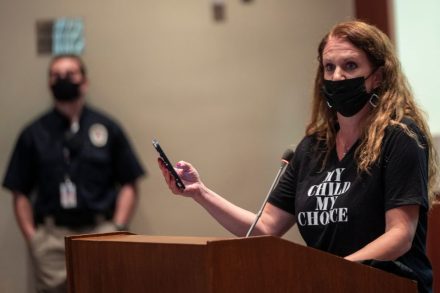
Yaeli Galdamez was a “girly girl,” her mother Abigail Martinez said in a recent interview. As a child growing up in El Salvador and California, she dressed in princess costumes and later had crushes on boys. But after she was bullied for her appearance in middle school, Yaeli began developing symptoms of depression. In eighth grade, she attempted suicide by overdosing on pills. Her mother was desperate to get her the help she needed. So as a sophomore Yaeli began regularly seeing the psychologist at her local high school. But the family says that her counseling for depression was accompanied by a focus Abigail knew nothing about: the school psychologist spent two years encouraging Yaeli in a male identity, Andy (sometimes Andrew).

parental rights
reading

Stop reading

Like you, I enjoy reading. I know, of course, because you are reading this. But perhaps you also share my interest in preventing others from reading. In case you are not yet enlisted in the Restricted Literacy Movement, allow me to point out our three basic claims. (Call it RLM, why don’t we: acronyms don’t have to be read, after all.) First, literacy beyond the rudimentary has become unnecessary. Most people can do their jobs and find fulfilling leisure without it. Second, attempting to produce literacy in the unwilling is an expensive, typically futile undertaking. Third, literacy is simply harmful to many who have acquired it. It engenders discontent, self-doubt and destructive impulses.

Time is running out for the Tories to meet their promises

From our UK edition

Will the Conservatives have much evidence that they've helped the country recover from the pandemic by the next election? Even though all the indications are that the party will go for a later poll in 2024, they still do not have much time to fix the big holes that have gaped wider as a result of Covid. In many cases, such as the NHS backlog, the holes were already there before the pandemic, which makes them even harder to close up. Education is another policy area where the rhetoric and time left to fulfil it just don't seem to match up. This morning I asked Education Secretary Nadhim Zahawi on Times Radio when he expected school children to have caught up the learning and attainment they lost as a result of lockdown.

Sunday shows round-up: Regime change ‘up to the Russian people’

From our UK edition

Nadhim Zahawi – Regime change is Russia ‘is up to the Russian people’ President Biden’s visit to Poland yesterday has caused more than a few ripples in the international community. Referring to Vladimir Putin, Biden declared ‘For God's sake, this man cannot remain in power’. In the BBC studios this morning, Sophie Raworth spoke to the Education Secretary about these remarks, asking if they represented a wider escalation of the war in Ukraine: https://twitter.com/BBCPolitics/status/1508016774402514948?

What schools should be teaching

From our UK edition

The state of Florida recently passed a piece of legislation making it illegal for teachers to hold discussions with pupils under the age of eight about gender orientation. It seemed a very reasonable idea to me and I would guess that a largeish proportion of parents in this country, perhaps even a majority, would concur. I would not wish to indulge in an unrealistically idyllic view of childhood, but my own life was certainly less complicated in the years before I suddenly realised, much in the manner of Henry Miller’s famous epiphany, that (to bowdlerise a little) girls were all in possession of cervixes and might thus be receptive to overtures of a sexual nature – or that there might be boys who for complex reasons would remain unmoved by such a revelation.

The left comes for the parents’ rights movement

Surveying the effect of British education on families, G.K. Chesterton wryly observed in his 1910 book What’s Wrong with the World: “The only persons who seem to have nothing to do with the education of the children are the parents.” Little more than a decade later, the compulsory public education movement was to pick up steam across the United States, often presented as a necessity for the protection and wellbeing of American children. History, Mark Twain might say, is rhyming.

loudoun

The miseducation of Randi Weingarten

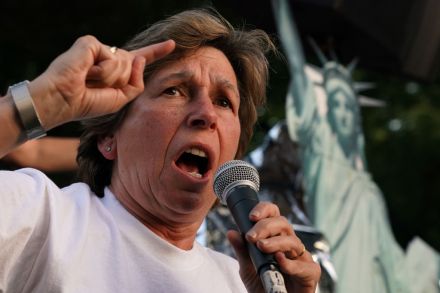
American Federation of Teachers president Randi Weingarten has had a busy two years. Keeping students out of schools, helping teachers fight for permanent, paid truancy, watching her liberal columnist friends write slobbering, glowing profiles of her in the New York Times — these are things that can really take it out of a woman. So, Cockburn has absolutely no patience for the right-wing internet trolls (or Russian bots, possibly?) who had a good laugh at Ms. Weingarten’s expense this week after she had a small spelling error on Twitter. “We #StandWithUkriane,” Weingarten wrote on Wednesday in a since-deleted post. Big deal, says Cockburn. She was only one letter off, which is almost as good as spelling “Ukraine” correctly. Ms.

randi weingarten

Nadhim Zahawi: how I escaped Saddam’s Iraq

From our UK edition

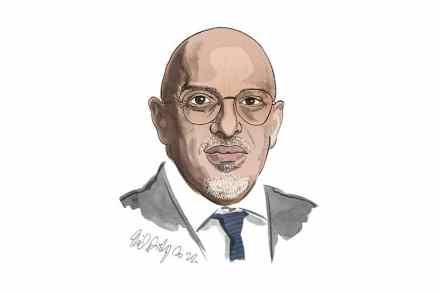
One night in December 1977, when Saddam Hussein was deputy leader of Iraq and already the strongman of the government, Nadhim Zahawi’s father was tipped off that Saddam’s secret police were after him. Zahawi, a Kurd working in Baghdad, decided to leave right away. He phoned the office to say that he was travelling to the north of the country for work and quickly set about his escape. The Baathist secret police did come for him that night, but by the time they arrived at his house, he was at Baghdad International Airport with a ticket to London.

School trip: My déjeuner sur l’herbe

From our UK edition

In 1966 we were 17 and about to do A-levels and leave our convent school for ever at the end of that summer term. Two girls were having a lesbian affair, another had been tempted to sleep with a boy, dramatically confessing this to our head nun, Mother Benedicta, in Mother B’s terrifying private room halfway up the staircase. Our head girl, Vanessa, had an older sister who would roar down to the school on the back of her boyfriend’s motorbike along with his friends, known as ‘leather boys’. Vanessa was worried about her sister living in sin. ‘The sins of the flesh are not the worst sins my child,’ Mother B wisely told her. (The sister was still married to her leather boy 50 years later while Vanessa married at least twice, and lived in sin.

Schools portraits: a snapshot of four notable schools

From our UK edition

Colville Primary School Based just off Notting Hill’s Portobello Road, Colville Primary School occupies a Victorian Grade II-listed building that was once a laundry. Today, it accommodates pupils up to the age of 11 who are taught under the school’s ‘three key values’: respect, aspiration and perseverance. Colville also says it believes in the British values of democracy, individual liberty and tolerance. The school’s performance has shot up over the past decade: three years ago, it was rated ‘Outstanding’ by Ofsted. Despite its setting in the heart of London, there’s plenty of area for play — the playground facilities are new, and there’s also a large ball court and running track.

The latest smear campaign against Clarence Thomas

Justice Clarence Thomas and his wife Virginia (Ginni) made the cover of the New York Times Magazine on February 27 amid an eleven-page article titled “The Long Crusade of Clarence and Ginni Thomas.” The authors are Danny Hakim and Jo Becker. It is in essence a hit piece, and the latest of several in the left-wing media aimed at undermining the legitimacy of Justice Thomas’s jurisprudence. The first salvo came in late January from Thomas’s long-time antagonist Jane Mayer in The New Yorker, but other eager journalists have stepped through Mayer’s muddy footprints. Three of their publications — the New Yorker, the Guardian, and CNN — contacted me because Ginni Thomas serves on the advisory board of my organization, The National Association of Scholars (NAS).

How schools are captured by ideological institutions

From our UK edition

This week, Nadeem Zahawi told teachers that they have ‘an important role in preparing children and young people for life in modern Britain, and teaching them about the society and world they grow up in.’ Actually, after 26 years in the classroom, I had worked that out for myself. Children spend significant periods of their lives with their teachers, and we have a huge responsibility that goes far beyond drilling our pupils for exams. But something has gone amiss in schools, and it seems that Zahawi might even realise that as well. In new guidance he has told teachers this week to avoid political bias in the classrooms.

State schools and the rise of posh apprenticeships

From our UK edition

Recently, a friend forwarded me a letter he’d received from his children’s school, an independent secondary in London, to mark National Apprenticeships Week. The letter set out to parents everything the school was doing to provide children with information, options and contacts to explore apprenticeships, either in combination with or as an alternative to a university degree. The school isn’t household-name famous, but it’s still prestigious, exclusive and, yes, expensive: a year’s fees cost something close to the national average full-time salary.

How the ancients approached the three Rs

From our UK edition

German archaeologists have found ancient Egyptian tablets covered in repetitive writing exercises and ask — were they pupil punishments? But if classical examples are anything to go by, they sound more like normal education. For elite Roman boys, education began with elementary reading, writing and numbers. From about the age of nine, they developed these skills further, especially in the study of poetry, and began Greek; and at 15, they were taught the arts of political and legal argument, drawing widely on mythical, historical and philosophical precedents, to prepare them for life at the top of Roman society. Rote learning, memorisation, repetition (and the whip) were the means of ‘driving into the memory the lessons to be learned’. The educationist Quintilian (d.