Education

Laws helps Gove

From our UK edition

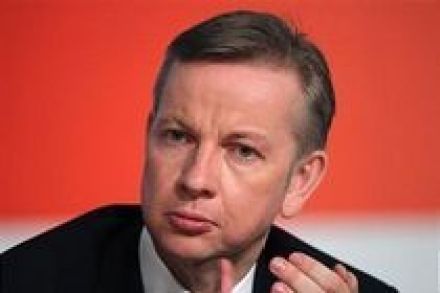
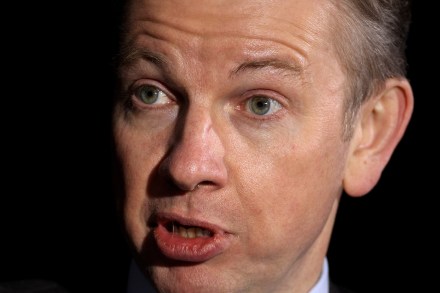
Michael Gove has just been explaining in the Commons where the £7 billion for the fairness premium that Nick Clegg announced on Friday will come from. Revealingly, David Laws was present as Gove answered this urgent question. I understand that Laws was crucial to both the pupil premium being implemented at a decent level and the real-terms increase in the schools Budget.   Laws himself told John Pienaar’s show last night that “obviously I've talked to him [Nick Clegg] about some of the things that I've been associated with in the past, like the schools funding issue... because I was the schools spokesman in the last parliament”.
The universities strike back

From our UK edition

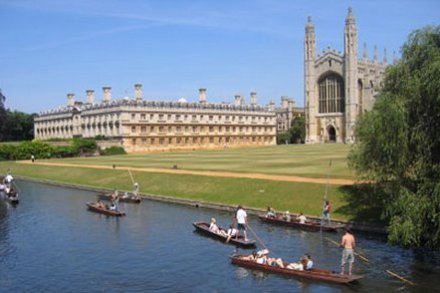
A wander through to p.14 of the Sunday Times delivers one of the most eyecatching political stories (£) of the day. The headline: "Cambridge may go private in fees row". And the content: that officials at Cambridge Uni are dissatisfied with the findings of the Browne review, which they see as too restrictive. Their issue is with the fees that are imposed by the government should a university charge above £6,000 for a year's tuition. This, they claim, prevents them from pulling in the kind of Big Bucks that Ivy League institutions have in their bank accounts - and could lead to British universities falling behind.

The government protects yet more spending

From our UK edition

This morning’s papers announce that cuts to the defence budget will be considerably less than 10 percent, following an intervention from David Cameron. Liam Fox has fought a valiant rearguard to protect his budget; success has come at significant personal cost.  And that’s not all. The BBC has learnt that the schools budget is to receive a real terms spending increase when the Fairness Premium for the disadvantaged and the Pupil Premium are added to the final reckoning. This is politically interesting: education is the one issue where Labour’s opposition has been coherent. Michael Gove was eviscerated over his incompetent cancellation of the school building project and his free schools programme has not been the immediate success its supporters expected.

The cuts are almost settled

From our UK edition

We are entering the end game of the spending review. The Department of Education settled this morning, according to both Tory and Lib Dem sources. Although there is confusion about whether the money for the pupil premium is coming from inside or outside the education budget – Clegg’s speech suggested outside but other Whitehall sources are not so sure. Liam Fox has told friends that he knows the final number for the defence budget and that it is a lot better than expected over the summer. Fox has played a blinder in terms of defending his budget but this has come at a huge personal cost for him. Even supporters say that they don’t think his relationship with Downing Street will ever fully recover.

Clegg sweetens the pill with a fairness premium

From our UK edition

Only five days to go until the spending review – and after weeks of emphasis on the cuts we're about to see, the government has today unveiled a new spending commitment. It comes courtesy of Nick Clegg: a new "fairness premium" targeted at the least well-off young people. Lib Dem Voice has full details here, but the basic point is that £7 billion will be spent, across 4 years, on programmes for disadvantaged 2 to 20 year-olds. Much of this will go towards the "pupil premium" that we've heard so much about, and which should advance school choice in the most deprived areas. Putting aside his genuine commitment to it, Clegg is facing two ways with this announcement: the public and his own party.

Counting down to the spending review

From our UK edition

Only one week to go, folks, until the main event itself: the Comprehensive Spending Review. And judging by this morning's papers, the Treasury have almost settled on their final acts. Only the welfare, eduction and defence budgets have any significant question marks hanging over them. Those question marks, though, are fading fast. A story in this morning's Times (£) reports that David Cameron has endorsed the building of two aircraft carriers, but has decided to delay the Trident upgrade until after 2015. No, strictly speaking, he's not going back on this. Rather, the idea is that the coalition will keep on working towards a replacement for Trident between now and the next election – but will hold back from signing the very final contracts until five years hence.

Cable backs the Browne report

From our UK edition

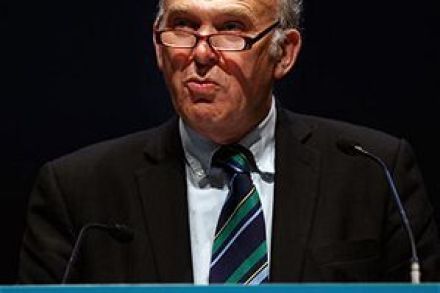
The Lib Dem website still says that the party stands for the abolition of tuition fees, so Vince Cable had to draw on all his presentational skill this afternoon. The ‘current system of university funding is no longer feasible’ he said, before adding that Scotland’s free system is unsustainable. Second, he made clear that he and his party have always supported a ‘progressive graduate contribution’. The Browne report incorporates a progressive contribution into an alternative to the current system; Cable vowed to introduce a ‘specific proposal along the lines of the Browne report.’ Cable also dealt with the politically sensitive issue that these changes would not disadvantage middle income earners.

Cable and Clegg scrambling to repel errant MPs

From our UK edition

The Lib Dems have met the Browne report with a mixture of cordiality and outright antipathy. According to the Guardian, Greg Mulholland is the ring-leader of a band who will vote against a fee rise come what may. Lib Dem ministers are describing the Browne report as ‘unpalatable’ in its current form but recognise that fees must rise and are ‘keeping their powder dry’. The stumbling block is Browne’s recommendation that interest free loans be scrapped. This stark move was to be offset by raising the threshold and tapering interest rates to protect the disadvantaged. There are also concerns that the affluent will be able to pay off their debt quickly, whilst everyone else is lumbered with debts for 30 years.

The scale of IDS’ and Gove’s challenge

From our UK edition

Yesterday was a day of weighty reports. At 700 pages, the Equality and Human Rights Commission’s ‘How Fair is Britain?’ won the thoroughness stakes. Aside from the usual findings that a disproportionate number of young black men are imprisoned and that the white working class is outperformed at school by Indian and Chinese migrants, it made some telling discoveries. The report found that a staggering 50 percent of Muslim men and nearly 75 percent of Muslim women are unemployed in certain regions. No clues as to where, though the reasons as to why should now be familiar: the figures correspond with the Centre for Policy Studies’ view that Britain has the highest rate of household worklessness in Europe.

A sustainable and permanent solution

From our UK edition

‘A sustainable and permanent solution’, that was Lord Browne’s refrain this morning. Browne has aimed to fill the £1bn university funding black hole with a system that doesn’t prejudice the disadvantaged or force universities to privatise. Browne recommends that the tuition fee cap goes, but insists the Treasury should collect a levy from universities that charge above £6,000: fees set at £9,000 will cede 50 percent of £1,000 above £6,000, which will rise to 75 percent for fees of £12,000. This tapered levy is designed to discourage institutions from charging US-style of £20,000.

Making the case for further tuition fees

From our UK edition

Ever the opportunist, Ed Miliband recognised that university funding could be the coalition’s first test of resolve. Opposing a tuition fee hike has given him the chance to serenade disgruntled Liberal Democrats and to discard New Labour’s sheen (which so incensed Alan Johnson, the minister who introduced the fee in such difficult circumstances). Miliband is determined to mould the Labour party in his image. Speaking on the Politics Show yesterday (16:20 in), he said that the party, Johnson included, will strive to deliver a graduate tax. After a summer’s procrastination, the government has run out of time. The substance of Lord Browne’s recommendations is in the public domain and it has caused disquiet on government benches.

Vince Cable’s discomfort is shared by the coalition

From our UK edition

The trouble with holding a ministerial debate in public is that, when it comes to the crunch, it's obvious who the winners and losers are. So it is with Vince Cable and higher education funding. A couple of months ago, the business secretary tap-danced onto the stage with a (problematic) plan for a new graduate tax. Now, it seems clear that the Browne Review will reject his advice (£) in favour of increasing tuition fees. And so Cable has had to send out an excruciating email explaining why a graduate tax was never really a good idea in the first place. After the flip comes the flop, so to speak. But this isn't just about Cable's embarrassment.

More Mail Fail: Clegg Edition

From our UK edition

Apparently the print edition of the Mail on Sunday screams "Hypocrisy" because Nick Clegg, though not a believer himself, is not averse to sending his eldest child to be educated at the (catholic) London Oratory. Like you, dearest reader, I look forward to the Mail opposing school choice. The online version of this nonsense does its best to be faux-outraged with "Why is atheist Nick Clegg considering sending his son to the same exclusive school as the Blairs?" It is not clear whether the atheism or the Blair connection is the more pernicious. Never mind that Clegg's wife is catholic and the children are being brought up as catholics.

Gove re-emphasises his reform agenda

From our UK edition

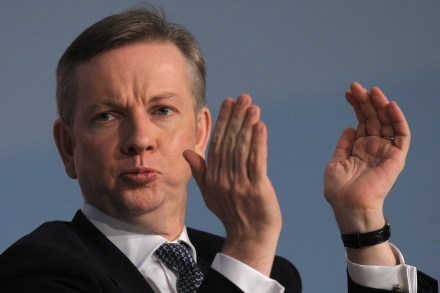
Michael Gove means business. His case is simple: standards have fallen; it is time to be radical. Under Labour, Britain fell from 4th to 14th for science, from 7th to 17th for literacy and from 8th to 24th for mathematics. With a fervour that was nothing short of zealous, Gove promised that the ‘injustice will end’. His ministerial career has had a difficult start - his message often lost under Ed Balls' righteous indignation. Having faltered, he is beginning to re-direct his rhetorical emphasis to more fertile ground. Where once he wanted to empower parents, he now wants to empower teachers - no doubt to attract recalcitrant teaching unions to his cause. Gove re-introduced his New Deal for Teachers.

Withdrawing child benefit at 16 would be the wrong call

From our UK edition

In the last few weeks, there has been much speculation that child benefit would be stopped when a child reaches 16. Today’s announcement suggests that this is not going to happen, although the Tories are refusing to rule it out. If there are to be changes to child benefit — and given the financial situation there need to be — then removing it from households with a higher rate taxpayer is a better move than stopping it at 16. Child benefit ending at 16 would send out a message that at 16 a child should start earning its way in the world. This would, for obvious reasons, have a negative impact on social mobility as it would likely lead to fewer children staying on at school post 16.

Cameron, more ideological than he appears

From our UK edition

The Tory conference in Birmingham is the last big political event before the cuts come. After the 20th, every time a senior Tory appears in public for the next few years they will be about why this or that is being cut. As the row over defence shows, these questions will come from right across the spectrum. For this reason, Simon Schama’s interview with Cameron in today’s FT is probably one of the last that will start with the assumption that Cameron is genial, non-ideological fellow. Once the cuts are happening, it will be harder to cast Cameron as a consensual figure. His edges will appear harder, more defined.  But when Schama asks Cameron what he wants his legacy to be we get a reminder of how non-ideological Cameron is.

Why Cameron’s conference speech is vital

From our UK edition

Forget Ed Miliband’s promise of ‘optimism’ - a mantra that became so repetitive it had me reaching for the Scotch and revolver. Philip Collins has delivered a far more cutting verdict on David Cameron’s obsession with austerity. He writes (£): ‘Conservatives such David Cameron are not philosophers. The question to ask of Mr Cameron is not: what does he believe? It is: what problems does he inherit? Mr Cameron really does just want to fix the roof. The reason he wants to fix the roof is because it’s broken. The value he brings to this task is the insight that it is better to be dry than wet. He’s simple like that.

Ed Balls saves the pitch till last

From our UK edition

Predictable lines from Ed Balls this afternoon. ‘DIY free schools’ are iniquitous; Michael Gove is like the child snatcher in Chitty-Chitty Bang-Bang. Naturally, he made a pitch for the shadow chancellorship. Nick Clegg was his target and his pitch was avowedly left-wing: 'It was Nick Clegg: the man whose own election leaflets said ’Vote Liberal Democrat or you’ll get a Tory government, who said ‘stop the Tory VAT bombshell, who said spending cuts now would be ‘reckless’ and put jobs and the recovery at risk.

Another obstacle in the way of free schools

From our UK edition

A few weeks ago, I wrote a cover story about how teachers' unions are trying to strangle the Gove schools agenda at birth. But I fear it is facing an even greater, more immediate threat: basic bungling by government departments. The FT today says that the Department of Transport wants to make sure that local authorities keep the right to veto a new school. Armed with such a weapon, it is a sure way of crushing any competition. The DoT's argument is staggeringly banal: that a new school may play havoc with the traffic. If you're a local authority, wanting to use any means possible to stop a new school competing with the ones you run, it's all the excuse you need.