Education

Talking point: the West Lothian question

From our UK edition

Political Betting carries this table on the breakdown of the tuition fees vote. English Lib Dems were noticeably more loyal than their Celtic counter-parts (only 16 of 43 voted against the bill), which reflects the left-wing political focus in those regions and perhaps the divide in the Liberal Democrat party itself. But, clearly, the West Lothian question is at issue here. Personally, I’m swayed by the argument that the new fees arrangement will affect applications to Scottish universities and therefore it is the business of Scottish MPs. That higher education was devolved in the first place is another, more interesting debating point. The comments section is yours...

The students vs the Lib Dems

From our UK edition

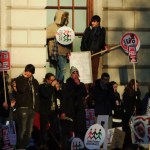
One of the things I heard yesterday when I strolled around the edges of the protests, particularly from older people, was how the coalition's policies had politicised Britain’s young. “It has really made my children wake up”, said an elderly bystander with a wistful look in his eyes.  Student leaders say they now hope to punish Lib Dems who voted for the tuition fees, targeting MPs in seats such as Bath, Burnley, Bradford East, Bristol West and Brent Central.   The sense of rage directed against the Liberal Democrats comes, I suspect, from a deeper sense of betrayal - and not simply student dissatisfaction over today’s issue.

From the archives: The student protests of ’68

From our UK edition

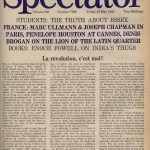
No, not Paris, but the University of Essex – where, in early to mid-1968, students rallied angrily against Vietnam and all that. The situation was aggravated when three students – including David Triesman, later Lord Triesman – were summarily suspended from their studies, and The Spectator duly dispatched a correspondent to investigate. The resultant article came in the issue dated 24 May 1968; a few pages on from an editorial headlined "How to deal with the student problem", and alongside coverage of events in France.

Sifting through the wreckage

From our UK edition

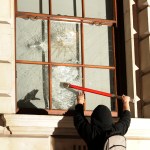
The revolution may not be televised, but protests certainly are – and the process magnifies the drama. Since last night, the news broadcasts have all had footage of two thugs trying to smash the windows of the Treasury and, in the process, familiarising themselves with the properties of bombproof glass. The attack on Charles and Camilla's royal limo is splashed across all this morning's front pages. The script is so well-rehearsed now that I hesitate to repeat it: the vast majority are peaceful protesters, infiltrated by vandals who soak up the attention. Many of the protesters yesterday looked like they’d get a cab straight back home to their Notting Hill trust-fund houses.

Coalition wins fees vote with a majority of 21

From our UK edition

The final tally was 323 in favour of lifting the cap on tuition fees from £3,290 to £9,000 a year, with 302 against. The second vote, on raising the basic cap to £6,000, passed with the same majority. Although we don't know the divisions yet, we can safely say that it's the biggest rebellion of this Parliament so far – the lowest government majority until today was 51. UPDATE 1: 28 Lib Dems voted with the government; 21 against; and 8 either didn't vote or abstained. This is the biggest Lib Dem rebellion since the party was founded.

Exclusive: the fee hike won’t create a market

From our UK edition

The fee vote really comes down to two questions. First, will the fee hike proposed by the coalition government actually create an internal market in higher education? Second, what will be the effect on the public finances? There is good reason to be doubtful.   First, the market: the idea, I suppose, is that world-class universities might charge higher fees than second and third tier ones. But, in the last few days, I've spoken to several very senior higher-education sources who privately report that universities like Leeds Met, Bolton and Worcester are very seriously considering charging the full £9,000 tuition for their courses once legislation is in place. The government is extremely concerned.

The Lib Dems walk through the fire

From our UK edition

Brace yourselves, CoffeeHousers. Today is the day of the tuition fee vote, along with all the froth and fury that will attend it. The government's motion will most likely pass through the Commons – yes, even without the support of Simon Hughes – but the wider repercussions are, as yet, uncertain. The main question is what the Lib Dems will achieve by walking through the fire, as Nick Clegg puts it. Will they emerge from the other side, a more credible party of government in the public's eyes? Or will they just get burnt to ashes? At the very least, the yellow bird of liberty is stuttering this morning. As Anthony Wells reports, the latest YouGov poll has them at 8 percent – what appears to be their lowest level of support for 20 years.

How far our schools have fallen

From our UK edition

Comparing GCSE or A-Level results to previous years is a meaningless exercise. Leaving aside all the arguments about whether or not these exams are getting easier, it doesn’t much matter if children today are doing better academically than their peers a generation ago. What does matter is how they are doing in comparison to children in other countries, the people they’ll be competing with in the global marketplace.   Today’s PISA rankings, the OECD’s comparison of education standards, makes for depressing reading on this front. England has fallen from 7th in reading in 2000 to 25th today, from 8th to 27th in maths and 4th to 16th in science.

Is Oxford University Racist?

From our UK edition

That's the question asked by David Lammy and the Guardian today. According to the paper 21 Oxford and Cambridge colleges made no offers to black, British students last year. At Oxford just one student of self-described "Black Caribbean" background won a place. Only 35 applied. The headline figures are pretty terrible and enough to give anyone pause. But they are only headline figures. Virtual Economics argues that they don't tell the full story, not least because the sample sizes are often so small. He has a point: if just 35 Black Caribbean students applied to Oxford last year that's not much more than one per college. I'm not sure this is a large enough sample from which to draw too-firm conclusions.

Clegg will vote for fees hike

From our UK edition

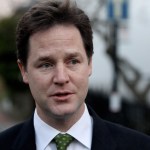
The wait is over. We have just been told that Nick Clegg will definitely vote for the coalition’s policy on tuition fees. Clegg announced this, according to his spokeswoman, at the meeting of the Lib Dem parliamentary party that is currently going on. He told the meeting that to govern is to choose, and that the coalition had to chosen to invest in early years education rather than in scrapping fees.   Clegg’s spokesperson said that he had urged the party to ‘walk through the fire together’ but that he accepted and respected that not every Lib Dem MP would vote with him. We will, apparently, be told this evening whether or not Lib Dem ministers and PPS will be able to defy the whip and retain their jobs.

The Lib Dem rebels make themselves heard

From our UK edition

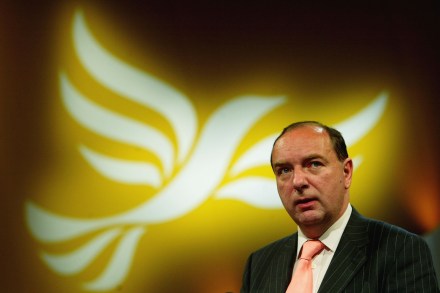
Here in Westminster we are all brushing up on the names of Lib Dem PPSs, as we try and work out who might quit the payroll vote over fees. The latest is that Michael Crockart, PPS to Michael Moore – who is himself the most anonymous Lib Dem Cabinet minister – looks set to walk. But one of the better known Lib Dem ministers has now put his head above the parapet. Norman Baker has told the BBC that quitting over fees is one ‘option’ but he hasn’t yet made up his mind. (Oddly enough, these comments seem to have been made on the South East edition of the Politics Show on Sunday, but only just reported).   Baker has always been a maverick.

The Lib Dem tuition fee confusion continues

From our UK edition

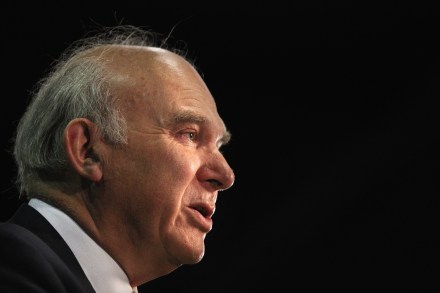
Who knows how, and whether, Vince Cable is going to vote in next Thursday's tuition fee decider? Not even the man himself, it seems. A few days ago he suggested he might abstain for the sake of party unity. Yesterday, he told his local paper that "I have a duty as a minister to vote for my own policy – and that is what will happen." And yet this morning's Guardian has a "party source" saying, "a final decision has not been made. It is still possible Vince could abstain." At least we haven't heard that he might vote against the proposal – although, at this rate, I wouldn't be surprised. To my mind, the most likely outcome – and one mooted in the papers today – is a three-way split.

The Lib Dems need to get their act together on tuition fees

From our UK edition

There have been a huge amount of police out in Westminster today. After being caught off-guard by the student demo a few weeks back, the cops are now leaving nothing to chance.   But if the police have now got their act together, the same cannot be said of the Liberal Democrats. They are currently considering whipping their MPs to abstain on tuition fees despite the fact that the government’s policy is one that has been crafted by a Lib Dem Secretary of State, Vince Cable, and a Tory Minister of State, David Willetts.   If the Lib Dems were to abstain, it would play to the worst stereotypes of the party. They would be derided as ditherers of the first degree, incapable of taking a tough decision.

The government takes the fight to students

From our UK edition

The government’s response to the protest over tuition fee hikes has stiffened. Nick Clegg has written to Aaron Porter and David Cameron has penned an op-ed piece in the Standard today. They are united. The NUS should protest; debate is important. But that debate is moribund if the NUS deliberately misrepresent the government and mislead students. Cameron writes: ‘Of course these people have a right to protest. But I also believe they have a responsibility to know the full facts about what they're objecting to — and judging by the fury that's been unleashed, there are a lot of misconceptions flying around.’ It is vital that the Conservatives assist their embattled colleagues; the government must be unified.

Clegg fights back in tuition fees row

From our UK edition

Nick Clegg has written a gloriously condescending letter to Aaron Porter, who hopes to recall Liberal Democrat MPs who vote in favour of tuition fees rises. Clegg emphasises that he was unable to deliver the tuition fee pledge in coalition, and therefore struck out to make university funding as fair as possible. After a wide consultation, it was found that the graduate contribution scheme is the fairest and most progressive outcome. He urges Porter to temper his language and not misrepresent the government’s position for political aims. ‘Grow up’ seems to be the unspoken request.

A degree of truth

From our UK edition

Tuition fees work. By the standards that any progressive is supposed to hold dear - higher overall participation rates in universities and higher participation rates among low income groups – experience from other countries shows that fees work. As the think tank Centreforum showed four years ago in an in-depth study, fees have long been the norm in Australia, New Zealand and the United States and these countries have seen “their universities’ reputations grow and their higher education participation rates rise across the social spectrum.” Meanwhile, the UK has been sliding backwards. In 2000, the UK had the third-highest graduation rate among OECD countries, with 37 percent of young people getting a degree. The average was 28 percent.

The Lib Dems are in quiet turmoil over tuition fees

From our UK edition

A cruel north wind heralds the Lib Dem’s discontent. In public, the party has withstood criticism of its apparent u-turn on student finance, helped in part by the more puerile elements of the student protest. Ministers, from both wings of the party, have stressed that coalition necessitates compromise: tuition fees had to rise; therefore, the Lib Dems’ task in government was to protect the poorest, which they seemingly have. Backbenchers hedged their bets, saying that they were scrutinising the legislation before deciding how to vote.     But consternation has reigned in private. This morning, weeks of whispered disgruntlement broke into open tension.

Time for a history lesson

From our UK edition

"Now, with the best teaching force and the best school leadership ever, we are poised to become world class if we have the courage and vision to reform and invest further and put the parent and pupil at the centre of the system. Our reforms must build on the freedoms that schools have increasingly received, but extend them radically. We must put parents in the driving seat for change in all-ability schools that retain the comprehensive principle of non-selection, but operate very differently from the traditional comprehensive. And to underpin this change, the local authority must move from being a provider of education to being its local commissioner and the champion of parent choice.

Five things the student unions didn’t protest against in the last 13 years…

From our UK edition

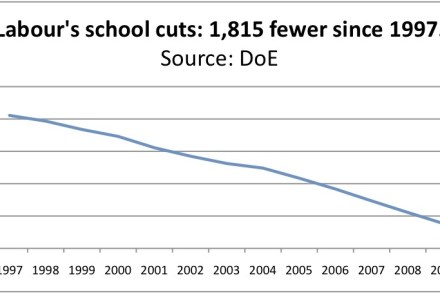
1)    That Labour cut the number of schools each year. 2)    That pupils were shepherded into ever-larger schools. 3)    That, although the budget trebled, class sizes hardly moved. 4)    That the attainment gap between private and public schools grew to become the largest of any country except Brazil (Source: OECD ) 5)    And all at a time when the supposed funding per pupil was soaring… Moral: cash doesn’t help schools. Reform does.

The problem for Gove is that structures beget standards

From our UK edition

As you’d expect, Michael Gove’s White Paper is a feast of good sense. His speech in the Commons was powerful analysis, and his rebuttal of Labour MPs fun to watch. He’s all for making kids learn properly in primary school, retaining order in the classroom, making detention easier and better modern language teaching. Amen, amen, amen. But, I fear that the White Paper will not be transformative, for a simple reason: the schools system is broken. It doesn’t respond to instructions. The Education Secretary does not run education - power rests with local authorities and the teaching unions. They’re not too keen on Gove, and have allies in parliament ready to insert the odd amendment into legislation. Top-down instructions won’t work.