Education

Liberal Democrat Misanthropes

From our UK edition

Bagehot had the misfortune to attend a Liberal Democrat fringe meeting on education reform. But I'm glad he did because he's produced a righteous post that demands to be read in full. Here's a taste of it: The title of the meeting was blunt: "Will Schools Have Too Much Freedom in a Big Society?" Mr Hames tried pluckily to defend the idea of radical, permissive reforms to British education policy. Such change might be messy, he conceded, as different sorts of schools and academies sprang up. But his audience—well-meaning and "progressive" local councillors, school heads and school governors—appeared convinced that changes to education policy (and certainly any changes to the powers of local councils over schools) spelled misery and disaster [...

A yellow spanner in the works

From our UK edition

The teaching unions, it seems, haven't been wasting their time in Liverpool: the Lib Dem conference has just passed a motion opposing the coalition's free schools agenda. Even though the result throws up the bizarre image of, as Guido puts it, "Lib Dems voting against liberalism," it comes as little surprise. As Fraser reported last night, there's a tidal opinion in Lib Dem circles that these school reforms are little more than an attack on hardworking local authorities. A pity that Sarah Teather's message about the "dead hand of local government" didn't filter downwards sooner.   The concern now is what this actually means for the free schools programme.

Live-blogging from the fringe: “Whose schools are they anyway?”

From our UK edition

So where will the tension be at the Lib Dem conference? Easy: the free schools agenda. Clegg backs it, and when David Laws took over the agenda he backed Gove's market-based reform. But the teaching unions are in a fight to the death against it. The Gove agenda would put power in the hands of parents, whereas it currently rests with unions and local authorities. The latter two have beaten everyone who has spoken about reform, from Callaghan to Thatcher to Blair. But Gove represents an existential threat. Luckily he is in coalition with the Lib Dem MPs, with whom both unions and local authorities have massive influence. The NUT and NASUWT have huge stalls here, and plenty staff to canvass Lib Dem members.

Who’s Afraid of Catholic Schools?

From our UK edition

Since it's Pope Day, let's consider this tediously-hardy perennial too. Commenting on this post, Fifer asks: Since you've given this some thought, then, perhaps you can answer me this - why, exactly, are my taxes being used to fund an education system divided in Scotland on sectarian lines when, out of a population of 5 million, only 65,000 can be bothered turning up to see the head of their faith preach? Even Celtic can manage that turnout a few times a year. If we really are in the dire financial straits we're told we are, perhaps it really is time to "think of the children" and educate them all as best we possibly can for the money available, rather than perpetuating massive structural inefficiencies as a sop to an increasingly irrelevant religion.

Citizen Castro rains on Comrade Hattie’s last parade

From our UK edition

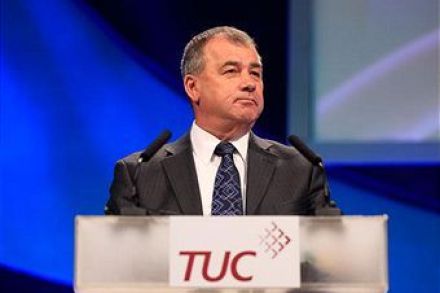
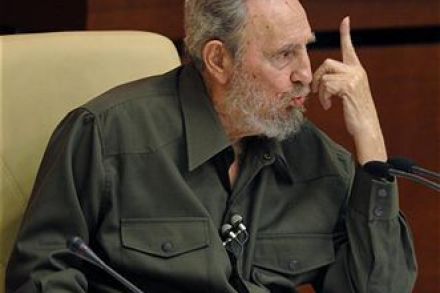
There was praise for Fidel Castro – of all people – at PMQs today. That the tribute came from a Tory MP must make this a unique event in the annals of parliament. Castro’s recent admission that Cuba’s state monopolies might profit from a little nibbling around the edges gave Priti Patel, (Con, Witham), a bright idea. She asked the prime minister if the Marxist cigar-enthusiast might visit the TUC Conference to share his economic vision with the brothers. The PM, who seemed calm, fresh and genially bullish today, caught the joke and ran with it. He offered his own tribute to the semi-retired dictator. ‘Even Comrade Castro is on the same planet as the rest of us. Now we just need to get Labour and the unions across as well.

The coalition faces its most important battle of the next five years

From our UK edition

Strolling through central Birmingham yesterday, I came across one of those brewery advertisements from the early part of the last century. "Unspoilt by progress," it boasted – a slogan that popped into my head when I heard the unions' various interventions this morning. As Iain Dale suggests, there is something very 1970s about what Crow, Barber, Serwotka & Co. are saying today. The coalition will need to meet much of the unions' belligerence with some fire of its own. David outlined some ways it can do that earlier. But, to my mind, there is one charge that demands a particularly ferocious counterattack.

Field caught between reality and fantasy

From our UK edition

Frank Field's been thinking. He will make his report on poverty next week and he hints at its contents in an extensive interview with the Times (£). He is convinced that there is more to social mobility than money and he has some brilliantly simple ideas to alleviate poverty. He advocates creating four or five terms in the school year to shorten the long summer holiday, which he argues disadvantages the poor. 'They have less help at home so they lose out even more in long holidays. They drop behind, they are not being read to or tutored or talked to in the same way as many middle-class children. They have often fallen behind by the beginning of the next school year.The school year is also out of kilter with mums working.

Ed Miliband makes a very obvious pass at Vince

From our UK edition

Not exactly on the ball are they? It took nearly six hours for a Labour leadership contender to try to resuscitate Vince Cable's graduate tax, which lapsed into seizure following reports that Lord Browne will recommend a tuition fee hike instead. Ed Miliband, in Mephistophelean mood, has appealed to Vince Cable, offering to replace tuition fees with a graduate tax. ‘You’re welcome to each other,’ will be the retort of most Tories. But Miliband’s pass is significant. The coalition agreement promised to wait for the Browne Review. But the agreement is no longer sacrosanct.

The Vice Chancellors scupper Vince

From our UK edition

Vince Cable won’t be slipping on his dancing shoes at this year’s Lib Dem conference. A draft of the Browne review into university funding is out today and apparently it does not mention a graduate contribution, Cable’s Lib-Dem friendly answer to tuition fees. The Times has caught wind of this rumour (£), which is also doing the rounds among higher education think-tanks and consultants. This is unsurprising. Neither David Willetts the universities minister, nor his predecessor Lord Mandelson, ever mentioned a graduate contribution until Cable went on manoeuvres because Lord Browne was not seriously considering such a measure.

Gove to introduce baccalaureate for 16 year-olds

From our UK edition

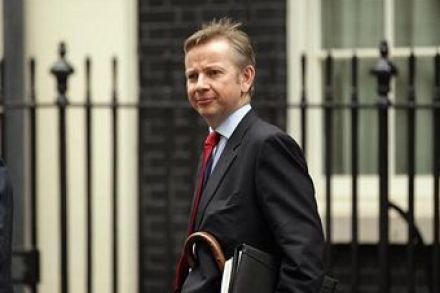
Fixing the education system in Britain is absolutely crucial to promoting social mobility, the principal domestic social policy aim of the coalition. So Michael Gove’s announcement on the Andrew Marr show this morning that the government plans to introduce an English baccalaureate is to be welcomed. The baccalaureate programme will end at 16, still allowing specialisation at A-Level—one of the things that allows undergraduate education in this country to be far more intellectually rigorous than in the States, and will require pupils to do English, maths, science, a foreign or ancient language and a humanity. This should help stop the drift to softer subjects at GCSE and place pressure on all schools to enter all their pupils in all these subjects.

First free schools will open next September

From our UK edition

Tomorrow’s Guardian front page says Michael Gove dealt fresh blow as only 20 'free schools' approved. But this is actually not a bad rate of progress. The 20 refers only to the new schools that will open in September 2011, more will open in 2012 and 2013 and so on. One would expect the numbers to increase as momentum behind the programme builds. As soon as parents see what these schools can do, there’ll be greater demand for them. Ed Balls is out tonight with a typically pugnacious statement claiming that this proves that parents don’t want free schools. But it is worth remembering that Tony Blair, a man who knows a thing or two about what the public want, goes out of his way to praise Tory school plans in his autobiography.

The decline of the Gap Year

From our UK edition

When I say that I doubt that I will take a Gap Year, many adults are surprised. “Why”, they say, wide-eyed, “it's such a wonderful growing experience / important rite of passage / chance to save the world.” Hm. All this may be so, but I am by no means alone in dismissing a year spent abroad. I can see many reasons for this. The first comes from the infamous video “Gap Yah.” Everyone has seen it. My grandmother has seen it. If you haven’t seen it, then you can find it here. In addition to being very funny and easily quotable, it does highlight a significant reason for the decline of the Gap Year. The Gap Year is now commonly known as the Gap Yah, and with this new branding comes an unshakeable social stigma.

The education battle opens

From our UK edition

Michael Gove has announced that 32 schools will open as Academies at the start of the new term. More schools are set to open over the next academic year, but it is a disappointing figure. However, it could’ve been worse – I’ve heard rumours that as few as 10 schools would adopt Gove’s reforms. The figure of 32 is at the upper limit of recent estimates knocking around Westminster. Disappointing it may be, but slow progress is unsurprising. These are radical steps and teachers are hesitant in the face of change. Blair’s original academy reforms were frustrated in part by teachers and governors eager to preserve the status quo. However, first Blair and now Gove are committed to an attritional struggle with the recalcitrant Educational Establishment.

Who governs Britain? | 28 August 2010

From our UK edition

CoffeeHousers may like to see the full leaked letter (pasted below) to which I referred in The Spectator's cover story this week. It shows how the NUT is using Freedom of Information to try and force school heads to hand over a list of names of anyone who might support a campaign to opt out of local authority control and become quasi-independent Academies. We have blacked out any information that may reveal the source. This letter helps explain why Michael Gove will have so few names next week, when he lists the list of schools who have succeeded in their fast-track application. Out of the 3,000 eligible, a few dozen will have made it.

Malcolm X and Michael Gove: Big Society Brothers?

From our UK edition

A splendid spot by Dave Osler at Liberal Conspiracy: Malcolm X's ideas about education in Harlem and Brooklyn aren't so very different from those Michael Gove has in mind for Haringey or Toxteth. As Malcolm X wrote: The Board of Education in this city [New York] has said … there are 10 percent of schools in Harlem and the Bedford-Stuyvesant community in Brooklyn that they canot improve. So what are we to do? ‘This means that the Organization of Afro-American Unity must make the Afro-American community a more potent force for educational self-improvement.

Revealed: the secret school wars

From our UK edition

Britain’s state school system is a national disgrace. Not because we don’t have excellent schools: we do. But only for those who can afford to move to the good catchment areas. The comprehensive system gives the best service to the rich, and the worst to the poor. It is a system which harbours bad teachers – only 18 have been struck off for incompetence in 40 years. Compare this to the USA where 252 bad teachers were sacked in one day last week. Our world-class private schools show that England can be a world leader in education. But we have one of the biggest gaps in the world between attainment in private and public sector.

Today’s GCSE results prove that academies work

From our UK edition

Today's GCSE results demonstrate the tremendous success of City Academies, a hugely heartening trend given that this formula - which was so slowly rolled out under the Labour legislation which introduced them - can now be rapidly implemented under the new Academies Act. It's always been a con to look at the absolute results of Academies, as under Labour the only schools given such status were schools that were doing poorly. What matters is improvement. Let's take the three Academies groups and look at the ratio of  pupils winning five good GCSEs (i.e. A-C including English and Maths). In the The Harris Federation, which now runs nine schools, there was a 10 point increase. In the ARK academies, a 13 point increase. In the ULT Academies, an 8 point increase.

David Miliband and the graduate tax

From our UK edition

As James Kirkup notes, it looks as if David Miliband supports a graduate tax – only ‘looks’ mind, we can’t be sure. The university funding debate is now captive to ill-defined terms – is what is being proposed a tax, a fee or a contribution? David Miliband is hard enough to comprehend as it is, but is he talking about a graduate contribution or a graduate tax? How would either be assessed? Also, does David Willetts make any more sense?

Will there be money for free schools?

From our UK edition

Some eyecatching numbers in today's FT about how many free schools we can expect, and when. According to Department of Education officials, there will be about 12 of the new schools in 2011, another 50 in 2012, and around 100 in 2013. The paper dwells on how this falls short of the Tories' pre-election rhetoric. And it's true: the original idea was for around 3,000 new schools across nine years. So, 162 schools across three years hardly looks like fluid progress towards that goal. This needn't be a bad thing, of course. As so often, quality not quantity will determine the lasting success of this reform.

Clegg’s no Dave

From our UK edition

Nick Clegg faced a stormy Q&A session this afternoon and he isn’t in David Cameron’s league as a performer. He struggled through tough questions on VAT, DfID, a transaction tax, AV and the appointment of Philip Green. His answers were garbled, though he did stick to the government’s script. There was, however, one particularly damaging exchange. Clegg was heckled by a man who thought the coalition ‘lacked a mandate for its rather brutal social policies’, and added that Clegg should get out of the coalition before it was ‘too late.’ Clegg’s response was limply pugilistic. ‘You’ve obviously got an axe to grind.