Education

Aristotle and the leisurely pursuit of education

From our UK edition

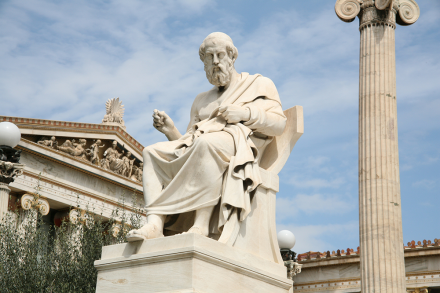
Nearly six million people are on out-of-work benefits. It is claimed that, for most of those, going back to work would not be financially worth it. Aristotle would have agreed with them because for him, leisure was the most important possession a man could have. The ancients generally had no concept of the dignity of labour, apart from idealistic views about the farmer working in harmony with gods and man for the moral betterment of mankind. For most people, work was a painful necessity whose only purpose was to keep you from penury. The farmer-poet Hesiod (c.
What I learned from my meeting with the Education Secretary

From our UK edition

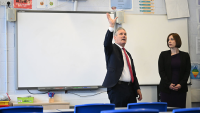
Dear Secretary of State, thank you for meeting me and one of my deputies on Monday. You will have noticed in our meeting how disappointed we were with your responses to the questions teachers have about the government’s proposals. I assure you, we are not alone in that feeling. As teachers, we often hear politicians say how much they care about education. One of two things follows: either they turn out to be that rare politician who is truly interested in schools; or they are that all too common politician who simply wants to appear that way. Our meeting confirmed that you are firmly in the latter category. Politicians who truly want to raise standards for our most deprived communities would ordinarily be interested in hearing from the people who know best how to do it: teachers.

What Bridget Phillipson has in common with Plato

From our UK edition

One does not like to disagree with one’s editor, but while the image of Rome salting the earth of its bitter rival Carthage is a striking way of describing Labour’s plan to wreck our current system of education, Rome was not in the habit of destroying the advantages that its conquests produced. The salting story is a 19th-century invention, endorsed by no less an authority than the Cambridge Ancient History (1930), but now rescinded. As Mr Gove made clear in last week’s magazine, the universal imposition of a national curriculum, among other measures, will remove the freedom and choice – the two words you will find nowhere in discussion of Labour education policy – which played such a crucial part in improving educational attainment.

The ‘shocking tactics’ of Kemi Badenoch

From our UK edition

Whitehall is being swept by moral outrage. Ministers, in full This Is Spinal Tap mode, have turned their pious horror up to 11 and Keir Starmer has accused the opposition of a ‘shocking tactic’, preferring ‘the elevation of the desire for retweets over any real interest in the safeguarding of children’. What dark perfidy has been done? What cynical political stunt have the Conservatives pulled, staining their hands with such baseness? Kemi Badenoch has tabled a reasoned amendment to the Children’s Wellbeing and Schools Bill, which is being debated at second reading today. Let me explain briefly.

Michael Gove: why does Labour want to ruin state schools?

From our UK edition

13 min listen

At PMQs today, the battle lines were drawn ahead of today’s vote on Labour’s Children’s Wellbeing and Schools Bill, which aims to protect children within the education system. Its contents have galvanised opposition parties, who are using the legislation to force a fresh inquiry into grooming gangs. Shadow Education Secretary Laura Trott has also been on the airwaves today, attacking some of the reforms detailed in the plan, specifically on academies and free schools. The government is set to take away many of their freedoms to set curriculum and pay, freedoms given to them by our now editor – then education secretary – Michael Gove. So, do academies have a future in the education system? What’s Labour’s motivation here?

Why homeschooling rates have doubled

From our UK edition

Schools are a relatively new phenomena in human history. In Britain, they expanded in the 19th century and early 20th century in step with industrialisation and urbanisation, but in many places in the world, what little education the young receive occurs at home. The assumption most share, not unreasonably, is that where there are schools to attend, parents should send their children to them so they can avail themselves of the opportunities for academic learning, for socialisation and working through what they might do after they leave with the rest of their lives.

Luigi Mangione’s bad education

Luigi Mangione is officially the “suspect” in the murder of UnitedHealthcare CEO Brian Thompson, but he is plainly the culprit, and public discussion has moved on to his motives. Why would a young man possessed of intellectual gifts, friends, family, good looks, a winning personality and, apparently, lots of money, gun down a man he had never met? This isn’t the kind of question my organization, the National Association of Scholars, normally takes up. We concern ourselves more with academic standards and questions of state and federal policy. But I’ve been nudged several times with questions about Luigi’s academic background. This has two parts: Luigi’s high school and Luigi’s college.

The sad demise of the scathing school report

From our UK edition

As the first term of the school year draws to a close, pupils’ reports will soon be landing, encrypted and password-protected, on parents’ smartphones. But once they’ve finally managed to open them to find how little Amelia or Noah has been performing, there will be another code for them to crack: what on earth the teachers are actually trying to say about their child. These days, reports tend to be written with the help of AI software or templates, which makes it impossible to work out how your child is really doing. In our super-sensitive age, many schools now play it safe by couching all comments as positives, and only using approved adjectives from word banks and drop-down menus.

Must try harder, Education Secretary

From our UK edition

The headmaster of one of the best comprehensives in the country was once asked the following question by Tony Blair: ‘If you could do one thing to improve state education in this country, what would it be?’ ‘Oh, that’s easy,’ he said. ‘I’d line up every civil servant in the education department and machine gun the lot of ’em.’ No prime minister has ever asked me that question, but my answer would be more diplomatic. It would be to insist that every incoming education secretary memorise the serenity prayer. This is the prayer that members of Alcoholics Anonymous recite at the end of their meetings: ‘God, grant me the serenity to accept the things I cannot change, the courage to change the things I can, and the wisdom to know the difference.

Decline and fall: how university education became infantilised

From our UK edition

Last month, after 21 years studying and teaching Classics at the University of Cambridge, I resigned. I loved my job. And it’s precisely because I loved the job I was paid to do, and because I believe so firmly in preserving the excellence of higher education, in Britain and beyond, that I have left. When I arrived in Cambridge two decades ago, giants were still walking the earth. Students could attend any lecture, at any level, in any department; graduate and research seminars were open to any interested party, and you could sit at the feet of the greats. Unforgettable gatherings of everyone from undergraduates to professors would discuss the big questions late into the night.

The classroom panopticon

Is it ironic to give a prize for encouraging “open discussion and debate in the classroom” and “creating an environment where all perspectives can be heard” in the name of William F. Buckley Jr.? Although best known today as the founder of National Review and longtime host of Firing Line, Buckley first came to prominence in 1951 with the publication of his book God and Man at Yale, subtitled: The Superstitions of “Academic Freedom.ˮ Buckley’s secular and secularized Protestant critics might well have considered the firmly Catholic young man, twenty-five years old at the time the book appeared, an apologist for something they regarded as superstition. But Buckley did not mean the term as a compliment when he applied it to academic freedom.

classroom

Maths is stressful. That’s why it’s necessary

From our UK edition

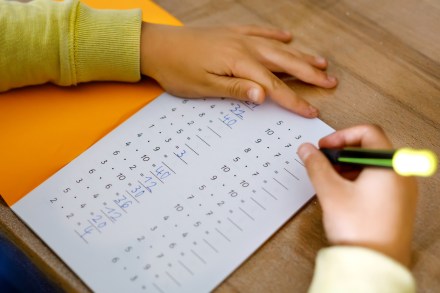
In the weeks since the Labour government came to power, we’ve gone from debating compulsory teaching of maths until age 18 to entertaining the idea that the times tables may be too stressful for children to memorise. My resilience, my determination and my empathy are largely products of being bad at maths When I was at school in Poland in the 2000s and 2010s, the response to such a suggestion would have been an eye-roll, or the blowing of a loud raspberry. The comment that ‘if you can’t have what you like, then you must learn to like what you have’ was commonplace, and maths was taken by everyone until age 18. I was at the top of my class until, at age 15, I began to fall behind in maths.

Why French students want English uniforms

From our UK edition

Béziers, France The École Mairan in Béziers in southern France is a happy neighbourhood elementary school housed in a superb renovated 19th-century hôtel particulier. In the middle of the medieval city, surrounded by both great houses and humbler tenements, it is attended by 120 pupils aged six to 11. There are the children of Algerian and Moroccan immigrants and the children of distinguished Biterrois families, with a sprinkling of Spaniards, Italians, Ukrainians and one American. Mairan is one of four schools in Béziers, and 100 in France, where this autumn children have started wearing school uniforms. So I went to Béziers to have a look. ‘The children love their uniforms.

The ancients knew the value of practical education

From our UK edition

The welfare state was designed to serve everyone’s needs. But those needs were defined by the state. So schools teach fronted adverbials (but what about hindmost ones, eh?) and trigonometry, and may (absurdly) have to teach maths to all up to 18. Do these really fulfil the needs of all our children, far too many of whom are not (apparently) leading happy, useful lives? In the ancient world education was for the sons of the elite, to prepare them to run the country. But some elite Romans did without it. When Marius, who early on made his mark in battle and was picked out as a likely leader of men, became consul in 107 bc, the historian Sallust put a speech into his mouth in which he contrasted himself, the outsider, with the educated elite.

Letters: A cautionary lesson for England’s schools

From our UK edition

Lessons to learn Sir: Your leading article ‘Requires improvement’ (7 September) rightly raised concerns that a curriculum review in England might reverse the excellent progress in schools following the Gove reforms. Fortunately, there are two very good examples of what happens when you replace rigour and the acquisition of knowledge with left-wing dogma and woolly thinking. The introduction of the Curriculum for Excellence in Scotland has led to a dramatic fall in standards in Scottish education and a resultant collapse in its Pisa [Programme for International Student Assessment] ranking. Last year Wales recorded its lowest-ever Pisa ranking.

The real threat to schools? Falling birth rates

From our UK edition

Labour’s proposal to impose VAT on private school fees will, we are often warned, lead to state schools becoming overloaded as parents withdraw their children from the independent sector and try to find alternative arrangements. That may turn out to be true in some areas in the short term, but in the longer term there is a different problem facing the state and independent sectors alike: a falling population of school-age children. It isn’t excessive class sizes which threaten to be an issue so much as shrinking classes, leading to school closures and amalgamations with other institutions. London classrooms appear to be emptying – in 2022, 15.5 per cent of primary school places were unfilled For nursery and primary schools in England, pupil numbers peaked in 2019.

School portraits: snapshots of four notable schools

From our UK edition

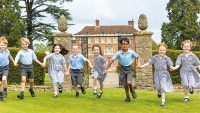
Elstree, Berkshire Elstree – which educates boys and girls from three to 13 – is nestled in 150 acres of stunning countryside near Newbury in Berkshire. The school, which celebrated its 175th anniversary last year, says that its aim is two-fold: ‘to find out how a child is intelligent rather than how intelligent a child is’ and to teach pupils that ‘effort is king’. From Year 4 onwards, children can choose to flexi or weekly board and from Year 5 pupils are taught by individual specialists in all subjects from Year 5, compared with the usual Year 7. Although Elstree is non-selective, school-leavers have received scholarships to – among others – Eton, Harrow, Radley, Marlborough and Winchester.

Tried and tested by the Common Entrance Exam

From our UK edition

This is about something that did not happen to me at school, an exam I dreaded, but never had to take. It was the only examination that ever really worried me, and it was called Common Entrance. Do not confuse it with modern imitations bearing the same name. In those days, preparing for it involved (for me, anyway) translating English into Latin and French (a proper knowledge of irregular verbs and a wide vocabulary in both those languages was required). It also demanded thorny and tricky types of mathematics, an astounding grasp of largely Imperial geography – and a full knowledge of English history since the Conquest. I actually understood the jokes in 1066 and All That, for which modern children would need a decoder.

The real crisis in our school system

From our UK edition

For years, each school in England has been put in one of four categories: ‘outstanding’, ‘good’, ‘requires improvement’ and ‘inadequate’. While undoubtedly crude, the system offered clarity to parents. Bridget Phillipson, the Education Secretary, has now abolished this categorisation structure but not yet said precisely what will replace it. Children are returning to school in the middle of uncertainty. Are politicians blind to the staggering inequality within a state system that educates 93 per cent of pupils? The National Education Union has long urged schools to ignore Ofsted ratings and to stop referring to them on their gates. Phillipson’s reform seems to nod towards this.