Education

English schools are failing disadvantaged children

From our UK edition

Education should be the great equaliser – the ladder with which all children, regardless of circumstances of birth, can improve themselves and, by doing so, climb towards a more prosperous future. It was certainly that way for me. I loved learning, and my state education took me from humble beginnings in Clacton-on-Sea to working in Westminster. Fixing this system will not be politically easy ... but political difficulty is no excuse for inaction But not all children are so lucky. Despite England’s significant success at raising overall attainment over the past decade, the gap between advantaged and disadvantaged pupils has stubbornly remained – despite the significant sums of money spent on the problem.

Texas

The Ten Commandments of Texas

Blessed greetings From Texas, where Governor Greg Abbott recently signed a bill that will require public schools to display the Ten Commandments in every classroom. Teachers must display the Commandments as a poster or framed copy, at least 16 inches by 20 inches, in a typeface that is clearly legible from any part of the room. Supporters of the bill say the Ten Commandments are a cornerstone of American history, though they may have that confused with the Ten Amendments in the Bill of Rights.

Amanda Spielman on the SEND row and Labour’s Ofsted blind spot

From our UK edition

22 min listen

As Labour looks to get a grip on public spending, one rebellion gives way to another with the changes to the Special Educational Needs and Disabilities (SEND) system threatening to become welfare round two.  On this week’s Saturday edition of Coffee House Shots, Lucy Dunn is joined by The Spectator’s Michael Simmons and former Ofsted chief Amanda Spielman to explore what the government is planning – and why so many Labour MPs are worried. Is the system failing the children it's meant to support, or simply costing too much? And can Labour afford to fix it without tearing itself apart? Listen for: Amanda on the unintended consequences of the 2014 SEND overhaul; why teaching assistants may not be the silver bullet schools think they are; and Labour’s mess over Ofsted.

Keir can’t catch a break

From our UK edition

13 min listen

Keir Starmer will have been hoping for a more relaxed week – but he certainly won’t be getting one. He is facing a fresh rebellion over support for children with special educational needs (SEND), which threatens to become welfare 2.0. The plan involves overhauling the SEND system and it’s another case of Labour MPs exclaiming that they didn’t stand on a Labour ticket just to target the most vulnerable in society. The main concern among backbenchers is whether it should be legally enforceable for parents to ensure their children receive bespoke support. Elsewhere, all roads lead to the Treasury, as Neil Kinnock has a solution for increasing Rachel Reeves’s headroom: a wealth tax.

We’re losing the ability to read

From our UK edition

A recent American study, called ‘They Don’t Read Very Well’, analyses the reading comprehension abilities of English literature students at two Midwestern universities. You may be surprised to discover that the title is not ironic. That they don’t read very well is an understatement along the lines of Spike Milligan’s ‘I told you I was ill’. The study’s subjects were given the first paragraph of Charles Dickens’s Bleak House, and asked to read it out loud, parsing the sentences for meaning. A doddle, you’d think, for anyone reading Eng lit at a university. Well, you’d be wrong. Most participants were unable to elicit a scintilla of sense from Dickens’s prose. It’s as if, dumbfounded, they’d been confronted with Linear B.

The reviving of the American mind

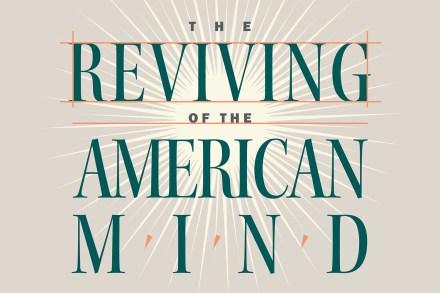
In his 1987 book, The Closing of the American Mind, Allan Bloom argued that higher education no longer taught US citizens how to think. “We are like ignorant shepherds living on a site where great civilizations once flourished,” he wrote. “The shepherds play with the fragments that pop up to the surface, having no notion of the beautiful structures of which they were once a part.” Now, almost 40 years later, we’re even more clueless. The rot in academia has spread throughout the education system and can be found all over American life. Rational thinking has now been almost entirely usurped by the baser passions of anger and grievance, as we saw all too clearly in the collective insanity of the Black Lives Matter riots of 2020.

Trump
universities

Wokeism is stifling thought in America’s universities

The American education system needs drastic reform from bottom to top.  Our K-12 schools, both public and private, have come to be dominated by radical left-wing ideas. Schools not only indoctrinate students with a one-sided view of history and society, but they also increasingly fail in their core mission of imparting the basic skills needed to function in our advanced and complex society. Likewise, our universities, professional schools and graduate schools are in the grip of a far-left ideology that has compromised their traditional missions of truth-seeking, knowledge creation and the preservation and transmission of western culture and the advanced skills essential to its vitality and prosperity.

Rufo

How Christopher Rufo is changing American education

As fire-breathing counter-revolutionaries go, Christopher Rufo seems notably mild-mannered. Perhaps it’s his northern California roots and Pacific Northwest home that keep him from embracing the based lifestyle pursued by so many conservatives in the Trumpian era. He doesn’t like sports. He doesn’t enjoy UFC. He allows his four kids to watch Disney movies and admits he was once a vegetarian. Yet it’s also possible that the Georgetown-educated PBS documentarian turned right-wing iconoclast is effective precisely for that reason: he knows the people he is criticizing.

IQ

Why is intelligence declining?

In 1906, the famous polymath Sir Francis Galton visited a country fair on the edge of Plymouth, England. A bullock had been tethered for slaughter and almost 800 locals were invited to guess its dressed weight: how heavy it would be after butchering. Galton – an obsessive measurer of people, weather and intelligence – gathered the entries, calculated the average and found something remarkable. The crowd’s collective estimate came within a single pound of the ox’s actual weight. This elegant experiment would become one of the founding truisms of modern democratic thought. Galton had shown that while individuals may err, the group, in aggregate, can reason with uncanny accuracy and prescience. He had discovered “the wisdom of crowds.

ADHD

We shouldn’t downplay the risks of ADHD medication

I was diagnosed with ADHD in my freshman year of college. I’d suspected as much in high school, but I disliked the idea of taking medication. College was different. No matter what I tried, I kept finding gaps in my notes – and therefore gaps in my knowledge on test day. While I was prescribed so-called “smart drugs,” I didn’t delude myself into thinking they would magically make me more intelligent – which is why I laughed when I saw the ADHD research industry perform a volte-face in the pages of the New York Times, in a piece headlined: “Have we been thinking about ADHD all wrong?” The obvious answer is yes.

Harvard’s intricate China ties

Scratch almost any major US political story and sooner or later you’ll hit a big red nerve that belongs to the Chinese Communist party (CCP). Tariffs, energy, TikTok, the border, Fentanyl, Greenland, Panama, the Gulf of America – on all these subjects the Trump administration is, one way or another, trying to limit Beijing’s power in the West. And Donald Trump’s "war on Harvard," it turns out, is no exception. It’s clear that the President is pushing against anti-Semitism and the Diversity, Equity and Inclusion madness on America’s most famous campus, as well as in countless other colleges and universities.

Harvard

Lily Parr and the creepiness of AI resurrection

From our UK edition

I’m not sure it’s possible to make a horror movie more sinister than the chirpy four-minute film on YouTube purporting to be an ‘interview’ with the late Lily Parr. Parr was a professional footballer who played as winger before the war, a chain-smoking 6ft Lancashire lesbian with that gung-ho spirit I remember from my girls’ boarding school, before the governors purged the spinster games mistresses. Three UK in collaboration with Chelsea FC have cooked up an AI version of Lily, which they insist can answer questions just as she would have done. They’ve persuaded Karen Carney (real, not AI), who played for England, to talk to AI Lily and then presented footage of the conversation as if it were a scoop.

How DEI destroyed itself

Those who wonder why more Americans haven’t risen up in rebellion against the Trump administration’s assault on affirmative action, its gutting of university departments, its violation of the neutrality of the American legal profession, should keep in mind the epigraph from the 20th-century philosopher Will Durant that appears in the opening moments of Mel Gibson’s 2006 movie Apocalypto: “A great civilization is not conquered from without until it has destroyed itself from within.” As he promised to do, Donald Trump is dismantling large parts of the government he conquered at the ballot box last November. You don’t have to approve. Roughly half of Americans do not. But the regime he is undoing has yielded diminishing returns for most of this century.

DEI market

Trump is right to eradicate the Department of Education

Teachers’ unions have donated millions upon millions over the years almost exclusively to Democratic candidates and left-wing organizations. So it’s no wonder Dems, realizing their cash cow could be on the verge of drying up, are losing their minds over President Trump signing an executive order yesterday to begin eradicating the Department of Education. If Americans get a real taste of school choice (Trump still needs a Congressional vote to end the agency), the left knows there will be no going back. Senator Chuck Schumer called the order “one of the most destructive and devastating steps Donald Trump has ever taken.

Education

Can the Tories save their education legacy?

From our UK edition

13 min listen

Bridget Phillipson's schools bill is back in the Commons today. The scope of the legislation is twofold: firstly, looking at the welfare of children in schools and secondly at fundamentally changing the landscape of secondary education by doing away with academies (and with it the legacy of the previous Conservative government on education). The plan has been read by many – including former head of Ofsted Amanda Spielman, who joins today's podcast – as Labour pandering to the unions and perhaps even prioritising the adults (union members) over the children. Amendments to the bill will be debated this afternoon, including a Tory amendment that would ban phones in schools, although it doesn't seem that Labour is in the mood to make any concessions. What is motivating Labour?

Colin Freeman, Harry Ritchie, Max Jeffery, Michael Gove and Catriona Olding

From our UK edition

35 min listen

On this week’s Spectator Out Loud: Colin Freeman explains how Islamic State tightened its grip on the Congo (1:23); Harry Ritchie draws attention to the thousands of languages facing extinction this century, as he reviews Rare Tongues: The Secret Stories of Hidden Languages by Lorna Gibb (8:00); Max Jeffery highlights the boxing academy changing young lives (13:20); Michael Gove reflects on lessons learned during his time as education secretary (20:30); and, Catriona Olding introduces the characters from her new Provence-based memoir club (29:27).  Produced and presented by Patrick Gibbons.

School portraits: snapshots of four notable schools

From our UK edition

Ludgrove, Berkshire Ludgrove, which was founded in 1892 by the footballer Arthur Dunn, is a boarding prep school in Berkshire and has 130 acres for its pupils to learn, run around and play in. The school is one of the last preps to provide full boarding (which is fortnightly). At weekends, boys can use 11 football pitches, four tennis courts, two squash courts and a nine-hole golf course. It’s not just Prince William’s alma mater: other old boys include Alec Douglas--Home, Simon Sebag Montefiore and Bear Grylls (who opened the new Exploration Centre in June 2021). Most of the boys go on to Eton, Harrow, Radley or Winchester.

Why I’ve never forgotten Sister Cecilia

From our UK edition

It is never people, always buildings. Faces change, time blurs them, but – unless they undergo a complete makeover – buildings remain pretty much the same, bar a few coats of paint. Along the second-floor corridor lined with arched windows that overlook the street. Buses grind by below. Up the last short steep staircase and along the very top corridor, which is narrower and lined with books. They call it the library and I am often here, tucked into the window seat reading, but otherwise heading for the arched door – everything is arched here – at the far end. It opens on to a low-ceilinged room with roof lights through which the sun seems always to be shining.

Columbia exemplifies the failure of universities

Yesterday, with growing sadness, I read a wonderful book about teaching and learning, written by one of the great teachers of the past century. Why the sadness? Because the author, Gilbert Highet, was a revered professor at Columbia in the Fifties and Sixties. It is impossible to read his paean to learning, written a half-century ago, without weeping for what his university has become. When Highet wrote of learning, he meant absorbing from history’s greatest minds, from Plato, Aristotle, Thucydides, Virgil, Cicero, Machiavelli, Hobbes and Locke, and teaching their lessons to students who wished to learn from them. Reading Highet’s words a half century later, we realize he was speaking of another time and place — virtually another university.

columbia