Education

Columbia exemplifies the failure of universities

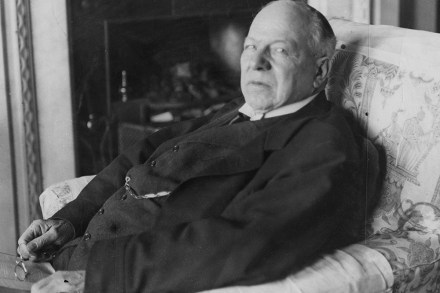
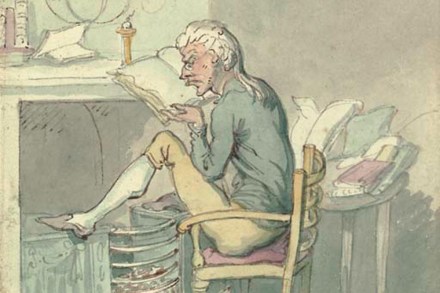
Yesterday, with growing sadness, I read a wonderful book about teaching and learning, written by one of the great teachers of the past century. Why the sadness? Because the author, Gilbert Highet, was a revered professor at Columbia in the Fifties and Sixties. It is impossible to read his paean to learning, written a half-century ago, without weeping for what his university has become. When Highet wrote of learning, he meant absorbing from history’s greatest minds, from Plato, Aristotle, Thucydides, Virgil, Cicero, Machiavelli, Hobbes and Locke, and teaching their lessons to students who wished to learn from them. Reading Highet’s words a half century later, we realize he was speaking of another time and place — virtually another university.

columbia

Luigi Mangione’s bad education

Luigi Mangione is officially the “suspect” in the murder of UnitedHealthcare CEO Brian Thompson, but he is plainly the culprit, and public discussion has moved on to his motives. Why would a young man possessed of intellectual gifts, friends, family, good looks, a winning personality and, apparently, lots of money, gun down a man he had never met? This isn’t the kind of question my organization, the National Association of Scholars, normally takes up. We concern ourselves more with academic standards and questions of state and federal policy. But I’ve been nudged several times with questions about Luigi’s academic background. This has two parts: Luigi’s high school and Luigi’s college.

The classroom panopticon

Is it ironic to give a prize for encouraging “open discussion and debate in the classroom” and “creating an environment where all perspectives can be heard” in the name of William F. Buckley Jr.? Although best known today as the founder of National Review and longtime host of Firing Line, Buckley first came to prominence in 1951 with the publication of his book God and Man at Yale, subtitled: The Superstitions of “Academic Freedom.ˮ Buckley’s secular and secularized Protestant critics might well have considered the firmly Catholic young man, twenty-five years old at the time the book appeared, an apologist for something they regarded as superstition. But Buckley did not mean the term as a compliment when he applied it to academic freedom.

classroom

Is there a solution to chronic absenteeism in schools?

I hated going to school so much as a kid that to this day, the sight of Back to School! signs printed in cutesy kiddy font on glowing school-bus yellow that fill stores every August strikes me with dread. I want to punch them. My elementary school years were fine; I attended a teeny-tiny Catholic school where I think most of the dedicated teachers qualified for food stamps. I knew my classmates so well that they were essentially extended siblings (and a couple of them still are). I graduated first in my class (out of ten) and was star of the pathetic basketball team. High school was a Catholic school too, but insular and snooty. I was an outsider there, from “over the mountain.” I wasn’t bullied or anything, but no matter what, I always felt like I was imprisoned.

absenteeism
homeschooler

My experience as a homeschooler

I love the first day of school. Summer break was the perfect amount of time to make me long for the tedium of learning again. Mom would purchase new binders; I would begin to dream about that perfect first-day-of-school outfit; friends would discuss frightening future assignments and school supplies would be gathered. I would wake up that morning and have everything ready for me — only to arrive sleepily at the kitchen table in my pajamas, with my six siblings and our not-so-beloved Saxon Math books. My high-school experience as a homeschooler included a hodge-podge of extracurricular activities... orchestra, soccer, debate, church responsibilities and a bunch of random classes in things like graphic design and Polynesian dance.

Coercion and coddling take campus

On October 7, 2023, I was the chairman of the political science department at a large public university, but not for long. I did what I presumed universities are for, encouraging students to talk with professors about big questions and important issues of the day. So on October 18, I held a faculty-student discussion with a Middle East expert. I opened the event by stating some facts: that a terrorist organization committed to the death of Jews had attacked Israel, raping and murdering many young people at a peace concert and seizing hostages. I said that these events raised deep moral questions about what should be done in response, regarding the destruction of Hamas and the fate of thousands of noncombatant Palestinians. Discuss. The discussion did not go well.

campus

Why can’t America produce proficient teachers?

“Record drops in teen math and reading scores.” “National Math, Reading Scores Hit Historic Lows.” “Test Scores Flashing Red!” The headlines roll in weekly, each more alarming than the last. In February, twenty-six schools in Baltimore failed to bring a single student up to the most basic math requirements. The same month, sixty-seven schools in Illinois couldn’t produce a single proficient reader. We’ve reached a national education crisis, and its roots run deeper than many are willing to admit. The pressing question is: why can’t America produce proficient students? But perhaps a more crucial question is: why can’t America produce proficient teachers?

teachers teaching

Want student loan forgiveness? Make universities pay

At the turn of the twentieth century, Saturday Evening Post editor and Yale dropout George Lorimer bitingly summed up academia when he said “colleges don’t make fools, they only develop them.” On the heels of yet another multibillion-dollar Biden administration college bailout, it seems we haven’t learned the lesson: colleges might not make fools, but they’re certainly trying to make fools of us. The bailout projects come from a Biden campaign promise: “I will eliminate your student debt.” Half-slogan, half-bribe, this resonated with millions burdened by the unpayable debt brought on by liberal arts degrees that may barely be worth the paper they’re printed on.

debt

Biden’s absurd student loan ‘solution’

You’ve got to hand it to President Biden — when he puts his mind to something he doesn’t let mere semantics like the rule of law stop him. Despite an earlier Supreme Court slap down, “Middle Class Joe” provided an upper-class gift to some 150,000 college graduates in the form of $1.2 billion in student loan forgiveness. That brings total educational loan forgiveness under this White House to $137 billion effectuated by nothing more than a stroke of Biden’s pen via executive order. Biden openly boasted of his defiance, all but inviting the justices to try to stop his patronage gambit. It’s not that anyone can blame him, because it’s a political win-win for the White House.

The fight for civilization in higher education

The idea that Western civilization ushered in an age of oppression, cultural destruction, environmental degradation and all manner of human exploitation, is bittersweet. I don’t mean that it tastes like coffee or dark chocolate. I mean bittersweet the vine, Celastrus orbiculatus, with the colorful orange-red berries. This kind of bittersweet grows at a phenomenal rate, ascending into the canopy and strangling trees. If you drive north out of New York City, you will pass endless miles of arboreal carnage. Tens of thousands of roadside trees are draped in the deadly vine. It is an invasive Asian species that, once established, is impossible to eradicate. And while its fall berries are attractive and make for good floral arrays, they are inedible.

civilization higher education

The populism of Machiavelli and Jefferson

A few years ago a Marine turned novelist, G. Michael Hopf, captured a classic truth in a pithy formula. Inspired by cyclical theories of history — in particular the generational “turnings” of William Strauss and Neil Howe — Hopf wrote in his novel Those Who Remain, “Hard times create strong men, strong men create good times, good times create weak men, and weak men create hard times.” One need not put much stock in Strauss and Howe to appreciate the maxim. It could just as well be derived from Sallust or other classical sources. Or from Machiavelli: in his Discourses on the First Decade of Titus Livy, the Florentine philosopher considers where best to build a city.

Machiavelli

What lies behind the obsession with race transforming universities?

The first problem about decolonization is the word itself. Colonization is the process of establishing control over a foreign territory and its indigenous inhabitants, by settlement, conquest or political manipulation. But decolonization? It has come to mean much more than the reversal of that process. Today, it refers to an altogether wider agenda, whose central objective is to discredit or downgrade the cultural achievements of the West. Objective truth and empirical investigation are mere western constructs. They are optional ideas which need have no weight beyond the western societies which invented them. But the West has imposed them on the rest of the world by a process akin to the colonial conquests of the past four centuries.

decolonization

Democrats bring a CCP-tied witness to education hearing

A hearing about the Chinese Communist Party’s funding of American K-12 education took a surprising turn when the Democrats’ witness — and several members of the House Education and Workforce Committee — took pains to conflate opposing foreign investments in public schools with Asian-American hatred. Gisela Perez Kusakawa, the executive director of the Asian American Scholar Forum (AASF), kicked off her remarks by linking concern over the Chinese Communist Party’s investments in public schools to America’s incarceration of Japanese-Americans during World War Two. Warning the Asian-American youth could end up as “collateral damage,” Kusakawa repeatedly conflated opposing the CCP with anti-Asian-American racism.

ccp Chinese President Xi Jinping delivers a speech during a ceremony at Tsinghua University ceremony (KENZABURO FUKUHARA/AFP via Getty Images)

The Youngkin blueprint

Virginia Beach, Virginia “Please run. We need you to save our country. Please.” A man pleads with Virginia governor Glenn Youngkin, referring to speculation that Youngkin may jump into the 2024 GOP presidential primary — and that Republican donors are encouraging him to do so. Youngkin responds, with a laugh: “I’m busy.” The governor is, indeed, quite busy. It is late August and he has just finished up one of his “Parents Matter” listening sessions, this one in Virginia Beach. Youngkin has been traveling the Commonwealth and hearing directly from parents to fulfill one of his biggest 2021 campaign promises: protecting the rights of parents from government overreach in matters concerning their children.

Youngkin
rufo

Christopher Rufo’s new book is impressively erudite

When a new book by an author often characterized as a conservative polemicist earns a rave review in the staid Economist, independent thinkers take notice. Christopher Rufo’s articles on recent US radicalism for the Manhattan Institute’s City Journal have long attracted wide attention, and now America’s Cultural Revolution has been praised as “meticulous” and “cerebral” as well as “persuasive and well-written.” All true, for Rufo’s book is impressively erudite, reflecting a breadth and depth of familiarity with influential leftist writings that will shame any number of “woke” academics.

Why public schools never have enough money

The new school year is just a few weeks away, and that can only mean one thing: right on cue, school districts are once again bemoaning a “lack of funding.” It’s the same story every year. Along with notices advertising the local high school drama department’s production of Grease come headlines announcing the school district is in dire straits and schools will literally fall to pieces if they aren’t pumped full of life-saving funding, stat. Year after year, it’s the same old song and dance: school funding increases, and the next year they need even more. Why is it never enough, though, and where does all the money go?

schools

Summer vacation fatigue

Alexandria, Virginia I entered summer with the following list of tasks: convert the shed into an office; discard several tons of debris from the storage room; assemble that Amish treehouse that’s been sitting in the yard; chop down the ash tree. A gust of wind took down the crabapple tree right before the Memorial Day barbecue. On the guest list: my younger brother, who moonlights as an unlicensed contractor; my wife’s cousin who built his own home; and Terry Schilling, who constructed a luxury treehouse. A normal man would have leaned on such a guest list to get the work done for him. A writer self-conscious about his manliness would make a show of chopping the tree up with the dull blade of a cheap chainsaw.

summer
disinformation

Disinfo-nation: the new censorship is here to stay

Lying is the great American pastime. We’ve been at it ever since some of the Pilgrim fathers shined on some of the folks back home with tales of the Eden they had found on the barren coast of Massachusetts: For fish and fowl, we have great abundance; fresh cod in the summer is but coarse meat with us; our bay is full of lobsters all the summer and affordeth variety of other fish; in September we can take a hogshead of eels in a night, with small labor, and can dig them out of their beds all the winter; we have mussels; and ... As the American Socrates, P.T. Barnum, may once have said, “There’s a sucker born every minute.” Or he may have not said. The Fort Wayne Weekly Sentinel in 1894 said he said it, but P.T. denied it.

A better way to go to college: at sea

I have been pondering ways to rescue young Americans from the trouble and often the waste of the four-year undergraduate college education. Many young people as I recently pointed out are looking for alternatives. But there aren’t very many good ones. In what follows, I propose we put some of these discontented souls in a ship and sail them around the world. It is not entirely a new idea, and before I turn my rudder in that direction, I’d like to survey the horizon. Once, long ago, I was asked by the senior administration of my university to look after the playboy son of a wealthy European family who had decided to enroll in an undergraduate degree program. He was handsome, smooth, reckless and not very bright.

semester sea