Education

Don’t forget about BTECs during the A-level circus

From our UK edition

The summer ritual of A-level results day is so well known it's easy to forget the thousands of students receiving their BTec National results. That’s the intro to a BBC News item on vocational qualification results issued today. It’s also the story of British culture and economics, told in a single, unwittingly revealing, sentence. Around 250,000 kids will get BTEC results today – that’s almost as many as the 300,000 or so who get A-level results. But of course, media and political attention paid to the latter group is vastly greater than the former. Why?
Inflated exam grades let the government ignore its own failures

From our UK edition

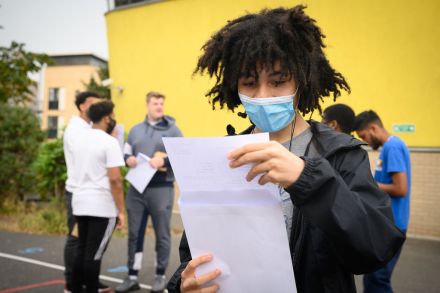
It was obvious that closing schools would hit the poorest hardest, inflicting permanent damage and deepening inequality. While many private schools and the best state schools maintained a full timetable of lessons throughout lockdown, a study by UCL in June found that 2.3 million pupils — one in five of the total — did virtually no schoolwork at all during the weeks of lockdown. The official response has been to turn a blind eye, and imagine that the damage can be covered up by simply awarding decent exam results. This year’s students are right to protest about the injustice of the system. From the moment the decision was taken to cancel exams, rather than carry out exams with social distancing, this year’s mess was guaranteed.

The proof that free speech in universities is in peril

From our UK edition

About 18 months ago, I attended a debate at Policy Exchange, the think tank founded by Nick Boles, Francis Maude and Archie Norman, on whether there was a free speech crisis at British universities. One panellist, Professor Jon Wilson of King’s College London, vigorously denied that any such problem existed. Various people pointed to examples of right-of-centre academics being no-platformed — Charles Murray, Amy Wax, Linda Gottfredson — but that was scarcely conclusive. It was anecdotal evidence, not hard data. The same cannot be said any more. This week, Policy Exchange published a paper by three academics — Remi Adekoya, Eric Kaufmann and Tom Simpson — which proves beyond reasonable doubt that free speech is in trouble in the higher-education sector.

The rise of the Econian

From our UK edition

A study has shown that protestors who took part in Extinction Rebellion’s demonstrations last year were overwhelmingly middle-class, highly educated and southern. Well, there’s a surprise. It turns out some 85 per cent of the London protestors had a degree, a third had a postgraduate qualification and two thirds described themselves as middle-class. Three quarters of those charged with offences lived in the south. And, if the accents I heard from the protestors as I biked through the throng on my way to work were anything to go on, a high percentage were public school--educated, too. I’d never seen so many Econians — the public school boys and girls who rule the wokerati world.

The rise of homeschooling

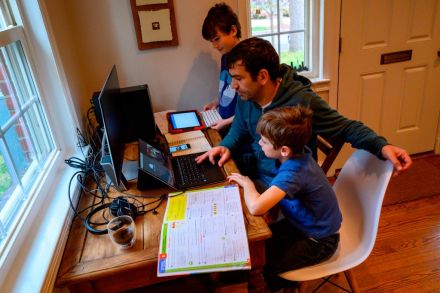
As school districts scramble to plan for the new school year during a global pandemic, many parents are taking matters into their own hands.States around the country, from Virginia to Kansas to Texas, have reported large rates of increased interest from parents in homeschooling their kids this fall. North Carolina’s homeschool application website recently crashed due to overwhelmingly high levels of submission. National and state polls show anywhere between 15 to 40 percent of families expressing a greater likelihood that they will homeschool during the COVID-19 pandemic.

homeschooling

Children of a lesser pod

As New York City schools grapple with how to handle a virus that has an under 1 percent infection rate in children, parenting boards frequented by the educated, monied-but-not-so-monied-as-to-send-their-kids-to-private-school set, are forming ‘pods’. A ‘pod’ will be a small group of children, usually no more than five, who will meet at each other’s homes in lieu of traditional schooling in September. You, and four other families in your same tax bracket, will hire a teacher to educate the five children in the pod. Parenting boards are overwhelmed with requests for these tutors. The families will agree to only interact with each other: an absurd and impossible promise that will surely be broken.

pod

The lost boys: the white working class is being left behind

From our UK edition

You can argue about the merits of pulling down statues, but it’s hard to make the case that mass protests serve no useful purpose. At the very least, they provoke debate and draw attention to uncomfortable topics that it might otherwise be easier to ignore. The recent protests have forced everyone to have difficult discussions about race, class, poverty and attainment. Any serious examination of the statistics shows that we’re pretty far from equal, but what the figures also show is that it’s wrong-headed and damaging to lump very different groups together. In these discussions politicians often lazily assume that all BAME (Black, Asian and Minority Ethnic) people are the same, and that all white groups are equally privileged.

Home advantage: not going to school was the making of me

From our UK edition

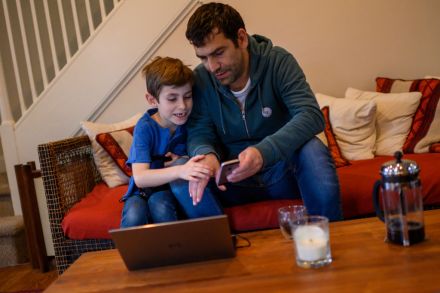
At last, school’s out for summer — although this might be a strange concept for children who have not set foot in a classroom for months. If social media is anything to go by, home-schooling is hell. Since March, the internet has been awash with panicked parents sharing mock timetables with slots for ‘mum quits’ and ‘dad starts drinking’. And who’s to say the madness will end after the summer? A recent survey showed that a quarter of parents don’t intend to send their children back to the classroom in September, and one in ten of those plans to home-school permanently — which at least offers certainty. It can also offer much more than that. And I speak from experience.

In Los Angeles, school’s out…forever?

Americans have mixed feelings about opening schools this fall. Some — like the Trump administration’s Department of Education — want schools to reopen, withholding federal dollars from those that remain closed. However, the majority of Americans see opening schools as a health risk to their children.After two-thirds of teachers opposed the reopening of schools, the Los Angeles School District will not be returning to in-person classes this fall. However, United Teachers Los Angeles, the main teachers' union in the city, seemingly wants to suspend the return of quality instruction indefinitely. UTLA — composed of 35,000 teachers — released a list of policy demands that must be met before schools reopen.

school

Target for half of kids to go to university dropped

From our UK edition

In a sign of how worried the government is about youth unemployment, it will – quiet literally – pay firms to hire 16 to 24 year olds. But, as I say in the magazine this week, these government-funded jobs can only be a short-term fix. Any medium-term solution is going to require fixing post-16 education. A third of British graduates are in non-graduate jobs. The government subsidises this failing system The expansion of higher education has not worked out as intended; the 50 per cent target for pupils going to university has been hit, but too many students are doing courses that don’t represent value for money.

Gavin Williamson is right to call out educational snobbery

From our UK edition

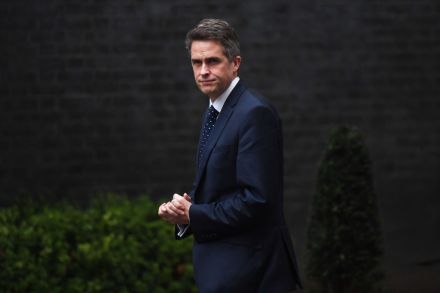
Politicians give speeches all the time, but with differing levels of significance. Can you think of a genuinely important political speech given by a minister this week? Maybe your answer is Rishi Sunak’s fiscal statement, and I’m not going to suggest that speech isn’t a big deal. It is. But I am going to make the case for a speech given today by Gavin Williamson, the Education Secretary. The speech was to the Social Market Foundation, the think-tank I run, so I obviously have an interest here. Nonetheless, I think Williamson’s speech deserves to be seen as a big deal.

The growing educational apartheid

From our UK edition

This week would normally be the time when state and private schools go their separate ways, when privately educated children go off on their holidays while the state school lot carry on for another couple of weeks of term. Except this time, the divergence happened in March, when lockdown started and the educational apartheid began, between rich and poor – or at least, between those who can afford fees and the not so well off. At that point, private school pupils went online for their education with school days running pretty well as normal; state school pupils ceased to have any education at all apart from homework set online, which might be marked, or might not, depending on whether the teachers felt like it.

To understand the past, you need to inhabit it for a while

From our UK edition

‘It’s no go my honey love, it’s no go my poppet; Work your hands from day to day, the winds will blow the profit. The glass is falling by the hour, the glass will fall forever, But if you break the bloody glass, you won’t hold up the weather.’ The first poem I ever heard was ‘Eenie, meenie, minie moe, catch a tiger by the toe. If he hollers, let him go’, etc. I found it mystifying. How would one catch a tiger by its toe? And do tigers ‘holler’? ‘There is something about this poem they’re not telling me,’ I thought, full of worry, my nappy beginning to chafe. This was last week, by the way. (Ha. Only kidding.

The private school advantage has never been greater than in lockdown

From our UK edition

When Boris Johnson announced the easing of lockdown this week, there was nothing for schools. Pubs, yes. Theme parks, even. But the education of children? There is no great rush for that, it seems. First things first. I have a 14-year-old daughter at a state grammar and like so many parents, I am in despair. The two-metre rule, which had presented such problems for schools, is finally being relaxed. But far from cheering the move as a crucial step towards getting children into the classroom, the teaching unions are still cavilling — advising headteachers to ensure they have contingency plans for bringing only half of pupils back, on a rotating basis. The Prime Minister has said all pupils should return in September.

Children should get out more — even if it’s for hide and seek in the park

From our UK edition

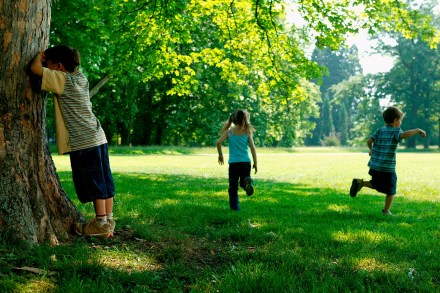
We live in an urban world. It’s a statistical fact. The great outdoors for most of us is a thing of the past — a place, like elderly relatives, to be visited infrequently and preferably with gloves. Metro world, by contrast, is safe, insulated, inviting. No getting wet in the rain, no patchy wifi, no mud on our new Nikes. Little wonder that our education system has gone the same way: safe, sedentary, sterile. Patrick Barkham thinks there might be a better way. Give kids more space, he pleads. Free them up from rules and tests. Climbing trees, prodding roadkill, collecting grubs: hell yes, if they want to, why not? The statistics (that boring, schooly word again) suggest he might be on to something. One in eight British youngsters can’t identify an oak leaf.

School’s out: the true cost of classroom closures

From our UK edition

It’s Monday at 9 a.m. and secondary schools in England have just re-opened their gates to students in Years 10 and 12. I have been looking forward to this moment for 13 long weeks, since that frightening afternoon in March when my colleagues and I gathered around a computer in the staff room and saw a healthier-looking Boris Johnson declare he was shutting schools. But today I’m not at the comprehensive in Hackney where I teach economics welcoming back my students with a rousing lesson on the financial devastation caused by the crisis. I’m surplus to requirements and am still marooned at home.

Reopening schools must be our first priority

From our UK edition

It would be a tragedy if one of the legacies of Covid-19 — a disease which hardly affects children physically — was a widening of the already broad gap in educational attainment between rich and poor. But sadly, the damage is already well under way. Back in March, Britain was the European country most keen to keep its schools open in the face of the then-burgeoning number of Covid-19 cases. Now it is the other way around. In Denmark, primary schools have been open for a month. This week, children began to return to class in Germany, France and the Netherlands. Next week, schools will start to reopen in Belgium. Yet in Britain, the earliest date we have been given for reopening schools is 1 June, and then only for some children in primary schools.

These kids just got screwed by lockdown – and no one bothered to tell them

From our UK edition

Here are some numbers that too many people who work in and around politics don’t know. In any given year, around 700,000 young people turn 18 and leave school. A little under half of them go on to higher education (HE). The other half, around 360,000, do something else. Roughly half of these non-HE school leavers would normally get a job. Another 60,000 or so would become apprentices. And quite a lot – more than 100,000 – would go down in the stats as ‘not sustained’ or ‘activity not captured’ meaning that whatever they did, it didn’t last, or that they have dropped out of the view of educational statisticians. In other words, life has not gone well for them.

Coronavirus has made amateur mathematicians of us all

From our UK edition

‘What is the point of learning maths? When do you ever actually need it? How does it ever affect your life?’ That’s the frequent complaint of my school-age children, labouring over their times tables and number bonds. It was my complaint as I struggled to tell median from mean, or sine from cosine. Well. Now we have a nation and a world bewitched and terrified in equal measure by a ground-level demonstration of what an exponential function does. Our entire society is being shaped for a generation by that elegant, predictable, horrifyingly steepening curve. One shred of comfort in this catastrophe is the thought that no journalist will ever again write ‘increasing exponentially’ as a fancy-sounding way of saying ‘increasing a lot’.

No one in Jefferson’s day suspected the contradiction between commerce and education

Laramie, Wyoming Historians of democracy know that the phenomenon was built upon two principal social structures: bourgeois commerce and popular education. The first developed during the Middle Ages and grew until eventually it replaced war as the means by which states and individuals acquired wealth; the feudal class gave way to the bourgeoisie. The second developed in the late 18th and early 19th centuries in North America, the United States in particular. The two institutions were widely regarded as socially, morally, economically and politically complementary; necessary to the growth of a solid middle class, of capitalism and of republican government.

jefferson education