Education

Have we hit peak graduate?

From our UK edition

The Tory party has turned sharply against the idea of ever larger numbers going to university. The reasons for this are both economic and political, I say in the Times today. On the economic front, the taxpayer is bearing more of the cost of the expansion of higher education than expected — the government estimates that it will have to write off 53 per cent of the value of student loans issued last year — and there is a belief that the lack of funding for technical education is contributing to the UK’s skills and productivity problems. Politically, the issue is that graduates tend not to vote Tory Politically, the issue is that graduates tend not to vote Tory. At the last election, the Tories beat Labour by 44 per cent to 32 per cent.

It’s time the British faced some uncomfortable truths, says Matthew d’Ancona

From our UK edition

As Britain starts its long Covid recovery, are deeper problems lurking beneath the surface? Matthew d’Ancona certainly thinks so, and in this brief, rather shrill polemic, he urges us to face some uncomfortable truths. Uppermost in his mind is the threat posed by the populist right, which he worries will try to blame Britain’s post-Covid economic hardship on immigrants. D’Ancona suggests that a message of intolerance would fall on fertile ground. Britain, he says, is already in a state of disarray: Public confidence in our institutions has plummeted, as has the belief in a widely honoured social contract; the notion of shared universal rights and responsibilities is mortally threatened in many places by a sense of futility and voicelessness.

Education catch-up chief quits amid spending row

From our UK edition

The government's ambition to close the learning gap that has occurred as a result of the pandemic hit a stumbling block today. After the Department for Education announced plans for a £1.4bn programme in schools to help children catch up, ministers were criticised for not going further in their proposals. Now the government’s education catch-up chief has resigned. This evening, Sir Kevan Collins wrote to the Prime Minister to offer his resignation as education recovery commissioner. Collins cited the 'huge disruption to the lives of England's children' that the pandemic has caused, arguing that only a 'comprehensive and urgent' response would do.

Paying the price of free speech

Last month in this space, I wrote a few words about what had happened to the practice of art in the West over the last century or so. That of course is a gigantic topic, and in a thousand words I was able to touch upon but a tiny part of the story — or, to tell the truth, only a tiny part of a tiny part of the story. Mostly, I described and lamented the eclipse of beauty in the metabolism of art, which is another way of lamenting the eclipse of aesthetic pleasure. In the 18th century, the world was awash in commentary that talked about the beautiful and the sublime as central categories in the appreciation of art.

free

Pimlico Academy and the politicisation of the playground

From our UK edition

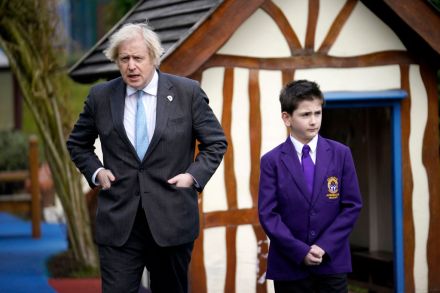
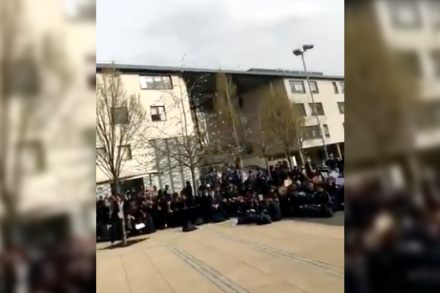
The strange tale of Pimlico Academy, the central London school roiled by ‘anti-racist’ protests, shows us that the culture war now consumes all before it. No institution or arena of life can carry on unmolested by our overheated discussions about race and identity. The politicisation of absolutely everything has, perhaps inevitably, reached the playground. Daniel Smith was, until this week, headteacher of Pimlico Academy. He resigned yesterday following months of student and staff protests over the school’s uniform policy, traditional ‘kings and queens’ curriculum and, most scandalously of all, its flying of the Union flag.

The Proustian power of handwriting

From our UK edition

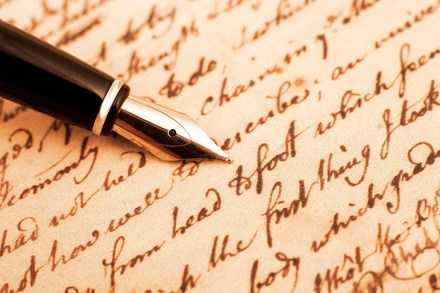
Towards the end of April, my mum sent me a letter. She doesn’t write as a rule — we speak on the phone — but this time she sent something. It’s hard to explain the effect her handwriting had on me after so many months of being apart. It was as if she was there, in envelope form, on the doormat. And because her handwriting’s been so familiar for so long, it wasn’t simply my mum as she is now, but Mum through three decades. I stood there in the gloom of the hall, vertiginous with memory, and I realised how unlikely it is that any future generation will have this same experience. I’m Generation X, the last of the analogue gang, brought up on handwriting. Our things weren’t encoded, they were imprinted: records and tapes.

Why I picked an apprenticeship over a politics degree

From our UK edition

I’d always wanted to work in the media but had no idea how to get there. I would spend hours during sixth form trawling the pages of impressive journalists on Wikipedia, desperately trying to get some sense of what was required. My conclusion? An Oxbridge education tied most of them together. Inspired, I applied to various top universities. After getting a handful of offers, I picked a politics course at a leading institution, the University of Warwick. In the meantime, I started getting as much work experience as possible. The more I did, however, the more I realised that there were actually alternative paths into the industry. So many of the young journos I met weren’t graduates. Their route had been the government’s apprenticeship scheme.

Letters: The veiled elitism of social mobility

From our UK edition

Levelling up Sir: In making the case for social mobility, Lee Cain unwittingly endorses the classism he hopes to fight (‘Left behind’, 24 April). As the historian Christopher Lasch has argued, the canard of social mobility merely replaces ‘an aristocracy of wealth with an aristocracy of talent’. Far from being egalitarian, the concept is inherently elitist: it implies moving up, out or away from a class, town or profession condemned as undesirable. And by paying lip service to ‘meritocracy’ it becomes a self-serving justification for elites’ power and privilege — if they had the ‘ability and ambition’ to rise to the top, it must only be indolent dullards who are left behind.

The class of 2020 are being failed yet again

From our UK edition

Last year, after the cancellation of exams and the ensuing A Level results fiasco, which saw thousands of students downgraded by an algorithm, the Government promised this would never happen again. They asked students to put their faith in a system that had failed them once before, and guaranteed that lessons would be learnt. Yet, one year later, young people are being put in yet another impossible position by the education system. Despite earlier assurances from the Education Secretary that exams would not be cancelled this year, teacher-assessed grades will end up deciding the fate of the class of 2020/21. That will create its own set of problems for many students.

Westminster and the truth about the class ceiling

From our UK edition

I come from the Lancastrian town of Ormskirk, which, though pretty, provided little in the way of opportunity or aspiration. No one in our family had been to university. I qualified for free school meals. Expectations for my future were low. But I was lucky. I had great mentors and ended up in Downing Street. I also worked for a Prime Minister who believes in social mobility and put ‘levelling up’ at the very centre of his premiership. This was the reason I came into politics too. Boris Johnson understands that the need for social mobility is now more urgent than ever, as we emerge from lockdown. While the food poverty debate raged last summer, and the government found itself losing a PR war with the footballer Marcus Rashford, I attended a cabinet meeting.

The impact of lockdown on education

From our UK edition

Just how damaging has lockdown been to children’s education? An Oxford University study has tried to quantify it by analysing data from Dutch schoolchildren — who, unlike in Britain where exams were cancelled, took tests shortly before and shortly after the first lockdown last spring. The level of parental education was a big predictor of falling performance If any country’s children had managed to get through lockdown with their education unscathed, suggest the authors, it ought to be those in the Netherlands. There, schools were closed for a relatively short period — eight weeks — and the penetration of broadband in homes is higher than in any other country.

The facts about race and education

From our UK edition

Judging from the reaction to last week’s Commission on Race and Ethnic Disparities report, you’d think it had been written by a group of white supremacists who deliberately falsified the evidence about the prevalence of racism in contemporary Britain. Labour MP Clive Lewis tweeted a picture of the Ku Klux Klan alongside the hashtag #RaceReport, while Dr Priyamvada Gopal, a Cambridge University professor, compared the chairman of the Commission to Goebbels. In fact, only one of the report’s ten authors is white and the chairman, Dr Tony Sewell, says in the foreword: ‘We take the reality of racism seriously and we do not deny that it is a real force in the UK.

How to kill the English language

From our UK edition

Probably, most of you will have only the dimmest idea what a ‘fronted adverbial’ is. I used one in the last sentence. Can you spot it? Very good. Those among you who did are either a) professional linguists, b) seven-year-olds, or c) are, like me, recovering from several long months of home-schooling a seven-year-old. Forgive me if in mentioning it I retraumatise members of category c). ‘Fronted adverbials’ have become something of a cause célèbre among the parents of primary school children. They even occasioned a prime ministerial joke, interpreted in some quarters as a dig at a certain former education secretary, about ‘every detail of the syllabus, from fronted adverbials to quadratic equations’.

The misunderstood motto of Rishi Sunak’s old school

From our UK edition

The first thing that Dr Tim Hands, headmaster of Winchester College, would like to clear up is his school’s world-famous motto, ‘Manners maketh man’. Whenever a Wykehamist makes the papers, this ancient phrase is wheeled out, referring to his (in)decent manners. But this isn’t quite right, says Hands. Two pieces of stained glass — one formerly in Bradford Peverell church near Dorchester, and another in the Warden’s Lodgings at New College Oxford (founded by Winchester’s founder Bishop William of Wykeham) — read ‘Manner maketh man’. This, says Hands, is the origin for the school’s motto. ‘“Manner” means what you are and what you do — not how you fold your handkerchief.

I never considered sending my daughter to boarding school – until the pandemic hit

From our UK edition

Last summer, we joined the sharp-elbowed ‘exodus’ that saw demand for places at independent schools increase by up to 30 per cent. We were guilty, according to the Observer, of creating ‘an even larger divide between affluent and disadvantaged pupils’. Not to be out (middle) classed, we went one better, enrolling our 15-year-old daughter as a boarder. Home for the holidays, she so animatedly regaled us with her experiences that we might have smugly congratulated ourselves on our selfless financial sacrifice were it not for one qualification: ‘But I’d rather be here, with you.’ We’d never countenanced boarding.

Six rules for picking the wokest school

From our UK edition

One of the great advantages private schools offer is an ability to change with the times. While some hold on to traditional notions, many are adapting nimbly to the new woke world — expunging their problematic historical figures and educating pupils in the new equivalent of U and Non-U. But how do parents ensure their little treasures aren’t triggered and are always confined to the safest of spaces? Here, then, is our guide to the wokest schools. Rule one: lots of schools were woke decades ago At my alma mater, Westminster, the history curriculum was pretty much decolonialised in the 1970s by left-wing teachers.

Mixed blessing: do single-sex schools have a future?

From our UK edition

If you were starting with a blank screen to design an education system today, it seems unlikely that you would think of creating single-sex schools, any more than you would single-sex professions or single-sex restaurants. Education for life is something we do together, like working or eating. Their existence is explained by the fact that when the first were established, most girls didn’t go to school. William of Wykeham founded Winchester in 1382 for ‘poore scholars’ who would be boys — that was obvious. Dean John Colet founded St Paul’s School in 1509, taking advice from Erasmus of Rotterdam and putting the management of the 153 scholars ‘from all nacions and all countres indifferently’ into the hands of the Mercers’ Company.

The school trip that gave me my first act of rebellion

From our UK edition

What I remember in most vivid detail about my school trips are the coach journeys. This may be testimony to the fact that the schools I went to never took me anywhere glamorous, not because they didn’t have the money (our parents were paying enough) but because it wasn’t really thought decent or necessary to take children somewhere exciting in those days. At St Joseph’s Convent, our most exotic outing was to Birmingham for a recorder festival, aged about six. Picture a coach-load of little girls in maroon blazers, maroon felt hats, maroon A-line skirts and beige gloves — yes gloves. We went everywhere in beige gloves. Maroon felt hats in winter, straw boaters in summer. But always beige gloves. We were young ladies. We did things properly.

School portraits: a snapshot of four notable schools

From our UK edition

St Edward’s School, Oxford St Edward’s School has featured in these pages before, because of its North Wall performing arts centre which attracts (in ‘normal’ times) more than 20,000 public visitors a year to its exhibitions and performances. St Edward’s sets great store by being part of Oxford as a whole. ‘Beyond Teddies’ is the school’s community outreach programme, encompassing a community farm on school grounds where young people with learning disabilities and autism explore basic outdoor skills, marshalling the Oxford Half Marathon and visiting local care homes. Academically, the co-ed boarding and day school also thinks outside the box, with its pioneering ‘Pathways and Perspectives’ courses.