Economy

Cable separates his own brand from the Lib Dems

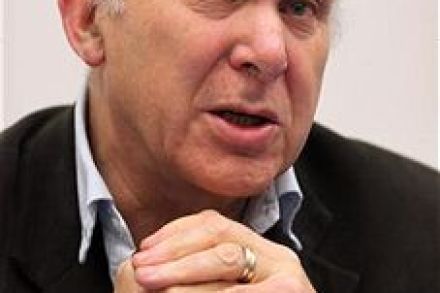
So are Vince Cable's public spending cuts his own, or are they Lib Dem policy?  In his Straight Talk interview with the Lib Dem treasury spokesman this weekend, Andrew Neil tries to get to the bottom of it all.  The result?  Well, according to Cable, Nick Clegg "approved" his pamphlet for the think tank Reform, and some of its contents could find their way into the party's manifesto: "A lot of it is already Lib Dem policy, a lot of it already is, the rest of it will have to be considered and we’ll go into an election with a manifesto, we have a due process.  Maybe because of who I am a lot of it will be there, but some of it may not be, it has to be agreed with my colleagues of course.

Will the Tories abolish the RAF?

Over at his new blog for the Wall Street Journal, Iain Martin ups the provocative factor by asking: "Will the Tories axe the RAF?"  Here's the key passage: "It has long been the dirty little secret of the U.K. defence establishment that a way to streamline the command structure, reduce duplication and slash costs is to close the RAF. There are two options for how it could be done: 1) Abolish the traditional three services and switch to a single marine corps model, with all three services effectively merging under new leadership. Or, 2) Split the RAF’s capacity between the two remaining services, giving the army the lift and delivery components and the navy responsibility for the strike capability, meaning fighters etc.

Why ministers block cuts

After Michael Fallon's claim last week that the shadow cabinet hasn't got "the faintest idea" of the commitment necessary to tackle the debt crisis, this anecdote from Benedict Brogan's column should act as another warning to David Cameron: "Whitehall is gripped by short-termism, yet in a world dominated by the targets culture introduced by Labour, is this any surprise? When ministers themselves prioritise short-term results that can be ready for the Six O'Clock News or the autumn conference, how can the Civil Service hold out for the long view?

All political parties must face up to the debt crisis’ severity 

The Independent's Hamish McRae writes a superb column today on just how far the next government will have to go to tackle Brown's debt crisis.  His main point is that unless severe action is taken over the coming years, we'll be stuck in a perilous position by the time the next global downturn hits.  But it's this passage which stands out: "To what extent will the deficit fix itself, and how much more needs to be done? We don't have to do the full 13 per cent of GDP and the present government proposed in the Budget that it should cut about half, 6.4 per cent of GDP, of that over an eight-year period. Vince Cable, who seems to have become the nation's favourite financial GP, suggests an eight per cent correction over five years.

Losing perspective 

At The Spectator, we’ve been so close to the spending debate that one worries about losing perspective. But this post from Faisal Islam gives one a sense of just how important today’s revelations are: “We have never seen this level of detail on a budget situation before. Much of what was implied or left out of the budget is stated in astonishing detail here. It is a total disaster for the treasury and the government, but some will argue the Tories have taken a big risk with financial confidence in publishing it.

The Tories’ Treasury mole exposes Labour’s cuts deception

On July 2nd, Gordon Brown told the House of Commons: “I have always told the truth and I've always told people as it is...we don't want to have the 10 per cent cuts the Conservatives are talking about.” The Tories’ extremely destructive Treasury mole has leaked documents proving that Labour has been planning substantial cuts in front line services since before the budget. The DEL figures, printed below, are key: suggesting that a cumulative 9.3% cut was planned for 2011-2014, and Paul Waugh is right to point out that these revelations may explain why the government delayed its comprehensive spending review.

Purnell’s enjoying the freedom of the backbenches

James Purnell has just spoken at The Spectator’s Paths to Prosperity conference, with sideburns bushier than ever after the summer. He was doing an on-stage interview with Andrew Neil and was quite firm on the release of al-Megrahi. "He should have died in jail” said Purnell. “I would have left him in jail." I suspect the freedom to say such things is one of the reasons that Purnell quit government. He later took questions (quite often rude ones) from the floor. Sir Richard Sykes had been on earlier, talking about the dismal state of British education, and Purnell was asked why he couldn’t just agree that schools had gone downhill too. He drew the line at trashing Labour’s record on education. But I think we can see Purnell set off into his own orbit.

Brown missed a trick by not deploying the ‘c-word’ earlier

Six months after a Politics Home/Spectator poll illustrated that ‘cuts’ was no longer a dirty word, Gordon Brown squared up and let slip the c-word. A new Politics Home ‘insider poll’ reveals that 86% of respondents believe Labour would be in a stronger position now if they had admitted the need for future cuts at the time of the Budget. That is almost certainly true: the obvious contrivance that was ‘Tory cuts versus Labour investment’, together with the invention of 0% rise economics, torpedoed the government’s credibility.

Tory guru: Financial system riskier now than it was before the collapse of Lehman Brothers

There’s a good article in the New York Times today about how little has changed in the way Wall Street does business since the collapse of Lehman—employment in the sector is only down eight percent, Goldman employees will earn on average $700,000 this year and derivatives are still not being traded on an open exchange. Indeed, the new Tory guru Nassim Taleb, the author of The Black Swan, thinks that the system might be riskier now than it was when Lehmans collapsed: “Mr. Taleb warns that the system has grown riskier since last fall. The extensive government support that began after Lehman collapsed will lead investors to assume that governments will always prevent major banks from collapsing, he said.

The thinking behind Mandelson’s double-dip warning

Peter Mandelson’s warning of a double-dip recession is in pretty much all the papers today. There’s no doubt that there is a risk the recession could turn into a W shaped one because the underlying problems in the financial sector have not been properly dealt with. But it also plays into Labour’s political strategy which is to argue that the situation is still so serious that it remains no time for a novice. ‘Don’t let the Tories ruin it’ or ‘Don’t let the Tories throw it away’ are both being mooted as possible Labour election lines. Brown apparently believes that Churchill’s fate shows that the people must not think the danger has passed if he is to win re-election.

Checking up on the UK’s debt crisis

Now this is engrossing in a grim kind of way.  It's the Economist's brand new Global Debt Comparison feature, and charts public debt for the entire world ($39.1 trillion dollars, at the moment), while also providing details for individual countries.  If you want a sense of the debt crisis facing this country, then just click on the info for the UK across a few years.  In 2009, it's bad enough: the Economist has us in the highest debt group, with public debt at 79.6 percent of GDP. For what it's worth, that's slightly better ratio than, say, France (83.7 percent) or Germany (87.9 percent).  But by 2011, our public debt-GDP ratio has shot up to 112.5 percent, outstripping France (102.3 percent) and almost equal with Germany (115.8 percent).

On second thoughts, maybe Labour should keep Brown in place…

Over at his essential blog, Benedict Brogan says that Dave 'n' George deserve some praise for Moody's decision to retain the UK's AAA credit-rating.  His thinking: that because Messrs Cameron and Osborne have been going on about debt and the need to cut spending, investors - anticipating a Tory government - are more confident about Things to Come. A similar point is made by Edmund Conway in a comment piece for the Telegraph today: "Part of the reason the debt markets have remained relatively sanguine in the face of a staggering collapse in tax revenues and increase in the deficit is that they are assuming a Conservative victory: when the prospect of an Alan Johnson leadership challenge briefly made a hung parliament more likely, they panicked.

Another Darling vs Brown battle

Well done, Alistair.  After taking on Brown over the crude "Labour investment vs Tory cuts" dividing line - and winning - it sounds as though the Chancellor is challenging another of the PM's lies: that the government's "stimulus" measures have "saved 500,000 jobs" during the recession.  According to the Mail on Sunday, Darling has told the PM to stop repeating this claim because it can't be substantiated, and he's resisting having it put in the Budget, too. As soon as the government started mentioning "500,000 jobs", Westminster's lie detectors started sounding; especially as it gradually morphed from "up to 500,000" to "at least 500,000".

Darling lays down the spending gauntlet – but will it be flung back in his face?

So here it is.  After rumblings that Brown is prepared to set out spending cuts - rather than hiding them away in he small print of the Budget - Alastair Darling confirms the new strategy in an interview with the Times.  He doesn't actually use the word "cuts", but it amounts to that: "'As there is less uncertainty you can decide what your priorities are,' he said. 'This doesn’t mean you are going into some sort of Dark Age but we will have to decide, given what’s happened to the economy, how much we think we can afford to spend on services, how much we should be devoting to making sure we recover our fiscal position. That’s a judgment that I’m going to have to make at the Pre-Budget Report in the autumn.' ...

If Britain hasn’t returned to growth by the end of the year, will it still be ‘no time for a novice’?

Looking at the OECD’s latest economic forecast it seems that the UK—unlike the US and the Euro-Zone--will not return to growth by the end of this year. (Although, one can’t help but wonder if Brown will start heralding zero percent growth in the fourth growth). Indeed, the OECD projects that the UK economy will shrink by 4.7 percent over this year as a whole—although the worst appears to be behind us with the rate of shrinkage slowing since the last quarter of 2008 and the first quarter of this year.   As Kevin Maguire suggests today, Labour’s election strategy is likely to be that Britain is not out of the woods yet and so it is still no time for a novice.

Brown’s misplaced hope

In his insightful article on Brown and the forthcoming G20 summit, Francis Elliot writes a sentence which should terrify Labour supporters: "[Gordon Brown] has already decided that his only hope of a comeback in the polls lies with the economy." Sure, we all know that Team Brown has been putting a lot of hope in a green shoots strategy.  But, as we've pointed out on Coffee House before, there's little reason to believe that an economic recovery will deliver a significant boost for the Government.  If that's all that the PM has, then his situation is looking more hopeless than ever.

The FT is still the Brown ‘un

Most of Fleet Street might have abandoned Gordon Brown but judging by today’s editorial the FT, along with the Mirror, will be with Brown to the end. In its editorial today it praises Brown’s “prudent suggestions” for the G20 meeting. It goes onto say that “the G20’s aim should be to provide political cover so that governments – including the UK’s – have the room to continue running large deficits, if sustainable growth should prove to be further away than hoped.” Then, bizarrely, it goes onto say that the “prime minister faces both ways on bankers’ bonuses” as if this is a good thing.

Labour’s new dividing line is a gamble

Alistair Darling has long suggested that the original dividing line between the Tories and Labour concerned Labour spending, which will stimulate growth, versus Tory inaction. And last week, Darling was quoted in the Mail on Sunday setting out a new dividing line between the parties by framing the “debate in terms of our cuts being better than their cuts”. It is a stance that presupposes Britain is returning to growth thanks to the government’s strategy. And that is the message of an opinion piece, titled ‘The cure is working’, penned by Darling in this morning’s Guardian. Here’s the key section: ‘The Tories have opposed our measures every inch of the way, but I make no apology.

Is Theresa May priming a second Freud Review?

In some respects, Theresa May has delivered an effective speech on unemployment and the benefits system today.  It touches on all the tragic indicators - the 6 million people on out-of-work benefits, the high levels of youth worklessness, the shocking consequences of welfare ghettoes etc. - and re-states, in no uncertain terms, the Tories' commitment to welfare reform.  She even partially responds to those critics who thought she'd been drafted into the shadow welfare role to be "softer" on single mums than Labour, by instead attacking the state for encouraging lone parents "not to bother trying to work until their youngest child was sixteen".

A very risky strategy

Labour’s attempt to create a new dividing line on cuts is intriguing because it suggests that the government reckons we are pulling out of recession – a message Alistair Darling has been stressing recently. Central to Labour’s argument is that their initial interventions, opposed by the Tories, preserved public services through the recession. By claiming that now is the time to make extensive cuts, beyond mere efficiency savings, suggests that they think the economy is robust enough to survive sweeping public spending cuts. If an economic boom couldn’t save John Major, I doubt a modest recovery will save Brown from defeat.