Economy

Confidence returns

One of the most significant news stories of the day comes courtesy of the Institute of Chartered Accountants: "Confidence among business professionals has surged, suggesting the recession is at an end, a survey has said. The Institute of Chartered Accountants' index of business confidence rose to 4.8 at the end of June, from -28.2 in March, the biggest rise for two years." Economically speaking, this is encouraging stuff – it's the view from the frontline of the real economy, after all.  And these types of surveys always tend to have a self-fulfilling quality, as more confident companies adopt the measures – spending, hiring etc. – which are likely to drive us out of recession.

TheĀ ‘Dear Leader’s Children’

A major political headache is how to ensure the recession doesn’t claim another lost generation. Official figures suggest that nearly 1 million people under the age of 25 are already on the dole, with a further 1.5 million being economically inactive. These figures will only get worse. Polly Toynbee thinks that Germany is pulling out of recession because they have the answer: ‘Labour's efforts are directed towards getting people into work. But Germany focuses on stopping people falling out of work, by contributing to wages. A study this week says a ¤6bn scheme prevented a major rise in unemployment, and helps explain why Germany is already pulling out of recession.

The next government will have to help this lost generation

It's noteworthy enough when David Blanchflower - a member of the Bank of England's MPC until May this year - says that the government "isn't doing enough" to stem the unemployment crisis, as he does in an article for today's Guardian.  But his more specific points about the "lost generation" of unemployed young people are also worth highlighting. As Fraser blogged yesterday, this recession is taking a particular toll on those aged under 25.  Partially, this is down to school and university leavers being unable to find work.  But, as Blachflower points out, there's another effect at play - young people with jobs are the first in line to lose them, as firms make redundancies: "A policy of last in, first out is also operating.

The truth behind Mandy’s “half-a-million jobs” claim

Anyone listening to Lord Mandelson’s claim this morning that the Brown stimulus saved “at least” half a million jobs would have smelt a large, whiskered rat. The Treasury has tonight told The Telegraph that the 500,000 figure was a maximum estimate, not a minimum as Mandy claimed. Your baristas here at Coffee House have asked the Treasury to show us their study – not available, it seems. So we have submitted a Freedom of Information request for it. While we all hold our breath, it’s worth looking at this claim in more detail because it is a Brownie we are highly likely to hear again.

Why I remain unconvinced about the Tories’ tax break for married couples

Ok, Fraser - I'm not going to let this tax 'n' marriage debate rumble on interminably, but I do want the final word!  First, I appreciate your response - it makes a very strong case, but one which fails to convince me.  Why?  Well, largely because I agreed with most of it already.  As I said in my original post, IDS and others have unearthed plenty of statistics which show just how important marriage is to the functioning of society, and to the lives of people within it.  This evidence, much of which you raise, is important and shouldn't be ignored.   But there are still reasons - beyond those set out by Philip Collins today - for being wary of, specifically, tax-breaks for married couples.  For starters, what's to be gained from them?

A mutual decision?

There is an interesting little story tucked away in today’s Daily Mirror, the government might only sell off Northern Rock and Bradford and Bingley on condition that they are turned into mutually-owned societies. Jason Beattie reports that the idea of turning them back into building societies is being backed by John McFall, the chairman of the Treasury Select Committee, and 29 other Co-Operative party Labour MPs. I suspect that if Northern Rock and Bradford and Bingley are de-nationalised this side of the election, something that I suspect Brown would like to do, the price will be the key determinant.

Why marriage should be recognised in the tax system

Cameron has been fairly bold in entering the debate on marriage, because we don't like do that debate in Britain. Not really - it's private, and we Brits don't like debating private things. Anything which helps marriage can easily be paraphrased as "deploying fiscal incentives to force something which should largely be a private decision". And not by the left, but by our very own Pete Hoskin in the below post. Now, we are a heterodox bunch of baristas here at CoffeeHouse and we do disagree - so here is why I think Pete is wrong. I'd like to have a go offering some of the "convincing answers" he's looking for. Right now, millions of couples are better off apart under the perverted incentives of the welfare state. The Tories would remove this anomaly.

Continuing the immigration debate

My post on immigration the other week was picked up by BBC World Service, who invited me to discuss it with Lord Maurice Peston (podcast here). I regard it as one of the most important yet least discussed issues in Britain right now, and my original also raised some typically robust comments and critiques from CoffeeHousers. My point is that Britain has a dangerously dysfunctional labour market, one so flawed that when the economy expands it sucks in foreign workers rather than tackling our unemployment. I also revealed that all net job creation in the private sector can be accounted for by immigration. Anyway, allow me to respond to some of the points raised: 1. THE BORIS FACTOR.

A framework for shelving tax cuts

So, the News of the World claims that the Tories are planning to shelve some of their tax-cutting proposals - including the inheritance tax cut and tax breaks for married couples - to help combat the fiscal crisis.  Guido suspects that the news came direct from the Blackberry of Andy Coulson, but the Tories have told Tim Montgomerie to "treat the story with a ton of salt". Either way, I do - like Tim - have some sympathy for the idea that commitments will have to be sidelined to overcome Brown's debt mountain.  The longer those terrible deficits remain, the more future generations will be burdened by the Dear Leader's fiscal sabotage, and the more likely that potential investors will turn away from the UK.

Darling speaks his mind

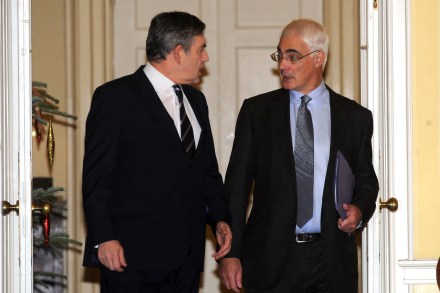
You've got to hand it to Alistair Darling: he really does seem to be making the most of his post-reshuffle security.  His interview with the Telegraph's Ben Brogan today is a case in point.  Once again, he goes against the Brown/Mandelson claim that there won't be a spending review before the next election.  But it's this passage which jumped out at me: "In another departure from Mr Brown, he even talks about reversing tax increases, including the planned rise in the top rate to 50p on those earning more than £150,000. 'Looking into the future I would like to be able to reduce tax. Raising the top rate is something I didn’t want to do.'" Brown will be livid.  Just imagine: a Chancellor who speaks against the authority of Number 10.

Brown’s legacy of inequality, poverty and joblessness

We all know Labour has failed to run an efficient economy or public services, but what’s little discussed is its failure to achieve even its own goals. Had Brown bankrupted the country but, say, made the poorest much better off, then Labour members might not be facing such an existential crisis. As it stands they won three victories, trebled health spending, redistributed some £1.5 trillion – and will end up with a society even more ‘unequal’ than it ever was under Thatcher. I look at this in my column today, and thought I’d share a few of the points with CoffeeHousers. First, equality. This (rather than making the poor better off) is the great leftist goal – and it can be nominally achieved by hurting the rich.

There could be a pay freeze, after all

Over at the FT's Westminster blog, Jim Pickard picks up on an important comment from Stephen Timms, the Treasury minister, speaking at a committee meeting this morning.  Timms suggests that Treasury hasn't ruled out a public sector pay freeze, as recommended by the Audit Commission's Steve Bundred.  Here are the minister's words:   “It’s certain the case that our pay policy needs to reflect the wider economic circumstances ... we will be deciding on pay policy over the next few weeks, the policy has got to be fair to people who work in the public sector just as we have to be fair to everybody else. The suggestion by Steve Bundred has made is certainly one we will reflect on but the details on that will be made over the next few weeks.

Rules versus discretion

Today's White Paper on financial regulation avoids introducing some unnecessary regulatory changes at the expense of failing to introduce some necessary ones.  In particular, it fails to recognise the abject failure of Gordon Brown's "tripartite" framework, in which prudential supervision of the banks was taken from the Bank of England and given to the FSA. Prudential supervision is the proper task of the central bank, for only if it has oversight of banks can the central bank decide whether they should receive last resort lending when they need it.  Without prudential oversight, the Northern Rock debacle is the likely result, and the fact that we are still debating this the best part of two years into the credit crunch is a sorry indictment of UK policymaking in this period.

How important were all those initiatives the government kept announcing?

There was a time when the government seemed to be announcing new measures to get the economy and the banking sector in particular moving again on an almost daily basis. Today, the Wall Street Journal has done a rather good audit of these measures. For instance, in January “the British government created a guarantee program meant to revive the dormant market for asset-backed securities. The program aims to spur purchases of banks' asset-back securities, or bundled consumer loans, by guaranteeing them for buyers. The guarantees were made available in April, but since then, none of the major U.K. banks has issued a security with such a guarantee.” Also, only 13 firms have joined in the government’s £5 billion trade insurance programme.

Brown puts on his gloomy face for the world stage

How peculiar.  After all the economic optimism coming out of government recently, all the talk of recovery by the end of the year, Brown's going to warn that the worst of the recession may be yet to come in his meetings with G8 leaders this week.  The Times has the full story here, but this snippet from the Dear Leader's address in France today gives you the idea: "If we do not take the necessary action now to strengthen the world economy and put in place the conditions for sustainable world growth, we will be confronted with avoidable unemployment for years to come." So does this mean he's losing faith in the "green shoots" strategy, by which a grateful nation will hail him for leading the UK out of recession?  No, I rather suspect not.

Pure Balls | 5 July 2009

According to the Sunday Times, poor old Shaun Woodward is getting the blame for inspiring Brown’s mendacious “Labour investment v Tory cuts” line. As if. This is the work of Ed Balls, and his trademark belief that the public can be easily fooled on such issues because their eyes glaze over when you mention statistics. A quick chronology: when the 10 percent figure came out in my Daily Telegraph piece it was Ed Balls who seized on it (his wife did so earlier that day with the Standard) and used it in a letter to Michael Gove demanding where those 10 percent cuts would be made. He used my figure as if it were official Tory policy.

More blows against Brown’s spending narrative

It's public spending time again, dear CoffeeHousers, with a couple of eye-catching articles in  today's papers.  The first is a comment piece by Steve Bundred, chief exec of the Audit Commission, on the necessity for extensive spending cuts.  If you recall, Bundred claimed a few days ago that health and education shouldn't be ring-fenced from cuts, and here he repeats the point, adding a snappy conclusion: "So don't believe the shroud wavers who tell you grannies will die and children starve if spending is cut. They won't. Cuts are inevitable, and perfectly manageable. We should insist on a frank and intelligent debate about how and where they will fall, which will then enable everyone to make more sensible plans.

Pimp My Ride: Amish Style

Actually, this is rather a touching, sad story about the Amish and the impact first rising prosperity and then, of all things, a run on an Amish bank in Indiana. Nonetheless, it seems that the Amish are no more able to resist shiny baubles and status symbols than the rest of us. Plus, the idea of what one might term the Cosmo-Amish and their tricked out buggies is, you know, amusing: Some Amish bishops in Indiana weakened restrictions on the use of telephones. Fax machines became commonplace in Amish-owned businesses. Web sites marketing Amish furniture began to crop up. Although the sites were run by non-Amish third parties, they nevertheless intensified a feeling of competition, says Casper Hochstetler, a 70-year-old Amish bishop who lives in Shipshewana.

Ireland today, Britain tomorrow

It was Brian Lenihan yesterday and in a fortnight it will be Alistair Darling's turn to announce the bad news when he delivers his emergency-in-all-but name budget. Or bloodget. Lenihan, the Irish finance minister, did his best to spread the pain around, announcing tax increases and cutting spending while leaving many of the most difficult measures to next year's budget. The Irish economy is forecast to contract by 8% this year and, even after the cash-saving and raising measures announced yesterday, the government will run a deficit of 10.75% of GDP. Eye-watering and sobering stuff.  In the Irish Times Mark Hennessy writes: For weeks, the Cabinet has debated the options in detail unlike any previous cabinet. Eventually, it decided that it could not cut more than €3.

The Darling Buds of April

I have stolen the headline to this post from a breakfast discussion held by "reputation management firm" Fishburn Hedges, where I was a guest speaker this week. Me and my fellow panelists were there to talk about the budget  (coming your way on April 22nd) and give some idea of how the media gears up to the great day. I suggested that part of the problem with newspaper Budget coverage is that political journalists know very little about economics. Robert Cole, a senior writer at the Times and the man who has run the paper's Budget coverage for many, many years, explained the excitement of the day and his biggest fear - theat nothing happens. Alistair Smith, who runs the media operation for Barclays explained how the big financial institutions gear up their response.