Economy

The euro crisis is an opportunity for Cameron

Gerard Baker has written the cover piece for this week’s magazine and it’s a must read. In it, he explains why ‘closer fiscal union’, as Rompuy terms it, is not to Germany’s advantage: ‘Any attempted fiscal union might well yield to Germany the biggest single vote in how much to raise in taxes and how to spend it. But it could still be outvoted by an alliance of smaller countries. Such a set-up would become an institutionalised mechanism by which German taxes will be siphoned off permanently to weaker European states. The nightmare for Germans is that an unholy alliance of Spanish, Greeks, Italians and Portuguese will be able to
Cameron's European balancing act

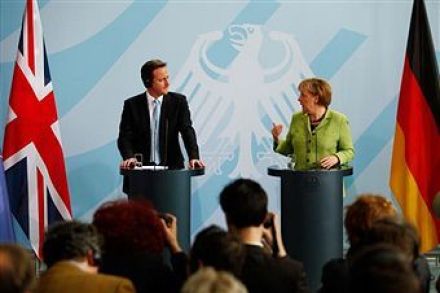
So David Cameron strides onto the European stage today, with his first EU summit since becoming Prime Minister. And early signs are that it’s going to be a peculiar day for him. As Ben Brogan writes in the Telegraph, Europe seems to be liking the (liberal-democratised) Tories more than they thought they would. Sarkozy is, apparently, “smitten” with our PM, while Angela Merkel “has come to admire his directness”. So after pitching himself against the Lisbon Treaty, and broadly selling himself as a eurosceptic over the past few years, Cameron now faces the prospect of cuddles over the coffee and croissants in Brussels. Like I say: peculiar. I suspect Cameron

A good war

As Allister Heath notes in City AM this morning, Mervyn King has had a good war. Well, not so much a good war as a profitable peace. King contributed to the domestic crisis by sustaining very low interest rates whilst ignoring asset prices. Brown may have forced the Governor’s hand, but King was groggily supine until a sovereign debt crisis threatened. George Osborne is dismantling Gordon Brown’s regulatory imperium. King is the major beneficiary as the FSA is subsumed by the Bank of England. How will exercise that power? Obviously, time will tell; but monetary tightening will moderate excess (and spruce up banks’ balance sheets) in the short-term. Heath reports:

Osborne gets upfront about our debt burden

A couple of weeks on holiday, and there’s plenty to catch up on.  First, though, George Osborne’s speech to Mansion House yesterday evening.  In terms of substance, it was fairly radical stuff.  And it’s encouraging that so many of the Tories’ solid plans for reforming the financial regulatory system have survived the coalition process.  But, really, it was one simple, little sentence which jumped out at me.  This: “Debt [is] set to still rise even at the end of this five year Parliament.” “So what?” you may be thinking, “we knew that already.”  Ah, yes, but we’ve rarely heard a politician be quite so upfront about our debt position before

The debate opens as Darling is vindicated and condemned

As Fraser observed at the weekend, Alistair Darling has a point: it is not as bad as was feared. The new Office for Budget Responsibility agrees, reducing estimated public borrowing to £155bn 2010/11. Still, it’s hardly a picnic is it? And I wonder what response Darling will get if he presses Cameron and Osborne for an apology. His growth forecasts have been downgraded to 2.6 percent and the structural deficit is greater than he admitted to – Paul Mason reckons it’s about £5bn more than was forecast. Osborne’s hands are tied by these figures; his calculations will be based on them. There is, of course, the possibility that the OBR’s

Waiting on the OBR

The Office for Budget Responsibility is expected to downgrade the previous government’s growth forecasts. Alistair Darling’s rosy prediction that the economy would grow by 3-3.5 percent in 2011 will be replaced by a conservative estimate of 2-2.5 percent, in line with other independent forecasters. Also, according to the Guardian, the OBR will ‘trim’ the Treasury’s breezy estimates of growth until 2014-15.   There is no guarantee that the OBR’s forecast will be flawless – and the Treasury Select Committee’s scrutiny will have to be exhaustive. But George Osborne is bound to the OBR’s figures, rather than the Treasury being bound to a political agenda. Balance and responsibility will be restored

Darling has a point

I had expected Alistair Darling to have slumped off to spend more time with his memoirs after the election, but here he is, fists aloft, fighting the government. About the only member of the Labour front bench effectively doing so. He has a point. The economy is looking better than expected, not worse – as David Cameron has been pretending. Each new forecast for the deficit seems to give a less ghastly picture. British house prices are on the rebound. And when the Office of Budget Responsibility announces its forecasts on Monday, it is likely to give a better picture than that in Darling’s budget. Already Darling is telling the

Darling: it’s not as bad as all that

Alistair Darling is about to retire to the backbenches, though he stresses (and hopes) that it’s a brief stint in obscurity. ‘I get bored,’ he tells the Guardian in an interview today. Darling is remarkable. He emerged from 13 years in cabinet and a hellish tenure as Chancellor with his reputation enhanced. There were rumours of a leadership bid, but those were fanciful. Darling was not an architect of New Labour, but he certainly laid the odd brick. Darling could not break the legacy of Blair and Brown, and reveals as much in his Guardian interview. As Shadow Chancellor, he has to defend his record as Chancellor and argue that

Cable, the free radical, dreams of a grand future

What is Vince Cable up to? He is on manoeuvres, keeps making attempted power grabs from George Osborne. Barely a week passes without him rattling the cage to which Cameron and Clegg have confined him  – that is, the unwieldy and yet fairly powerless Department for Business, Innovation & Skills. For all its bulk, the department doesn’t really do anything. It has the universities brief, which is important, but it is certainly not an economics department as Cable was pretending last week. “It is a bit like the German economics ministry and the finance ministry,” he claimed. “Two departments, working in parallel.” As if. Cable may like economics, but he

Lord Ashdown's the right man for the Balkans

Last week, Europe’s foreign ministers gathered in Sarajevo under much fanfare – and did very little except issue a repetitive press release about the region’s future in the EU. The only highlight of the event was William Hague’s speech, which was excellent.   Enlargement, however, is deeply unpopular among European elites, and the gathered foreign ministers seemed to be acutely aware of how little the market will bear by way of new ideas and initiatives.   So the ideas I put out in a brief in the run-up to the summit for improving the EU’s accession process went nowhere. Only Austria and Estonia openly defended proposals at the meeting. Germany

Osborne's successful first outing on the international stage

George Osborne’s Asia trip has now been rounded off with a meeting of the G20 finance ministers in South Korea and he is now heading back to Britain and his Budget preparations. The trip must be marked up as a success for Osborne. In its communiqué, the meeting implicitly endorsed Osborne’s two major moves since becoming Chancellor, cuts this year and the setting up of the Office of Budgetary Responsibility:  ‘We welcome the recent announcements by some countries to reduce their deficits in 2010 and strengthen their fiscal frameworks and institutions’ No one can doubt that the Tories have comprehensively won the argument for in-year cuts. With a growing domestic

Pacific islands defy apocalyptic climate change scenarios

The President of the Maldives can sell his snorkel: he’ll be waving not drowning. The New Scientist carries a fascinating article, examining the research of Paul Kench of the University of Auckland and Arthur Webb of the South Pacific Applied Geoscience Commission. Using aerial photographs and high-resolution satellite images, Kench and Webb have found that 23 out of 27 low-lying Pacific islands, deemed to be vulnerable to rising sea levels, have grown by up to 10 percent in 40 years. Local sea levels have risen by 120 millimetres over the period. Coral is defying the apocalyptic flooding scenarios. Reef coral surrounding the islands is eroded and deposited to form atolls

Red Vince sips clear blue water

Deprived of the comforts of third party opposition – the ability to say and do as he pleased – Vince Cable has had to put away childish things. Of necessity, the business and enterprise secretary cannot be a socialist. And Cable used yesterday’s speech at the Cass Business School to prove he’s no socialist.   He convinced. Cable will enact the coalition’s plans to reform regional development agencies, cut preferential micromanagement grants that supersede the judgement of markets, demolish stifling small business regulation, curtail short-term speculation on company takeovers to protect shareholders, cutting the deficit early and the part-privatisation of the Royal Mail. He also endorsed long-standing Tory policy of

Cameron creates cover for cuts

David Cameron’s speech today was, in many respects, the one he needed to make: the clean-break speech, which trashed Labour’s record on the economy while also outlining how the coalition would deliver us to the sunny uplands. As it happens, it was also quite effective: a blend of policy specifics and punchy rhetoric.  And while we’d heard many of those specifics before – corporation tax cuts, reduced regulation, carbon capture, etc. – they cohered here as they rarely have done before. The most earcatching apsect of the speech, though, was the emphasis Cameron placed on government intervention.  Yes, there was a solid core of small state fundamentals.  But the PM

Nearing the precipice?

Recent events in the Eurozone have led a number of commentators to suggest that we are nearing some repeat of the financial crisis that followed the nationalisation of Fannie Mae and Freddie Mac in August 2008 and the subsequent (and consequent) bankruptcy of Lehman’s. In my view, the current situation is rather different from that in 2008, but matters could turn out much worse. Our situation is not like 2008 (yet) because: – not such a high proportion of AAA securities has been reduced to junk status – there are now slightly more robust resolution regimes in place for banks – banks have a bit more liquidity – US and

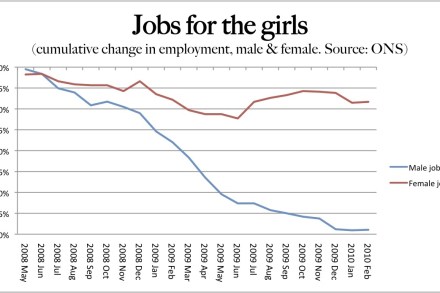
The death of the male working class | 27 May 2010

Gender discrimination is illegal in Britain – but tell that to the recession. It has hit male jobs harder than female jobs and in a cover story for this week’s Spectator, Matthew Lynn looks behind it. This has been, he says, a Mancession, where “the jobs lost in the last two years have tended to be ones done by men, whereas the preponderance of new vacancies are in areas of the economy in which women do best.” I asked the ONS for the official figures – and here they are:   They show that, if you count everyone in Britain employed over the age of 16, there has been a

Climate kamikaze

Several months ago, European leaders went to Copenhagen to save the planet. China, India and Brazil on the other hand went to the climate negotiations in Denmark to showcase the changed distribution of power in the world. Unsurprisingly, the Europeans came home empty-handed, shut out of the key negotiations and powerless despite what was meant to be a standard-setting promise of 20 percent cut in the EU’s greenhouse gas emissions. The US and the rising powers struck a non-binding deal, the value of which is still being determined. Reading today’s cover story in The Times, the lesson the eco-friendly EU Commission seems to have drawn from this experience is that

A day of pomp and positivity

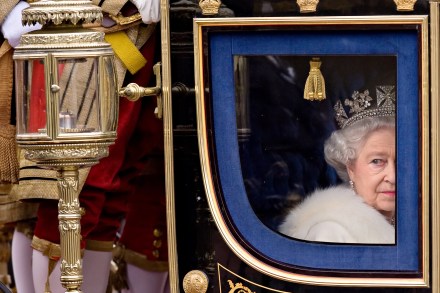
The sun is filtering through the garden at 22 Old Queen Street, and a brass band is marching around St James’s Park: we’re getting the light and the pomp in equal measures for today’s Queen’s Speech.  As for the actual policy, well, we largely know what it’s all about.  There will be proposals for scrapping ID cards, strengthening civil liberties, reforming schools, making the police more accountable, and more.  The emphasis from the government is on handing power back to the people. The question is whether the coalition can make today’s positives balance out the age of austerity.  The stock market today provides a gloomy reminder that their biggest challenge

Calling Osborne's bluff

I’ve just read through George Osborne’s speech to the CBI annual dinner last night, and there’s much in there about free markets and tax cuts that will encourage Tory supporters.  But one passsage seemed a little strange to me: “And on the subject of coalitions, let me be absolutely frank. As a member of the negotiating team, we did consider whether we could try to bluff our way into a minority government. But it was David Cameron’s bold vision and Nick Clegg’s great foresight which saw, before anyone else, that that option would be the greatest compromise of all. A weak, unstable government, risking defeat night after night in Parliament.